Magic in East Asia
Taoist talismans, the I Ching and feng shui, onmyodo and the omamori, and the mudang of Korea. 308 entries on EveryJaadu so far.
Places of magic
Kyoto 5Beijing 3Edo 3Mount Tai 3Shikoku 3Akita 2Asakusa 2Guangdong 2Himeji Castle 2Kifune Shrine 2Kumano Sanzan 2Mount Hiei 2Mount Ōmine 2Mukden 2Nagano Prefecture 2Sado Island 2Sendai 2Seoul 2Shimane Prefecture 2Aikoku Station 1Aizu region 1Akishino-dera 1Amami Ōshima 1Amoy 1Anyang 1Aojiang 1Aomori prefecture 1Ariake Sea 1Asagaya 1Awaji Island 1
Rites of the region
Writing and burning a fu talismanJoss paper and the Hungry Ghost offeringKau cim and jiaobeiThe I Ching and the yarrow stalksFeng shui placementSetsubun bean-throwingHarai, the Shinto rite of purificationOmamori and ofuda renewalOmikuji fortune slipsGut, the Korean shaman rite
Countries
PurposeProtectionHealingSeeing and foretellingLuck and prosperityLove and attractionCursing and harmCleansing and purificationSpeaking with spirits and the deadChange and initiationBinding and oathsPower and authorityWonder and entertainment
WhoShamansFolk healersPriests and ritual specialistsWitches, sorcerers and cunning folkDiviners and readersMediums and the possessedCeremonial magicians and alchemistsHouseholds and ordinary peopleStage magiciansScholars and sceptics
BeliefHindu and TantricBuddhistJainMuslim and SufiJewishChristianSikhZoroastrianShinto and TaoistIndigenous and shamanicAfrican and Afro-diasporicPagan and NeopaganEsoteric and occultFolk and village customSecular and stageOther traditions
🇯🇵 JapanNoro祝女
Ryukyuan village priestesses who tend sacred hearths and utaki shrinesTradition · Speaking with spirits and the dead · Protection Fading
 🇨🇳 China and 5 moreKau chim求籤
A divination practice using numbered bamboo sticks to seek answers from deitiesOracle · Seeing and foretelling · Power and authority Living
🇨🇳 China and 5 moreKau chim求籤
A divination practice using numbered bamboo sticks to seek answers from deitiesOracle · Seeing and foretelling · Power and authority Living
 🇯🇵 JapanShinto shrine神社 (jinja)
A structure housing kami deities within the Shinto tradition of JapanTradition · Protection · Speaking with spirits and the dead Living
🇯🇵 JapanShinto shrine神社 (jinja)
A structure housing kami deities within the Shinto tradition of JapanTradition · Protection · Speaking with spirits and the dead Living
 🇯🇵 JapanOfudaお札/御札 (ofuda)
Paper and wooden talismans from Japanese Shinto shrines and Buddhist templesCharm · Protection · Cleansing and purification Living
🇯🇵 JapanOfudaお札/御札 (ofuda)
Paper and wooden talismans from Japanese Shinto shrines and Buddhist templesCharm · Protection · Cleansing and purification Living
 🇯🇵 JapanMiko巫女
A Shinto shrine priestess and traditional female medium in JapanTradition · Speaking with spirits and the dead · Protection Living
🇯🇵 JapanMiko巫女
A Shinto shrine priestess and traditional female medium in JapanTradition · Speaking with spirits and the dead · Protection Living
 🇯🇵 JapanKagura神楽
A Shinto ritual dance where performers embody deities to purify and welcome spiritsTradition · Protection · Speaking with spirits and the dead Living
🇯🇵 JapanKagura神楽
A Shinto ritual dance where performers embody deities to purify and welcome spiritsTradition · Protection · Speaking with spirits and the dead Living
 🇨🇳 China and 1 moreAncestor veneration in China中國傳統宗法性宗教
Rites for dead kin who are thought to watch over the familyTradition · Protection · Speaking with spirits and the dead Living
🇨🇳 China and 1 moreAncestor veneration in China中國傳統宗法性宗教
Rites for dead kin who are thought to watch over the familyTradition · Protection · Speaking with spirits and the dead Living
 🇯🇵 JapanChinkon kishin鎮魂帰神
A Japanese spiritual practice combining soul calming with spirit possessionRite · Speaking with spirits and the dead · Healing Living
🇯🇵 JapanChinkon kishin鎮魂帰神
A Japanese spiritual practice combining soul calming with spirit possessionRite · Speaking with spirits and the dead · Healing Living
 🇨🇳 ChinaReligion of the Shang dynasty
The spiritual system of ancient China's second dynasty, centred on ancestor worship and oracle bone divination.Tradition · Protection · Luck and prosperity Historical
🇨🇳 ChinaReligion of the Shang dynasty
The spiritual system of ancient China's second dynasty, centred on ancestor worship and oracle bone divination.Tradition · Protection · Luck and prosperity Historical
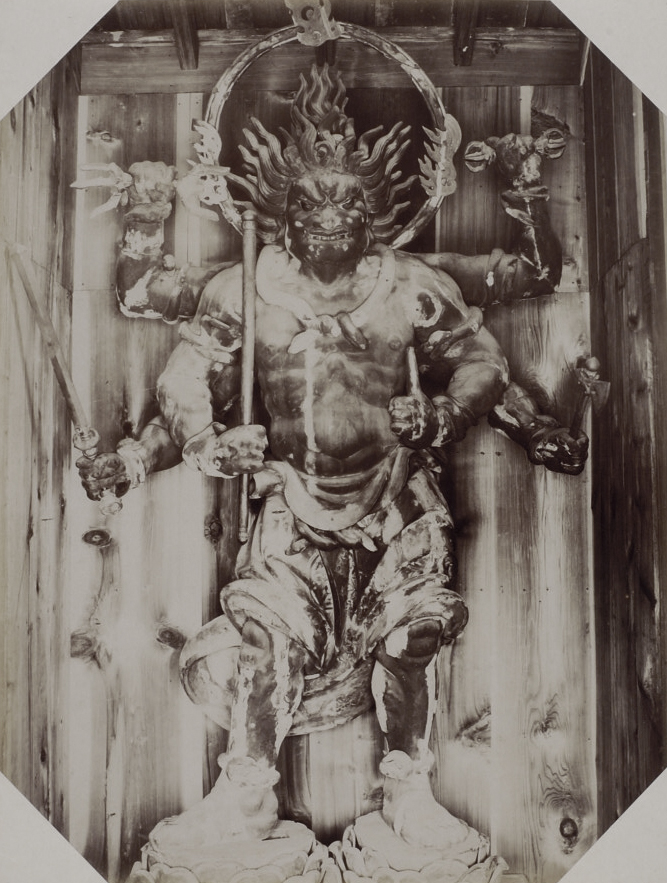 🇯🇵 JapanDaigensuihō大元帥法
An Esoteric Shingon Buddhist rite for military defense and cursing enemiesRite · Cursing and harm · Protection Historical
🇯🇵 JapanDaigensuihō大元帥法
An Esoteric Shingon Buddhist rite for military defense and cursing enemiesRite · Cursing and harm · Protection Historical
 🇯🇵 Japan and 4 moreKṣitigarbhaक्षितिगर्भ
A bodhisattva vowed to empty the hells and guard children, shown with a staff and jewel.Being · Protection · Speaking with spirits and the dead Living
🇯🇵 Japan and 4 moreKṣitigarbhaक्षितिगर्भ
A bodhisattva vowed to empty the hells and guard children, shown with a staff and jewel.Being · Protection · Speaking with spirits and the dead Living
 🇯🇵 JapanHoshi Matsuri星まつり
A Buddhist ritual to honor stars and pray for protection from disasterRite · Protection · Luck and prosperity Living
🇯🇵 JapanHoshi Matsuri星まつり
A Buddhist ritual to honor stars and pray for protection from disasterRite · Protection · Luck and prosperity Living
 🇯🇵 JapanSuzu鈴
A hollow Japanese bell with inner pellets, used in Shinto rites and shrines.Charm · Protection · Speaking with spirits and the dead Living
🇯🇵 JapanSuzu鈴
A hollow Japanese bell with inner pellets, used in Shinto rites and shrines.Charm · Protection · Speaking with spirits and the dead Living
🇨🇳 China and 5 moreKau chim求籤
A divination practice using numbered bamboo sticks to seek answers from deitiesOracle · Seeing and foretelling · Power and authority Living
🇯🇵 JapanShinto shrine神社 (jinja)
A structure housing kami deities within the Shinto tradition of JapanTradition · Protection · Speaking with spirits and the dead Living
🇯🇵 JapanOfudaお札/御札 (ofuda)
Paper and wooden talismans from Japanese Shinto shrines and Buddhist templesCharm · Protection · Cleansing and purification Living
🇯🇵 JapanMiko巫女
A Shinto shrine priestess and traditional female medium in JapanTradition · Speaking with spirits and the dead · Protection Living
🇯🇵 JapanKagura神楽
A Shinto ritual dance where performers embody deities to purify and welcome spiritsTradition · Protection · Speaking with spirits and the dead Living
🇨🇳 China and 1 moreAncestor veneration in China中國傳統宗法性宗教
Rites for dead kin who are thought to watch over the familyTradition · Protection · Speaking with spirits and the dead Living
🇯🇵 JapanChinkon kishin鎮魂帰神
A Japanese spiritual practice combining soul calming with spirit possessionRite · Speaking with spirits and the dead · Healing Living
🇨🇳 ChinaReligion of the Shang dynasty
The spiritual system of ancient China's second dynasty, centred on ancestor worship and oracle bone divination.Tradition · Protection · Luck and prosperity Historical
🇯🇵 JapanDaigensuihō大元帥法
An Esoteric Shingon Buddhist rite for military defense and cursing enemiesRite · Cursing and harm · Protection Historical
🇯🇵 Japan and 4 moreKṣitigarbhaक्षितिगर्भ
A bodhisattva vowed to empty the hells and guard children, shown with a staff and jewel.Being · Protection · Speaking with spirits and the dead Living
🇯🇵 JapanHoshi Matsuri星まつり
A Buddhist ritual to honor stars and pray for protection from disasterRite · Protection · Luck and prosperity Living
🇯🇵 JapanSuzu鈴
A hollow Japanese bell with inner pellets, used in Shinto rites and shrines.Charm · Protection · Speaking with spirits and the dead Living
Photo credits on this page
The small pictures above come from Wikimedia Commons under free licences. Some are cropped to fit.
- Chinkon kishin: Tomokiyo Yoshisane (友清歓真), also known as Tomokiyo Kyūgo (友清九吾), Public domain, source
- Kau chim: No machine-readable author provided. 9old9 assumed (based on copyright, Public domain, source
- Ofuda: 教派研究 (Sectarian research), CC BY-SA 3.0, source
- Shinto shrine: No machine-readable author provided. Fg2 assumed (based on copyright c, Public domain, source
- Miko: Chris Gladis, Flickr user MShades, CC BY 2.0, source
- Kagura: Elstner Hilton, Public domain, source
- Ancestor veneration in China: Three huntings, CC BY-SA 4.0, source
- Daigensuihō: Kamakura-period artist; photo by Kudo Risaburo (工藤利三郎), Public domain, source
- Religion of the Shang dynasty: Unknown author, CC0, source
- Kṣitigarbha: སངས་རྒྱས་བཅོམ་ལྡན་འདས།, Public domain, source
- Hoshi Matsuri: Anonymous ( Japan ) Unknown author, CC0, source
- Suzu: Unknown author, CC0, source