
Hoshi Matsuri
In its own language: 星まつり
from Japanese hoshi, meaning star, and matsuri, meaning festival or ritual
A Buddhist ritual to honor stars and pray for protection from disaster
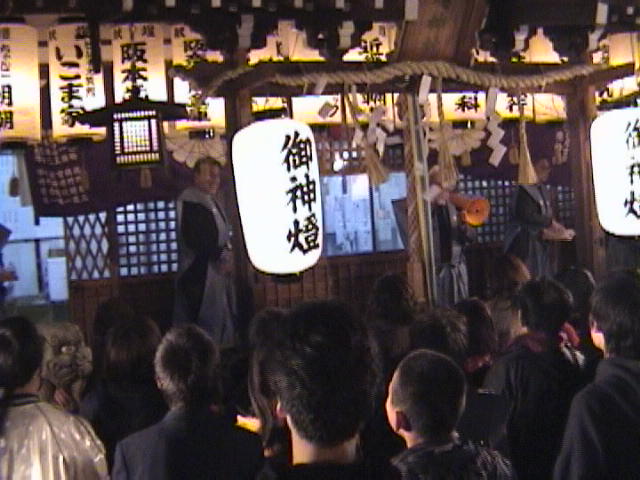
Hoshi Matsuri is a Japanese Buddhist ceremony dedicated to the worship of celestial bodies. It is performed to remove disasters and misfortunes for both the nation and individuals. The practice relies on esoteric astrology and specific mandalas.
- Also known as Hoshi Kuyō or Hokuto-hō
- Performed during lunar New Year and winter solstice
- Uses Star Mandala and Seven-Star Nyoirin Mandala
- Aims to prevent disasters and ensure personal happiness
- Rooted in Esoteric Buddhist astrology
What it is
Hoshi Matsuri, also called Hoshi Kuyō, is a Buddhist rite focused on the veneration of stars. It belongs to Esoteric Buddhism, a branch of Mahāyāna teachings. The ceremony honors principal stars and personal guardian stars linked to an individual's birth year. Practitioners believe these celestial bodies influence human destiny. The ritual aims to eliminate global disasters and local misfortunes. It serves as a spiritual shield for communities and families alike.
Where it comes from
The practice emerges from Esoteric Buddhist traditions in Japan. It draws upon ancient astrological systems that view the sky as a map of fate. The ritual incorporates elements from Shingon and Tendai Buddhism. Historical texts link it to the worship of deities like Ekakṣara-uṣṇīṣacakra and Sudṛṣṭi Bodhisattva. These figures appear in specific mandalas used during the ceremony. The tradition reflects a blend of Indian astronomical concepts adapted into Japanese religious life.
How it is done
The ceremony involves offerings and prayers directed at celestial deities. Priests use mandalas such as the Star Mandala or the Seven-Star Nyoirin Mandala as focal points. Participants identify their birth star and yearly governing star. Ritual actions are performed to align with these stellar influences. The practice includes chanting and visualizations based on esoteric astronomy. Offerings are made to ward off negative forces and invite happiness.
Tools and materials
Mandalas are central to the ritual. The Star Mandala depicts deities associated with the Big Dipper and Navagraha. The Seven-Star Nyoirin Mandala features Cintāmaṇicakra. The Myōken Mandala represents Sudṛṣṭi Bodhisattva. These diagrams serve as spiritual maps for practitioners. They guide the visualization of stars and their protective powers. No physical tools beyond these sacred images are explicitly detailed in standard accounts.
Hoshi Matsuri, drawn and placed
- Living
- Revived
- Fading
- Historical
- Legendary
- Performed
- Lineage
- Esoteric Buddhism
- Timing
- lunar New Year, risshun, setsubun, winter solstice
What it is for
The main goal is protection from disaster and misfortune. It seeks to ensure personal happiness throughout the year. Communities perform it to safeguard the nation from calamity. Individuals seek relief from bad luck tied to their birth star. The ritual addresses both collective and personal well-being. It is believed to harmonize human life with cosmic order.
Who does it
Buddhist priests conduct the ceremony within Esoteric Buddhist temples. Training requires mastery of esoteric rituals and astrological knowledge. Priests must understand the significance of each star and deity. The role is typically held by ordained monastics. The priest acts as an intermediary between the community and the celestial realm.
Peoples and places
The ritual is primarily practiced in Japan among Buddhists. It is part of the broader cultural heritage of East Asia. Different schools, such as Shingon and Tendai, may have variations. The practice remains relevant in contemporary Japanese religious life. Diaspora communities may also observe it if they maintain Buddhist traditions.
At a glance: who, where and when
Who does it
Peoples
Belief worlds
Occasions
What people believe
Esoteric Buddhism teaches that stars govern human destiny. Each person has a birth star and a yearly governing star. These celestial bodies exert influence over health and fortune. Deities associated with the stars offer protection when honored. The universe is seen as interconnected through these cosmic forces. Misfortune arises from disharmony with these stellar patterns.
When it is done
The ritual is performed on significant dates. These include the lunar New Year and risshun, the start of spring. It is also held during setsubun and the winter solstice. These times mark transitions in the natural cycle. The timing aligns with astrological shifts in the stars' positions.
How scholars and sceptics see it
Scholars view Hoshi Matsuri as a key example of Esoteric Buddhist practice. Anthropologists study its integration of astrology and religion. Historians trace its roots to Indian astronomical concepts. Researchers note its role in maintaining social harmony. Sceptics may interpret it as psychological comfort rather than cosmic intervention.
Cautions and what is closed
No specific harms or frauds are widely reported regarding this ritual. It is a structured religious ceremony without known dangers. Outsiders may find the esoteric details complex or inaccessible. The practice does not involve public spectacle or commercial exploitation.
Compare and confuse
Hoshi Matsuri is related to Onmyōdō, a Japanese divination system. It shares astrological concepts with Nine Star Ki. However, it focuses on Buddhist deities rather than secular fortune-telling. Other star-worship traditions exist globally but differ in theological framework.
Law and persecution
The ritual is legally permitted in Japan as part of religious freedom. There are no known bans or persecutions against its practice. It operates within established Buddhist institutions. Legal status is stable and uncontested.
Today
The ceremony continues to be performed in Japanese temples. It remains a living tradition for adherents of Esoteric Buddhism. Modern practitioners maintain the ancient forms and meanings. It serves as a cultural anchor for those seeking spiritual protection.
Questions people ask about Hoshi Matsuri
What is Hoshi Matsuri?
It is a Japanese Buddhist ritual honoring stars to prevent disasters and bring good luck. It is also called Hoshi Kuyō or Hoshiku.
When is it performed?
It takes place on the lunar New Year, risshun, setsubun, and the winter solstice, marking seasonal changes.
Who performs this ritual?
Buddhist priests trained in Esoteric Buddhism conduct the ceremony, using mandalas and specific chants.
What is its purpose?
It seeks to eliminate misfortunes for individuals and nations, ensuring happiness aligned with one's birth star.
Good reading and sources
The facts on this page come from the Wikipedia article "Hoshi Matsuri", written by its contributors and used under the CC BY-SA 4.0 licence, and from its Wikidata record (CC0). EveryJaadu rewrote the text in its own words, with AI assistance, and compares every page with the article to make sure no passage is copied. It may be reused under the same CC BY-SA 4.0 licence with a link back.
It may contain mistakes. Names and customs differ from one community to the next, and some knowledge is closed to outsiders and left out here. This page describes belief and practice. It does not say that any of it works, it is not a how-to, and it is not medical advice. If something is wrong, tell us. Last refreshed 2026-10-09.
More from Japan
All the entries from Japan 🇯🇵 Japan and 1 moreMisogi禊
A Shinto rite of full-body purification using cold waterRite · Cleansing and purification · Speaking with spirits and the dead Living
🇯🇵 Japan and 1 moreMisogi禊
A Shinto rite of full-body purification using cold waterRite · Cleansing and purification · Speaking with spirits and the dead Living
 🇯🇵 JapanSetsubun節分
A Japanese seasonal rite to drive away bad luck and welcome spring with roasted beansRite · Protection · Luck and prosperity Living
🇯🇵 JapanSetsubun節分
A Japanese seasonal rite to drive away bad luck and welcome spring with roasted beansRite · Protection · Luck and prosperity Living
 🇯🇵 JapanHyakumonogatari Kaidankai百物語怪談会
An Edo period Japanese parlour game where ghost stories extinguish candles one by oneRite · Cursing and harm · Wonder and entertainment Historical
🇯🇵 JapanHyakumonogatari Kaidankai百物語怪談会
An Edo period Japanese parlour game where ghost stories extinguish candles one by oneRite · Cursing and harm · Wonder and entertainment Historical
Related elsewhere
All rite 🇧🇪 Belgium and 2 moreHorseshoe
A metal shoe for a horse's hoof and a talisman of good fortuneCharm · Protection · Luck and prosperity Living
🇧🇪 Belgium and 2 moreHorseshoe
A metal shoe for a horse's hoof and a talisman of good fortuneCharm · Protection · Luck and prosperity Living
 🇪🇬 Egypt and 3 moreAmulet
A portable object worn or carried to ward off harm and invite fortuneCharm · Protection · Luck and prosperity Living
🇪🇬 Egypt and 3 moreAmulet
A portable object worn or carried to ward off harm and invite fortuneCharm · Protection · Luck and prosperity Living
 🇮🇹 ItalyFortunaFortūna
The Roman goddess of luck and fate, shown with a wheel and a horn of plentyBeing · Luck and prosperity · Seeing and foretelling Historical
🇮🇹 ItalyFortunaFortūna
The Roman goddess of luck and fate, shown with a wheel and a horn of plentyBeing · Luck and prosperity · Seeing and foretelling Historical
 🇮🇳 India and 5 moreKolamகோலம்
A daily geometric floor drawing made with rice flour at the home entrance in South IndiaTradition · Protection · Luck and prosperity Living
🇮🇳 India and 5 moreKolamகோலம்
A daily geometric floor drawing made with rice flour at the home entrance in South IndiaTradition · Protection · Luck and prosperity Living