Scholars and sceptics
Anthropologists, historians and investigators who study magic and test its claims.
Scholars and sceptics are the people who study magic from outside the practice: anthropologists, historians, folklorists, psychologists, scholars of religion and investigators who test claims. They have names such as E. E. Evans-Pritchard, Marcel Mauss, Bronislaw Malinowski, Mary Douglas, Keith Thomas and Carlo Ginzburg, and also investigators such as James Randi. This page covers what they have found, how they disagree, and what their work has cost and changed. Their work has changed how the whole subject is understood.
Early theories
Nineteenth-century writers such as James Frazer treated magic as a mistaken early science, a view now widely rejected as arrogant and inaccurate. Later anthropologists, including Evans-Pritchard in his 1937 study of the Azande, showed that magical belief can be a consistent way of reasoning about misfortune. Mauss and Malinowski stressed its social role. Fieldwork, archives, laboratory studies and surveys are their main methods, and each field has its own debates and schools.
The history of witch trials
Historians have revised their view of the witch trials. Keith Thomas and Alan Macfarlane studied English village accusations, Carlo Ginzburg found the benandanti in Friuli, and Ronald Hutton has argued about the numbers and causes, and Silvia Federici links the persecution to the rise of capitalism, a thesis historians dispute. The older figure of nine million victims has been dropped, and estimates now run to tens of thousands of executions.
Testing claims
Sceptics test whether claims hold up. James Randi offered a prize for evidence of paranormal power that was never won, and organisations such as the Committee for Skeptical Inquiry investigate fraud. Researchers study why people believe: pattern-seeking, uncertainty and the wish to control events. The best sceptics aim to understand people, not to mock them. Sceptics hold that claims should be tested, and they have a long record of exposing cases such as spirit photography and fake healers.
Ethics of study
Scholars were often colonial officials or missionaries, and their reports shaped how Indigenous religions were named. Contemporary researchers work with communities, ask consent and respect closed knowledge. Practitioners sometimes object to being explained, and sceptics sometimes to being called closed-minded. The conversation continues, and this guide aims to stay neutral on whether magic works. Their critics reply that science cannot measure everything that matters to a community, and that explaining a ritual away is not the same as understanding it.
Scholars and sceptics on EveryJaadu
The entries written up so far, best known first.
 🇮🇹 Italy and 3 moreRenaissance magic
A 15th and 16th century revival of magical arts blending philosophy, astrology, and hidden knowledge.Tradition · Power and authority · Seeing and foretelling Historical
🇮🇹 Italy and 3 moreRenaissance magic
A 15th and 16th century revival of magical arts blending philosophy, astrology, and hidden knowledge.Tradition · Power and authority · Seeing and foretelling Historical
 🇬🇧 United KingdomPendle witches
A 1612 series of English witch trials that resulted in ten executions near Pendle Hill.Belief · Cursing and harm Historical
🇬🇧 United KingdomPendle witches
A 1612 series of English witch trials that resulted in ten executions near Pendle Hill.Belief · Cursing and harm Historical
 🇪🇬 EgyptDemon
A supernatural entity believed to cause harm or possess humansBeing · Cursing and harm · Speaking with spirits and the dead Historical
🇫🇷 FranceLouviers possessions
A seventeenth-century French convent case of mass demonic possession and witchcraft accusationsBelief · Cursing and harm Historical
🇮🇪 IrelandEarly Irish astrology
The study of celestial cycles in early Ireland, blending native observation with Christian and continental learning.Tradition · Seeing and foretelling · Luck and prosperity Historical
🇮🇪 IrelandLorica
A Hiberno-Scottish monastic prayer for protection against evilText · Protection Historical
🇪🇬 EgyptDemon
A supernatural entity believed to cause harm or possess humansBeing · Cursing and harm · Speaking with spirits and the dead Historical
🇫🇷 FranceLouviers possessions
A seventeenth-century French convent case of mass demonic possession and witchcraft accusationsBelief · Cursing and harm Historical
🇮🇪 IrelandEarly Irish astrology
The study of celestial cycles in early Ireland, blending native observation with Christian and continental learning.Tradition · Seeing and foretelling · Luck and prosperity Historical
🇮🇪 IrelandLorica
A Hiberno-Scottish monastic prayer for protection against evilText · Protection Historical
 🇮🇹 Italy and 1 morePalladiumΠαλλάδιον (Palladion)
A wooden statue of Athena said to protect cities, stolen from Troy and brought to Rome.Charm · Protection Historical
🇮🇹 Italy and 1 morePalladiumΠαλλάδιον (Palladion)
A wooden statue of Athena said to protect cities, stolen from Troy and brought to Rome.Charm · Protection Historical
 🇮🇱 Israel and 5 moreAstaroth
An arch-demon in Western occultism, derived from the ancient goddess Astarte.Being · Power and authority · Cursing and harm Historical
🇮🇱 Israel and 5 moreAstaroth
An arch-demon in Western occultism, derived from the ancient goddess Astarte.Being · Power and authority · Cursing and harm Historical
 🇫🇷 FranceTitivillus
A medieval demon who collects scribal errors and liturgical mistakes in a sack.Being · Cursing and harm Historical
🇫🇷 FranceTitivillus
A medieval demon who collects scribal errors and liturgical mistakes in a sack.Being · Cursing and harm Historical
 🇬🇷 GreeceGelloΓελλώ
A Greek demon of infancy and a class of beings blamed for infant death.Being · Cursing and harm · Protection Historical
🇬🇷 GreeceGelloΓελλώ
A Greek demon of infancy and a class of beings blamed for infant death.Being · Cursing and harm · Protection Historical
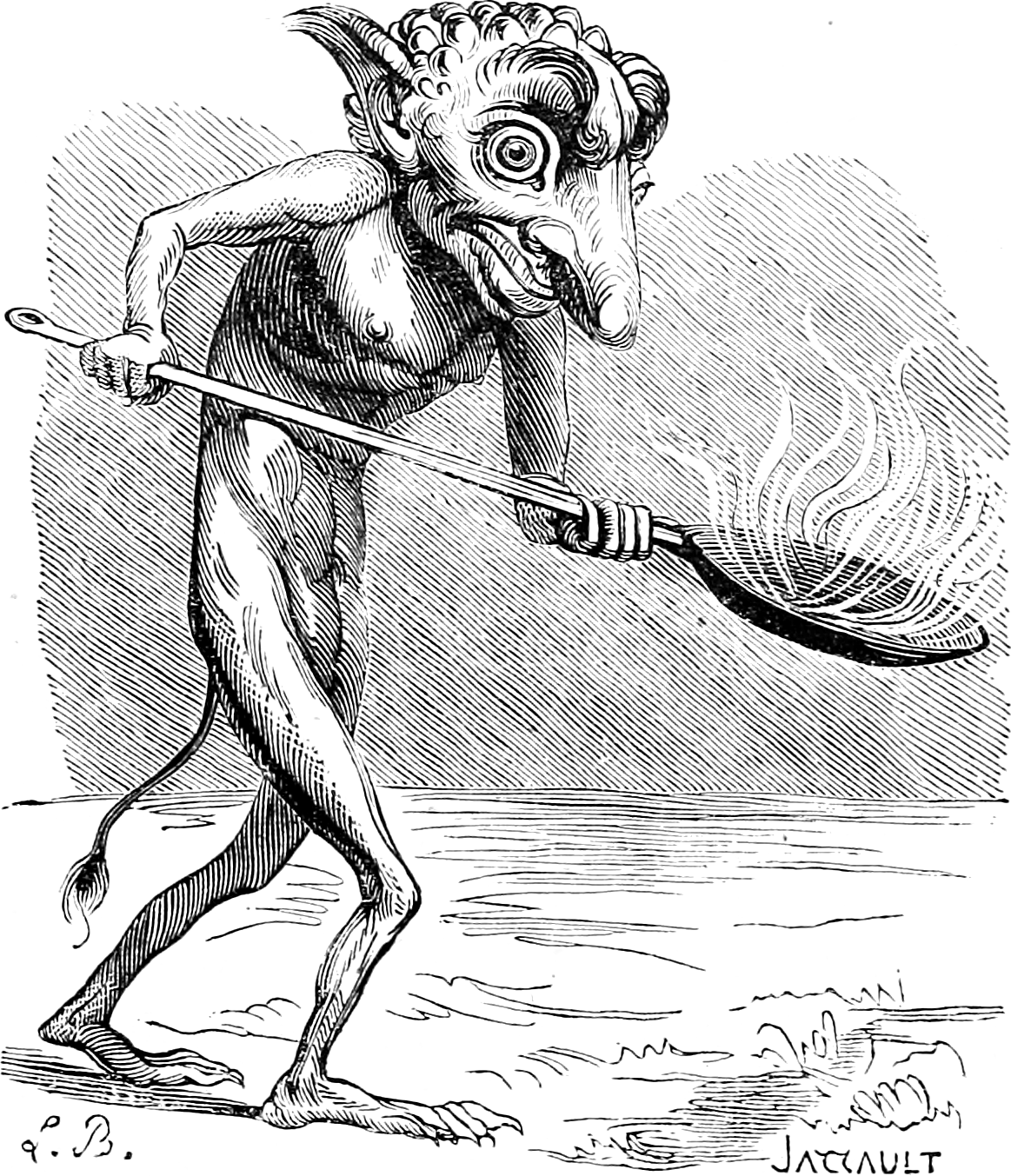 🇫🇷 FranceDictionnaire Infernal
A French demonology book cataloguing spirits and their hierarchies with engravings.Text · Power and authority Historical
🇫🇷 FranceDictionnaire Infernal
A French demonology book cataloguing spirits and their hierarchies with engravings.Text · Power and authority Historical
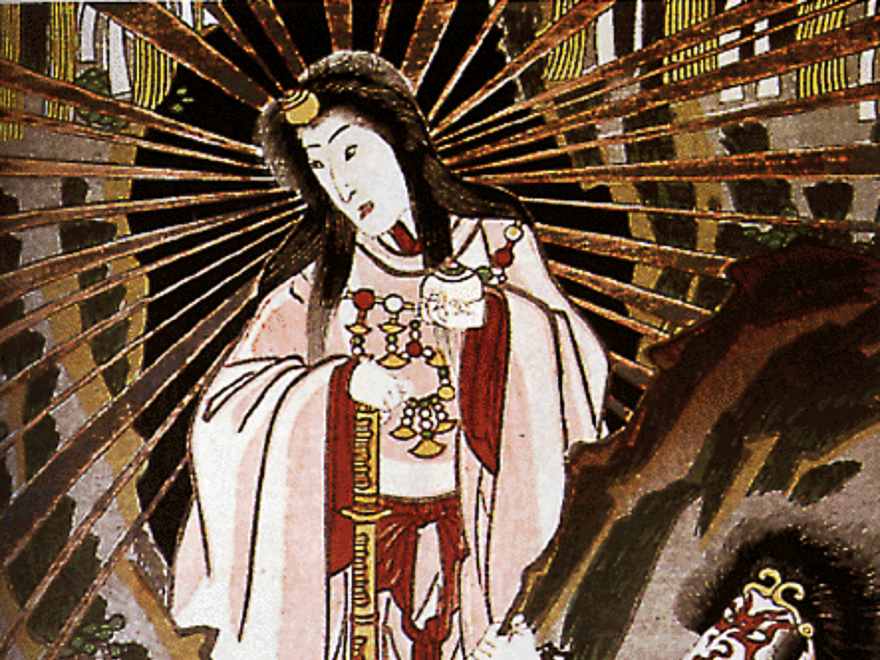 🇯🇵 JapanAkuma悪魔(あくま)
An evil spirit in Japanese folklore, later used for Satan in ChristianityBeing · Cursing and harm Historical
🇯🇵 JapanAkuma悪魔(あくま)
An evil spirit in Japanese folklore, later used for Satan in ChristianityBeing · Cursing and harm Historical
 🇫🇷 France and 1 moreDusios
A Gaulish spirit type later classified as an incubus demon by early Christian writersBeing · Cursing and harm · Power and authority Historical
🇫🇷 France and 1 moreDusios
A Gaulish spirit type later classified as an incubus demon by early Christian writersBeing · Cursing and harm · Power and authority Historical
 🇩🇪 Germany and 5 moreYellow badgeJudenstern
A marked garment worn by Jews under laws of distinction and humiliation across centuries.Charm · Cursing and harm Historical
🇩🇪 Germany and 5 moreYellow badgeJudenstern
A marked garment worn by Jews under laws of distinction and humiliation across centuries.Charm · Cursing and harm Historical
 🇮🇱 IsraelNumber of the beastἈριθμὸς τοῦ θηρίου
A biblical number linked to a prophetic figure and interpreted through ancient numerologyBelief · Cursing and harm Historical
🇮🇱 IsraelNumber of the beastἈριθμὸς τοῦ θηρίου
A biblical number linked to a prophetic figure and interpreted through ancient numerologyBelief · Cursing and harm Historical
 🇩🇪 Germany and 3 moreCruentation
A medieval judicial test where a suspect touched a victim's body to see if it bled.Rite · Cursing and harm Historical
🇩🇪 Germany and 3 moreCruentation
A medieval judicial test where a suspect touched a victim's body to see if it bled.Rite · Cursing and harm Historical
 🇮🇱 Israel and 1 moreSerpent seed
A fringe belief that Cain was the offspring of Eve and the Serpent, creating two distinct human lineages.Belief · Cursing and harm Historical
🇸🇾 Syria and 1 moreLots of the ApostlesSortes Apostolorum
A Christian divination text based on casting lots to seek guidance from the apostles.Text · Seeing and foretelling Historical
🇮🇱 Israel and 1 moreSerpent seed
A fringe belief that Cain was the offspring of Eve and the Serpent, creating two distinct human lineages.Belief · Cursing and harm Historical
🇸🇾 Syria and 1 moreLots of the ApostlesSortes Apostolorum
A Christian divination text based on casting lots to seek guidance from the apostles.Text · Seeing and foretelling Historical
 🇫🇷 France and 1 moreGargoylegargouille
A carved stone waterspout shaped like a creature, used on Gothic buildings to shed rainwaterCharm · Protection · Wonder and entertainment Historical
🇩🇪 GermanyBuch der heiligen Dreifaltigkeit
A 15th-century German alchemical treatise that aligns chemical work with Christian theology.Text · Change and initiation Historical
🇫🇷 France and 1 moreGargoylegargouille
A carved stone waterspout shaped like a creature, used on Gothic buildings to shed rainwaterCharm · Protection · Wonder and entertainment Historical
🇩🇪 GermanyBuch der heiligen Dreifaltigkeit
A 15th-century German alchemical treatise that aligns chemical work with Christian theology.Text · Change and initiation Historical
 🇬🇧 United KingdomSaducismus Triumphatus
A 1681 English book defending witchcraft beliefs and attacking skepticsText · Cursing and harm Historical
🇬🇧 United KingdomSaducismus Triumphatus
A 1681 English book defending witchcraft beliefs and attacking skepticsText · Cursing and harm Historical
 🇮🇷 Iran and 5 moreAxis mundi
A concept describing a central point connecting the earthly and heavenly realms.Belief · Speaking with spirits and the dead · Power and authority Historical
🇮🇷 Iran and 5 moreAxis mundi
A concept describing a central point connecting the earthly and heavenly realms.Belief · Speaking with spirits and the dead · Power and authority Historical
 🇮🇸 Iceland and 3 moreDeal with the Devil
A cultural trope of trading one's soul for worldly favours in exchange for demonic aidBelief · Power and authority · Cursing and harm Historical
🇮🇸 Iceland and 3 moreDeal with the Devil
A cultural trope of trading one's soul for worldly favours in exchange for demonic aidBelief · Power and authority · Cursing and harm Historical
 🇮🇱 Israel and 1 moreDivine retribution
Supernatural punishment by a deity in response to anger or wrongdoingBelief · Cursing and harm Historical
🇮🇱 Israel and 1 moreDivine retribution
Supernatural punishment by a deity in response to anger or wrongdoingBelief · Cursing and harm Historical
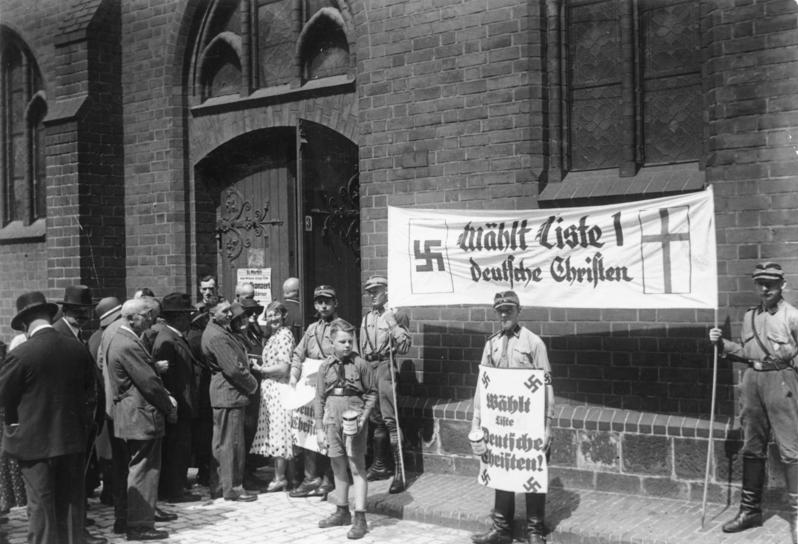 🇩🇪 Germany and 1 moreReligious aspects of Nazism
The study of how Nazi ideology borrowed religious forms and esoteric beliefs to build a political movement.Tradition · Power and authority · Cursing and harm Historical
🇩🇪 Germany and 1 moreReligious aspects of Nazism
The study of how Nazi ideology borrowed religious forms and esoteric beliefs to build a political movement.Tradition · Power and authority · Cursing and harm Historical
 🇫🇷 FranceLoudun possessionsaffaire des possédées de Loudun
A 17th-century witchcraft trial in France involving alleged demonic possession by Ursuline nuns.Belief · Cursing and harm · Speaking with spirits and the dead Historical
🇫🇷 FranceLoudun possessionsaffaire des possédées de Loudun
A 17th-century witchcraft trial in France involving alleged demonic possession by Ursuline nuns.Belief · Cursing and harm · Speaking with spirits and the dead Historical
 🇪🇬 Egypt and 1 moreCurse of Ham
A biblical story used to justify slavery and racial discriminationBelief · Cursing and harm Historical
🇪🇬 Egypt and 1 moreCurse of Ham
A biblical story used to justify slavery and racial discriminationBelief · Cursing and harm Historical
Photo credits on this page
The small pictures above come from Wikimedia Commons under free licences. Some are cropped to fit.
- Obake: Utagawa Kunisada (歌川国貞), Public domain, source
- Saducismus Triumphatus: unknown engraver of the 17th century, Public domain, source
- Cruentation: Unknown author, Public domain, source
- Number of the beast: William Blake, Public domain, source
- Renaissance magic: Unknown author, Public domain, source
- Pendle witches: Dr Greg, CC BY 3.0, source
- Demon: Martin Schongauer, Public domain, source
- Astaroth: M. Jarrault, Public domain, source
- Titivillus: Andrewrabbott, CC BY-SA 4.0, source
- Gello: Filippino Lippi, Public domain, source
- Dictionnaire Infernal: Louis Le Breton, Public domain, source
- Dusios: Eric Hunt, CC BY-SA 2.5, source
- Palladium: Marie-Lan Nguyen ( Jastrow ), Public domain, source
- Deal with the Devil: Christoph, Public domain, source
- Loudun possessions: Unknown author, Public domain, source
- Curse of Ham: Ксенофонтов Иван Степанович. Ksenofóntov Iván Stepánovich (1817-1875), Public domain, source
- Gargoyle: Bernard Gagnon, CC BY-SA 4.0, source
- Axis mundi: Unknown author, Public domain, source
- Divine retribution: John Martin, Public domain, source
- Serpent seed: David Roberts, CC BY-SA 3.0, source
- Religious aspects of Nazism: Unknown author, CC BY-SA 3.0 de, source
- Yellow badge: Edited version of original photo by Rama, CC BY-SA 3.0, source