
Yellow badge
In its own language: Judenstern
from German Judenstern, meaning 'Jew's star'
A marked garment worn by Jews under laws of distinction and humiliation across centuries.
The yellow badge was a required accessory used to mark Jewish people as outsiders in various societies. Mandates appeared in medieval Europe and Islamic caliphates, culminating in Nazi Germany's forced wearing of the Star of David before the Holocaust.
- Caliph Umar II introduced vestimentary distinctions in the early 8th century.
- The Fourth Council of the Lateran mandated distinguishing garb in 1215.
- Nazi Germany enforced the Star of David starting in 1939.
- Tunisian Jews were called shikliyyun for wearing the shikla.
- Badges were used to humiliate and separate minorities from majorities.
What it is
The yellow badge served as a mandatory insignia to identify Jewish individuals within non-Jewish populations. It functioned as a visible marker of ethno-religious identity, designating the wearer as an outsider. The practice spanned from early Islamic caliphates through medieval European kingdoms to the twentieth century. In its most notorious iteration, it was a Star of David imposed by Nazi authorities. Historically, these badges were not voluntary charms but legal requirements enforced by state or religious power.
Where it comes from
The tradition of marking non-Muslims began in the Umayyad Caliphate under Caliph Umar II in the early eighth century. Islamic authorities later hardened these rules through decrees known as ghiyar. In 850, Caliph al-Mutawakkil ordered Jews and Christians to wear specific garments and patches. These measures aimed to differentiate dhimmis from Muslims. The practice spread to North Africa and Sicily, where patches depicted animals like apes or pigs to enforce humiliation. European mandates followed the Fourth Council of the Lateran in 1215, which required distinguishing garb for Jews and Muslims.
How it is done
Authorities dictated the shape, color, and placement of the badges. In Muslim regions, patches appeared on headgear, necks, or shoulders. Some decrees required lead weights inscribed with dhimmi around the neck. In Europe, badges took forms such as wheels, ovals, or tablets of yellow felt. They were pinned to the breast or back. Enforcement varied by location, with fines imposed for non-compliance. In some areas, communities could purchase exemptions from these visual markers.
Tools and materials
Materials included yellow cloth, white fabric, and felt. Shapes ranged from stars to wheels and animal images. A lead weight bearing the word dhimmi was sometimes required. Wooden calves or crosses served as additional markers in specific contexts. Colors shifted over time, though yellow remained dominant. The Nazi version utilized a blue Star of David on a yellow background. Inscriptions often included local words for Jew, such as Jude or Juif.
Yellow badge, drawn and placed
- Living
- Revived
- Fading
- Historical
- Legendary
- Performed
- Lineage
- Laws of dhimmi distinction
- Timing
- daily wear mandated by law
What it is for
The primary intent was social separation and control. Markers distinguished Jews from the majority population to prevent intermarriage and proselytization. In Islamic lands, the practice also sought to humiliate non-believers in accordance with religious injunctions. In Nazi Germany, the badge publicly disclosed Jewish identity to facilitate persecution and eventual genocide. It stripped individuals of privacy and dignity, forcing them into a visible minority status.
Who does it
Scholars study these mandates as examples of state-sponsored discrimination. No single practitioner group performed the wearing; it was imposed upon entire communities. Local magistrates and religious councils enforced the rules through fines and public shaming. In modern times, the symbol is analyzed by historians and human rights advocates rather than practitioners.
Peoples and places
The practice affected Jewish communities across the Middle East, North Africa, and Europe. Tunisian Jews were known as shikliyyun due to the shikla requirement. Spanish Jews wore turbans to meet distinctive dress codes. French and English laws specified exact dimensions for the badges. The Nazi regime applied the star across occupied Europe, using local languages for inscriptions. Different peoples adapted the symbols to their own legal and cultural frameworks.
At a glance: who, where and when


What people believe
Islamic law regarding dhimmi status justified the markings as a sign of subordination. Christian canon law viewed distinguishing garb as necessary to maintain social boundaries between faiths. The Nazi ideology used the badge to dehumanize Jews, framing them as enemies of the state. These beliefs transformed clothing into a tool of theological and political exclusion.
When it is done
The badges were worn daily as part of ordinary life. There were no specific festivals tied to their use. Instead, they marked every public appearance. Life events did not exempt individuals from wearing the insignia. The requirement persisted until the abolition of the governing laws or the end of the regimes that enforced them.
How scholars and sceptics see it
Historians view the yellow badge as a mechanism of social control and segregation. Anthropologists analyze it within the context of dhimmi status and medieval sumptuary laws. Scholars note that while some restrictions applied to Christians, the Jewish experience was uniquely targeted for long-term stigmatization. Modern researchers examine the psychological impact of forced visibility and the transition from medieval religious markers to racial persecution.
Cautions and what is closed
The badge was a precursor to severe violence and genocide. In Nazi Germany, it facilitated the identification and deportation of Jews during the Holocaust. Wearing the badge carried the risk of arrest, violence, and death. In contemporary contexts, wearing similar symbols can cause distress and be seen as offensive or trivializing to survivors and victims of persecution.
Compare and confuse
The yellow badge is distinct from voluntary religious jewelry or protective amulets. It shares similarities with other forced identification systems, such as the pink triangle for homosexuals in Nazi camps. Unlike medieval badges, the Nazi star was part of a systematic extermination policy. Other groups, such as Cathars, were also forced to wear marks, but the Jewish badge had the longest continuous history of legal enforcement.
Law and persecution
Legislation mandated the wearing of badges in various jurisdictions. Medieval councils and Islamic caliphs issued decrees with fines for non-compliance. Nazi Germany enacted strict laws requiring the star for all Jews over six years old. Post-war efforts have focused on remembering the victims rather than enforcing such laws. Modern legal systems prohibit forced identification based on religion or ethnicity.
Questions people ask about Yellow badge
What is the yellow badge?
It is a historical insignia required to be worn by Jewish people to mark them as outsiders. It appeared in medieval Europe and Islamic caliphates, most infamously as the Star of David in Nazi Germany.
Where did the practice originate?
The practice began in the Umayyad Caliphate under Caliph Umar II in the early eighth century. It was later adopted and adapted by European Christian authorities following the Fourth Council of the Lateran.
Why was it worn?
It was worn to distinguish Jews from the general population. Authorities used it to prevent intermarriage, enforce social separation, and in later periods, to facilitate persecution and genocide.
What did the badge look like?
Shapes and colors varied. Early versions included wheels, ovals, or animal patches. The Nazi version was a yellow Star of David with the word Jude inscribed in faux Hebrew letters.
Good reading and sources
- German call to ban 'Jewish star' at Covid demosBBC, Article
- Taliban defends badges planThe Guardian, Article
- BBC - Radio 4 - This Sceptred Isle - A Day in the Life of 13th-Century EnglandBBC, Article
- Yellow badge on WikipediaEncyclopedia
- More photos on Wikimedia CommonsPhotos and video
- Wikidata recordOpen data
The facts on this page come from the Wikipedia article "Yellow badge", written by its contributors and used under the CC BY-SA 4.0 licence, and from its Wikidata record (CC0). EveryJaadu rewrote the text in its own words, with AI assistance, and compares every page with the article to make sure no passage is copied. It may be reused under the same CC BY-SA 4.0 licence with a link back.
It may contain mistakes. Names and customs differ from one community to the next, and some knowledge is closed to outsiders and left out here. This page describes belief and practice. It does not say that any of it works, it is not a how-to, and it is not medical advice. If something is wrong, tell us. Last refreshed 2026-10-06.
More from Germany
All the entries from Germany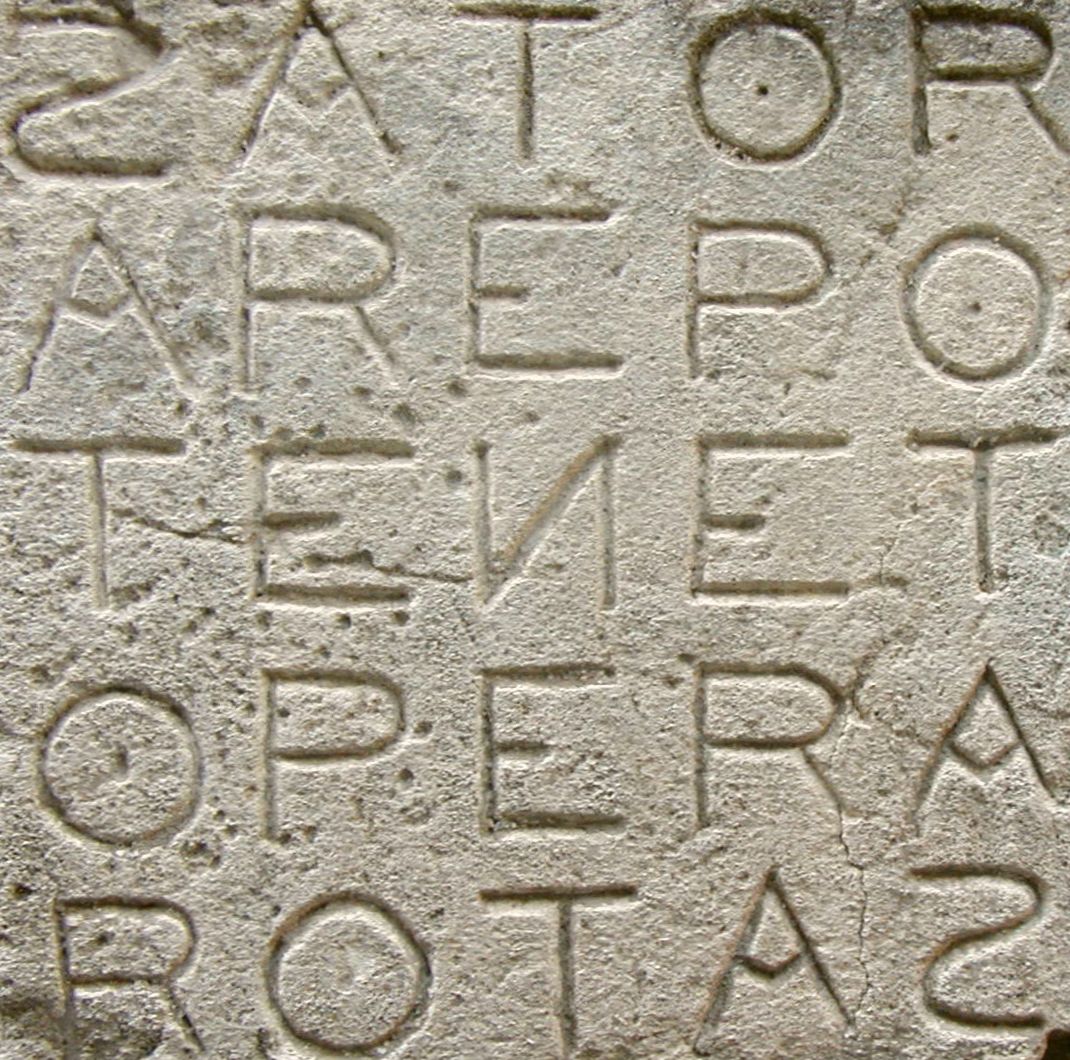 🇮🇹 Italy and 5 moreSator Square
A five-word Latin palindrome found in Roman ruins and medieval churchesCharm · Protection · Healing Historical
🇮🇹 Italy and 5 moreSator Square
A five-word Latin palindrome found in Roman ruins and medieval churchesCharm · Protection · Healing Historical
 🇬🇧 United Kingdom and 5 moreConcealed shoes
Shoes hidden in building structures as folk charms for protection and fertilityCharm · Protection · Speaking with spirits and the dead Historical
🇬🇧 United Kingdom and 5 moreConcealed shoes
Shoes hidden in building structures as folk charms for protection and fertilityCharm · Protection · Speaking with spirits and the dead Historical
 🇮🇹 Italy and 5 moreRelic
An object or body part kept to honor a holy person and mark their connection to the divineCharm · Protection · Healing Living
🇮🇹 Italy and 5 moreRelic
An object or body part kept to honor a holy person and mark their connection to the divineCharm · Protection · Healing Living
 🇬🇧 United Kingdom and 2 moreAdder stone
A naturally perforated stone used as a protective talisman in European folkloreCharm · Protection · Luck and prosperity Historical
🇬🇧 United Kingdom and 2 moreAdder stone
A naturally perforated stone used as a protective talisman in European folkloreCharm · Protection · Luck and prosperity Historical
Related elsewhere
All charm 🇪🇬 Egypt and 1 moreLilithלִילִית
A feminine figure from Mesopotamian and Jewish mythology, often depicted as a night demon or spirit.Being · Cursing and harm Legendary
🇪🇬 Egypt and 1 moreLilithלִילִית
A feminine figure from Mesopotamian and Jewish mythology, often depicted as a night demon or spirit.Being · Cursing and harm Legendary
 🇪🇬 EgyptCurse
A spoken wish for misfortune to befall a person or placeBelief · Cursing and harm · Luck and prosperity Historical
🇪🇬 EgyptCurse
A spoken wish for misfortune to befall a person or placeBelief · Cursing and harm · Luck and prosperity Historical
 🇮🇳 India and 5 moreHoliहोली
A Hindu spring festival marked by coloured powders and bonfires to celebrate love and virtue.Tradition · Love and attraction · Cursing and harm Living
🇮🇳 India and 5 moreHoliहोली
A Hindu spring festival marked by coloured powders and bonfires to celebrate love and virtue.Tradition · Love and attraction · Cursing and harm Living
 🇮🇩 Indonesia and 2 moreDukun
A traditional healer and spirit medium in Indonesian folk practiceTradition · Healing · Seeing and foretelling Living
🇮🇩 Indonesia and 2 moreDukun
A traditional healer and spirit medium in Indonesian folk practiceTradition · Healing · Seeing and foretelling Living