
Cruentation
from Latin cruentus, meaning bloody
A medieval judicial test where a suspect touched a victim's body to see if it bled.
Cruentation was a medieval legal procedure used to determine guilt in murder cases. It relied on the belief that a corpse would bleed when touched by its killer, serving as divine proof of innocence or guilt.
- Used in Germany until the mid-18th century
- Corpse believed to bleed when touched by killer
- Referenced in the Nibelungenlied around 1200
- Explained scientifically as decomposition fluid
- Used to accuse Jews of ritual murder
What it is
Cruentation served as a method for proving guilt in murder trials during the medieval period. The core belief held that the body of the deceased would spontaneously bleed when brought into the presence of their killer. This phenomenon was viewed as a direct verdict from God, revealing the truth when human testimony failed. The practice appeared in early Germanic law and spread across Europe, including Germany, Poland, and Scotland. It remained in use until the mid-eighteenth century in some regions. The test was often part of a larger trial by ordeal, where physical signs were interpreted as supernatural evidence.
Where it comes from
The custom originated within medieval Germanic legal traditions. It is referenced in the epic poem Nibelungenlied, written around 1200. The practice spread from these Germanic roots to other European nations and later to North American colonies. While rooted in local law, it gained prominence through religious interpretations that saw natural events as divine interventions. Over time, the procedure became more formalized and stringent. Early critics began questioning its reliability in the sixteenth century, though widespread refutation did not occur until much later.
How it is done
In a cruentation trial, the accused person was required to place their hands directly on the corpse of the murder victim. Observers watched closely for any unusual signs, particularly if the wounds on the body began to bleed again. If bleeding occurred, it was taken as proof of guilt. If no blood appeared, the suspect was often considered innocent, though the psychological pressure frequently led to confessions regardless of the physical result. The act was sometimes overseen by clergymen, blending legal procedure with religious ritual.
Tools and materials
The primary tool was the corpse of the alleged victim. No special instruments were needed beyond the body itself. The focus was entirely on the physical reaction of the dead tissue. In some accounts, the body was moved or handled specifically to trigger the supposed bleeding. The reddish-brown fluid associated with decomposition was the key visual indicator. This fluid was interpreted as fresh blood rather than post-mortem leakage.
Cruentation, drawn and placed
- Living
- Revived
- Fading
- Historical
- Legendary
- Performed
- Lineage
- medieval Germanic law systems
- Timing
- during judicial proceedings
What it is for
The main purpose was to resolve murder cases where evidence was scarce or conflicting. It provided a way to bypass the need for eyewitnesses or confessions by invoking divine judgment. It was also heavily used in antisemitic contexts to accuse Jews of ritual murder. In these cases, the bleeding corpse was presented as proof of Christian children being killed by Jewish communities. The test reinforced social hierarchies and religious prejudices by framing violence as a spiritual crime.
Who does it
The procedure was conducted by legal authorities and judges within the court system. Clergymen sometimes participated or oversaw the event, lending religious authority to the outcome. Scholars and medical professionals later analyzed the practice, noting its lack of scientific basis. The accused individuals were typically laypeople facing serious criminal charges. The process required the presence of the specific corpse linked to the crime, making location and preservation important factors.
Peoples and places
The practice was most common in Germany, Poland, and Norway. It also appeared in Scotland and British colonial America. In England and Scotland, it was known as the ordeal of touch. The tradition was deeply embedded in Christian societies that viewed nature as subject to divine will. Antisemitic narratives in Germany and surrounding areas used the test to target Jewish populations. Different regions adapted the procedure to fit local legal customs and religious beliefs.
At a glance: who, where and when
Who does it
Belief worlds
Occasions

What people believe
The underlying worldview assumed that God could intervene in the natural order to reveal truth. A bleeding corpse was seen as a miraculous sign, overriding normal biological processes. This belief connected legal justice with spiritual morality. It suggested that the dead could speak through their bodies to accuse their killers. The practice reflected a society where divine verdicts were still considered valid evidence alongside human testimony.
When it is done
The test was performed during judicial proceedings whenever a murder case lacked clear evidence. It was not tied to specific festivals or seasonal cycles. Instead, it occurred as needed to resolve criminal disputes. In colonial America, it was used sporadically into the late eighteenth century. The timing depended entirely on the legal schedule and the availability of the corpse.
How scholars and sceptics see it
Medical professionals eventually explained the bleeding as a result of decomposition. As bodies broke down, purge fluid accumulated in the lungs and could leak from the mouth or nose when the corpse was moved. Scholars like Antonius Blancus questioned the practice in 1545, but systematic refutation came later. Historians note that the test persisted despite growing scientific understanding. Psychologists observe that the ritual likely induced confessions through fear and stress rather than supernatural means.
Cautions and what is closed
The practice was used to justify persecution against Jewish communities, leading to false accusations and violence. It contributed to the myth of ritual murder and blood libel. These accusations caused significant harm to innocent people and fueled antisemitic hatred. The reliance on such tests undermined fair legal standards and allowed prejudice to influence judicial outcomes. Modern scholars view it as a dangerous example of pseudoscience in law.
Compare and confuse
Cruentation is related to other trial by ordeals, such as hot iron or water tests, which also sought divine intervention. It shares similarities with the ordeal of touch practiced in England. Unlike modern forensic science, it relied on interpretation of ambiguous physical signs. The term is distinct from general superstition, as it was an official legal procedure in many jurisdictions.
Questions people ask about Cruentation
What is cruentation?
It is a medieval legal test where a suspect touched a victim's corpse to see if it bled, believed to be a divine verdict on guilt.
Where did this practice originate?
It originated in medieval Germanic law systems and spread to countries like Germany, Poland, and Scotland before reaching North America.
Why did corpses appear to bleed?
Decomposition causes purge fluid to accumulate in the lungs, which can leak from the mouth or nose when the body is moved.
Was it used against specific groups?
Yes, it was frequently used in antisemitic accusations against Jews, claiming they murdered Christian children whose bodies then bled.
Good reading and sources
The facts on this page come from the Wikipedia article "Cruentation", written by its contributors and used under the CC BY-SA 4.0 licence, and from its Wikidata record (CC0). EveryJaadu rewrote the text in its own words, with AI assistance, and compares every page with the article to make sure no passage is copied. It may be reused under the same CC BY-SA 4.0 licence with a link back.
It may contain mistakes. Names and customs differ from one community to the next, and some knowledge is closed to outsiders and left out here. This page describes belief and practice. It does not say that any of it works, it is not a how-to, and it is not medical advice. If something is wrong, tell us. Last refreshed 2026-10-07.
More from Germany
All the entries from Germany 🇩🇪 Germany and 7 moreWalpurgis NightWalpurgisnacht
A spring vigil marking the eve of Saint Walpurga's feast day with bonfires and student festivalsRite · Protection · Speaking with spirits and the dead Living
🇩🇪 Germany and 7 moreWalpurgis NightWalpurgisnacht
A spring vigil marking the eve of Saint Walpurga's feast day with bonfires and student festivalsRite · Protection · Speaking with spirits and the dead Living
 🇩🇪 Germany and 5 moreMaypoleMaibaum
A tall wooden pole raised for European spring festivals, accompanied by dance and celebration.Tradition · Luck and prosperity · Love and attraction Living
🇬🇧 United Kingdom and 4 moreTelling the bees
A Western European custom of informing bees about major household eventsRite · Protection · Speaking with spirits and the dead Living
🇩🇪 Germany and 5 moreMaypoleMaibaum
A tall wooden pole raised for European spring festivals, accompanied by dance and celebration.Tradition · Luck and prosperity · Love and attraction Living
🇬🇧 United Kingdom and 4 moreTelling the bees
A Western European custom of informing bees about major household eventsRite · Protection · Speaking with spirits and the dead Living
 🇩🇪 Germany and 4 moreNeed-fireNotfeuer
A ritual fire lit by friction to protect livestock and people from disease and witchcraftRite · Protection · Cleansing and purification Historical
🇩🇪 Germany and 4 moreNeed-fireNotfeuer
A ritual fire lit by friction to protect livestock and people from disease and witchcraftRite · Protection · Cleansing and purification Historical
Related elsewhere
All rite 🇪🇬 Egypt and 1 moreLilithלִילִית
A feminine figure from Mesopotamian and Jewish mythology, often depicted as a night demon or spirit.Being · Cursing and harm Legendary
🇪🇬 Egypt and 1 moreLilithלִילִית
A feminine figure from Mesopotamian and Jewish mythology, often depicted as a night demon or spirit.Being · Cursing and harm Legendary
 🇪🇬 EgyptCurse
A spoken wish for misfortune to befall a person or placeBelief · Cursing and harm · Luck and prosperity Historical
🇪🇬 EgyptCurse
A spoken wish for misfortune to befall a person or placeBelief · Cursing and harm · Luck and prosperity Historical
 🇮🇳 India and 5 moreHoliहोली
A Hindu spring festival marked by coloured powders and bonfires to celebrate love and virtue.Tradition · Love and attraction · Cursing and harm Living
🇮🇳 India and 5 moreHoliहोली
A Hindu spring festival marked by coloured powders and bonfires to celebrate love and virtue.Tradition · Love and attraction · Cursing and harm Living
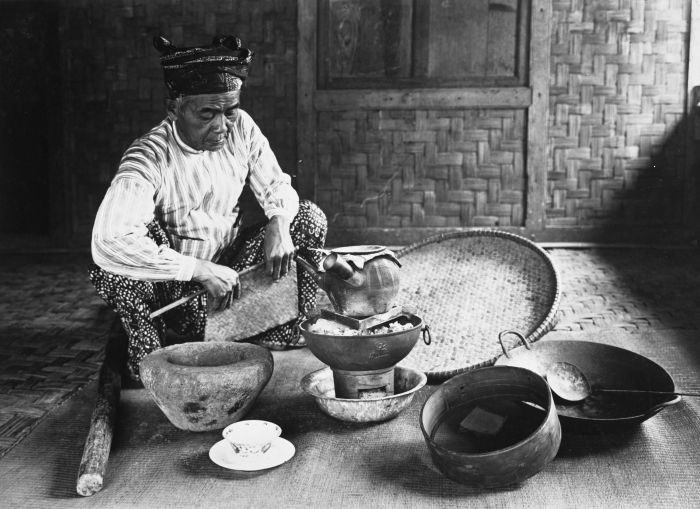 🇮🇩 Indonesia and 2 moreDukun
A traditional healer and spirit medium in Indonesian folk practiceTradition · Healing · Seeing and foretelling Living
🇮🇩 Indonesia and 2 moreDukun
A traditional healer and spirit medium in Indonesian folk practiceTradition · Healing · Seeing and foretelling Living