Dictionnaire Infernal
from Latin for an underworld dictionary
A French demonology book cataloguing spirits and their hierarchies with engravings.
The Dictionnaire Infernal is a reference work on demons and superstitions first published in France in 1818. It organises spirits into hierarchies and includes illustrations that later influenced magical texts like The Lesser Key of Solomon.
- First published in France in 1818 by Jacques Collin de Plancy.
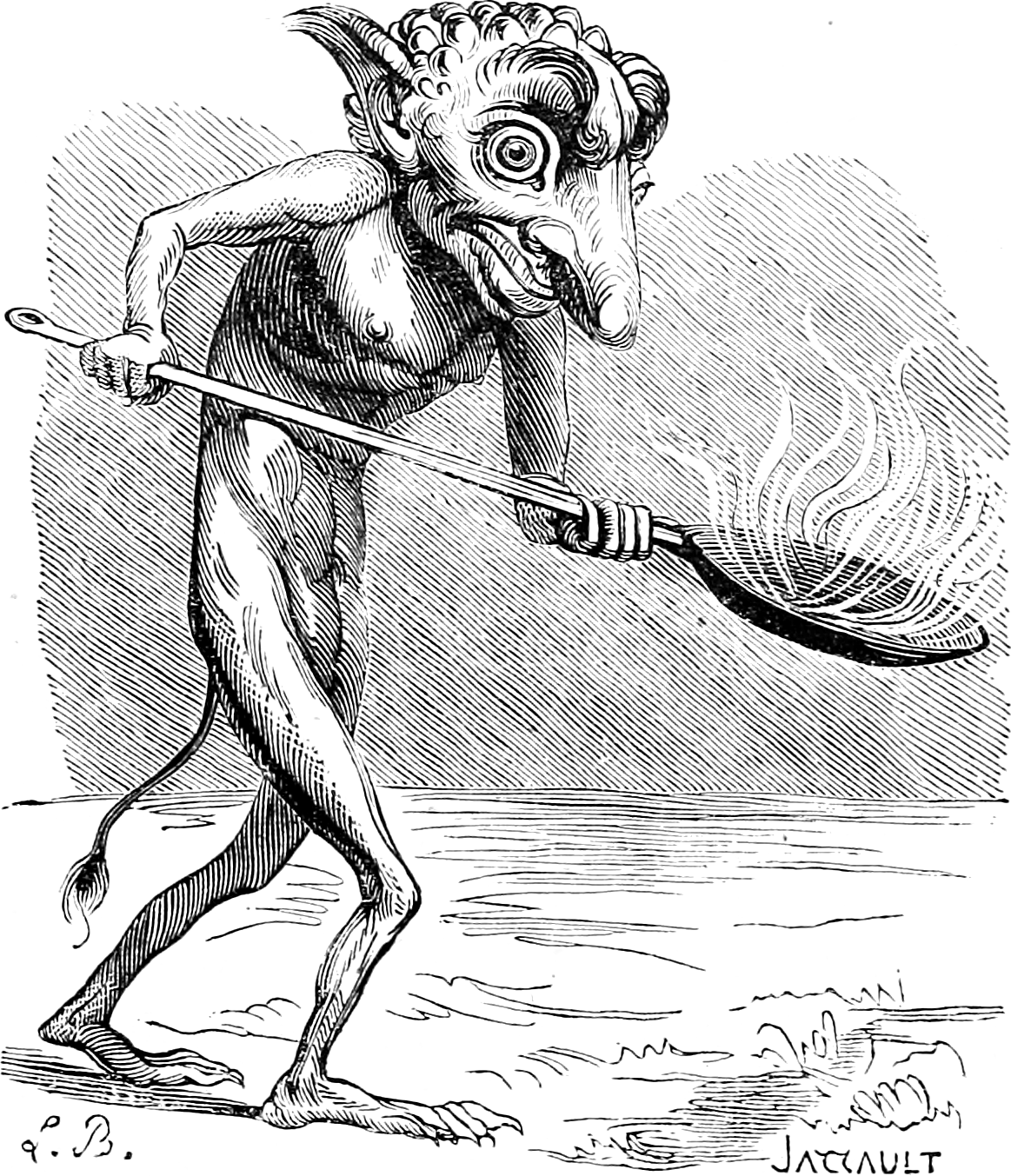
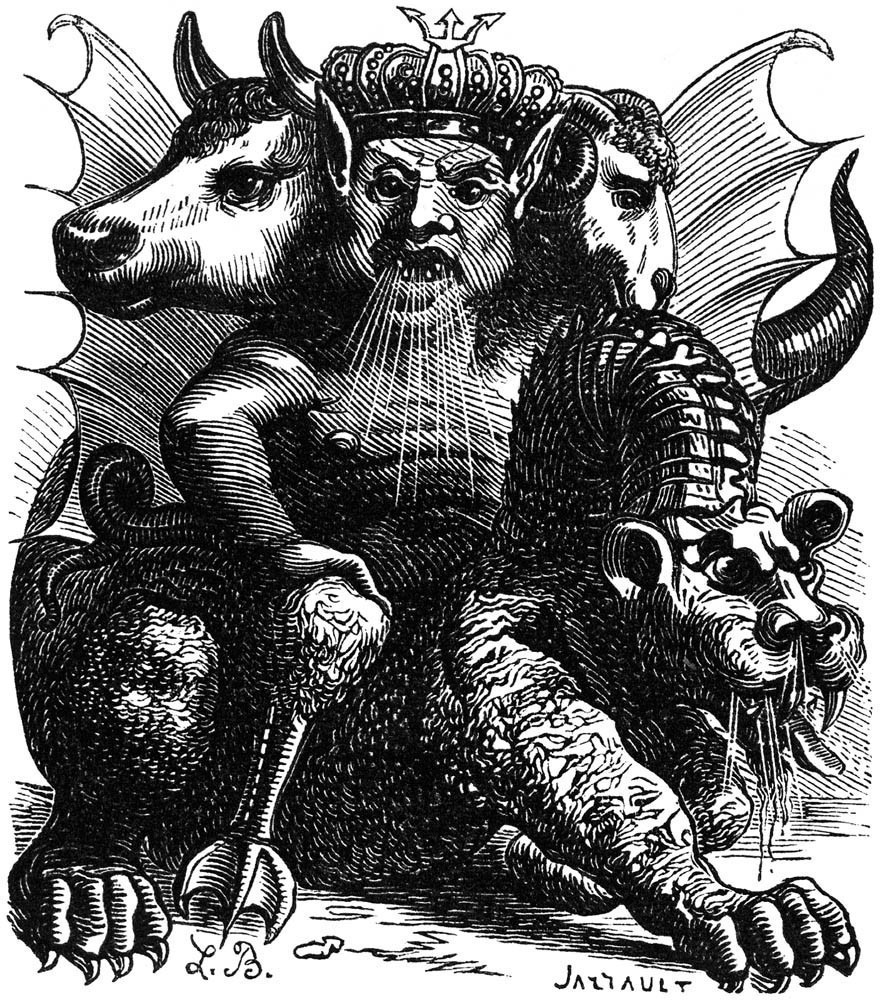
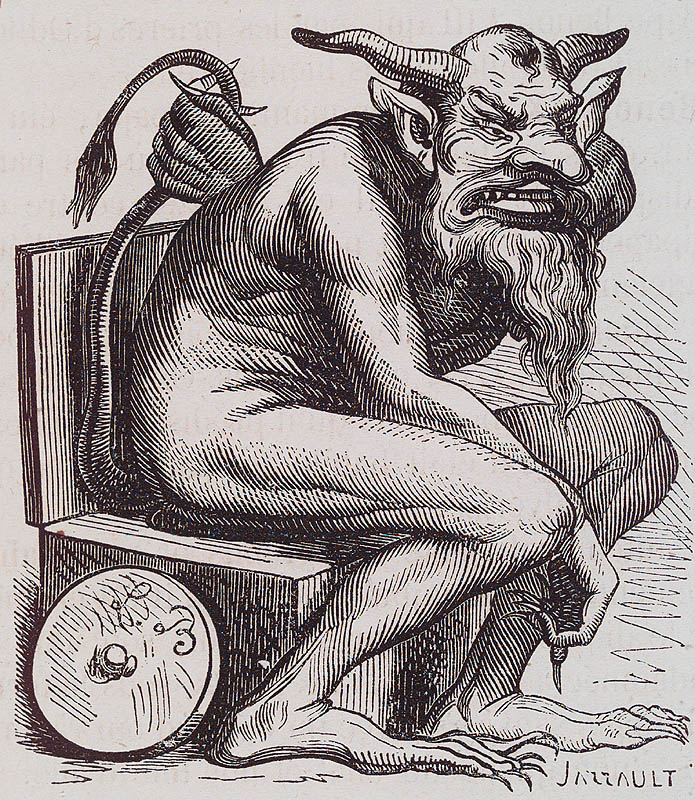
- The 1863 edition features 69 illustrations by Louis Le Breton.
- Many images were later used in The Lesser Key of Solomon.
- Author shifted from skepticism to Roman Catholic theology over time.
- Catalogues demons, superstitions, and occult sciences in hierarchical order.
What it is
The Dictionnaire Infernal serves as a comprehensive guide to the world of demons and supernatural beliefs. First released in 1818, it functions as a catalogue of spirits arranged in specific orders. The text explores various superstitions, occult sciences, and folktales. Later editions expanded significantly, adding detailed descriptions and visual representations of these entities. It remains a key historical document for understanding how nineteenth-century scholars viewed the infernal hierarchy.
Where it comes from
Jacques Collin de Plancy wrote the initial version in 1818. He was influenced by Voltaire and initially approached the subject with skepticism. Over time, his views shifted toward Roman Catholic theology. By 1863, he revised the work extensively to align with religious doctrine. This edition included sixty-nine illustrations by Louis Le Breton. These images became famous and were later adopted into other magical traditions.
How it is done
The book presents information through alphabetical entries or thematic sections. It describes the appearance and nature of each demon. The 1863 edition added engravings to depict what these beings look like. Readers use it to identify spirits and understand their roles within the demonic hierarchy. The text also discusses divination methods, distinguishing between practices like chiromancy and cartomancy based on perceived plausibility.
Tools and materials
The primary tool is the printed text itself. The 1863 edition relied heavily on woodcut engravings by Louis Le Breton. These images provided visual definitions for the demons described in the text. The illustrations helped readers visualize the abstract concepts of demonology. The physical book served as both a reference manual and an artistic collection of supernatural imagery.
Dictionnaire Infernal, drawn and placed
- Living
- Revived
- Fading
- Historical
- Legendary
- Performed
- Lineage
- Western demonology
What it is for
Readers consult the Dictionnaire Infernal to learn about demons and occult traditions. It aims to compile all known knowledge about superstitions and hellish manifestations. Some users seek to understand the theological implications of these beings. Others study it for its historical value or its influence on ceremonial magic. It provides a structured way to categorize chaotic supernatural beliefs.
Who does it
Jacques Collin de Plancy authored the work. He began as a skeptic but became a devout Roman Catholic. His transformation influenced the tone of the later editions. Scholars and occultists have studied the text for its organization of demonic lore. The illustrations by Louis Le Breton are often cited by those interested in the visual history of magic.
Peoples and places
The work originated in France during the nineteenth century. It reflects the intellectual climate of post-revolutionary Europe. The text bridges the gap between Enlightenment rationalism and religious revival. Its influence spread beyond France, particularly through its adoption in English-speaking magical circles. The 1863 edition became a standard reference for many practitioners.
At a glance: who, where and when
Who does it
Belief worlds


What people believe
The text operates within a Christian framework of demonology. It assumes the existence of Hell and its inhabitants. De Plancy eventually argued that denying these torments was equivalent to denying God. The book treats demons as real entities with specific hierarchies and powers. It distinguishes between natural signs and human artifacts in divination practices.
When it is done
The publication dates mark its presence in history. New editions appeared in 1825, 1826, 1844, 1845, 1853, and 1863. Each reprint updated the content or added new illustrations. The 1863 edition is the most recognized version today. There are no specific festivals or rituals associated with the book itself.
How scholars and sceptics see it
Historians view the Dictionnaire Infernal as a product of its time. It shows the transition from skepticism to religious orthodoxy. Scholars note the author's vacillation between rationalism and faith. The illustrations are studied for their artistic merit and influence on later occult art. The text provides insight into nineteenth-century European attitudes toward the supernatural.
Cautions and what is closed
The book contains descriptions of harmful spirits and dark practices. Some readers may find the content disturbing or offensive. The theological stance of the later editions rejects certain divination methods. Users should be aware of the author's strong religious biases in the final versions. The text is a historical document, not a practical guide for summoning.
Compare and confuse
The Dictionnaire Infernal is often compared to The Lesser Key of Solomon. Many of its illustrations were used in S. L. MacGregor Mathers's edition. It shares similarities with the Pseudomonarchia Daemonum in its hierarchical approach. Unlike grimoires intended for ritual use, this book is primarily descriptive. It catalogs rather than instructs.
Law and persecution
There are no specific legal restrictions on the book. It has been widely published and distributed since the nineteenth century. The text is available in digital formats and libraries worldwide. No major controversies have prevented its circulation. It is treated as a historical and cultural artifact.
Questions people ask about Dictionnaire Infernal
What is the Dictionnaire Infernal?
It is a French book on demonology first published in 1818. It catalogs demons and superstitions in a hierarchical structure, serving as a reference for supernatural beliefs.
Who wrote the Dictionnaire Infernal?
Jacques Collin de Plancy wrote the original text. He was a French author who initially approached the subject skeptically before adopting a more religious perspective in later editions.
Why is the 1863 edition famous?
This edition includes sixty-nine illustrations by Louis Le Breton. These images became highly influential and were later incorporated into other magical texts like The Lesser Key of Solomon.
How does the book view divination?
The author distinguishes between different methods. He finds chiromancy plausible due to individual bodily signs but rejects cartomancy as merely human-made artifacts without personal connection.
Good reading and sources
- Dictionnaire Infernal on WikipediaEncyclopedia
- More photos on Wikimedia CommonsPhotos and video
- Wikidata recordOpen data
The facts on this page come from the Wikipedia article "Dictionnaire Infernal", written by its contributors and used under the CC BY-SA 4.0 licence, and from its Wikidata record (CC0). EveryJaadu rewrote the text in its own words, with AI assistance, and compares every page with the article to make sure no passage is copied. It may be reused under the same CC BY-SA 4.0 licence with a link back.
It may contain mistakes. Names and customs differ from one community to the next, and some knowledge is closed to outsiders and left out here. This page describes belief and practice. It does not say that any of it works, it is not a how-to, and it is not medical advice. If something is wrong, tell us. Last refreshed 2026-10-06.
More from France
All the entries from France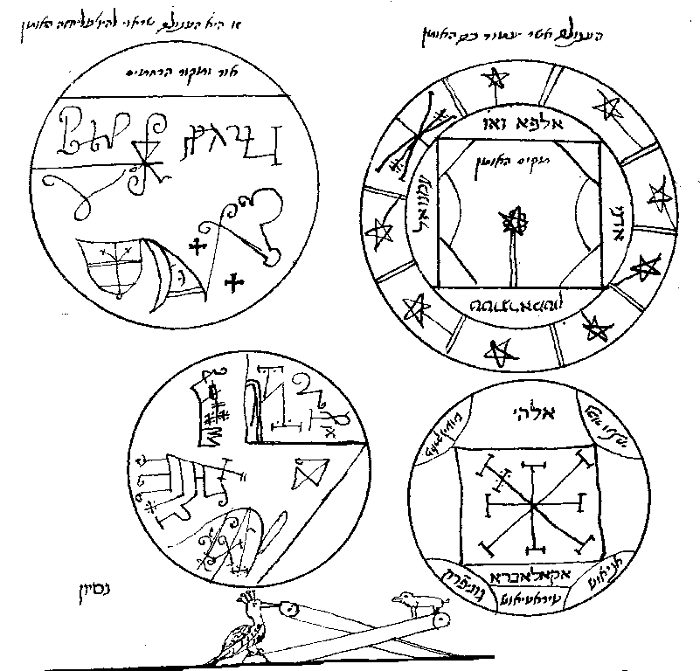 🇮🇹 Italy and 2 moreKey of SolomonClavicula Salomonis
A Renaissance grimoire attributed to King Solomon, detailing ritual preparations and invocations.Text · Cursing and harm · Love and attraction Historical
🇮🇹 Italy and 2 moreKey of SolomonClavicula Salomonis
A Renaissance grimoire attributed to King Solomon, detailing ritual preparations and invocations.Text · Cursing and harm · Love and attraction Historical
 🇫🇷 France and 1 moreNostradamus
A French astrologer and physician known for a book of poetic propheciesText · Seeing and foretelling · Power and authority Historical
🇫🇷 France and 1 moreNostradamus
A French astrologer and physician known for a book of poetic propheciesText · Seeing and foretelling · Power and authority Historical
 🇬🇧 United Kingdom and 5 moreAleister Crowley
English occultist and founder of the religion of ThelemaText · Power and authority · Change and initiation Living
🇬🇧 United Kingdom and 5 moreAleister Crowley
English occultist and founder of the religion of ThelemaText · Power and authority · Change and initiation Living
 🇫🇷 France and 2 moreÉliphas Lévi
A French writer who shaped modern occult thought and ceremonial magic.Text · Power and authority · Speaking with spirits and the dead Historical
🇫🇷 France and 2 moreÉliphas Lévi
A French writer who shaped modern occult thought and ceremonial magic.Text · Power and authority · Speaking with spirits and the dead Historical
Related elsewhere
All text 🇮🇳 India and 5 moreAstrology
A divinatory practice that reads human fate through the positions of celestial bodies.Belief · Seeing and foretelling · Luck and prosperity Living
🇮🇳 India and 5 moreAstrology
A divinatory practice that reads human fate through the positions of celestial bodies.Belief · Seeing and foretelling · Luck and prosperity Living
 🇮🇳 India and 2 morePalmistry
A divination method that interprets the lines and shapes of the hand to predict fate or reveal character.Oracle · Seeing and foretelling · Power and authority Living
🇮🇳 India and 2 morePalmistry
A divination method that interprets the lines and shapes of the hand to predict fate or reveal character.Oracle · Seeing and foretelling · Power and authority Living
 🇨🇳 China and 3 moreChinese dragon龍
A legendary water deity and imperial symbol in East Asian cultureBeing · Protection · Luck and prosperity Historical
🇨🇳 China and 3 moreChinese dragon龍
A legendary water deity and imperial symbol in East Asian cultureBeing · Protection · Luck and prosperity Historical
 🇮🇳 India and 2 moreHomaहोम
A fire ritual found across Asian religions where offerings are burned as a votive exchange with the divine.Rite · Protection · Speaking with spirits and the dead Living
🇮🇳 India and 2 moreHomaहोम
A fire ritual found across Asian religions where offerings are burned as a votive exchange with the divine.Rite · Protection · Speaking with spirits and the dead Living