Beliefs, omens and superstitions
Luck and unluck, the evil eye, knocking on wood and the small customs people keep without asking why.
Beliefs, omens and superstitions are the small customs people keep without asking why: knocking on wood, salt over the shoulder, avoiding the number thirteen, the evil eye, a black cat crossing the road, a first visitor of the new year. They are found on every continent and are rarely tied to a priest or book. This page looks at where they come from, what the word superstition hides, and why they persist.
What they look like
Beliefs differ by place. The number four is avoided in China, Japan and Korea because it sounds like the word for death, while thirteen is avoided in much of the West. In India, a sneeze before leaving home may delay a journey, and a lemon and chillies are hung over a shop. The evil eye is feared under many names: nazar, mal de ojo, ayin hara. First-footing at new year in Scotland is said to bring luck to a house.
Whose word is superstition
The word superstition has a history. Roman writers used it for religion they disliked, and Christian writers for forbidden practice. Today it often means someone else's belief. Many religions regard some of their own customs as faith and others as superstition, and where the line falls depends on the speaker. Using the word can mark a speaker as modern and a neighbour as backward. Tests of common superstitions show that people who hold them are not less educated or less rational than others, and many hold them lightly.
Why people keep them
Psychologists find that superstition rises with uncertainty and stakes, which is why athletes, sailors, students and gamblers are known for them. Anthropologist Bronislaw Malinowski observed in the 1920s that Trobriand fishermen used rites in dangerous deep-sea fishing and not in safe lagoon fishing. Most people who follow small customs say they do so partly in jest and partly just in case. Similar customs turn up in places that have never met each other, which suggests that people everywhere respond to risk in similar ways.
When belief causes harm
Most superstitions are harmless. Some are not: beliefs about witchcraft have led to killings in parts of Africa, India and Papua New Guinea, and beliefs about albinism have led to attacks in Tanzania and Malawi. Others cost people money, as when a fee is demanded to lift a bad omen. Education, law and trusted community leaders have all been part of reducing harm. Campaigns by health workers, teachers and community radio have been effective where they listen first and explain later.
Belief on EveryJaadu
The entries written up so far, best known first.
 🇪🇬 EgyptCurse
A spoken wish for harm, often backed by ritual or divine authorityBelief · Cursing and harm · Protection Historical
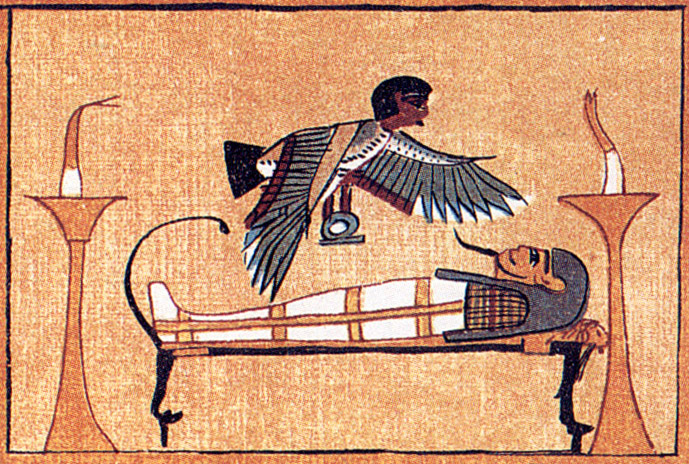 🇪🇬 Egypt and 1 moreSoul flight
A shamanic trance journey in which the soul is said to leave the bodyRite · Healing · Seeing and foretelling Living
 🇺🇸 United StatesGhost DanceNanissaanah
A circular movement seeking spiritual renewal and reunion with ancestorsRite · Speaking with spirits and the dead · Change and initiation Living
 🇧🇯 Benin and 3 moreZangbeto
A masked night-guardian tradition among the Ogu people of West AfricaTradition · Protection · Cursing and harm Living
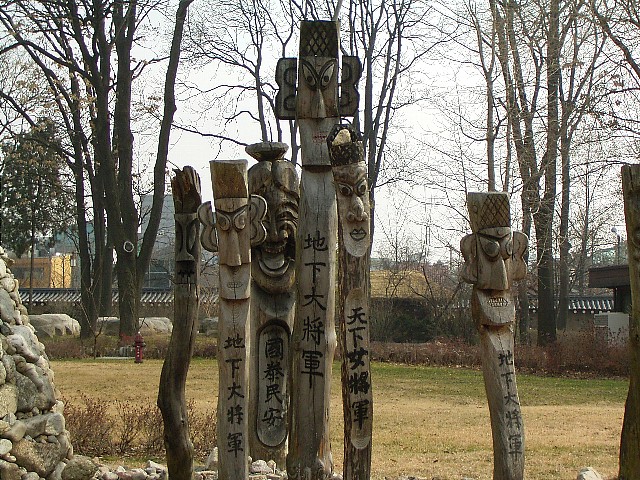 🇰🇷 South Korea and 1 moreJangseung장승
Wooden or stone poles that guard Korean villages and temples from evil spiritsTradition · Protection · Speaking with spirits and the dead Living
 🇲🇲 MyanmarBurmese folk religionNat Worship
Animistic worship of nature spirits and ancestors in Myanmar, often practiced alongside Buddhism.Tradition · Protection · Luck and prosperity Living
 🇮🇪 Ireland and 4 moreCairncarn
A human-made pile of stones used as a marker, memorial, or ritual object across many cultures.Tradition · Protection · Speaking with spirits and the dead Living
 🇲🇽 MexicoNagualnāhualli
A Mesoamerican belief in humans who shapeshift into animal counterparts.Belief · Power and authority · Cursing and harm Living
🇮🇳 IndiaSiddhiसिद्धि
Magical powers and spiritual attainments in Indian religionsBelief · Power and authority · Seeing and foretelling Living
 🇬🇷 Greece and 2 moreMagic in the Greco-Roman world
Private supernatural practices in ancient Greece and Rome, distinct from public state religion.Tradition · Protection · Cursing and harm Historical
 🇿🇦 South Africa and 4 moreWitch doctor
A traditional healer who identifies supernatural causes of illness and performs rituals to restore balance.Tradition · Healing · Protection Living
🇯🇵 JapanYutaユタ
Okinawan folk shamans who guide families through spirits and fortune-tellingTradition · Protection · Healing Living
 🇺🇸 United States and 4 moreRainmaking
Efforts to induce rain through technology, ritual, or prayer.Tradition · Protection · Healing Living
🇸🇪 Sweden and 3 moreRunic magic
The use of ancient Germanic letters for spells, divination, and protectionTradition · Protection · Seeing and foretelling Living
 🇬🇪 Georgia and 2 moreGeorgian mythologyქართული მითოლოგია
The pre-Christian beliefs of the Kartvelian peoples in the South CaucasusTradition · Protection · Seeing and foretelling Historical
 🇫🇮 Finland and 1 moreFinnish mythology
The pre-Christian folklore and cosmology of the Finns and KareliansTradition · Speaking with spirits and the dead · Protection Revived
 🇲🇳 Mongolia and 2 moreWind Horseརླུང་རྟ་
An East and Central Asian symbol of the soul, luck, and vital energyBeing · Luck and prosperity · Protection Living
 🇹🇭 Thailand and 1 moreGhosts in Thai cultureผี (phi)
A wide range of spirits and ghosts found in Thai folklore and popular belief.Belief · Protection · Cursing and harm Living
 🇱🇦 Laos and 3 moreTai folk religionສາສະໜາຜີ
Spirits, ancestor rites, and soul-calling ceremonies of the Tai peoplesTradition · Protection · Healing Living
 🇮🇳 India and 5 moreAsian witchcraft
A broad overview of magical practices and persecution across Asian culturesTradition · Cursing and harm · Protection Living
 🇨🇳 ChinaYao folk religion梅山教
The ethnic religion of the Yao, blended with Taoism since the 13th centuryTradition · Protection · Cleansing and purification Living
 🇮🇷 Iran and 2 moreSuperstitions in Muslim societies
Beliefs in supernatural forces and charms found across the Islamic worldTradition · Protection · Healing Living
 🇵🇪 PeruYachay
Peruvian Amazon phlegm said to hold a shaman's power as darts that harm or healSubstance · Cursing and harm · Healing Living
Photo credits on this page
The small pictures above come from Wikimedia Commons under free licences. Some are cropped to fit.
- Witch doctor: Lucjan Wędrychowski, Public domain, source
- Soul flight: Published by James Wasserman; facsimile made by E. A. Wallis Budge; or, Public domain, source
- Ghost Dance: Unknown author, Public domain, source
- Zangbeto: Grete Howard, CC BY 3.0, source
- Tengu: Katsushika Hokusai, Public domain, source
- Jangseung: Yoshiaki Sano, CC BY-SA 2.0, source
- Yao folk religion: Daderot, Public domain, source
- Asian witchcraft: Utagawa Kuniyoshi, Public domain, source
- Rainmaking: George Catlin, Public domain, source
- Yachay: Veton PICQ, CC BY-SA 3.0, source
- Georgian mythology: Mostafameraji, CC BY-SA 4.0, source
- Finnish mythology: Väinö Blomstedt, Public domain, source
- Wind Horse: Clemensmarabu, CC BY-SA 3.0, source
- Ghosts in Thai culture: Heinrich Damm ( User:Hdamm , Hdamm at de.wikipedia.org ), CC BY 2.0, source
- Cairn: Andrew Bossi, CC BY-SA 2.5, source
- Tai folk religion: ( เทวประภาส มากคล้าย ), Tevaprapas, Public domain, source
- Nagual: Unknown author, Public domain, source
- Superstitions in Muslim societies: Unknown author, CC0, source
- Magic in the Greco-Roman world: ArchaiOptix, CC BY-SA 4.0, source
- Burmese folk religion: Wagaung ( talk ), CC BY-SA 3.0, source