Spirits, creatures and beings
Djinn, fairies, orisha, golems and the other powers that magic deals with.
Beings are the powers that magic deals with: spirits, ancestors, gods, djinn, fairies, orisha, nats, kami, demons, golems, ghosts and the many kinds of household and landscape spirit. People in most cultures have described a world shared with unseen others, who may help, trouble or ask for respect. This page covers what these beings are said to be and the very different ways communities relate to them. They are always described here as what communities believe, not as established fact.
Different kinds of beings
A being can be a god with a priesthood, such as an orisha served in Yoruba religion, Cuba and Brazil. It can be an ancestor, honoured in China, Africa and Mexico. It can belong to a place, such as the kami of Shinto, the Thai phi or the Burmese nats. It can be a trouble-maker, like the djinn of Arabic and Islamic tradition, formed from smokeless fire, or the fairies of Ireland, whom people avoided naming.
Relationship, not command
In many traditions, a person does not command a being but enters a relationship with it, through offerings, promises and respect. Possession and mediumship are forms of that relationship, as in Vodou, Candomblé, Korean mudang rites and Sufi gatherings. In ceremonial magic of the European grimoires, by contrast, the magician summons spirits by name and authority, which the Church condemned as demon-raising. The same being may be loved in one household and feared in the next, and a spirit helpful to its servant can be harmful to a stranger.
Religions and renaming
Dominant religions often absorbed beings by relabelling them. Christian missionaries called many African and Indigenous spirits demons. Islam reads the djinn as real creatures, some of whom are Muslim, and Hindu and Buddhist traditions fold local deities into their own pantheons. Pagan and fairy beliefs were sometimes recast as the devil's work, which fed witch trials in Europe. Churches and mosques have sometimes divided beings into good and evil in ways the older traditions did not, so that a neutral local spirit became a demon on the day a missionary arrived.
Harm and interpretation
Belief in harmful spirits has been used to accuse people. Children in parts of West and Central Africa have been branded as witches possessed by evil spirits, and some have been abused by pastors or families in the name of deliverance. Scholars read spirit beliefs as ways to make sense of illness, loss and conflict, and many communities see them simply as neighbours. That is why accusations tied to spirit beliefs fall hardest on children and the vulnerable, and why many agencies train local leaders to challenge them.
Being on EveryJaadu
The entries written up so far, best known first.
 🇷🇴 Romania and 1 moreSânziană
Romanian fairies and a summer solstice festival of flowers and magicBeing · Protection · Love and attraction Living
🇪🇸 SpainTibicena
A demon of the Guanches, imagined as a black-furred dog with red eyes.Being · Cursing and harm Legendary
 🇩🇪 Germany and 4 moreNight ravennattravn
A nocturnal creature of European folklore, feared as a child-stealer or seen as a ghost in bird form.Being · Cursing and harm Historical
🇮🇪 IrelandGancanaghgean cánach
A male Irish fairy known for seducing women and tricking humans.Being · Cursing and harm · Love and attraction Legendary
🇬🇧 United KingdomLlamhigyn y Dŵr
A winged frog-like creature blamed for harm to fishermen and livestock in Welsh folkloreBeing · Cursing and harm Legendary
 🇫🇷 FranceYan-gant-y-tan
A Breton demon who carries five candles and is said to bring bad luck.Being · Cursing and harm · Wonder and entertainment Historical
🇮🇹 ItalySquasc
A small, tawny creature from Eastern Lombardy folklore that frightens children and plays jokes on young girlsBeing · Cursing and harm · Wonder and entertainment Legendary
🇸🇪 SwedenAskafroa
A Scandinavian tree spirit believed to guard the ash and demand appeasement.Being · Cursing and harm · Protection Legendary
 🇦🇲 ArmeniaVishapվիշապ
A water dragon of Armenian myth linked to storms and the sunBeing · Cursing and harm · Luck and prosperity Legendary
🇸🇪 SwedenRå
Guardian spirits of nature in Scandinavian folkloreBeing · Protection Legendary
🇷🇺 Russia and 1 moreChuvash dragonВӗрӗҫӗлен
A mythological serpent from Chuvash legends that can fly and breathe fire.Being · Wonder and entertainment Legendary
🇬🇧 United KingdomTrow
Nocturnal spirits of the Orkney and Shetland islands, known for mischief and musical abduction.Being · Cursing and harm · Wonder and entertainment Historical
 🇫🇷 France and 1 moreDusios
A Gaulish spirit type later classified as an incubus demon by early Christian writersBeing · Cursing and harm · Power and authority Historical
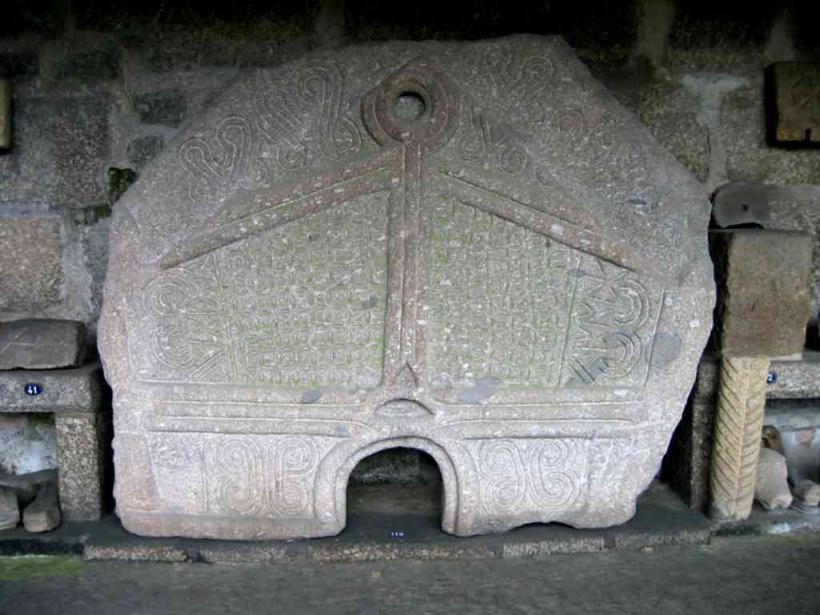 🇵🇹 PortugalEnchanted Mouramoura encantada
A supernatural maiden from Portuguese and Galician folklore who guards treasures and ancient stones.Being · Cursing and harm · Luck and prosperity Legendary
🇵🇹 Portugal and 1 moreCabra cabriola
A fire-breathing goat bogeyman used to frighten children in Portuguese and Brazilian folkloreBeing · Cursing and harm Living
 🇮🇪 IrelandDevil Whale
A giant sea creature mistaken for an island that drags sailors to the deepBeing · Cursing and harm Legendary
 🇬🇷 Greece and 1 moreMinoan Genius
A composite creature from Bronze Age Crete, often shown as a libation bearer or sacrificial attendant.Being · Protection · Speaking with spirits and the dead Legendary
 🇫🇷 FranceMargot the fairy
Earthly fairies of Brittany known for dancing, building monuments, and testing human guests.Being · Luck and prosperity · Cursing and harm Historical
🇳🇴 NorwayDeildegast
A Norwegian ghost bound to boundary stones it moved in lifeBeing · Cursing and harm Historical
🇬🇧 United KingdomPearlin Jean
A Scottish ghost said to haunt the ruins of Allanbank estate in BerwickshireBeing · Wonder and entertainment Historical
 🇷🇺 Russia and 2 moreSupernatural beings in Slavic religion
Mythic entities of nature, death, and fate in Slavic folklore and belief.Being · Protection · Cursing and harm Legendary
🇸🇪 Sweden and 1 moreGulon
A gluttonous beast of Nordic lore: dog in build, cat in face, said to eat without endBeing Legendary
 🇭🇺 Hungary and 1 moreSárkány
A winged reptilian beast from Hungarian folklore, linked to weather and literary heroes.Being · Cursing and harm · Wonder and entertainment Historical
 🇺🇦 UkraineMolfarмольфар
A Carpathian folk healer and magician blending pagan and Christian traditionsBeing · Healing · Seeing and foretelling Legendary
 🇪🇸 SpainGaueko
Basque legend's night spirit, said to forbid outdoor work after dark and punish boastersBeing · Cursing and harm Legendary
🇬🇧 United KingdomGigelorum
A Scottish folklore insect said to be the smallest creature, living in a mite's earBeing Legendary
 🇬🇷 GreeceOnocentaurὈνοκένταυρος
A Greek legendary being, half person and half donkeyBeing Legendary
🇬🇧 United KingdomAdar Llwch Gwin
Griffin-kin birds of Welsh legend that obeyed speech, and destroyed their own master.Being · Cursing and harm Legendary
🇷🇸 SerbiaBaukБаук
A bear-like creature from Serbian folklore that lurks in the dark.Being · Cursing and harm Legendary
 🇪🇸 SpainLamialamiak
River and sea spirits of Basque folklore, known for their beauty and magical labour.Being · Power and authority Historical
🇬🇧 United KingdomCeffyl Dŵr
A Welsh water spirit that takes the form of a horse to test or harm travellers.Being · Cursing and harm · Luck and prosperity Legendary
 🇬🇷 Greece and 1 moreHephaestusἭφαιστος
The Greek smith god who forged divine weapons and crafted automata for the gods.Being · Power and authority Historical
 🇬🇷 GreeceShadeσκιά
A ghostly shadow of the dead, said to linger in the world belowBeing · Speaking with spirits and the dead Legendary
 🇮🇸 IcelandSurtrSurtur
A fire giant of Norse myth who guards a burning realm and ends the worldBeing · Cursing and harm Legendary
 🇬🇷 Greece and 3 moreGeryonΓηρυών
A three-headed or three-bodied giant of Greek myth, keeper of red cattleBeing Legendary
 🇬🇷 GreeceMonopodσκιάποδες
A legendary one-legged people said to shade themselves with a giant footBeing Legendary
 🇬🇷 GreeceAloadaeἈλωάδαι (Aloadai)
Twin giants of Thessaly who challenged the gods and built mountains to reach Olympus.Being Legendary
🇬🇧 United Kingdom and 1 moreGrant
A medieval English demon resembling a prancing colt that warns of coming fires.Being · Seeing and foretelling Historical
 🇬🇷 GreeceDaimonδαίμων
A Greek spirit or divine force that mediates between gods and humansBeing · Protection · Speaking with spirits and the dead Historical
 🇪🇸 SpainGuajona
A blood-sucking hag from Cantabrian and Asturian legendBeing · Cursing and harm Legendary
 🇬🇷 GreeceMoiraiΜοίρες
Greek personifications of destiny who spin, measure, and cut the thread of life.Being · Power and authority Historical
 🇬🇷 GreeceSatyrσάτυρος
A male nature spirit from Greek myth, known for bestial features and wild behavior.Being · Wonder and entertainment Legendary
 🇱🇹 Lithuania and 1 moreAšvieniai
Twin horse deities of Baltic mythology who pull the sun chariotBeing · Protection Legendary
 🇵🇹 PortugalAngel of PortugalAnjo de Portugal
A guardian spirit of Portugal, celebrated on June 10 and linked to the Fátima visions.Being · Protection · Speaking with spirits and the dead Living
🇬🇧 United KingdomHobbididance
A spiteful sprite of English morris dance, later a fiend in King LearBeing · Cursing and harm Legendary
🇪🇸 SpainDip
A lame black hellhound of Catalan legend, said to drink blood in the nightBeing · Cursing and harm Legendary
 🇸🇪 SwedenSjörå
A Swedish lake spirit that rewards kindness and drowns the disrespectfulBeing · Protection · Luck and prosperity Legendary
🇮🇪 IrelandNeitNéit
An Irish war god, husband of Nemain and Fea, grandfather of BalorBeing Legendary
Photo credits on this page
The small pictures above come from Wikimedia Commons under free licences. Some are cropped to fit.
- Gaueko: Errazking, CC BY-SA 4.0, source
- Onocentaur: 'Angelo Vergatio' (Angelos Vergekios) and his daughter, Public domain, source
- Lamia: Josu Goñi Etxabe, Public domain, source
- Hephaestus: Foundry Painter (name vase), Public domain, source
- Shade: Henry Fuseli, Public domain, source
- Surtr: Friedrich Wilhelm Heine (1845-1921) after an original by Friedrich Wil, Public domain, source
- Geryon: E Group, Public domain, source
- Changeling: Henry Fuseli, Public domain, source
- Monopod: Michael Wolgemut / Wilhelm Pleydenwurff, Public domain, source
- Aloadae: No machine-readable author provided. Antars~commonswiki assumed (based, Public domain, source
- Daimon: François-André Vincent, Public domain, source
- Guajona: Francisco Goya / Francisco Goya, Public domain, source
- Minoan Genius: Zde, CC BY-SA 3.0, source
- Moirai: John Melhuish Strudwick, Public domain, source
- Satyr: Epiktetos (signed), Public domain, source
- Ašvieniai: Wojsyl , 2005, CC BY-SA 3.0, source
- Angel of Portugal: Daderot, Public domain, source
- Sjörå: Bernard Evans Ward, Public domain, source
- Enchanted Moura: Henrique José Teixeira Matos, Public domain, source
- Dusios: Eric Hunt, CC BY-SA 2.5, source
- Sânziană: Saturnian, CC BY-SA 3.0, source
- Night raven: Kim Diaz Holm (den unge herr Holm), CC BY 4.0, source
- Sárkány: Albrecht Dürer, Public domain, source
- Yan-gant-y-tan: Louis Le Breton, Public domain, source
- Supernatural beings in Slavic religion: Bartolomeo Giuliano, CC BY-SA 3.0, source
- Vishap: Kulttuurinavigaattori, CC BY-SA 4.0, source
- Devil Whale: Edmund Dulac, Public domain, source
- Molfar: Ніна Бурневіч, CC BY-SA 4.0, source