Spirits, creatures and beings
Djinn, fairies, orisha, golems and the other powers that magic deals with.
Beings are the powers that magic deals with: spirits, ancestors, gods, djinn, fairies, orisha, nats, kami, demons, golems, ghosts and the many kinds of household and landscape spirit. People in most cultures have described a world shared with unseen others, who may help, trouble or ask for respect. This page covers what these beings are said to be and the very different ways communities relate to them. They are always described here as what communities believe, not as established fact.
Different kinds of beings
A being can be a god with a priesthood, such as an orisha served in Yoruba religion, Cuba and Brazil. It can be an ancestor, honoured in China, Africa and Mexico. It can belong to a place, such as the kami of Shinto, the Thai phi or the Burmese nats. It can be a trouble-maker, like the djinn of Arabic and Islamic tradition, formed from smokeless fire, or the fairies of Ireland, whom people avoided naming.
Relationship, not command
In many traditions, a person does not command a being but enters a relationship with it, through offerings, promises and respect. Possession and mediumship are forms of that relationship, as in Vodou, Candomblé, Korean mudang rites and Sufi gatherings. In ceremonial magic of the European grimoires, by contrast, the magician summons spirits by name and authority, which the Church condemned as demon-raising. The same being may be loved in one household and feared in the next, and a spirit helpful to its servant can be harmful to a stranger.
Religions and renaming
Dominant religions often absorbed beings by relabelling them. Christian missionaries called many African and Indigenous spirits demons. Islam reads the djinn as real creatures, some of whom are Muslim, and Hindu and Buddhist traditions fold local deities into their own pantheons. Pagan and fairy beliefs were sometimes recast as the devil's work, which fed witch trials in Europe. Churches and mosques have sometimes divided beings into good and evil in ways the older traditions did not, so that a neutral local spirit became a demon on the day a missionary arrived.
Harm and interpretation
Belief in harmful spirits has been used to accuse people. Children in parts of West and Central Africa have been branded as witches possessed by evil spirits, and some have been abused by pastors or families in the name of deliverance. Scholars read spirit beliefs as ways to make sense of illness, loss and conflict, and many communities see them simply as neighbours. That is why accusations tied to spirit beliefs fall hardest on children and the vulnerable, and why many agencies train local leaders to challenge them.
Being on EveryJaadu
The entries written up so far, best known first.
 🇯🇵 Japan and 1 moreOni鬼(おに)
A horned demon of Japanese folklore known for strength and evil, later softened into a symbol of fortune.Being · Protection · Cursing and harm Living
 🇮🇶 Iraq and 1 moreRabisu
A wind spirit in Akkadian myth sent to correct human transgressionsBeing · Cursing and harm · Cleansing and purification Historical
 🇪🇬 EgyptImhotepỉỉ-m-ḥtp
An ancient Egyptian architect deified as a god of healing and wisdomBeing · Healing · Power and authority Historical
 🇦🇺 AustraliaRainbow Serpent
A creator spirit of water and land in Aboriginal Australian mythologyBeing · Healing · Cursing and harm Living
 🇫🇷 France and 1 moreCernunnos
An antlered Celtic deity associated with nature and fertilityBeing · Power and authority · Luck and prosperity Historical
 🇸🇪 Sweden and 2 moreMjölnirMjǫllnir
The hammer of the Norse thunder god Thor, used as a weapon and for blessingsBeing · Cursing and harm · Protection Historical
🇮🇳 India and 1 moreDaayan
A vengeful female spirit from Indian folklore, often blamed for misfortune and violence.Being · Cursing and harm Living
 🇵🇪 Peru and 1 moreViracochaWiraqucha
The supreme creator deity of the Andes, associated with the sea and civilization.Being · Power and authority · Wonder and entertainment Historical
 🇰🇷 South KoreaJeoseung Saja저승사자
A Korean psychopomp who escorts the dead to the afterlife.Being · Speaking with spirits and the dead Living
🇵🇪 Peru and 1 morePishtacoñañaq; kharisiri
An Andean bogeyman said to steal human fat for oil and medicineBeing · Cursing and harm · Power and authority Living
 🇮🇹 ItalyFortunaFortūna
The Roman goddess of luck, fate, and life's unpredictable turnsBeing · Luck and prosperity · Cursing and harm Historical
 🇨🇦 CanadaNanabozhoᓇᓇᐳᔓ
A shapeshifting spirit and trickster in Anishinaabe storytelling from North AmericaBeing · Cursing and harm · Power and authority Living
 🇪🇬 EgyptAnubis𓇋𓈖𓊪𓃣
The jackal-headed god who guides souls and oversees mummification in ancient Egypt.Being · Protection · Speaking with spirits and the dead Historical
 🇨🇱 ChileMoaimoꞌai
Monolithic ancestor statues of Rapa Nui, carved from volcanic stone between the fifteenth and sixteenth centuries.Being · Power and authority · Protection Historical
 🇪🇬 EgyptDemon
A supernatural entity believed to cause harm or possess humansBeing · Cursing and harm · Speaking with spirits and the dead Historical
 🇮🇳 India and 3 moreSpirit
An invisible force or soul found in many cultures, linked to gods, humans, and nature.Being · Speaking with spirits and the dead · Power and authority Living
🇸🇾 SyriaLilulilû (Akkadian), lilu (Sumerian)
A class of Mesopotamian spirits linked to unfulfilled lives and illnessBeing · Cursing and harm · Healing Historical
🇺🇦 Ukraine and 1 moreStrichaСтріча
A Slavic goddess who spins the golden thread of human destiny and good fortuneBeing · Luck and prosperity · Protection Historical
 🇸🇾 Syria and 1 moreShatiqatu𐎌𐎓𐎚𐎖𐎚 (šʿtqt)
A Ugaritic healing figure created from clay to cure the king KirtaBeing · Healing Historical
 🇬🇷 Greece and 4 moreTutelary deity
A guardian spirit or god assigned to protect a specific place, person, or group.Being · Protection Living
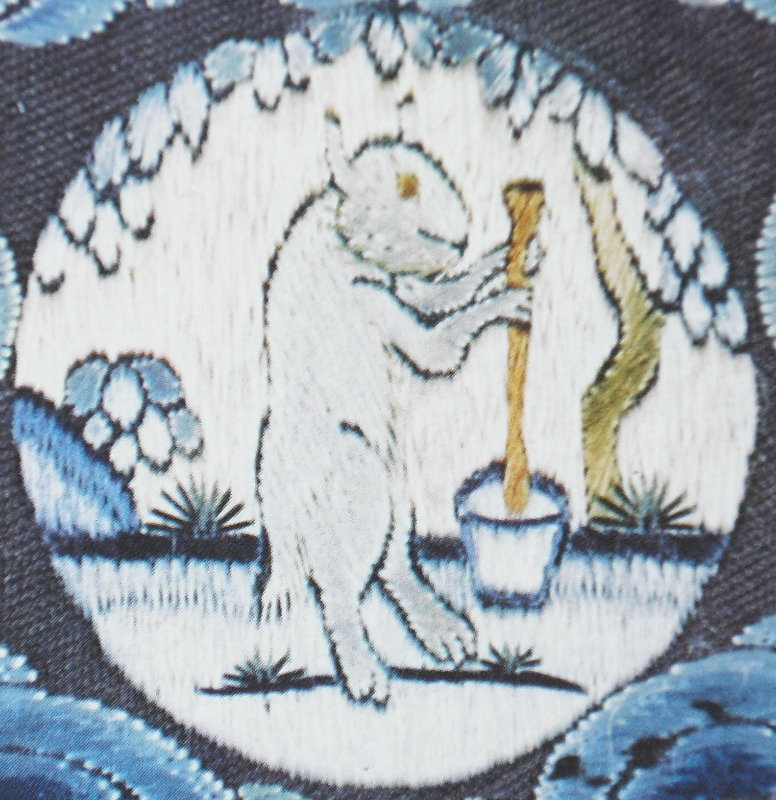 🇨🇳 China and 5 moreMoon rabbit月兔 (yuètù)
A mythical figure seen in lunar markings, pounding elixirs or rice cakes across Asia and the Americas.Being · Wonder and entertainment Living
🇪🇪 Estonia and 1 moreKalevaKalev
A primordial giant and ancestral figure in the mythologies of Estonia and FinlandBeing · Power and authority Historical
🇫🇮 Finland and 1 moreHiisi
A Finnic spirit of sacred places that evolved into a demonic giant in folkloreBeing · Cursing and harm · Power and authority Historical
 🇯🇵 Japan and 4 moreHousehold deity
A spirit or minor god believed to guard a home and its family members.Being · Protection · Speaking with spirits and the dead Historical
 🇱🇹 Lithuania and 2 moreLaumaLaumė
A Baltic fairy-like spirit of the sky, weather, and newborn children.Being · Protection · Healing Historical
 🇮🇩 IndonesiaAntabogaꦄꦤ꧀ꦠꦨꦺꦴꦒ
A serpent deity of Javanism and Sundanism who created the world turtle and rice goddessBeing · Power and authority Historical
 🇮🇳 IndiaKhunu Leimaꯈꯨꯅꯨꯔꯩꯃ (Khunu Leima)
A Meitei goddess who rules over pigeons and doves in the religion of Manipur.Being Historical
 🇪🇬 EgyptSet animalsha
A mysterious creature from ancient Egypt, linked to the god Set and chaos.Being · Power and authority Historical
🇰🇬 Kyrgyzstan and 2 moreAyaz AtaАяз Ата
A Turkic winter spirit who brings snow and gifts during the cold seasonBeing · Luck and prosperity · Protection Living
🇫🇮 Finland and 2 moreHaltija
A supernatural guardian of a specific place or animal species in Finnish and Baltic Finnic mythologyBeing · Protection · Speaking with spirits and the dead Historical
🇦🇷 ArgentinaLegendary creatures of the Argentine Northwest region
Myths and spirits from the Andean highlands of ArgentinaBeing · Protection · Cursing and harm Historical
 🇸🇪 Sweden and 1 moreStalloStállu
A large, clumsy creature from Sámi folklore that eats people and is often outwitted by humans.Being · Cursing and harm · Wonder and entertainment Historical
 🇻🇳 VietnamMẫu Thượng Ngàn林宮聖母
A forest goddess in Vietnamese indigenous religion, ruler of the Forest PalaceBeing · Power and authority Living
 🇷🇺 Russia and 5 moreVelesВелес
A Slavic chthonic deity of cattle, the underworld, and oathsBeing · Protection · Luck and prosperity Historical
 🇫🇮 Finland and 1 moreVäinämöinen
An ancient Finnish demigod and master singer from the Kalevala epicBeing · Wonder and entertainment Historical
🇧🇷 Brazil and 2 moreCaiporaCaapora
A Brazilian forest spirit that guards game and tests hunters with bribes or terrorBeing · Protection · Cursing and harm Living
🇬🇱 GreenlandAnguta
A Greenlandic Inuit figure who guides the dead and fathered the sea goddess SednaBeing · Speaking with spirits and the dead Historical
 🇨🇦 CanadaMistapewmistâpêw (ᒥᐢᑖᐤ)
A spirit-being of the Cree peoples, known as the Great Man or Bigfoot.Being · Protection · Healing Living
🇱🇹 Lithuania and 1 moreLaima
A Baltic goddess of fate connected to childbirth and destinyBeing · Seeing and foretelling · Luck and prosperity Historical
 🇬🇷 GreeceEudaemonεὐδαίμων
A benevolent Greek spirit offering guidance and protection to individuals.Being · Protection · Speaking with spirits and the dead Historical
 🇪🇬 EgyptAkhty
A rarely attested ancient Egyptian deity linked to the ibis and the evening horizon.Being · Speaking with spirits and the dead Historical
 🇬🇷 GreeceDaimonδαίμων
A Greek spirit or divine force that mediates between gods and humansBeing · Protection · Speaking with spirits and the dead Historical
 🇲🇽 MexicoXolotl
An Aztec deity of fire, lightning, and death who guides souls to the underworld.Being · Cursing and harm · Speaking with spirits and the dead Historical
 🇪🇬 EgyptHermanubisἙρμανοῦβις
A Graeco-Egyptian god who guides the souls of the dead to the underworld.Being · Speaking with spirits and the dead Historical
 🇵🇪 Peru and 3 moreMuki
A subterranean goblin of the Andes who guards mines and makes pacts with miners.Being · Power and authority · Luck and prosperity Living
🇳🇬 Nigeria and 1 moreIbo lwa
A nation of Vodou spirits carried from Igbo religion to Haiti, honoured as fightersBeing · Luck and prosperity · Cleansing and purification Living
 🇬🇷 Greece and 1 moreHephaestusἭφαιστος
The Greek smith god who forged divine weapons and crafted automata for the gods.Being · Power and authority Historical
🇬🇭 GhanaAmokye
Guardian of the entrance to Asamando in Akan and Ashanti beliefBeing · Speaking with spirits and the dead Living
Photo credits on this page
The small pictures above come from Wikimedia Commons under free licences. Some are cropped to fit.
- Hephaestus: Foundry Painter (name vase), Public domain, source
- Ancient Mesopotamian religion: editor Austen Henry Layard , drawing by L. Gruner, Public domain, source
- Moon rabbit: An artist, Public domain, source
- Nanabozho: D. Gordon E. Robertson, CC BY-SA 3.0, source
- Daimon: François-André Vincent, Public domain, source
- Moai: Rivi, CC BY-SA 3.0, source
- Imhotep: Rama, CC BY-SA 3.0 fr, source
- Rainbow Serpent: unknown (as drawn by an Aboriginal), Public domain, source
- Cernunnos: Nationalmuseet, Roberto Fortuna og Kira Ursem, Public domain, source
- Antaboga: fir0002 flagstaffotos [at] gmail.com Canon 20D + Tamron 28-75mm f/2.8, GFDL 1.2, source
- Mistapew: Alarichall, CC0, source
- Lauma: Raki_Man, CC BY 3.0, source
- Viracocha: Pattych ( talk ), CC BY-SA 3.0, source
- Khunu Leima: Author: DALL-E; prompted by Haoreima, Public domain, source
- Brownie: Unknown author, CC BY-SA 2.5, source
- Demon: Martin Schongauer, Public domain, source
- Stallo: John Bauer, Public domain, source
- Set animal: Unknown author, Public domain, source
- Household deity: Claus Ableiter, CC BY-SA 3.0, source
- Oni: Katsushika Hokusai 葛飾北斎 (1760-1849), Public domain, source
- Spirit: Jastrow, Public domain, source
- Jeoseung Saja: National Folk Museum of Korea, CC BY 4.0, source
- Mẫu Thượng Ngàn: Unknown author, Public domain, source
- Veles: Andrey Shishkin, CC BY 3.0, source
- Väinämöinen: Akseli Gallen-Kallela, Public domain, source
- Shatiqatu: Rama, CC BY-SA 2.0 fr, source
- Mjölnir: Mårten Eskil Winge, Public domain, source
- Eudaemon: WolfgangRieger, Public domain, source
- Akhty: Rémih, CC BY-SA 3.0, source
- Anubis: Hunefer, Public domain, source
- Xolotl: Adamt, CC0, source
- Hermanubis: Ad Meskens, CC BY-SA 3.0, source
- Muki: Arístides Herrera Cuntti at Spanish Wikipedia, CC BY-SA 3.0, source
- Fortuna: Charles Samuel, CC BY-SA 4.0, source