Everyday use: practices that mark them
Small habits kept at home: the horseshoe, the salt over the shoulder, the evil-eye bead.
Everyday magic is the small habits kept at home: the horseshoe, salt over the shoulder, knocking on wood, the evil-eye bead, a lucky number, a morning prayer, the red thread, a bowl of water at the door, a charm in the car. People keep them without making much of them. This page looks at what these habits are, why they last and where they fit alongside religion and science. It is the commonest magic of all.
What it looks like
Daily practice is ordinary. In India, a lemon and chillies hang at shops, and a rangoli drawn at a doorstep welcomes luck. In Turkey, a nazar hangs near the door. In Britain, people say touch wood. In Japan, a lucky cat sits in the shop window, and in Mexico an egg may be rolled over a child. Many of these customs use cheap, available things. Many habits are older than the people who keep them, and nobody can say who started them.
Why people keep them
Researchers describe such habits as low-cost ways to cope with uncertainty. They give a feeling of control, mark boundaries and bring people together at little risk. Studies of lucky charms show they can raise confidence. Most people hold small customs with a light touch, half serious and half playful, and would not say they believe in them. Practices come in several types: some are protective, some bring luck, some help the household keep track of time and weather, and some are no more than a habit of speech.
Names, religion and class
Customs are shared across religions with different explanations. The evil eye is feared by Muslims, Christians, Jews and Hindus in the Mediterranean and beyond. Religious reformers often attack such customs, and educated people sometimes mock them as rural. Women do most of the work of keeping them going, within the home. The home is also where these customs meet money, since shops sell everything needed, and some of the items on sale are made far from their cultural homes.
Shops and screens
Ordinary habits are now a market of charms, apps, horoscopes and online readers. Small purchases are harmless, but large payments for luck or protection are a warning sign of fraud. The customs also spread online, where they can lose their origin. Whether or not they work, they remain a way people say that they care about each other. In the end, the most common magic in the world is neither dramatic nor secret, and it is practised by people who have no wish to be called magicians.
Everyday use on EveryJaadu
The entries written up so far, best known first.
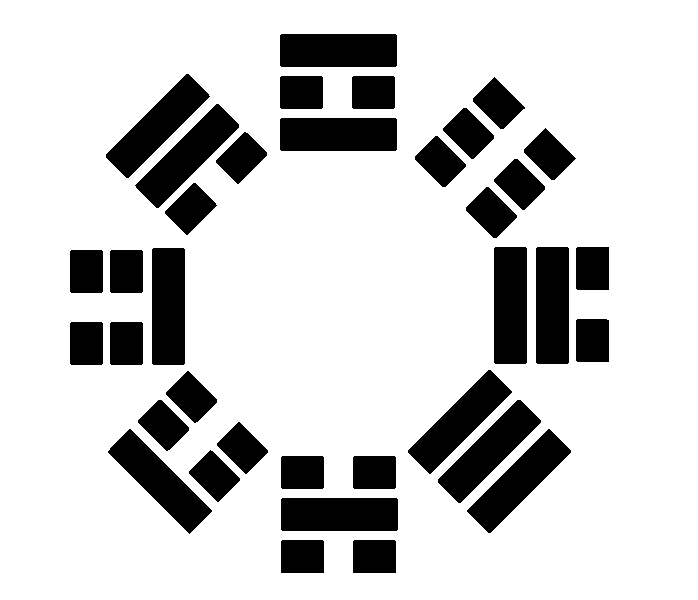 🇨🇳 China and 1 moreBagua八卦
A set of eight trigram symbols from China used in divination, cosmology, and feng shui.Tradition · Seeing and foretelling · Protection Living
🇨🇳 China and 1 moreBagua八卦
A set of eight trigram symbols from China used in divination, cosmology, and feng shui.Tradition · Seeing and foretelling · Protection Living
 🇯🇵 JapanShinto shrine神社 (jinja)
A structure housing kami deities within the Shinto tradition of JapanTradition · Protection · Speaking with spirits and the dead Living
🇯🇵 JapanShinto shrine神社 (jinja)
A structure housing kami deities within the Shinto tradition of JapanTradition · Protection · Speaking with spirits and the dead Living
 🇨🇳 ChinaNeidan内丹
A Taoist practice using the body as a cauldron to refine inner energies for longevity and immortalityTradition · Healing · Power and authority Living
🇨🇳 ChinaNeidan内丹
A Taoist practice using the body as a cauldron to refine inner energies for longevity and immortalityTradition · Healing · Power and authority Living
 🇯🇵 JapanMiko巫女
A Shinto shrine priestess and traditional female medium in JapanTradition · Speaking with spirits and the dead · Protection Living
🇯🇵 JapanMiko巫女
A Shinto shrine priestess and traditional female medium in JapanTradition · Speaking with spirits and the dead · Protection Living
 🇨🇳 China and 5 moreFeng shui風水
A Chinese geomantic practice for aligning structures with cosmic energyTradition · Protection · Luck and prosperity Living
🇨🇳 China and 5 moreFeng shui風水
A Chinese geomantic practice for aligning structures with cosmic energyTradition · Protection · Luck and prosperity Living
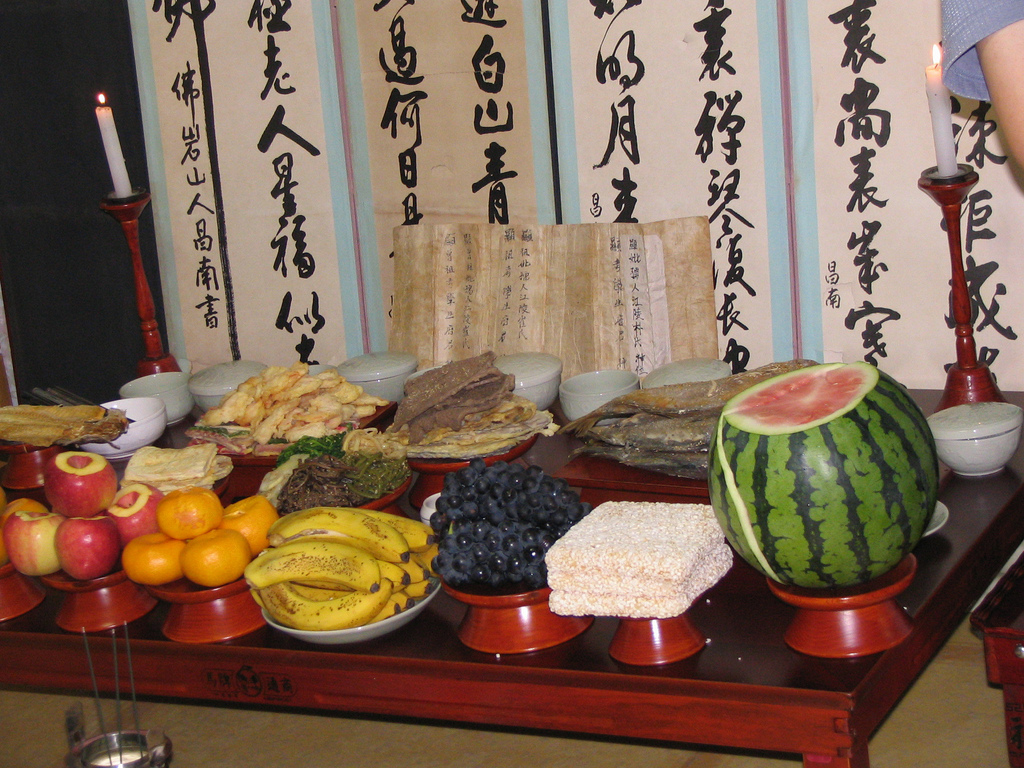 🇰🇷 South KoreaJesa제사
A Korean ancestral memorial rite involving food offerings and ritual bowsRite · Speaking with spirits and the dead · Luck and prosperity Living
🇰🇷 South KoreaJesa제사
A Korean ancestral memorial rite involving food offerings and ritual bowsRite · Speaking with spirits and the dead · Luck and prosperity Living
 🇯🇵 JapanKagura神楽
A Shinto ritual dance where performers embody deities to purify and welcome spiritsTradition · Protection · Speaking with spirits and the dead Living
🇯🇵 JapanKagura神楽
A Shinto ritual dance where performers embody deities to purify and welcome spiritsTradition · Protection · Speaking with spirits and the dead Living
 🇨🇳 China and 1 moreAncestor veneration in China中國傳統宗法性宗教
Rites for dead kin who are thought to watch over the familyTradition · Protection · Speaking with spirits and the dead Living
🇨🇳 China and 1 moreAncestor veneration in China中國傳統宗法性宗教
Rites for dead kin who are thought to watch over the familyTradition · Protection · Speaking with spirits and the dead Living
 🇯🇵 JapanMount Osore恐山
A volcanic pilgrimage site in Japan believed to be a gateway to the underworldTradition · Speaking with spirits and the dead · Protection Living
🇯🇵 JapanMount Osore恐山
A volcanic pilgrimage site in Japan believed to be a gateway to the underworldTradition · Speaking with spirits and the dead · Protection Living
 🇯🇵 JapanItakoイタコ
Blind women in Japan who train to channel spirits and communicate with the dead.Tradition · Speaking with spirits and the dead · Seeing and foretelling Fading
🇯🇵 JapanItakoイタコ
Blind women in Japan who train to channel spirits and communicate with the dead.Tradition · Speaking with spirits and the dead · Seeing and foretelling Fading
 🇰🇷 South Korea and 1 moreKorean shamanismKorean shamanism (Korean: Korean shamanism)
A traditional practice of ritual specialists who mediate between the human and spirit worlds.Tradition · Healing · Protection Living
🇰🇷 South Korea and 1 moreKorean shamanismKorean shamanism (Korean: Korean shamanism)
A traditional practice of ritual specialists who mediate between the human and spirit worlds.Tradition · Healing · Protection Living
 🇨🇳 China and 5 moreRegional forms of shamanism
A global overview of indigenous spirit-interaction practices across Asia and the Americas.Tradition · Healing · Speaking with spirits and the dead Living
🇨🇳 China and 5 moreRegional forms of shamanism
A global overview of indigenous spirit-interaction practices across Asia and the Americas.Tradition · Healing · Speaking with spirits and the dead Living
 🇯🇵 JapanChinkon kishin鎮魂帰神
A Japanese spiritual practice combining soul calming with spirit possessionRite · Speaking with spirits and the dead · Healing Living
🇯🇵 JapanChinkon kishin鎮魂帰神
A Japanese spiritual practice combining soul calming with spirit possessionRite · Speaking with spirits and the dead · Healing Living
 🇨🇳 China and 1 moreFalun Gong法轮功
A Chinese cultivation practice blending meditative exercises with moral principlesTradition · Healing · Protection Living
🇨🇳 China and 1 moreFalun Gong法轮功
A Chinese cultivation practice blending meditative exercises with moral principlesTradition · Healing · Protection Living
 🇨🇳 China and 1 moreNuo folk religion傩 (Nuó)
A Chinese exorcistic tradition using wooden masks and ancestor worship to drive away malevolent forcesTradition · Protection · Speaking with spirits and the dead Living
🇨🇳 China and 1 moreNuo folk religion傩 (Nuó)
A Chinese exorcistic tradition using wooden masks and ancestor worship to drive away malevolent forcesTradition · Protection · Speaking with spirits and the dead Living
 🇨🇳 ChinaReligion of the Shang dynasty
The spiritual system of ancient China's second dynasty, centred on ancestor worship and oracle bone divination.Tradition · Protection · Luck and prosperity Historical
🇰🇷 South KoreaMusok eumak무속 음악
Traditional Korean shamanistic music performed during gut rituals to induce tranceTradition · Speaking with spirits and the dead Living
🇨🇳 ChinaReligion of the Shang dynasty
The spiritual system of ancient China's second dynasty, centred on ancestor worship and oracle bone divination.Tradition · Protection · Luck and prosperity Historical
🇰🇷 South KoreaMusok eumak무속 음악
Traditional Korean shamanistic music performed during gut rituals to induce tranceTradition · Speaking with spirits and the dead Living
 🇨🇳 ChinaFlying Star Feng Shui
A Chinese feng shui school that charts a building's nine squares for good and bad qiTradition · Seeing and foretelling · Luck and prosperity Living
🇨🇳 ChinaFlying Star Feng Shui
A Chinese feng shui school that charts a building's nine squares for good and bad qiTradition · Seeing and foretelling · Luck and prosperity Living
Photo credits on this page
The small pictures above come from Wikimedia Commons under free licences. Some are cropped to fit.
- Chinkon kishin: Tomokiyo Yoshisane (友清歓真), also known as Tomokiyo Kyūgo (友清九吾), Public domain, source
- Bagua: TarcísioTS at Portuguese Wikipedia, Public domain, source
- Shinto shrine: No machine-readable author provided. Fg2 assumed (based on copyright c, Public domain, source
- Neidan: A16898, CC BY-SA 4.0, source
- Miko: Chris Gladis, Flickr user MShades, CC BY 2.0, source
- Feng shui: Unknown author, Public domain, source
- Jesa: by Joseph Steinberg (Baltimoron in Korea) at Flickr, CC BY-SA 2.0, source
- Kagura: Elstner Hilton, Public domain, source
- Ancestor veneration in China: Three huntings, CC BY-SA 4.0, source
- Mount Osore: Douglas P Perkins ( Douglaspperkins ( talk )), CC BY 3.0, source
- Itako: User Geomr~commonswiki self upload, CC BY-SA 3.0, source
- Falun Gong: longtrekhome, CC BY 3.0, source
- Nuo folk religion: Wikiwikiyarou, CC BY-SA 3.0, source
- Religion of the Shang dynasty: Unknown author, CC0, source
- Regional forms of shamanism: Man Sing, Public domain, source
- Korean shamanism: Hyewon Shin Yun-bok (申潤福: 1758-early 19th century) (혜원 신윤복 (申潤福: 1758-, Public domain, source
- Flying Star Feng Shui: Unknown author, Public domain, source