Power and authority
Magic as kingship, priesthood and status: the sorcerer-king, the court astrologer, the rainmaker.
Magic as power and authority is the use of ritual to make or hold rank: kings with sacred duties, court astrologers, rainmakers, chiefs who are said to hold spiritual force, and priests who keep a state religion. It includes the Egyptian pharaoh, the Mongol shamans at the court of the khan, the Chinese Taoist masters, the Zulu and Shona spirit mediums, and the astrologers who advised Mughal and European rulers. This page asks how magic and politics feed each other. Where this happens, magic is less about individual wishes and more about who is allowed to speak for the unseen.
Sacred rulers
In many kingdoms the ruler was believed to hold a power linked to harvest, rain or victory. Pharaohs performed rites to keep order, and the Divine Right of kings in Europe included the royal touch, a rite by which French and English monarchs touched people with scrofula. Chinese emperors held the Mandate of Heaven, which natural omens could confirm or withdraw. The Mongol khans consulted shamans and diviners. Kings also commissioned astrologers to choose coronation dates.
Advisers and rivals
Courts employed diviners, astrologers and mages. John Dee advised Elizabeth I, and Indian and Persian kings kept court astrologers. Such advisers also faced risk: in Rome, astrologers were expelled several times, and accusations of sorcery were used to remove rivals at courts from Byzantium to Ming China. Magic offered influence to people with little formal rank. Sorcery charges were used against queens and ministers in several courts, and the fall of a favourite was often explained by a spell.
Resistance and the state
Spirit mediums have led resistance. In Zimbabwe, the spirit mediums Nehanda and Kaguvi were central to the 1896 uprising against British rule, and Nehanda was hanged in 1898. In Kenya and Tanzania, the Maji Maji rebellion of 1905 drew on a water said to protect against bullets. Colonial states responded with witchcraft ordinances, which often banned healers and protected nobody. In Africa, chiefs are often described as guardians of a land and its rain, and ruling families have held rites for the whole community.
Modern politics
Some leaders consult astrologers or healers, and political use of the occult is reported from India to Latin America. Accusations of witchcraft are used against opponents and in land disputes. Scholars read these links as part of how power is made visible and legitimate. Citizens may wish to ask who benefits when magic is used in public life. Many states now regulate healers and diviners, or use them for public health messages, which shows how much influence they still have.
Power and authority on EveryJaadu
The entries written up so far, best known first.
 🇮🇩 IndonesiaPenjorᬧᬾᬜ᭄ᚚᚚᭀᬃ
A curved bamboo pole marking prosperity in Balinese Hindu ceremonyTradition · Luck and prosperity · Power and authority Living
 🇮🇳 India and 5 moreCowrie
A sea snail shell used as currency, divination tool, and charm across many culturesSubstance · Seeing and foretelling · Luck and prosperity Living
 🇮🇳 IndiaAtharvavedaअथर्ववेद
The fourth Veda of Hinduism, containing spells, healing rites, and domestic rituals.Text · Protection · Healing Historical
 🇨🇳 China and 1 moreDongyue Dadi東嶽大帝
The Chinese mountain god of Mount Tai who rules lifespans and underworld recordsBeing · Speaking with spirits and the dead · Power and authority Living
 🇪🇬 EgyptDjedḏd
An ancient Egyptian pillar symbol representing stability and resurrectionCharm · Protection · Power and authority Historical
 🇮🇳 IndiaTarpanaतर्पण
A Vedic offering of water and seeds to gods, sages, and ancestorsRite · Speaking with spirits and the dead · Power and authority Living
 🇱🇻 Latvia and 1 moreLatvian mythology
A collection of myths about gods, spirits, and the afterlife from the Baltic region.Tradition · Speaking with spirits and the dead · Power and authority Living
 🇪🇬 Egypt and 5 moreSacred dance
Movement used in worship to honour deities, heal communities, or connect with the spirit world.Tradition · Protection · Healing Living
 🇳🇬 Nigeria and 2 moreỌya
A Yoruba orisha of storms and the dead, worshipped in Africa and the Americas.Being · Protection · Speaking with spirits and the dead Living
 🇪🇬 EgyptOpening of the mouth ceremonywpt-r (Egyptian)
An ancient Egyptian rite to restore a deceased person's senses for the afterlifeRite · Speaking with spirits and the dead · Power and authority Historical
 🇪🇬 Egypt and 2 moreIsisꜣst (Egyptian)
Egyptian goddess of magic, mourning and kingship, mother of HorusBeing · Protection · Healing Historical
 🇪🇬 Egypt and 1 moreEye of Horuswḏꜣt
A stylized eye symbol in ancient Egypt representing healing and cosmic orderCharm · Protection · Healing Historical
 🇬🇧 United Kingdom and 3 moreJet
A black gemstone carved into amulets and mourning jewelry for millenniaCharm · Protection · Power and authority Historical
 🇪🇬 Egypt and 1 moreAncient Egyptian religion
Polytheistic worship, divine kingship, and funerary rites along the NileTradition · Protection · Speaking with spirits and the dead Historical
 🇨🇳 ChinaPig dragon玉豬龍
A coiled Neolithic jade amulet from Hongshan culture, possibly an early dragon imageCharm · Power and authority Historical
 🇪🇬 Egypt and 4 moreScarab
An ancient Egyptian amulet and seal shaped like a dung beetleCharm · Protection · Luck and prosperity Historical
 🇮🇩 Indonesia and 1 moreSandung
A house-shaped ossuary for the bones of the deceased among Dayak peoples in Borneo.Charm · Speaking with spirits and the dead · Power and authority Living
 🇯🇵 Japan and 4 moreKṣitigarbhaक्षितिगर्भ
A bodhisattva vowed to empty the hells and guard children, shown with a staff and jewel.Being · Protection · Speaking with spirits and the dead Living
 🇳🇿 New Zealand and 5 moreMokomokaiToi moko
Preserved Māori heads with facial tattoos, once traded as curios and now repatriated.Being · Cursing and harm · Power and authority Historical
 🇮🇩 IndonesiaMarapu
Ancestral religion of Sumba and Flores in IndonesiaTradition · Speaking with spirits and the dead · Protection Living
 🇹🇷 TurkeyHittite sun disk
An ancient Anatolian bronze symbol used in Hattian and Hittite religious ceremoniesCharm · Speaking with spirits and the dead · Power and authority Historical
 🇮🇪 IrelandTailteann GamesÁenach Tailteann
Ancient Irish funeral games and assemblies held in County Meath to honor the dead.Rite · Speaking with spirits and the dead · Luck and prosperity Historical
 🇪🇬 EgyptMaatmꜣꜥt
An Egyptian idea of truth, law and balance, and the goddess who stands for itBelief · Power and authority Historical
 🇮🇱 Israel and 1 moreAna BeKoachאנא בכח
A medieval Jewish liturgical poem linked to the 42-letter name of GodText · Power and authority · Protection Living
 🇪🇬 Egypt and 3 moreCrown of Immortality
A wreath of leaves, then a ring of stars, said to mark a life that does not endBelief · Power and authority Living
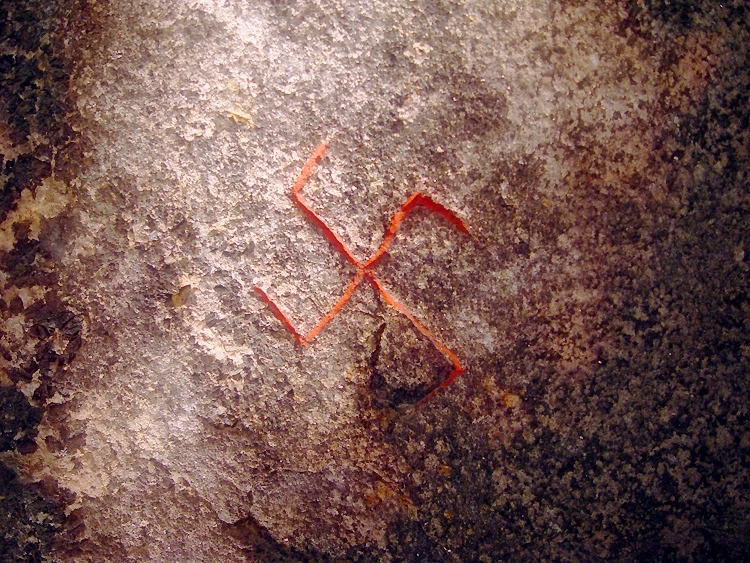 🇸🇪 Sweden and 4 moreSwastika (Germanic Iron Age)
A four-armed symbol found on Germanic artefacts from the Migration to Viking periods.Belief · Power and authority Historical
 🇸🇪 SwedenNumbers in Germanic paganism
The sacred role of three and nine in ancient Germanic ritual and mythBelief · Power and authority Historical
 🇲🇽 Mexico and 4 moreMirrors in Mesoamerican culture
Reflective stones used for divination and elite status across ancient Mexico and Central AmericaCharm · Seeing and foretelling · Power and authority Historical
 🇮🇹 Italy and 5 moreCrucifix
A cross bearing the figure of Jesus, central to Christian worship and artText · Power and authority Living
 🇯🇵 JapanMagatama勾玉
A curved Japanese bead used as jewelry, status symbol, and sacred object in Shinto.Charm · Power and authority · Speaking with spirits and the dead Living
 🇨🇳 ChinaQintianjian欽天監
China's state sky office, which also set lucky days and read omensTradition · Seeing and foretelling · Luck and prosperity Historical
Photo credits on this page
The small pictures above come from Wikimedia Commons under free licences. Some are cropped to fit.
- Sacred dance: Jorge Barrios, CC BY-SA 3.0, source
- Ancient Egyptian religion: Moh hakem, CC BY-SA 4.0, source
- Kṣitigarbha: སངས་རྒྱས་བཅོམ་ལྡན་འདས།, Public domain, source
- Mokomokai: New Zealand Electronic Text Centre, Public domain, source
- Ọya: Picture taken by Eurico Zimbres, CC BY-SA 2.5, source
- Penjor: Chainwit., CC BY-SA 4.0, source
- Atharvaveda: William Dwight Whitney / Charles Rockwell Lanman, Public domain, source
- Dongyue Dadi: H2v5o68z, CC0, source
- Tarpana: Biswarup Ganguly, CC BY 3.0, source
- Latvian mythology: Dezidor, CC BY 3.0, source
- Pig dragon: Prof. Gary Lee Todd, CC BY-SA 4.0, source
- Isis: Ägyptischer Maler um 1360 v. Chr., Public domain, source
- Eye of Horus: Tangopaso, Public domain, source
- Jet: Thmsfrst, Public domain, source
- Marapu: Unknown author, CC BY-SA 3.0, source
- Hittite sun disk: Noumenon, CC BY-SA 3.0, source
- Tailteann Games: Unknown author, Public domain, source
- Cowrie: NOAA (Photo Collection of Dr. James P. McVey, NOAA Sea Grant Program), Public domain, source
- Maat: anonymous, Public domain, source
- Ana BeKoach: Baruch Zvi Ring (c. 1872 - 1927) Details on Google Art Project, Public domain, source
- Djed: Anonymous ( Egypt ) Unknown author, Public domain, source
- Stentoften Runestone: Sendelbach ( talk ), CC BY-SA 3.0, source
- Crown of Immortality: https://commons.wikimedia.org/wiki/User:Xauxa, CC BY-SA 3.0, source
- Swastika (Germanic Iron Age): No machine-readable author provided. Bloodofox~commonswiki assumed (ba, Public domain, source
- Scarab: Rama, CC BY-SA 2.0 fr, source
- Opening of the mouth ceremony: Hunefer, Public domain, source
- Mirrors in Mesoamerican culture: Vassil, CC0, source
- Crucifix: Turismo Bahia, CC BY-SA 2.0, source
- Magatama: Kakidai, CC BY-SA 3.0, source
- Qintianjian: User:Vmenkov, CC BY-SA 3.0, source
- Sandung: Wibowo Djatmiko ( Wie146 ), CC BY-SA 3.0, source