
The sandung is a wooden or cement ossuary used by the Ngaju, Katingan, and Pesaguan people of Kalimantan, Indonesia, and some Dayak groups in Sarawak. It serves as a permanent home for ancestral remains after a secondary burial ritual known as Tiwah.
- Shaped like a small house with ornate roofs and stairs.
- Used during the Tiwah secondary burial ceremony.
- Bones are purified with oil and gold dust before placement.
- Decorated with celestial symbols guiding souls to paradise.
- Modern versions often use cement instead of wood.
What it is
The sandung is a traditional ossuary shaped like a miniature house. It acts as a permanent dwelling for the bones of the deceased within the Kaharingan faith of the Ngaju, Katingan, and Pesaguan peoples in southern and central Kalimantan. These structures are integral to the Tiwah ceremony, a secondary burial rite where ancestors are honored and prepared for their journey to the spiritual realm of Lewa Liau.
Where it comes from
The practice originates with the indigenous Dayak communities of Borneo, specifically the Ngaju, Katingan, and Pesaguan ethnic groups. While the exact historical start date is not detailed, the tradition has persisted for centuries. Ancient sandungs can be found in village centers, and some specimens are preserved today at the Balanga Museum in Palangkaraya, indicating a long-standing cultural continuity.
How it is done
During the Tiwah festival, bones are exhumed from temporary graves and brought back to the village. Close relatives clean and purify the remains, anointing them with oil and gold dust. The bones are then wrapped in cloth and placed inside the sandung. The structure itself is built with ornate features, including carved doors, windows, and roofs, often elevated on poles to protect the contents.
Tools and materials
Traditional sandungs are crafted from ironwood or fruit-bearing trees like durian, though lighter woods are also used. They are decorated with bright colors and carvings depicting the mythical tree of life, celestial bodies, and deities. Some types use Chinese jars or brass containers. Modern versions may utilize cement mixed with tile fragments and mirrors for decoration.
Sandung, drawn and placed
- Living
- Revived
- Fading
- Historical
- Legendary
- Performed
- Lineage
- Kaharingan religion
- Timing
- during the Tiwah ceremony
What it is for
The primary purpose is to provide a secure and dignified home for ancestral spirits in the afterlife. The sandung ensures the soul's safe passage to paradise and establishes a new household for the deceased among their kin. It also serves to protect the remains from threats through protective figures carved into the supporting poles.
Who does it
The construction and maintenance of sandungs are communal family efforts. Specific regional preferences exist; the Dayak of the Kahayan region favor large communal ossuaries, while those in the Katingan region prefer smaller individual ones. Single-person ossuaries are reserved for those who died unnaturally.
Peoples and places
The tradition is central to the Ngaju, Katingan, and Pesaguan peoples of Indonesian Kalimantan. It is also practiced by Dayak communities in the neighboring Malaysian state of Sarawak. Variations in size and style reflect local customs, with some groups emphasizing collective family storage and others focusing on individual resting places.
At a glance: who, where and when
Who does it
Belief worlds
Occasions


What people believe
The sandung reflects the Kaharingan belief in a journey to the paradise of Lewa Liau. Decorations guide the soul, with sun and moon motifs marking the path. The structure is believed to transport the deceased to their new home in the spirit world. Protective carvings guard against negative forces, ensuring the ancestor's peace.
When it is done
The sandung is primarily associated with the Tiwah festival, the most important ceremony for the Ngaju people. This event marks the final transition of the bones from the cemetery to the ossuary. The timing aligns with the completion of the secondary burial rites, ensuring the soul's readiness for its spiritual journey.
How scholars and sceptics see it
Anthropological records document the sandung as a key element of Dayak funerary architecture. Museums, such as the one in Palangkaraya, preserve these artifacts for study. The variation in design provides insight into social structures, with large ossuaries indicating strong kinship ties and smaller ones reflecting specific circumstances of death.
Cautions and what is closed
Ancient sandungs face theft due to their historical value. As more Dayak people convert to Christianity or Islam, the construction of traditional wooden ossuaries is declining.
Compare and confuse
The sandung is similar to other stilted structures used for storing remains or valuables, such as the Māori pātaka in New Zealand. Both serve as elevated repositories, though the sandung is specifically tied to the Kaharingan belief system and the Tiwah ritual.
Law and persecution
However, the decline in traditional practice due to religious conversion suggests a shift in cultural norms rather than legal restriction.
Today
In modern times, cement ossuaries are increasingly popular, particularly the ground-level sandung munduk type. Traditional wooden sandungs are still visible in parts of Central Borneo but are becoming rarer. The tradition persists among those who maintain the Kaharingan faith.
Questions people ask about Sandung
What is a sandung?
A sandung is a house-shaped ossuary used by Dayak peoples in Borneo to store the bones of ancestors after a secondary burial ritual.
Where is the sandung found?
It is primarily found in southern and central Kalimantan, Indonesia, among the Ngaju, Katingan, and Pesaguan peoples, and in Sarawak, Malaysia.
What is the Tiwah ceremony?
Tiwah is a major festival where bones are exhumed, purified, and placed in the sandung to ensure the soul's safe journey to paradise.
What materials are used to build it?
Traditionally made from ironwood or fruit trees, modern sandungs may use cement, decorated with paint, carvings, or mirror fragments.
Good reading and sources
- Sandung on WikipediaEncyclopedia
- More photos on Wikimedia CommonsPhotos and video
- Wikidata recordOpen data
The facts on this page come from the Wikipedia article "Sandung", written by its contributors and used under the CC BY-SA 4.0 licence, and from its Wikidata record (CC0). EveryJaadu rewrote the text in its own words, with AI assistance, and compares every page with the article to make sure no passage is copied. It may be reused under the same CC BY-SA 4.0 licence with a link back.
It may contain mistakes. Names and customs differ from one community to the next, and some knowledge is closed to outsiders and left out here. This page describes belief and practice. It does not say that any of it works, it is not a how-to, and it is not medical advice. If something is wrong, tell us. Last refreshed 2026-10-10.
More from Indonesia
All the entries from Indonesia 🇵🇭 Philippines and 1 moreAgimatAnting-anting
A Filipino amulet or charm believed to grant protection, power, and supernatural abilities.Charm · Protection · Love and attraction Living
🇵🇭 Philippines and 1 moreAgimatAnting-anting
A Filipino amulet or charm believed to grant protection, power, and supernatural abilities.Charm · Protection · Love and attraction Living
 🇹🇭 Thailand and 7 moreSpirit house
A small roofed shrine that shelters a place's protective spiritCharm · Protection Living
🇮🇩 IndonesiaIndonesian numismatic charmUang Gobog
Coin-like amulets from Indonesia used for protection and ritual offerings.Charm · Protection · Luck and prosperity Living
🇹🇭 Thailand and 7 moreSpirit house
A small roofed shrine that shelters a place's protective spiritCharm · Protection Living
🇮🇩 IndonesiaIndonesian numismatic charmUang Gobog
Coin-like amulets from Indonesia used for protection and ritual offerings.Charm · Protection · Luck and prosperity Living
 🇮🇩 IndonesiaPancar Merah
An engraved Islamic talisman from South Borneo used for protection and charismaCharm · Protection · Power and authority Historical
🇮🇩 IndonesiaPancar Merah
An engraved Islamic talisman from South Borneo used for protection and charismaCharm · Protection · Power and authority Historical
Related elsewhere
All charm 🇮🇳 India and 1 moreMantraमन्त्रम्
A sacred sound or phrase repeated to focus the mind and invoke spiritual powerText · Speaking with spirits and the dead · Power and authority Living
🇮🇳 India and 1 moreMantraमन्त्रम्
A sacred sound or phrase repeated to focus the mind and invoke spiritual powerText · Speaking with spirits and the dead · Power and authority Living
 🇮🇶 Iraq and 5 moreGrimoire
A textbook containing instructions for spells, rituals, and the creation of magical objects.Text · Protection · Healing Historical
🇮🇶 Iraq and 5 moreGrimoire
A textbook containing instructions for spells, rituals, and the creation of magical objects.Text · Protection · Healing Historical
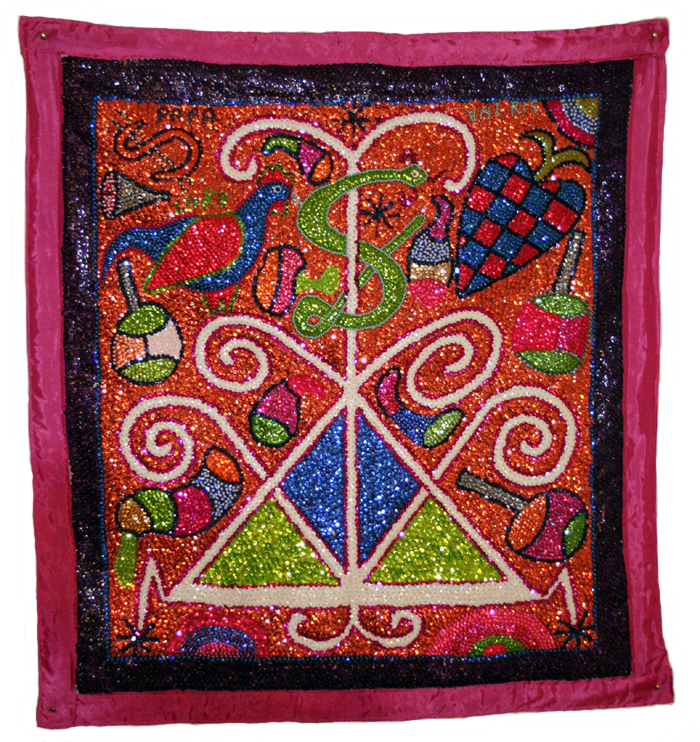 🇭🇹 Haiti and 2 moreHaitian VodouVodou
An Afro-Haitian religion blending West African traditions with Catholicism and FreemasonryTradition · Protection · Healing Living
🇭🇹 Haiti and 2 moreHaitian VodouVodou
An Afro-Haitian religion blending West African traditions with Catholicism and FreemasonryTradition · Protection · Healing Living