
Ana BeKoach
In its own language: אנא בכח
from Hebrew meaning We beg you with your strength
A medieval Jewish liturgical poem linked to the 42-letter name of God
Ana BeKoach is a Hebrew piyyut used in daily and Sabbath prayers. It is recited by Jewish communities for spiritual strength and soul protection. The text forms an acronym said to reveal a sacred divine name.
- Medieval Jewish liturgical poem
- Forms a 42-letter name of God
- Recited during Shabbat and Omer
- Linked to Kabbalistic sephirot
- Used for soul protection and strength
What it is
Ana BeKoach is a medieval Jewish liturgical poem. It is known by its opening words. The text contains forty-two lines. Each line begins with a letter that forms a sequence. This sequence is believed to spell out a forty-two-letter name of God. The poem is part of Jewish prayer services. It is used to invoke divine power. Practitioners believe it connects the reciter to the sacred name. The structure links the verses to days of creation and sephirot. It serves as a bridge between human prayer and divine attributes.
Where it comes from
The poem likely originated in the twelfth century. Ashkenazi Hasidim composed early versions based on the forty-two-letter name. Jacob of Segovia recorded a form resembling the modern version in the thirteenth century. Scholars note variations in manuscripts. Hayy ben Sherira mentioned the acronym but did not know the poem. Rashi and Maimonides stated the name was lost.
How it is done
The poem is recited aloud during specific prayers. It appears in the Korbanot section of morning services. It is also sung before Lekha Dodi on Friday evenings. Some recite it after each Omer count. It is included in bedtime Shema rituals. Hasidic groups recite it during Simchat Torah lapses. It is said at Tashlikh and Hanukkah candle lighting. The recitation focuses on the initial letters forming the sacred name.
Tools and materials
The primary tool is the Hebrew text itself. The poem relies on the acrostic structure. Each verse contributes letters to the forty-two-letter name. The text links to the seven lower sephirot. It associates with days of the week and creation. The number forty-two symbolizes the journey from Egypt. Forty-nine elements link to the Omer count. Psalm 67 is often recited alongside it.
Ana BeKoach, drawn and placed
- Living
- Revived
- Fading
- Historical
- Legendary
- Performed
- Lineage
- medieval Jewish piyyut tradition
- Timing
- daily prayers, Shabbat, festivals
What it is for
Reciters seek divine strength for daily life. The poem protects the soul during sleep. It aids the soul after death. It helps navigate personal life journeys. The forty-two stations represent spiritual waypoints. The Omer count uses it for reflection. It brings Ein Sof light to earth. Practitioners view it as a guide for overcoming obstacles. It connects individual experience to national history.
Who does it
Jewish communities recite the poem. Orthodox Jews include it in siddurim. Hasidim follow specific usage customs. Scholars study its textual variations. The poem requires knowledge of Hebrew. The practice is part of daily religious life. It is integrated into various prayer traditions. No special initiation is required for general recitation.
Peoples and places
The poem is central to Jewish liturgy. It is used in Israel and among diaspora communities. Sephardic and Ashkenedic traditions have slight variations. The Baal Shem Tov linked the forty-two camps to personal destiny. Isaac Luria influenced its adoption in Nusach Ari. Most Orthodox Jews accept its Kabbalistic aspects.
At a glance: who, where and when
Who does it
Peoples
Belief worlds
What people believe
Kabbalah views the poem as containing divine power. The forty-two-letter name created the world. The name links to the Exodus journey. The sephirot sustain the universe. Reciting the poem aligns the soul with divine attributes. The forty-two stations mirror the soul's journey. The text encodes the structure of creation. Faith holds that contemplation reveals hidden meanings.
When it is done
It is recited daily in morning services. It is sung on Friday evenings for Shabbat. It accompanies the forty-nine days of the Omer. It is used during Rosh Hashanah Tashlikh. It is recited at Hanukkah candle lighting. Funeral services include it for the deceased. Bedtime Shema uses it for night protection. Simchat Torah lapses feature specific verses. The timing aligns with sacred cycles and life events.
How scholars and sceptics see it
Historians trace the poem to medieval poets. Textual analysis shows manuscript variations. Scholars note the loss of the original name. The connection to Nehunya ben HaKanah is debated. Kabbalistic interpretations dominate religious understanding. Academic study focuses on liturgical development. Researchers examine the acrostic structure.
Cautions and what is closed
Some acronyms are not spoken in Orthodox practice. Outsiders may not access all meanings. The forty-two-letter name is considered sacred. Mishandling the text is viewed with reverence. The poem is not a charm for casual use. Its power is tied to proper intent and context.
Compare and confuse
It is related to other piyyutim using acrostics. The forty-two-letter name appears in other texts. Psalm 67 shares the forty-nine-word structure. The Shema contains encoded names. The Zohar references similar numerical patterns. Other Jewish prayers use divine names for power. The poem differs in its specific acrostic design.
Questions people ask about Ana BeKoach
What is Ana BeKoach?
It is a medieval Hebrew liturgical poem. The text forms an acronym of forty-two letters. These letters spell a sacred name of God. It is used in Jewish prayer services for spiritual strength.
Where does it come from?
Ashkenazi Hasidim composed early versions. Jacob of Segovia recorded a key form in the thirteenth century. It draws on earlier traditions of the forty-two-letter name.
When is it recited?
It is said during morning prayers and Friday evening services. It accompanies the daily Omer count. Hasidim recite it during festivals like Hanukkah and Simchat Torah. It is also used at funerals and bedtime.
What is its purpose?
Practitioners believe it invokes divine power. It protects the soul during sleep and after death. It helps navigate life's spiritual challenges. The recitation aligns the individual with the sephirot.
Good reading and sources
The facts on this page come from the Wikipedia article "Ana BeKoach", written by its contributors and used under the CC BY-SA 4.0 licence, and from its Wikidata record (CC0). EveryJaadu rewrote the text in its own words, with AI assistance, and compares every page with the article to make sure no passage is copied. It may be reused under the same CC BY-SA 4.0 licence with a link back.
It may contain mistakes. Names and customs differ from one community to the next, and some knowledge is closed to outsiders and left out here. This page describes belief and practice. It does not say that any of it works, it is not a how-to, and it is not medical advice. If something is wrong, tell us. Last refreshed 2026-10-09.
More from Israel
All the entries from Israel 🇮🇱 Israel and 2 moreMezuzahמְזוּזָה
A scroll of Torah verses placed in a case on Jewish doorpostsCharm · Protection · Speaking with spirits and the dead Living
🇮🇱 Israel and 2 moreMezuzahמְזוּזָה
A scroll of Torah verses placed in a case on Jewish doorpostsCharm · Protection · Speaking with spirits and the dead Living
 🇮🇱 Israel and 4 moreIsaac Luriaיִצְחָק בן שלמה אשכנזי לוּרְיָא
A sixteenth-century rabbi who founded modern Kabbalah through oral teachings in Safed.Text · Speaking with spirits and the dead · Change and initiation Living
🇮🇱 Israel and 4 moreIsaac Luriaיִצְחָק בן שלמה אשכנזי לוּרְיָא
A sixteenth-century rabbi who founded modern Kabbalah through oral teachings in Safed.Text · Speaking with spirits and the dead · Change and initiation Living
 🇮🇱 Israel and 3 moreGematriaגימטריה
A numeric writing system that assigns numerical values to words and phrases for interpretation.Text · Seeing and foretelling · Power and authority Living
🇮🇱 Israel and 3 moreGematriaגימטריה
A numeric writing system that assigns numerical values to words and phrases for interpretation.Text · Seeing and foretelling · Power and authority Living
 🇮🇱 Israel and 1 morePardesפרד״ס
A four-level method for interpreting Jewish scriptureText · Speaking with spirits and the dead Historical
🇮🇱 Israel and 1 morePardesפרד״ס
A four-level method for interpreting Jewish scriptureText · Speaking with spirits and the dead Historical
Related elsewhere
All text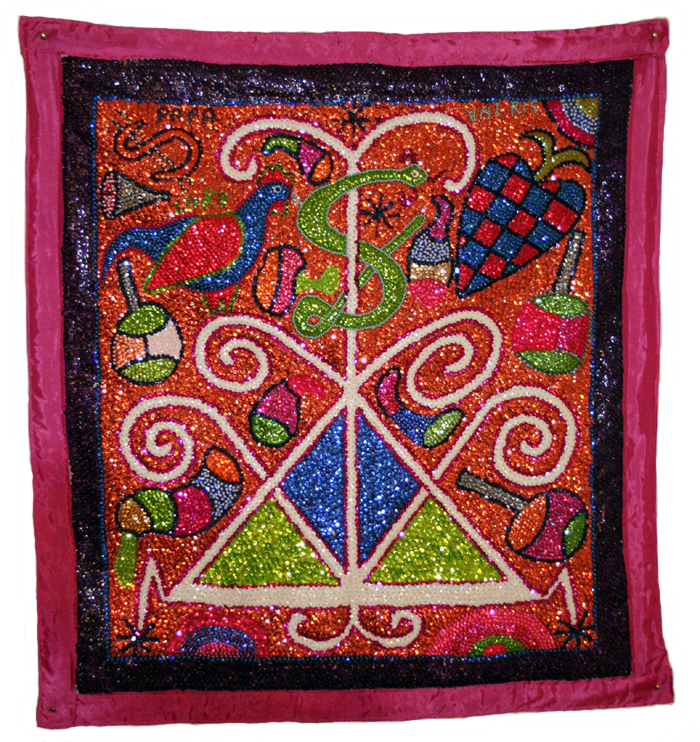 🇭🇹 Haiti and 2 moreHaitian VodouVodou
An Afro-Haitian religion blending West African traditions with Catholicism and FreemasonryTradition · Protection · Healing Living
🇭🇹 Haiti and 2 moreHaitian VodouVodou
An Afro-Haitian religion blending West African traditions with Catholicism and FreemasonryTradition · Protection · Healing Living
 🇮🇳 India and 2 moreYantraयन्त्र
A geometric diagram from Indian traditions used for worship and meditationTradition · Protection · Speaking with spirits and the dead Living
🇮🇳 India and 2 moreYantraयन्त्र
A geometric diagram from Indian traditions used for worship and meditationTradition · Protection · Speaking with spirits and the dead Living
 🇮🇶 Iraq and 5 moreGrimoire
A textbook containing instructions for spells, rituals, and the creation of magical objects.Text · Protection · Healing Historical
🇮🇶 Iraq and 5 moreGrimoire
A textbook containing instructions for spells, rituals, and the creation of magical objects.Text · Protection · Healing Historical
 🇳🇵 Nepal and 1 moreMani stone
Carved stones inscribed with Buddhist mantras, placed as offerings along paths in the Himalayas.Charm · Protection · Speaking with spirits and the dead Living
🇳🇵 Nepal and 1 moreMani stone
Carved stones inscribed with Buddhist mantras, placed as offerings along paths in the Himalayas.Charm · Protection · Speaking with spirits and the dead Living