
Eye of Horus
In its own language: wḏꜣt
from wḏꜣt, meaning whole or completed
A stylized eye symbol in ancient Egypt representing healing and cosmic order
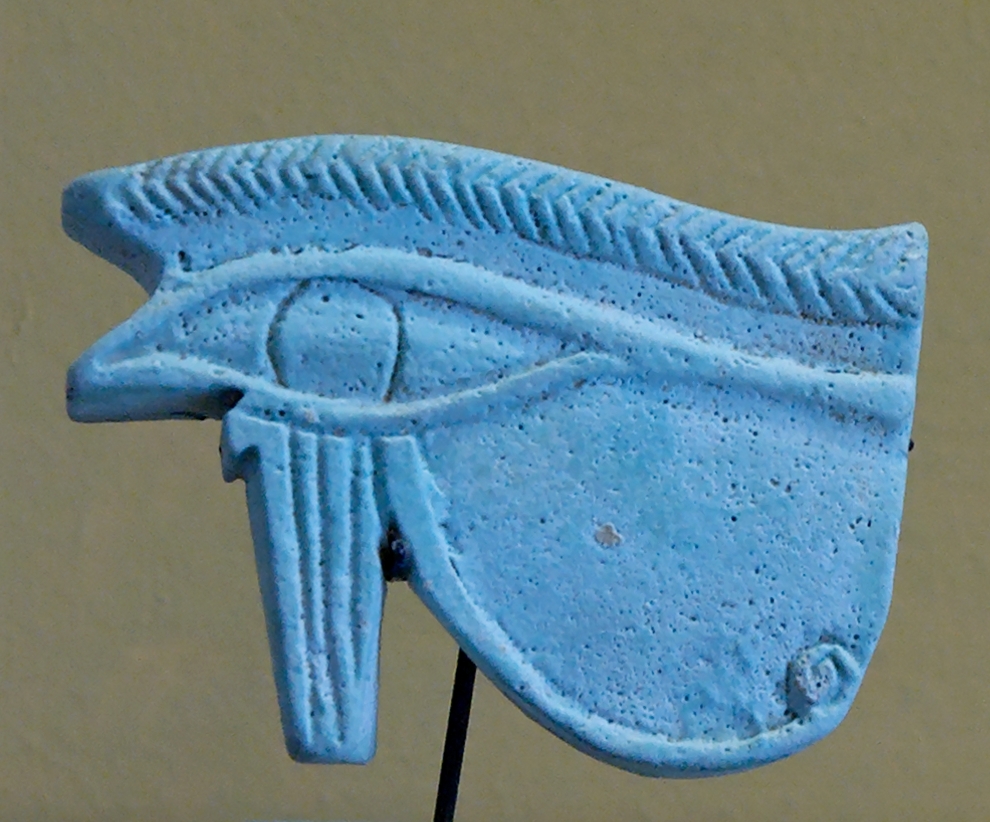
The Eye of Horus is a prominent symbol in ancient Egyptian religion, depicted as a left falcon or human eye. It represents well-being, protection, and the restoration of wholeness following injury.
- Symbolizes healing and protection in ancient Egypt
- Linked to the moon's waxing and waning phases
- Used as amulets from Old Kingdom to Roman times
- Myth involves Set damaging and Thoth restoring the eye
- Equated with cosmic order and ritual offerings
What it is
The Eye of Horus serves as a powerful emblem within ancient Egyptian spiritual life. It typically appears as a stylized left eye, often paired with the right Eye of Ra. The symbol conveys ideas of safety, recovery, and total completeness. It stands for the restoration of a damaged part into a functional whole. This imagery connects deeply with the moon's phases and the concept of cosmic balance known as maat.
Where it comes from
The symbol originates from myths about the god Horus and his conflict with Set. In these stories, Set damages Horus's eye during their struggle for power. Another deity, usually Thoth, helps restore the eye to its original state. This act of healing became a central theme. The restored eye was then offered to Osiris, sustaining him in the afterlife. This myth established the eye as a model for all ritual offerings.
How it is done
The symbol appeared frequently in art and daily objects. Amulets shaped like the eye were worn for protection. Pairs of eyes were painted on coffins to guard the deceased. The symbol also decorated stone stelae and the prows of boats. In medical texts, the eye was invoked to heal patients. Physicians compared their actions to Thoth restoring Horus's sight. The symbol acted as a visual prayer for health and safety.
Tools and materials
The primary tool was the amulet itself, carved from various materials. The symbol was also painted directly onto burial containers. Hieroglyphic characters representing parts of the eye were used in mathematics. These fractions likely derived from the different sections of the eye diagram. The physical representation served as a conduit for magical power.
Eye of Horus, drawn and placed
- Living
- Revived
- Fading
- Historical
- Legendary
- Performed
- Lineage
- ancient egyptian religion
- Timing
- during funerals and lunar festivals
What it is for
People sought the eye's power for protection against evil forces. It was believed to ward off harm and ensure bodily integrity. In funerary contexts, it provided sustenance to the dead. The symbol represented the life force that flowed from the gods to humans. By offering the eye, people maintained the cosmic order and ensured continued existence.
Who does it
The symbol was used by ordinary households for personal protection. Priests incorporated it into temple rituals and offerings. Physicians referenced it in healing spells and medical procedures. Scholars study its mathematical and religious significance today. Its widespread use indicates acceptance across different social strata.
Peoples and places
The symbol is primarily associated with ancient Egypt. It also spread to neighboring regions like Nubia and Syria. Different cultures adopted the motif for their own protective needs. In Egypt, it held deep religious meaning tied to kingship and the afterlife. Outside Egypt, it served more generally as a charm against misfortune.
At a glance: who, where and when
Belief worlds
Occasions



What people believe
Ancient Egyptians viewed the eye as a source of divine power. It represented the sun and moon, linking celestial bodies to earthly life. The restoration of the eye mirrored the waxing moon. This connection reinforced beliefs about renewal and cyclical time. The eye was seen as a tangible manifestation of maat, or cosmic truth.
When it is done
The symbol was linked to lunar festivals observed monthly. Events like the Blacked-out Moon and Half-Month festivals featured offerings. These rites paralleled the healing and filling of the eye. The fifteen days from new to full moon were associated with deities restoring the eye. Rituals during these times emphasized replenishment and order.
How scholars and sceptics see it
Experts debate the exact origins of the eye's associations. Some link it to Venus, while others see it as purely lunar. The mathematical fraction theory has been challenged but remains influential. Researchers analyze how the symbol evolved from myth to everyday object. Studies highlight its role in connecting medical practice with religious ritual.
Cautions and what is closed
The symbol was used to protect against eye diseases specifically. Medical papyri equate body parts with deities for healing. No specific dangers are associated with the symbol itself. It was considered a safe and potent protective device. Misuse or disrespect would have been seen as disrupting cosmic order.
Compare and confuse
The Eye of Horus is often paired with the Eye of Ra. While the left eye represents the moon and healing, the right eye relates to the sun and solar power. Both symbols share stylistic features but hold distinct meanings. The wedjat eye is sometimes used interchangeably with other eye motifs in art.
Questions people ask about Eye of Horus
What does the Eye of Horus represent?
It represents well-being, healing, and protection. The symbol signifies the restoration of wholeness after injury, mirroring the myth where Horus's eye is damaged and then healed by another deity.
Where did the Eye of Horus originate?
It originated in ancient Egyptian religion. The symbol stems from myths about the god Horus fighting Set. The restored eye was offered to Osiris, becoming a model for funerary offerings.
How was the Eye of Horus used?
It was used as an amulet for protection and painted on coffins. Physicians invoked it in healing spells. It also appeared on stelae and boats, serving as a powerful protective charm.
Is the Eye of Horus the same as the Eye of Ra?
They are related but distinct. The Eye of Horus is the left eye, associated with the moon and healing. The Eye of Ra is the right eye, linked to the sun and solar power, though they share artistic styles.
Good reading and sources
- Eye of Horus on WikipediaEncyclopedia
- More photos on Wikimedia CommonsPhotos and video
- Wikidata recordOpen data
The facts on this page come from the Wikipedia article "Eye of Horus", written by its contributors and used under the CC BY-SA 4.0 licence, and from its Wikidata record (CC0). EveryJaadu rewrote the text in its own words, with AI assistance, and compares every page with the article to make sure no passage is copied. It may be reused under the same CC BY-SA 4.0 licence with a link back.
It may contain mistakes. Names and customs differ from one community to the next, and some knowledge is closed to outsiders and left out here. This page describes belief and practice. It does not say that any of it works, it is not a how-to, and it is not medical advice. If something is wrong, tell us. Last refreshed 2026-10-06.
More from Egypt
All the entries from Egypt 🇪🇬 Egypt and 1 moreShen ring
An ancient Egyptian symbol of eternal protection, shaped like a rope looped around a stick.Charm · Protection Historical
🇪🇬 Egypt and 1 moreShen ring
An ancient Egyptian symbol of eternal protection, shaped like a rope looped around a stick.Charm · Protection Historical
 🇪🇬 EgyptScarab
A carved beetle amulet and seal used in ancient Egypt for protection, identity, and ritual.Charm · Protection · Luck and prosperity Historical
🇪🇬 EgyptScarab
A carved beetle amulet and seal used in ancient Egypt for protection, identity, and ritual.Charm · Protection · Luck and prosperity Historical
 🇪🇬 Egypt and 5 moreHamsaخمسة
A palm-shaped amulet used across North Africa and the Middle East to ward off harm.Charm · Protection · Luck and prosperity Living
🇪🇬 Egypt and 5 moreHamsaخمسة
A palm-shaped amulet used across North Africa and the Middle East to ward off harm.Charm · Protection · Luck and prosperity Living
 🇪🇬 EgyptDjedḏd
An ancient Egyptian pillar symbol representing stability and resurrectionCharm · Protection · Power and authority Historical
🇪🇬 EgyptDjedḏd
An ancient Egyptian pillar symbol representing stability and resurrectionCharm · Protection · Power and authority Historical
Related elsewhere
All charm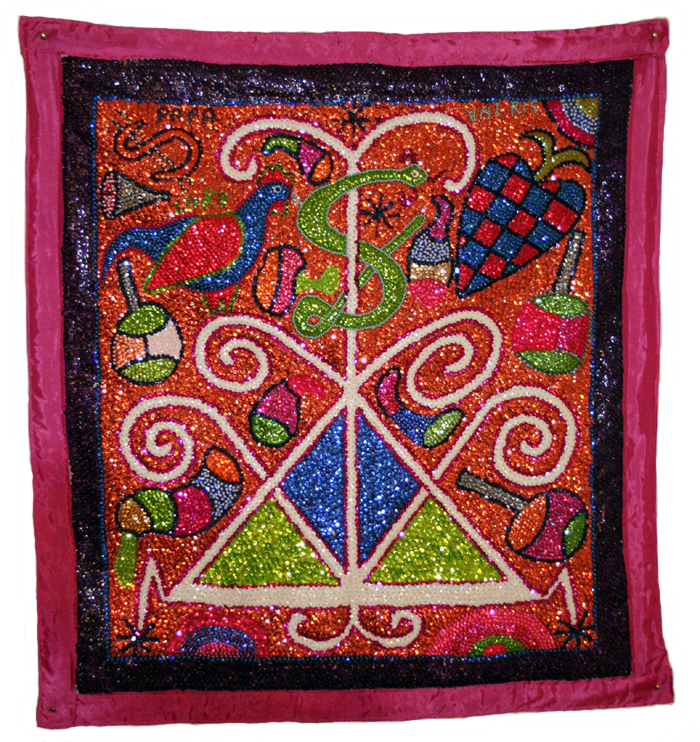 🇭🇹 Haiti and 2 moreHaitian VodouVodou
An Afro-Haitian religion blending West African traditions with Catholicism and FreemasonryTradition · Protection · Healing Living
🇭🇹 Haiti and 2 moreHaitian VodouVodou
An Afro-Haitian religion blending West African traditions with Catholicism and FreemasonryTradition · Protection · Healing Living
 🇨🇳 China and 2 moreEight Immortals八仙
Eight legendary Taoist figures of China, each with a power and a vesselFigure · Protection · Healing Living
🇨🇳 China and 2 moreEight Immortals八仙
Eight legendary Taoist figures of China, each with a power and a vesselFigure · Protection · Healing Living
 🇮🇶 Iraq and 5 moreGrimoire
A textbook containing instructions for spells, rituals, and the creation of magical objects.Text · Protection · Healing Historical
🇮🇶 Iraq and 5 moreGrimoire
A textbook containing instructions for spells, rituals, and the creation of magical objects.Text · Protection · Healing Historical
 🇿🇦 South AfricaSympathetic magic
A magical principle based on imitation and contact to influence the worldTradition · Protection · Healing Historical
🇿🇦 South AfricaSympathetic magic
A magical principle based on imitation and contact to influence the worldTradition · Protection · Healing Historical