Power and authority
Magic as kingship, priesthood and status: the sorcerer-king, the court astrologer, the rainmaker.
Magic as power and authority is the use of ritual to make or hold rank: kings with sacred duties, court astrologers, rainmakers, chiefs who are said to hold spiritual force, and priests who keep a state religion. It includes the Egyptian pharaoh, the Mongol shamans at the court of the khan, the Chinese Taoist masters, the Zulu and Shona spirit mediums, and the astrologers who advised Mughal and European rulers. This page asks how magic and politics feed each other. Where this happens, magic is less about individual wishes and more about who is allowed to speak for the unseen.
Sacred rulers
In many kingdoms the ruler was believed to hold a power linked to harvest, rain or victory. Pharaohs performed rites to keep order, and the Divine Right of kings in Europe included the royal touch, a rite by which French and English monarchs touched people with scrofula. Chinese emperors held the Mandate of Heaven, which natural omens could confirm or withdraw. The Mongol khans consulted shamans and diviners. Kings also commissioned astrologers to choose coronation dates.
Advisers and rivals
Courts employed diviners, astrologers and mages. John Dee advised Elizabeth I, and Indian and Persian kings kept court astrologers. Such advisers also faced risk: in Rome, astrologers were expelled several times, and accusations of sorcery were used to remove rivals at courts from Byzantium to Ming China. Magic offered influence to people with little formal rank. Sorcery charges were used against queens and ministers in several courts, and the fall of a favourite was often explained by a spell.
Resistance and the state
Spirit mediums have led resistance. In Zimbabwe, the spirit mediums Nehanda and Kaguvi were central to the 1896 uprising against British rule, and Nehanda was hanged in 1898. In Kenya and Tanzania, the Maji Maji rebellion of 1905 drew on a water said to protect against bullets. Colonial states responded with witchcraft ordinances, which often banned healers and protected nobody. In Africa, chiefs are often described as guardians of a land and its rain, and ruling families have held rites for the whole community.
Modern politics
Some leaders consult astrologers or healers, and political use of the occult is reported from India to Latin America. Accusations of witchcraft are used against opponents and in land disputes. Scholars read these links as part of how power is made visible and legitimate. Citizens may wish to ask who benefits when magic is used in public life. Many states now regulate healers and diviners, or use them for public health messages, which shows how much influence they still have.
Power and authority on EveryJaadu
The entries written up so far, best known first.
 🇫🇷 France and 2 moreKing ArthurBrenin Arthur
A legendary British king and folk hero of medieval literature and Welsh mythologyFigure · Power and authority · Wonder and entertainment Legendary
🇫🇷 France and 2 moreKing ArthurBrenin Arthur
A legendary British king and folk hero of medieval literature and Welsh mythologyFigure · Power and authority · Wonder and entertainment Legendary
 🇫🇷 FranceHoly GrailSaint Graal
A cup or stone from Arthurian tales that grants healing and eternal lifeFigure · Healing · Luck and prosperity Legendary
🇫🇷 FranceHoly GrailSaint Graal
A cup or stone from Arthurian tales that grants healing and eternal lifeFigure · Healing · Luck and prosperity Legendary
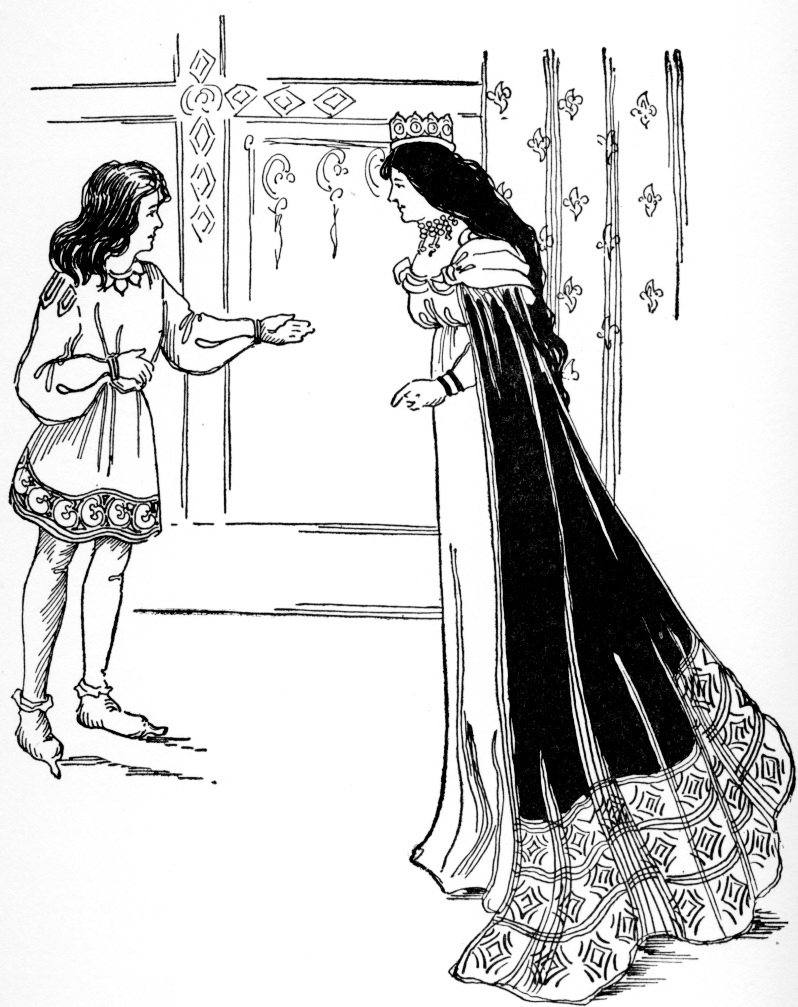 🇬🇧 United Kingdom and 3 moreMorgause
A legendary queen of Orkney and sister to King Arthur in British mythFigure · Power and authority Legendary
🇬🇧 United Kingdom and 3 moreMorgause
A legendary queen of Orkney and sister to King Arthur in British mythFigure · Power and authority Legendary
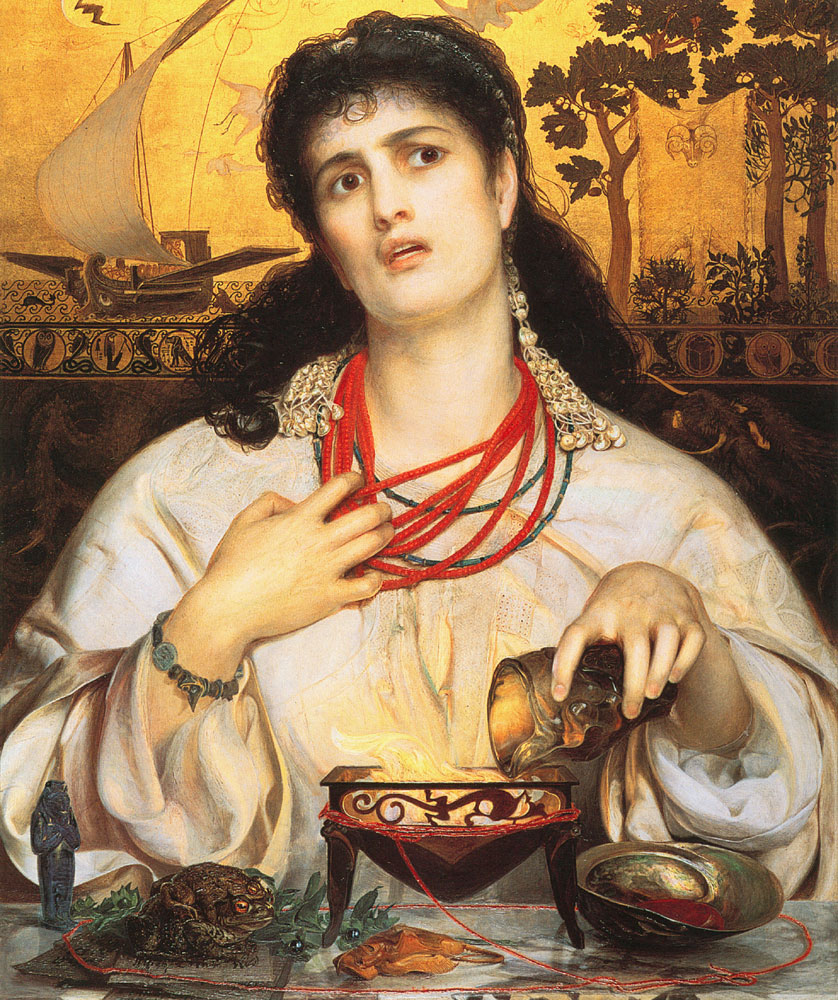 🇬🇷 GreeceMedeaΜήδεια
A sorceress and princess of Colchis who aids Jason and uses magic for revenge.Figure · Cursing and harm · Healing Legendary
🇬🇷 GreeceMedeaΜήδεια
A sorceress and princess of Colchis who aids Jason and uses magic for revenge.Figure · Cursing and harm · Healing Legendary
 🇫🇷 France and 1 moreBaphomet
A name from medieval trials and a symbol of occult equilibriumFigure · Power and authority Legendary
🇫🇷 France and 1 moreBaphomet
A name from medieval trials and a symbol of occult equilibriumFigure · Power and authority Legendary
 🇬🇷 Greece and 5 moreSibylΣίβυλλα (Sibylla)
Ancient Greek prophetesses who spoke divine counsel at holy shrinesFigure · Seeing and foretelling · Power and authority Legendary
🇬🇷 Greece and 5 moreSibylΣίβυλλα (Sibylla)
Ancient Greek prophetesses who spoke divine counsel at holy shrinesFigure · Seeing and foretelling · Power and authority Legendary
 🇩🇪 Germany and 1 moreFaust
A German legend of a scholar who trades his soul for knowledge and pleasureFigure · Power and authority · Cursing and harm Legendary
🇩🇪 Germany and 1 moreFaust
A German legend of a scholar who trades his soul for knowledge and pleasureFigure · Power and authority · Cursing and harm Legendary
 🇬🇧 United Kingdom and 1 moreMerlinMyrddin
A legendary prophet and magician from the King Arthur cycleFigure · Seeing and foretelling · Power and authority Legendary
🇮🇪 IrelandThe MorríganMórrígan
An Irish goddess of war, fate, and sovereignty who appears as a crow or shape-shifter.Figure · Seeing and foretelling · Cursing and harm Legendary
🇬🇧 United Kingdom and 1 moreMerlinMyrddin
A legendary prophet and magician from the King Arthur cycleFigure · Seeing and foretelling · Power and authority Legendary
🇮🇪 IrelandThe MorríganMórrígan
An Irish goddess of war, fate, and sovereignty who appears as a crow or shape-shifter.Figure · Seeing and foretelling · Cursing and harm Legendary
 🇬🇧 United Kingdom and 2 moreExcalibur
The mythical sword of King Arthur, symbolizing rightful sovereignty and magical power.Figure · Power and authority Legendary
🇬🇧 United Kingdom and 2 moreExcalibur
The mythical sword of King Arthur, symbolizing rightful sovereignty and magical power.Figure · Power and authority Legendary
 🇬🇷 Greece and 1 moreGolden FleeceΧρυσόμαλλον δέρας
A magical ram's skin from Greek myth, symbol of kingship and a quest objectFigure · Power and authority Legendary
🇬🇷 Greece and 1 moreGolden FleeceΧρυσόμαλλον δέρας
A magical ram's skin from Greek myth, symbol of kingship and a quest objectFigure · Power and authority Legendary
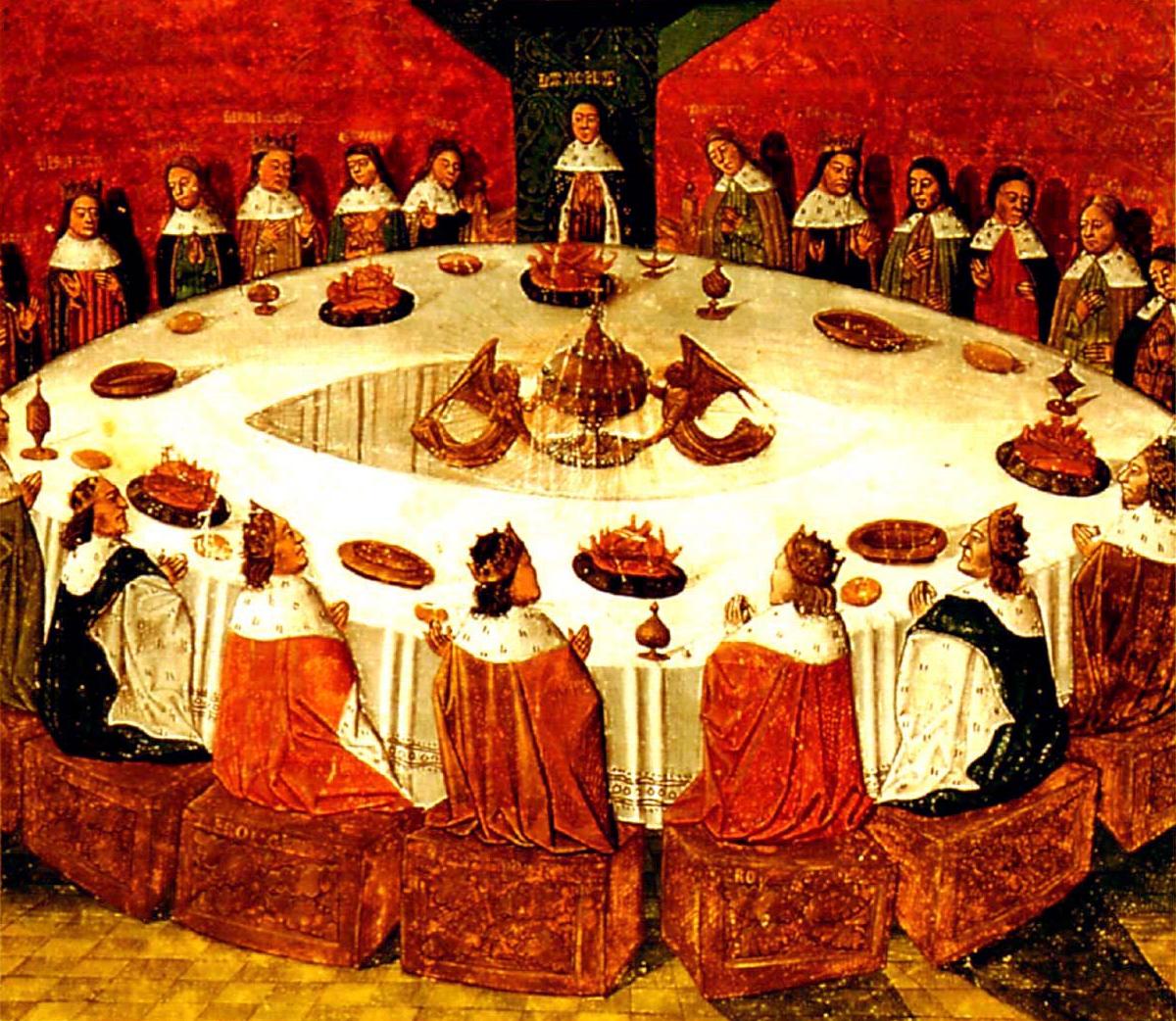 🇬🇧 United Kingdom and 1 moreRound Tablela Table ronde
A legendary table with no head, symbolizing equality among King Arthur's knights.Figure · Power and authority Legendary
🇬🇧 United Kingdom and 1 moreRound Tablela Table ronde
A legendary table with no head, symbolizing equality among King Arthur's knights.Figure · Power and authority Legendary
 🇫🇷 France and 2 moreMelusineMélusine
A water spirit of French and Luxembourgish lore, known for her serpent form and the castles she built.Figure · Luck and prosperity · Power and authority Legendary
🇫🇷 France and 2 moreMelusineMélusine
A water spirit of French and Luxembourgish lore, known for her serpent form and the castles she built.Figure · Luck and prosperity · Power and authority Legendary
 🇮🇪 Ireland and 1 moreFionn mac CumhaillFionn mac Cumaill
A legendary Irish hero and leader of the Fianna warrior bandFigure · Power and authority · Wonder and entertainment Legendary
🇮🇪 Ireland and 1 moreFionn mac CumhaillFionn mac Cumaill
A legendary Irish hero and leader of the Fianna warrior bandFigure · Power and authority · Wonder and entertainment Legendary
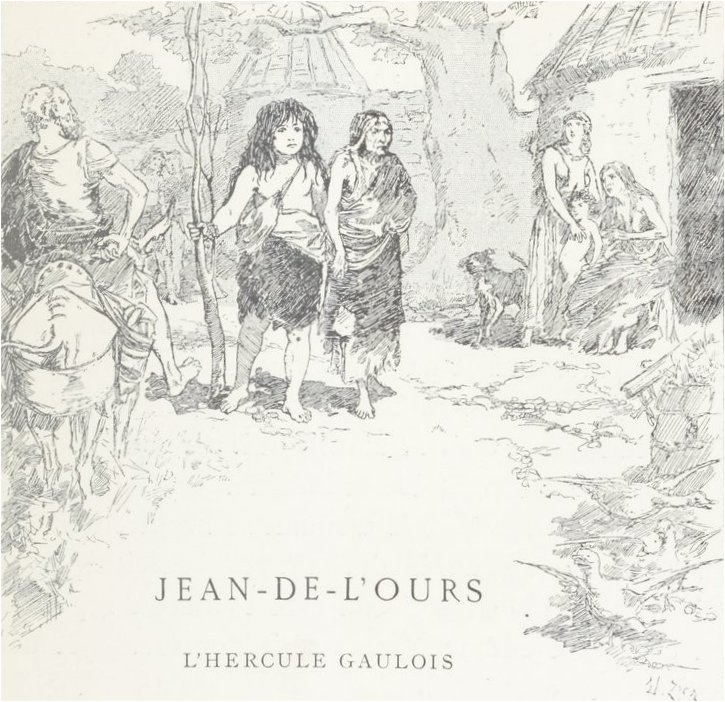 🇫🇷 France and 4 moreJean de l'Ours
A half-bear folk hero who rescues princesses from an underworld giant.Figure · Power and authority Legendary
🇫🇷 France and 4 moreJean de l'Ours
A half-bear folk hero who rescues princesses from an underworld giant.Figure · Power and authority Legendary
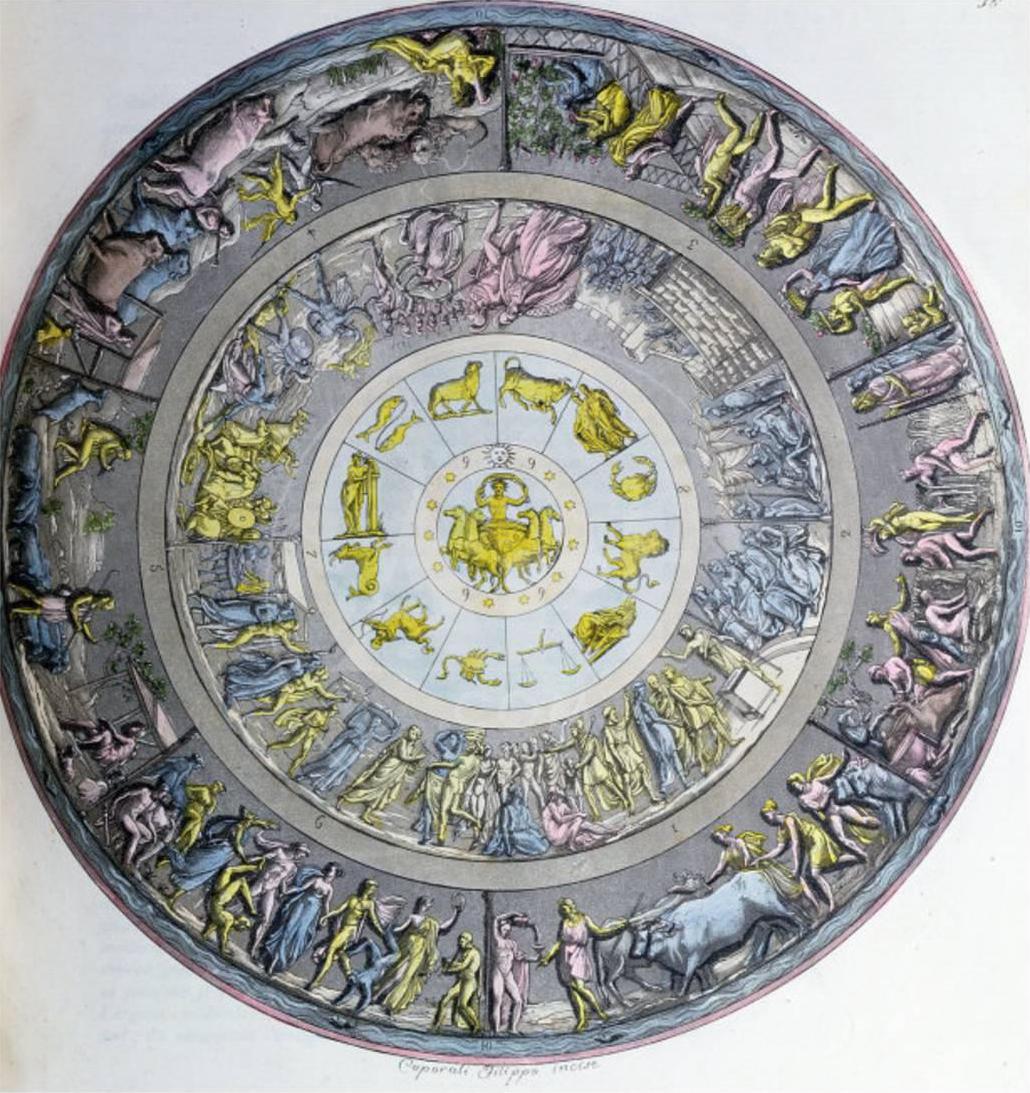 🇬🇷 GreeceShield of Achilles
A mythical shield forged by Hephaestus, decorated with a complete picture of the world and human life.Figure · Power and authority Legendary
🇬🇷 GreeceShield of Achilles
A mythical shield forged by Hephaestus, decorated with a complete picture of the world and human life.Figure · Power and authority Legendary
 🇩🇪 Germany and 2 moreWitege
A Germanic legendary warrior who shifts from loyal companion to traitor in epic poems.Figure · Power and authority Legendary
🇩🇪 Germany and 2 moreWitege
A Germanic legendary warrior who shifts from loyal companion to traitor in epic poems.Figure · Power and authority Legendary
 🇮🇪 IrelandCú Chulainn
A legendary Irish warrior hero and demigod of the Ulster CycleFigure · Power and authority Legendary
🇮🇪 IrelandCú Chulainn
A legendary Irish warrior hero and demigod of the Ulster CycleFigure · Power and authority Legendary
 🇳🇴 Norway and 1 moreBödvar BjarkiBöðvarr Bjarki
A Norse hero who fights as a bear and appears in legends of King Hrolf KrakiFigure · Power and authority Legendary
🇳🇴 Norway and 1 moreBödvar BjarkiBöðvarr Bjarki
A Norse hero who fights as a bear and appears in legends of King Hrolf KrakiFigure · Power and authority Legendary
 🇸🇪 SwedenKnights of Ålleberg
Swedish ghost story about sleeping warriors in a mountainFigure · Power and authority Legendary
🇸🇪 SwedenKnights of Ålleberg
Swedish ghost story about sleeping warriors in a mountainFigure · Power and authority Legendary
 🇵🇱 Poland and 1 morePan Twardowski
A Polish sorcerer who bargained with the Devil and ended up on the MoonFigure · Power and authority Legendary
🇵🇱 Poland and 1 morePan Twardowski
A Polish sorcerer who bargained with the Devil and ended up on the MoonFigure · Power and authority Legendary
Photo credits on this page
The small pictures above come from Wikimedia Commons under free licences. Some are cropped to fit.
- Shield of Achilles: Angelo Monticelli (1778-1837), Public domain, source
- Excalibur: Unknown author, Public domain, source
- Morgause: H. S. Campbell, Public domain, source
- Medea: Frederick Sandys, Public domain, source
- Baphomet: Eliphas Levi, Public domain, source
- Sibyl: Filippino Lippi (1457-1504), Public domain, source
- Faust: Earthsphere, CC BY-SA 4.0, source
- Merlin: Howard Pyle, Public domain, source
- Melusine: GilPe, CC BY-SA 3.0, source
- Round Table: Évrard d'Espinques, Public domain, source
- Fionn mac Cumhaill: Ary Scheffer / Formerly attributed to Anne-Louis Girodet, Public domain, source
- Jean de l'Ours: Édouard François Zier (1856–1924), illustrator, Public domain, source
- Witege: Max Koch, (1859–1930), Public domain, source
- Knights of Ålleberg: Photograph: Nasko, Public domain, source
- Pan Twardowski: Pit1233, Public domain, source
- Golden Fleece: Underworld Painter, Public domain, source
- Bödvar Bjarki: Louis Moe, Public domain, source
- Holy Grail: Photographed by the National Library of Wales, CC0, source
- Cú Chulainn: https://commons.wikimedia.org/wiki/User:Leimanbhradain, CC BY-SA 4.0, source
- King Arthur: William Morris, Public domain, source