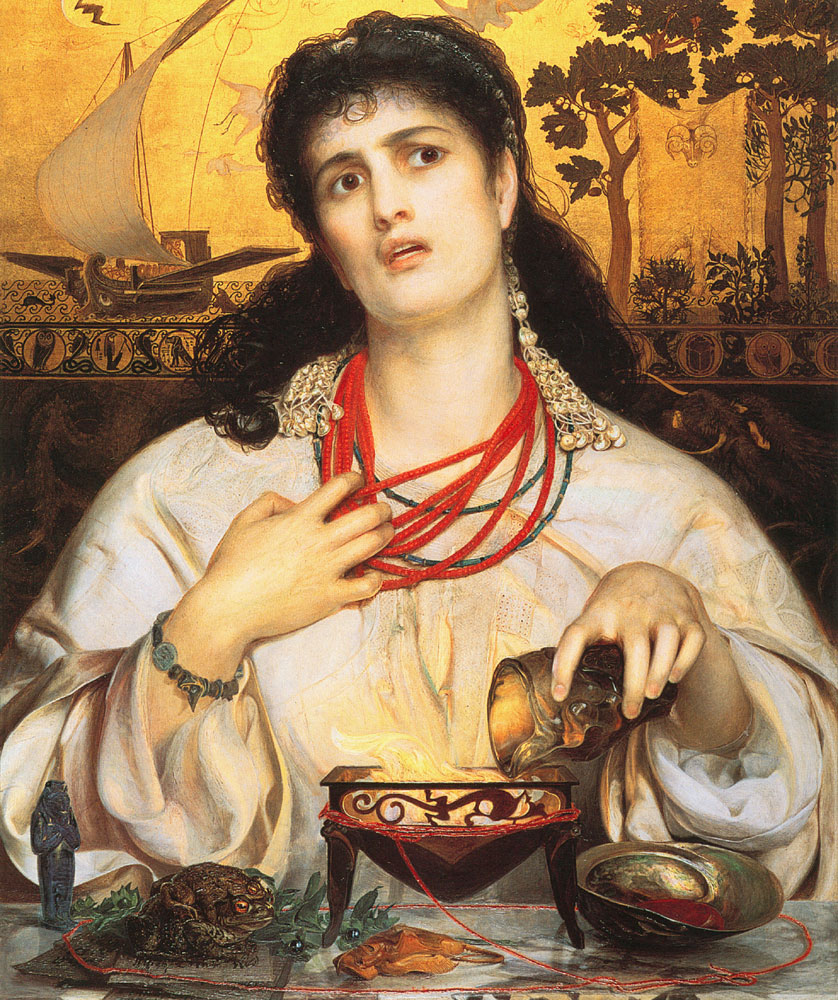
Medea
In its own language: Μήδεια
from Ancient Greek Mḗdeia, meaning planner or schemer
A sorceress and princess of Colchis who aids Jason and uses magic for revenge.
In Greek mythology, Medea is a sorceress and daughter of the King of Colchis. She is known as a skilled worker in medicinal magic and a priestess of Hecate. Her story involves helping Jason retrieve the Golden Fleece and later seeking vengeance through deadly spells.
- Daughter of King Aeëtes of Colchis
- High priestess of the goddess Hecate
- Used magic to help Jason get the Golden Fleece
- Killed her own children to punish Jason
- Escaped in a dragon-drawn chariot
What it is
Medea stands as a central figure in ancient Greek myth, defined by her mastery of pharmakeía, or medicinal magic. She serves as a high priestess to Hecate, the goddess associated with witchcraft and crossroads. As the granddaughter of the sun god Helios, she possesses divine lineage that fuels her supernatural abilities. Stories portray her as both a healer capable of restoring youth and a dangerous enchantress who manipulates fate through spells and poisons.
Where it comes from
The character first appears in Hesiod's Theogony around the eighth century BC. Later literary works solidified her legend. Apollonius of Rhodes wrote the Argonautica in the third century BC, detailing her role in the quest for the Golden Fleece. Euripides crafted his famous tragedy in the fifth century BC, focusing on her betrayal and subsequent revenge. These texts established her complex identity as a helper and a destroyer.
How it is done
Medea employs various magical techniques to influence events. She prepares unguents to protect heroes from fire-breathing beasts. She uses narcotic herbs to lull guarding dragons into sleep. Her craft includes creating potions that reverse aging and induce madness in opponents. She also utilizes divination to predict future outcomes for those traveling with her.
Tools and materials
Her magical practice relies on specific substances and objects. She uses herbal mixtures to create healing salves and deadly toxins. A golden crown and robe coated in poison serve as instruments of vengeance. Unguents derived from mythical sources protect her allies from physical harm. These items act as conduits for her will to alter reality.
Medea, drawn and placed
- Living
- Revived
- Fading
- Historical
- Legendary
- Performed
- Lineage
- Greek mythology
What it is for
Practitioners of her myth use her story to explore themes of power and betrayal. Her magic serves to aid heroes in impossible quests, such as retrieving the Golden Fleece. It also functions as a tool for retribution against those who break their vows. Her actions demonstrate the dual nature of magic as both a life-giving force and a weapon of destruction.
Who does it
Scholars analyze Medea as a representation of ancient views on female power and foreignness. She is depicted as a royal figure who commands respect through her divine ancestry. Her status as a priestess links her to religious institutions. Modern readers view her as a complex anti-heroine rather than a simple villain.
Peoples and places
The Greek tradition claims her origin in Colchis, located on the eastern edge of the Black Sea. Corinth becomes the stage for her most famous tragic acts. Athens offers her refuge after her departure from Corinth. Some accounts link her descendants to the Medes people in Iran, suggesting a wide cultural reach for her legend.
At a glance: who, where and when
Peoples
Belief worlds
![Relief of Medea and the Peliades since 1828 in the Antikensammlung Berlin (Inv.-Nr. Sk 925 [K 186]), pentelic marble, copie after an greek original ca. 420/10 B.C., modern changes; high 116,5 cm, wisth 89-96 cm](https://thumb.wikimedia.org/wikipedia/commons/thumb/d/d8/Relief_of_Medea_and_the_Peliades_Antikensammlung_Berlin.jpg/960px-Relief_of_Medea_and_the_Peliades_Antikensammlung_Berlin.jpg)


What people believe
Her narrative reflects beliefs about the influence of gods on human affairs. Hera and Aphrodite manipulate her emotions to achieve their own goals. Hecate provides a framework for understanding her magical skills. The story suggests that magic operates within a system of divine favor and mortal consequence.
Cautions and what is closed
The myth highlights the dangers of unchecked magical power. Medea's revenge leads to the death of innocent children and royalty. Her actions result in exile and eternal infamy. The tale warns of the consequences of breaking marital bonds and the destructive potential of envy.
Questions people ask about Medea
Who is Medea?
Medea is a sorceress and princess from Colchis in Greek mythology. She is known for her magical skills and her relationship with the hero Jason.
What kind of magic does she use?
She practices pharmakeía, which involves medicinal magic. This includes using herbs for healing, poisons for killing, and charms for protection.
Why did she kill her children?
According to Euripides, she murdered them to exact revenge on Jason for abandoning her. She wanted to ensure he would have no heirs left.
Good reading and sources
- Medea on WikipediaEncyclopedia
- More photos on Wikimedia CommonsPhotos and video
- Wikidata recordOpen data
The facts on this page come from the Wikipedia article "Medea", written by its contributors and used under the CC BY-SA 4.0 licence, and from its Wikidata record (CC0). EveryJaadu rewrote the text in its own words, with AI assistance, and compares every page with the article to make sure no passage is copied. It may be reused under the same CC BY-SA 4.0 licence with a link back.
It may contain mistakes. Names and customs differ from one community to the next, and some knowledge is closed to outsiders and left out here. This page describes belief and practice. It does not say that any of it works, it is not a how-to, and it is not medical advice. If something is wrong, tell us. Last refreshed 2026-10-05.
More from Greece
All the entries from Greece 🇷🇸 Serbia and 5 moreVampire
An undead creature from folklore that feeds on the blood or life force of the livingBeing · Cursing and harm · Luck and prosperity Legendary
🇷🇸 Serbia and 5 moreVampire
An undead creature from folklore that feeds on the blood or life force of the livingBeing · Cursing and harm · Luck and prosperity Legendary
 🇮🇹 Italy and 1 morePietro d'Abano
A medieval physician and astrologer accused of heresy and magic.Text · Healing · Wonder and entertainment Historical
🇮🇹 Italy and 1 morePietro d'Abano
A medieval physician and astrologer accused of heresy and magic.Text · Healing · Wonder and entertainment Historical
 🇬🇷 GreeceCassandraΚασσάνδρα
A Trojan priestess cursed to speak truth that no one acceptsFigure · Seeing and foretelling Legendary
🇬🇷 GreeceCassandraΚασσάνδρα
A Trojan priestess cursed to speak truth that no one acceptsFigure · Seeing and foretelling Legendary
 🇬🇷 GreeceOrpheusὈρφεύς
A Thracian bard whose music charms nature and who journeys to the underworldFigure · Wonder and entertainment Legendary
🇬🇷 GreeceOrpheusὈρφεύς
A Thracian bard whose music charms nature and who journeys to the underworldFigure · Wonder and entertainment Legendary
Related elsewhere
All figure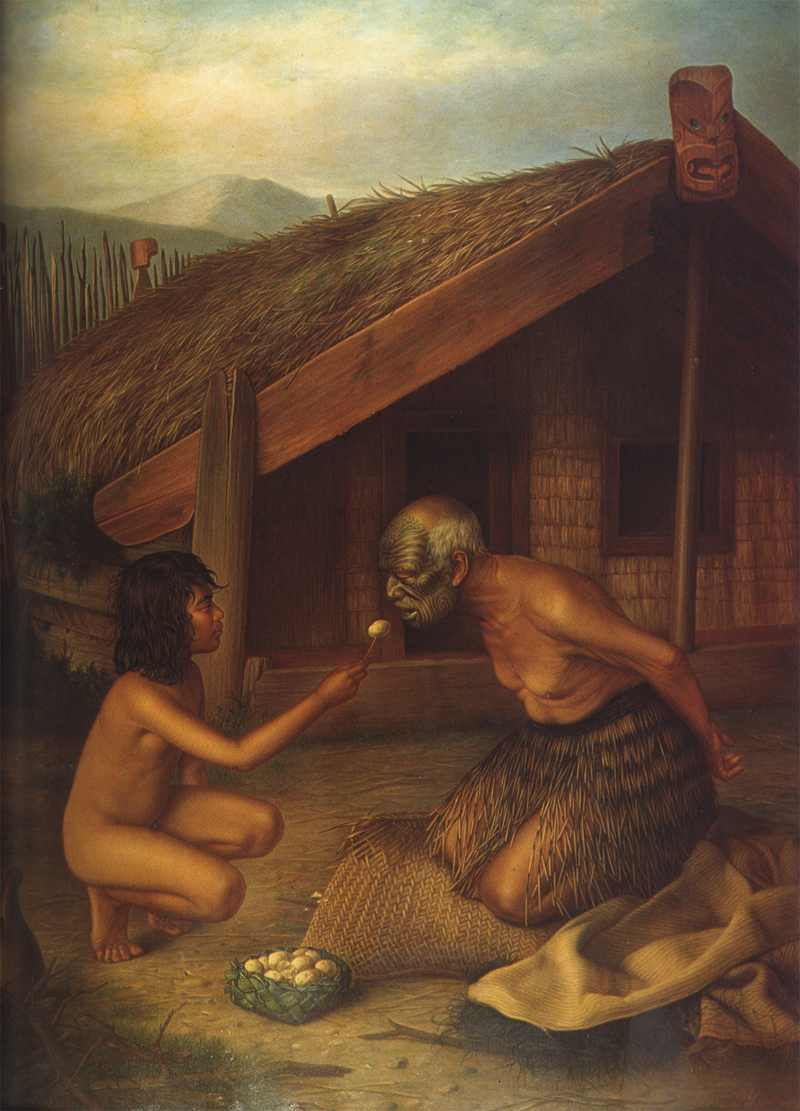 🇳🇿 New ZealandTohunga
A Māori expert practitioner of sacred or secular arts, from priests to carvers.Tradition · Healing · Seeing and foretelling Living
🇳🇿 New ZealandTohunga
A Māori expert practitioner of sacred or secular arts, from priests to carvers.Tradition · Healing · Seeing and foretelling Living
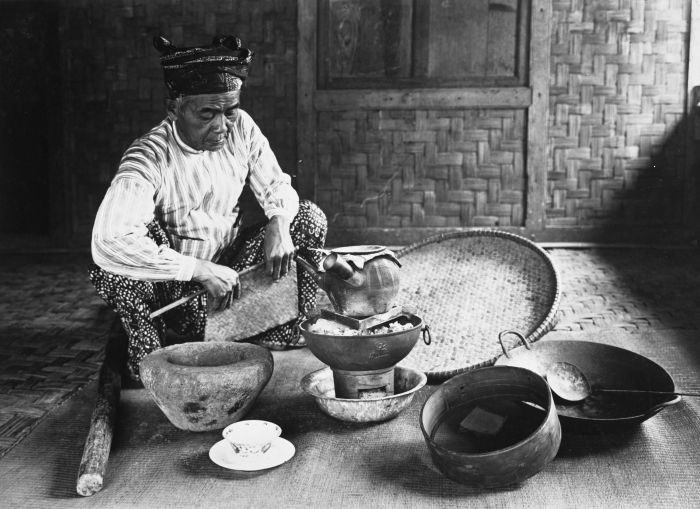 🇮🇩 Indonesia and 2 moreDukun
A traditional healer and spirit medium in Indonesian folk practiceTradition · Healing · Seeing and foretelling Living
🇮🇩 Indonesia and 2 moreDukun
A traditional healer and spirit medium in Indonesian folk practiceTradition · Healing · Seeing and foretelling Living
 🇿🇦 South AfricaSympathetic magic
A magical principle based on imitation and contact to influence the worldTradition · Protection · Healing Historical
🇿🇦 South AfricaSympathetic magic
A magical principle based on imitation and contact to influence the worldTradition · Protection · Healing Historical