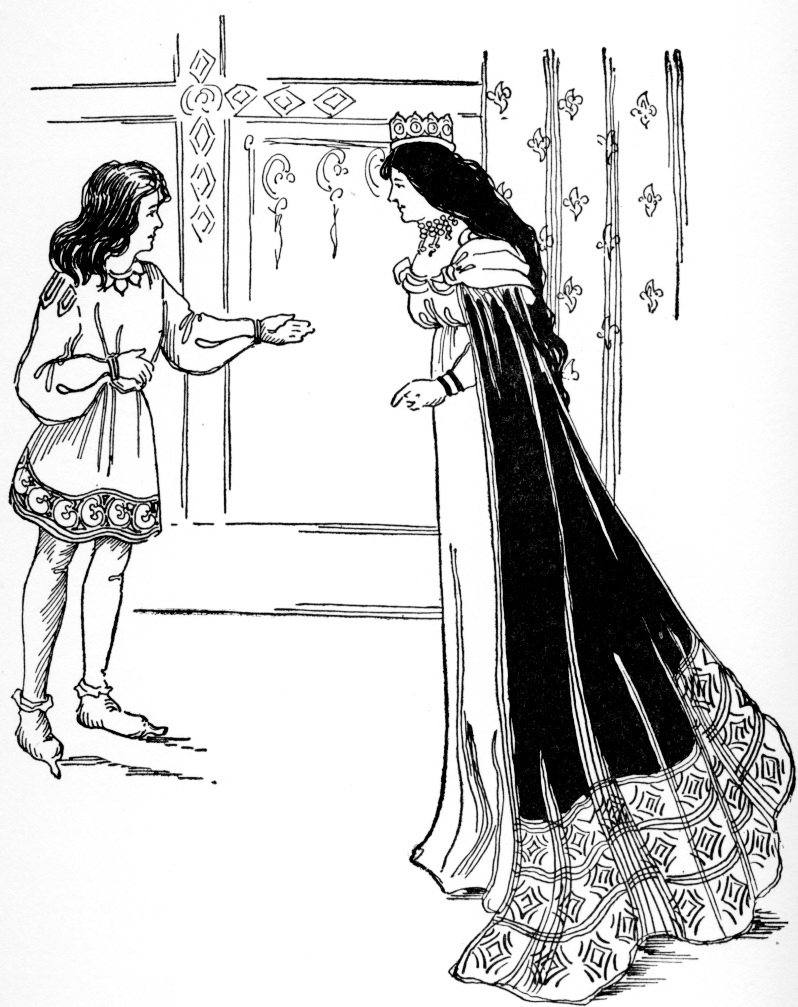
Morgause
Likely derived from the place name Orcades, later influenced by the name Morgan
A legendary queen of Orkney and sister to King Arthur in British myth
Morgause is a central figure in the Matter of Britain legends, appearing as a queen and often as the sibling of King Arthur. Her identity shifts across medieval texts, where she is also known as Anna or Gwyar, and serves as the wife of King Lot.
- Known as Anna in Geoffrey of Monmouth's Historia Regum Britanniae
- Called Gwyar in early Welsh texts, meaning 'bloodshed'
- Mother of Gawain, Agravain, Gaheris, and Gareth in Malory
- Name likely derives from the Latin Orcades for Orkney Islands
- Married to King Lot, ruling over northern realms like Scotland
What it is
Morgause stands as a prominent queen within the literary cycle concerning King Arthur. She typically holds the title of ruler over northern territories such as Orkney or Lothian. In most narratives, she is identified as a full or half-sister to Arthur. Her marital status usually links her to King Lot, though some accounts describe her as a widow. Modern writers sometimes merge her character with that of Morgan le Fay, creating a single entity from two distinct figures found in older texts.
Where it comes from
The character evolves through various medieval chronicles and romances. Early Welsh texts feature a woman named Gwyar, mother of Gawain. Latin chronicles by Geoffrey of Monmouth introduce Anna as Uther Pendragon’s daughter. The name Morgause appears later in French prose cycles and German adaptations like Wolfram von Eschenbach’s Parzival, where she is called Sangive. Scholars suggest the name may stem from the Latin Orcades, referring to the Orkney Islands, before evolving into its current form.
Morgause, drawn and placed
- Living
- Revived
- Fading
- Historical
- Legendary
- Performed
- Lineage
- Arthurian legend
What it is for
Her role primarily establishes royal lineage and political alliances within the Arthurian court. As a queen, she represents the northern realms allied with or opposed to Camelot. Her relationships drive key plot points, particularly regarding the birth of Mordred. In later traditions, her union with Arthur introduces the theme of accidental incest, which leads to the rise of Mordred as a antagonist who challenges Arthur’s rule.
Peoples and places
Welsh sources present her as Gwyar, a matronymic figure associated with bloodshed. Norman and Latin chronicles name her Anna, emphasizing her status as Uther’s daughter. German romances adapt her as Sangive or Seife, integrating her into broader European knightly tales. These variations show how different cultures reshaped the same core character to fit their local storytelling traditions and genealogical preferences.
At a glance: who, where and when
Belief worlds


How scholars and sceptics see it
Researchers trace her development from early Welsh matronymic names to complex medieval queens. Lewis Spence linked her to the Celtic goddess Ana, while others propose a derivation from the Irish goddess Deichtine via the name Morcades. Historians note that her identity was fluid, changing based on the author’s need to explain family trees or justify political claims in the post-Roman British period.
Compare and confuse
She is frequently confused with Morgan le Fay due to similar roles and names. In some texts, she is conflated with Elaine of Garlot. The name Anna appears in multiple unrelated contexts, including as the wife of Budic II of Brittany. Her Welsh counterpart Gwyar shares traits with other maternal figures in Celtic mythology, highlighting the blend of historical memory and mythic invention.
Questions people ask about Morgause
Who is Morgause?
She is a legendary queen in Arthurian literature, often depicted as the sister of King Arthur and the wife of King Lot. She rules over northern territories such as Orkney or Lothian.
What are her other names?
She appears as Anna in Latin chronicles, Gwyar in Welsh texts, and Sangive in German romances. The name Morcades also appears in early continuations of Chrétien de Troyes' works.
Is she related to King Arthur?
Yes, she is typically described as his full or half-sister. In some versions, she is the daughter of Igraine and Gorlois, making her Arthur’s stepsister.
Who are her children?
She is the mother of Gawain, Agravain, Gaheris, and Gareth. In later traditions, she is also the mother of Mordred, fathered by Arthur himself.
Good reading and sources
- Morgause on WikipediaEncyclopedia
- More photos on Wikimedia CommonsPhotos and video
- Wikidata recordOpen data
The facts on this page come from the Wikipedia article "Morgause", written by its contributors and used under the CC BY-SA 4.0 licence, and from its Wikidata record (CC0). EveryJaadu rewrote the text in its own words, with AI assistance, and compares every page with the article to make sure no passage is copied. It may be reused under the same CC BY-SA 4.0 licence with a link back.
It may contain mistakes. Names and customs differ from one community to the next, and some knowledge is closed to outsiders and left out here. This page describes belief and practice. It does not say that any of it works, it is not a how-to, and it is not medical advice. If something is wrong, tell us. Last refreshed 2026-10-05.
More from the United Kingdom
All the entries from the United Kingdom 🇬🇧 United Kingdom and 2 moreKing ArthurBrenin Arthur
A legendary British king and folk hero of medieval literature and Welsh mythologyFigure · Power and authority · Wonder and entertainment Legendary
🇬🇧 United Kingdom and 2 moreKing ArthurBrenin Arthur
A legendary British king and folk hero of medieval literature and Welsh mythologyFigure · Power and authority · Wonder and entertainment Legendary
 🇬🇧 United Kingdom and 1 moreMerlinMyrddin
A legendary prophet and magician from the King Arthur cycleFigure · Seeing and foretelling · Power and authority Legendary
🇬🇧 United Kingdom and 1 moreMerlinMyrddin
A legendary prophet and magician from the King Arthur cycleFigure · Seeing and foretelling · Power and authority Legendary
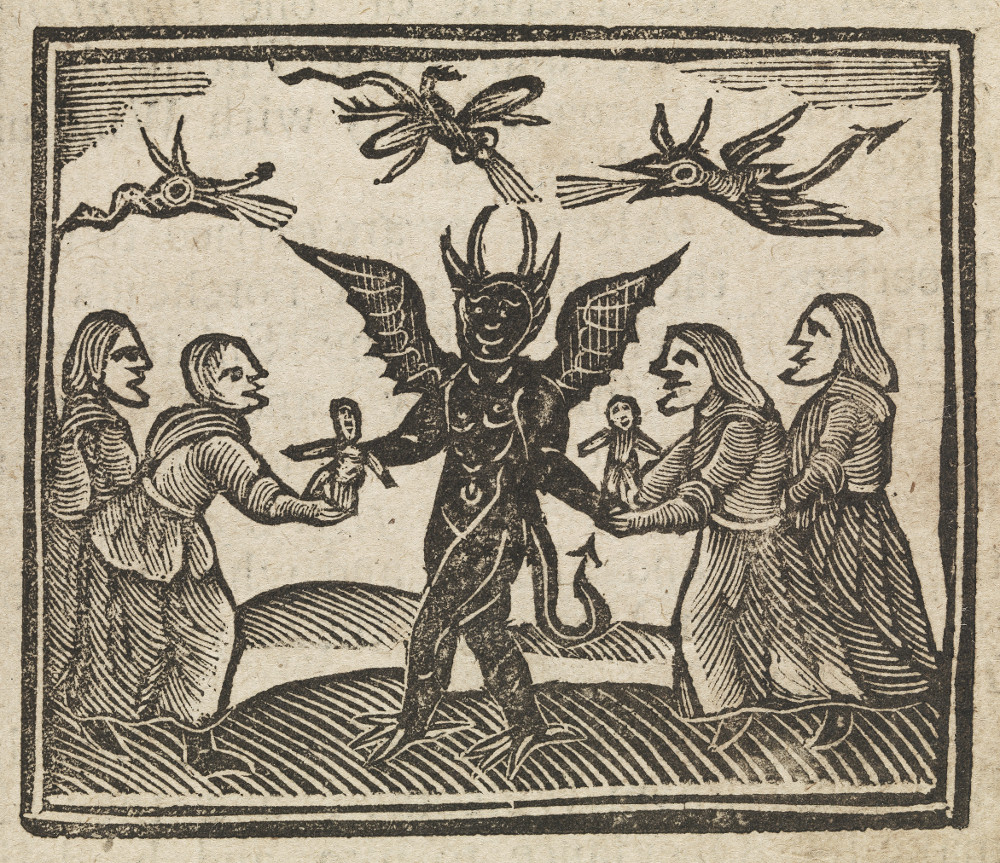 🇬🇧 United KingdomAgnes Sampson
A Scottish healer executed for witchcraft during the North Berwick trials.Figure Historical
🇬🇧 United KingdomAgnes Sampson
A Scottish healer executed for witchcraft during the North Berwick trials.Figure Historical
 🇩🇪 Germany and 1 moreFaust
A German legend of a scholar who trades his soul for knowledge and pleasureFigure · Power and authority · Cursing and harm Legendary
🇩🇪 Germany and 1 moreFaust
A German legend of a scholar who trades his soul for knowledge and pleasureFigure · Power and authority · Cursing and harm Legendary
Related elsewhere
All figure 🇮🇳 India and 5 moreAstrology
A divinatory practice that reads human fate through the positions of celestial bodies.Belief · Seeing and foretelling · Luck and prosperity Living
🇮🇳 India and 5 moreAstrology
A divinatory practice that reads human fate through the positions of celestial bodies.Belief · Seeing and foretelling · Luck and prosperity Living
 🇮🇳 India and 2 morePalmistry
A divination method that interprets the lines and shapes of the hand to predict fate or reveal character.Oracle · Seeing and foretelling · Power and authority Living
🇮🇳 India and 2 morePalmistry
A divination method that interprets the lines and shapes of the hand to predict fate or reveal character.Oracle · Seeing and foretelling · Power and authority Living
 🇨🇳 China and 3 moreChinese dragon龍
A legendary water deity and imperial symbol in East Asian cultureBeing · Protection · Luck and prosperity Historical
🇨🇳 China and 3 moreChinese dragon龍
A legendary water deity and imperial symbol in East Asian cultureBeing · Protection · Luck and prosperity Historical
 🇮🇳 IndiaMahakaleshwar JyotirlingaMahākāleśvara
A sacred Shiva shrine in Ujjain, India, known for its south-facing idol and ancient origins.Tradition · Protection · Power and authority Living
🇮🇳 IndiaMahakaleshwar JyotirlingaMahākāleśvara
A sacred Shiva shrine in Ujjain, India, known for its south-facing idol and ancient origins.Tradition · Protection · Power and authority Living