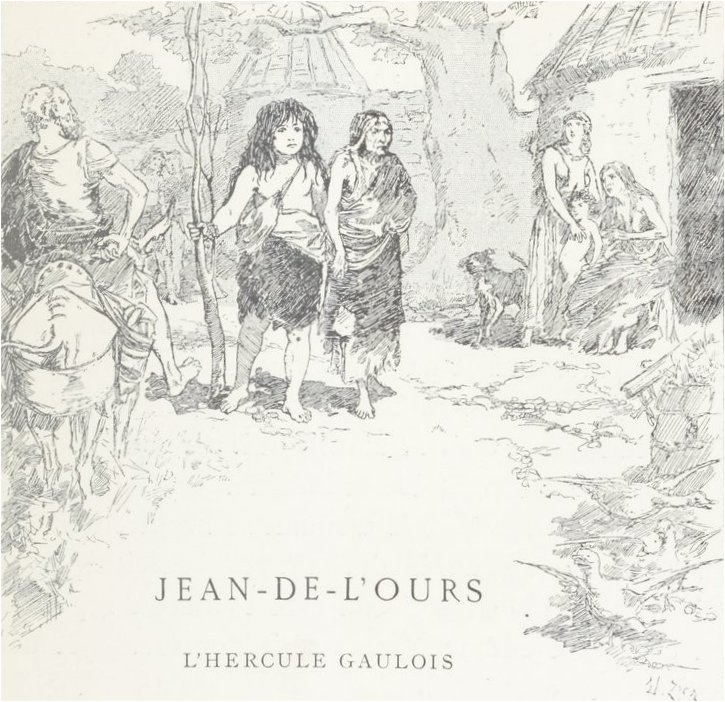
Jean de l'Ours
from French for John the Bear
A half-bear folk hero who rescues princesses from an underworld giant.
Jean de l'Ours is a legendary figure from French folklore, classified as tale type 301B. He is born of a human mother and a bear, or raised by one, and possesses superhuman strength. The hero journeys to rescue three princesses held captive in an underground realm.
- Hero is half-human and half-bear
- Carries a heavy iron cane
- Rescues three princesses from underground
- Companions betray him in the underworld
- Classified as ATU 301B
What it is
Jean de l'Ours is a central character in a widespread European folktale. Scholars classify this narrative as Type 301B within the Aarne-Thompson system. The story follows a hero who is part human and part bear. He travels to defeat a powerful adversary and save three royal women from captivity. The tale appears across many cultures with local names but keeps its core structure intact.
Where it comes from
The legend likely stems from ancient ideas about the bond between humans and animals. Some scholars suggest it reflects early totemic beliefs where bears were seen as ancestors. Variants exist throughout Europe, from France to Russia. The story also spread to the Americas through colonial contact. It remains a popular example of the bear-son archetype in global folklore.
How it is done
The hero typically starts as a child raised by a bear or born to a human mother and a bear. He acquires a massive iron staff and gathers loyal companions. They enter a haunted castle and descend into an underworld. There he defeats beasts guarding princesses. His companions often betray him, but he escapes using magical aid and returns to claim his reward.
Tools and materials
The hero carries a heavy iron cane used to strike giants and break barriers. He often receives magical ointment to heal wounds. Three colored balls made of steel, silver, or gold serve as proof of his deeds. These items help him navigate the underworld and prove his identity to the king upon his return.
Jean de l'Ours, drawn and placed
- Living
- Revived
- Fading
- Historical
- Legendary
- Performed
- Lineage
- Aarne-Thompson Type 301B
What it is for
The narrative serves as a cultural touchstone for understanding heroic archetypes. It explores themes of loyalty, betrayal, and the triumph of the outcast. Communities use the story to discuss social dynamics and moral lessons. Scholars analyze it to trace the migration of folk motifs across continents and centuries.
Who does it
No living practitioners perform rituals for Jean de l'Ours. The figure exists solely within literary and oral traditions. Folklorists and philologists study the variants to understand narrative evolution. Writers and illustrators have adapted the character for modern audiences over the last two centuries.
Peoples and places
The tale is most prominent in French and Spanish traditions. Russian versions feature Ivan the Bear's Son. Romanian and Italian variants also exist. Each culture adapts the hero's name and specific details. The story demonstrates how a single plot can travel and transform across linguistic boundaries while retaining its essential meaning.
At a glance: who, where and when


What people believe
The story reflects ancient beliefs in hybrid beings and animal kinship. It suggests a world where humans and animals could interact freely in mythical times. The underworld journey mirrors shamanic patterns found in other cultures. These elements point to deep roots in pre-Christian European mythology and shared human storytelling instincts.
When it is done
The tale is not tied to specific festivals or seasonal events. It is told as entertainment or educational material at any time. Families might share it during gatherings to teach children about courage. The narrative stands alone without requiring ritual timing or ceremonial context.
How scholars and sceptics see it
Folklorists like Paul Delarue and Stith Thompson have cataloged the tale. They note its connection to Type 650, the Strong Man stories. Researchers debate whether the bear represents a totem or a literal parent. Comparative studies link it to Central Asian and Caucasian variants. These analyses highlight the tale's wide geographic distribution.
Cautions and what is closed
The story contains violence against giants and beasts. Companions betray the hero and face execution. These elements reflect historical conflicts and social tensions. Modern readers view them as fictional tropes rather than real threats. The narrative does not promote harm but illustrates consequences of treachery.
Compare and confuse
Jean de l'Ours shares traits with Strong Hans and other bear-sons. It overlaps with tales of stolen princesses and underworld descents. Different cultures name the hero after their own word for John or Ivan. The core plot remains consistent despite these local variations in language and detail.
Questions people ask about Jean de l'Ours
Who is Jean de l'Ours?
He is a legendary folk hero from French tradition, classified as tale type 301B. He is born of a human mother and a bear, or raised by one, and possesses great strength.
Where does the story come from?
The tale originates in Europe, particularly France and Spain. It has spread to Russia, Romania, and the Americas. Variants exist in many languages under different names.
What does the hero do?
He travels to an underworld to defeat a giant and rescue three princesses. He uses a heavy iron cane and magical items to overcome obstacles and prove his identity.
Why is he called John the Bear?
The name reflects his hybrid nature. In French, Jean means John and ours means bear. Other cultures use similar names like Juan del Oso in Spanish or Ivashko Medvedko in Russian.
Good reading and sources
- Jean de l'Ours on WikipediaEncyclopedia
- More photos on Wikimedia CommonsPhotos and video
- Wikidata recordOpen data
The facts on this page come from the Wikipedia article "Jean de l'Ours", written by its contributors and used under the CC BY-SA 4.0 licence, and from its Wikidata record (CC0). EveryJaadu rewrote the text in its own words, with AI assistance, and compares every page with the article to make sure no passage is copied. It may be reused under the same CC BY-SA 4.0 licence with a link back.
It may contain mistakes. Names and customs differ from one community to the next, and some knowledge is closed to outsiders and left out here. This page describes belief and practice. It does not say that any of it works, it is not a how-to, and it is not medical advice. If something is wrong, tell us. Last refreshed 2026-10-06.
More from France
All the entries from France 🇬🇧 United Kingdom and 2 moreKing ArthurBrenin Arthur
A legendary British king and folk hero of medieval literature and Welsh mythologyFigure · Power and authority · Wonder and entertainment Legendary
🇬🇧 United Kingdom and 2 moreKing ArthurBrenin Arthur
A legendary British king and folk hero of medieval literature and Welsh mythologyFigure · Power and authority · Wonder and entertainment Legendary
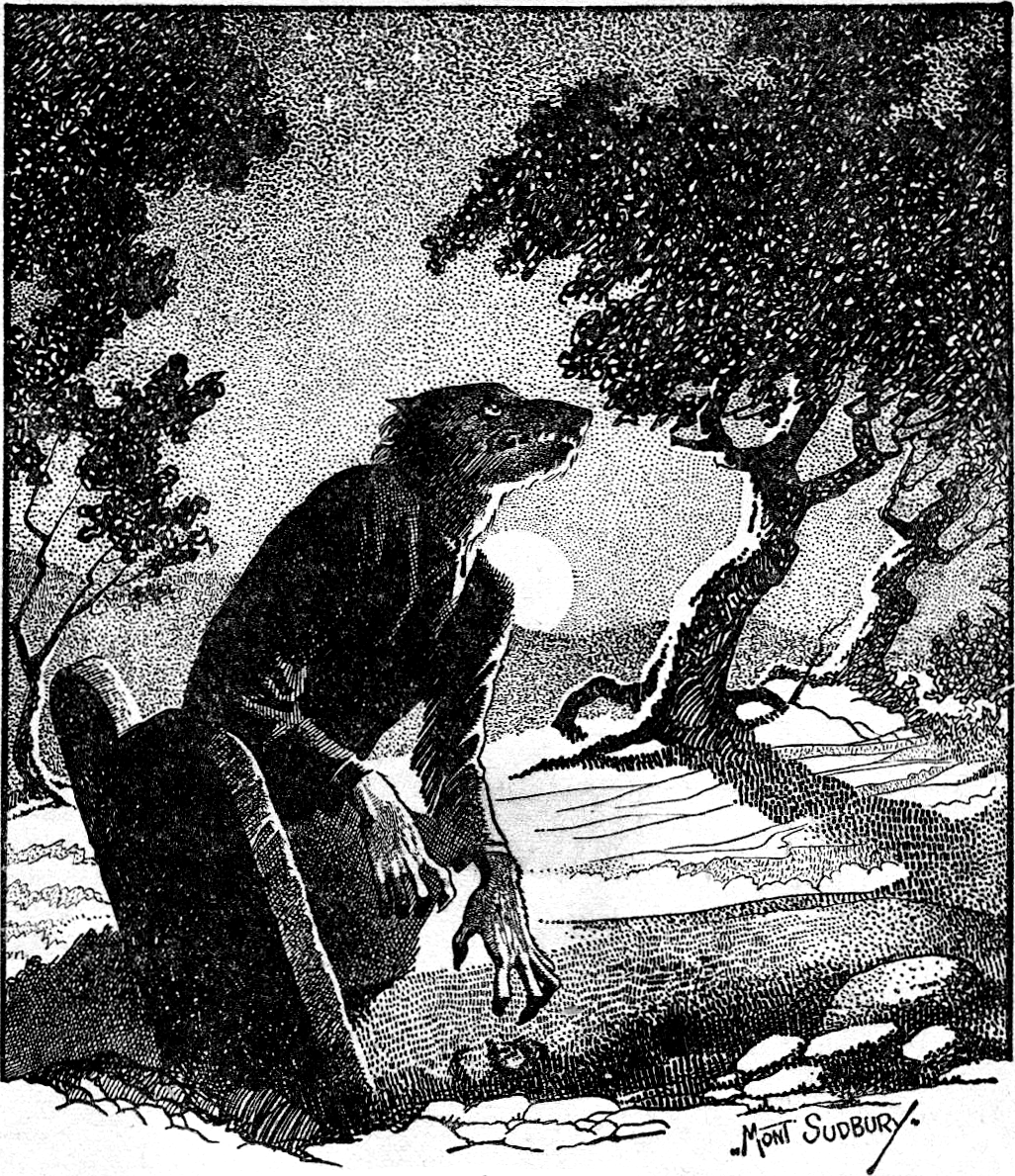 🇫🇷 France and 5 moreWerewolf
A mythical shapeshifter that turns into a wolf, central to European witch-hunts and Gothic horror.Being · Cursing and harm · Wonder and entertainment Legendary
🇫🇷 France and 5 moreWerewolf
A mythical shapeshifter that turns into a wolf, central to European witch-hunts and Gothic horror.Being · Cursing and harm · Wonder and entertainment Legendary
 🇫🇷 FranceHoly GrailSaint Graal
A cup or stone from Arthurian tales that grants healing and eternal lifeFigure · Healing · Luck and prosperity Legendary
🇬🇧 United Kingdom and 1 moreSamuel Liddell MacGregor Mathers
British occultist and co-founder of the Hermetic Order of the Golden DawnFigure Historical
🇫🇷 FranceHoly GrailSaint Graal
A cup or stone from Arthurian tales that grants healing and eternal lifeFigure · Healing · Luck and prosperity Legendary
🇬🇧 United Kingdom and 1 moreSamuel Liddell MacGregor Mathers
British occultist and co-founder of the Hermetic Order of the Golden DawnFigure Historical
Related elsewhere
All figure 🇮🇳 India and 5 moreAstrology
A divinatory practice that reads human fate through the positions of celestial bodies.Belief · Seeing and foretelling · Luck and prosperity Living
🇮🇳 India and 5 moreAstrology
A divinatory practice that reads human fate through the positions of celestial bodies.Belief · Seeing and foretelling · Luck and prosperity Living
 🇮🇳 India and 2 morePalmistry
A divination method that interprets the lines and shapes of the hand to predict fate or reveal character.Oracle · Seeing and foretelling · Power and authority Living
🇮🇳 India and 2 morePalmistry
A divination method that interprets the lines and shapes of the hand to predict fate or reveal character.Oracle · Seeing and foretelling · Power and authority Living
 🇨🇳 China and 3 moreChinese dragon龍
A legendary water deity and imperial symbol in East Asian cultureBeing · Protection · Luck and prosperity Historical
🇨🇳 China and 3 moreChinese dragon龍
A legendary water deity and imperial symbol in East Asian cultureBeing · Protection · Luck and prosperity Historical
 🇮🇳 IndiaMahakaleshwar JyotirlingaMahākāleśvara
A sacred Shiva shrine in Ujjain, India, known for its south-facing idol and ancient origins.Tradition · Protection · Power and authority Living
🇮🇳 IndiaMahakaleshwar JyotirlingaMahākāleśvara
A sacred Shiva shrine in Ujjain, India, known for its south-facing idol and ancient origins.Tradition · Protection · Power and authority Living