Cursing and harm
Curses, hexes and sorcery as people describe and fear them, with the counter-magic against them.
Cursing and harm are the part of magic that societies fear most. This page describes curses and sorcery as beliefs, and the social role of fear and accusation, and does not give instructions. The evil eye, the curse tablets of the Greek and Roman world, Hebrew and Arabic writings on harmful magic, sorcery in Melanesia and Africa, and the European witch are all part of this subject. Most of the harm recorded is that done to people accused.
What is believed
Many cultures hold that envy, anger or hostile ritual can bring illness, loss or death to a victim. The beliefs differ: in the Mediterranean, the evil eye needs no intent. In Azande society, studied by Evans-Pritchard, witchcraft was an inherited substance that explained why misfortune struck one person and not another. Greek and Roman lead curse tablets, often addressed to gods of the underworld, show the belief was written down in antiquity.
Accusation as social force
Where harm is feared, accusation follows. Anthropologists have shown that charges of witchcraft often follow tension inside a family or village, such as inheritance, jealousy or a sudden death. Accusers are usually in conflict with the accused, who is more likely to be old, poor, widowed or marginal. The belief can enforce norms and also destroy people. People also fear being accused, since an accusation can arrive without warning and can follow a family for generations.
Persecution and its present
European and colonial American witch trials, from the fifteenth to the eighteenth century, put tens of thousands to death, including the Salem trials of 1692. The practice has not ended. Mobs and families still attack accused people in parts of Africa, India, Papua New Guinea and elsewhere, and Saudi Arabia has executed people for sorcery. Albino people have been killed for body parts in East Africa. Several states are drafting or enforcing laws against accusation itself.
Counter-magic and scholarship
Where harm is feared, so is protection: amulets, cleansing, and a specialist who can say who sent it. Scholars see curses as a language of grievance, and psychologists have documented the nocebo effect, in which belief in harm can bring on real distress. A person who is afraid should seek medical and social help, and talk to someone they trust. People who believe they have been cursed should be helped to find practical support, including from health services, and not left alone with fear.
Cursing and harm on EveryJaadu
The entries written up so far, best known first.
 🇬🇷 GreeceErymanthian Boarὁ Ἐρυμάνθιος κάπρος
A wild boar from Greek myth captured by Heracles as his fourth labourBeing · Cursing and harm Legendary
🇬🇷 GreeceEmpusaἜμπουσα
A shape-shifting phantom of Greek myth with a single brass leg, sent by Hecate to seduce and devour young men.Being · Cursing and harm · Speaking with spirits and the dead Legendary
🇦🇱 Albania and 4 moreDhampir
A half-vampire figure from Balkan folklore who hunts the undeadBeing · Cursing and harm Legendary
🇬🇷 GreeceErymanthian Boarὁ Ἐρυμάνθιος κάπρος
A wild boar from Greek myth captured by Heracles as his fourth labourBeing · Cursing and harm Legendary
🇬🇷 GreeceEmpusaἜμπουσα
A shape-shifting phantom of Greek myth with a single brass leg, sent by Hecate to seduce and devour young men.Being · Cursing and harm · Speaking with spirits and the dead Legendary
🇦🇱 Albania and 4 moreDhampir
A half-vampire figure from Balkan folklore who hunts the undeadBeing · Cursing and harm Legendary
 🇨🇭 Switzerland and 3 moreTatzelwurm
A cat-headed lizard of the Alps, said to guard mines and drink cow milk.Being · Cursing and harm · Luck and prosperity Legendary
🇨🇭 Switzerland and 3 moreTatzelwurm
A cat-headed lizard of the Alps, said to guard mines and drink cow milk.Being · Cursing and harm · Luck and prosperity Legendary
 🇷🇺 Russia and 3 moreChortчёрт
A Slavic demon spirit with horns and hooves, known in folklore as a trickster or minor evil force.Being · Cursing and harm · Luck and prosperity Historical
🇷🇺 Russia and 3 moreChortчёрт
A Slavic demon spirit with horns and hooves, known in folklore as a trickster or minor evil force.Being · Cursing and harm · Luck and prosperity Historical
 🇸🇪 Sweden and 5 moreLindwormlindorm
A serpentine dragon of Northern and Central European folklore, often depicted as limbless or winged.Being · Luck and prosperity · Cursing and harm Legendary
🇸🇪 Sweden and 5 moreLindwormlindorm
A serpentine dragon of Northern and Central European folklore, often depicted as limbless or winged.Being · Luck and prosperity · Cursing and harm Legendary
 🇷🇴 Romania and 2 moreStrixστρίξ
A classical bird of ill omen that evolved into a term for witches and vampires across Europe.Being · Cursing and harm · Luck and prosperity Historical
🇷🇴 Romania and 2 moreStrixστρίξ
A classical bird of ill omen that evolved into a term for witches and vampires across Europe.Being · Cursing and harm · Luck and prosperity Historical
 🇫🇷 FranceTitivillus
A medieval demon who collects scribal errors and liturgical mistakes in a sack.Being · Cursing and harm Historical
🇫🇷 FranceTitivillus
A medieval demon who collects scribal errors and liturgical mistakes in a sack.Being · Cursing and harm Historical
 🇫🇮 FinlandIku-Turso
A primordial giant and sea monster from Finnish mythologyBeing · Power and authority · Cursing and harm Legendary
🇷🇴 Romania and 5 moreBalaur
A many-headed dragon from Romanian folklore that guards treasures and controls the weather.Being · Cursing and harm · Power and authority Legendary
🇫🇮 FinlandIku-Turso
A primordial giant and sea monster from Finnish mythologyBeing · Power and authority · Cursing and harm Legendary
🇷🇴 Romania and 5 moreBalaur
A many-headed dragon from Romanian folklore that guards treasures and controls the weather.Being · Cursing and harm · Power and authority Legendary
 🇵🇱 Poland and 3 moreStrzyga
A female demon in Polish folklore, linked to owls and vampiric traitsBeing · Cursing and harm · Protection Historical
🇷🇺 Russia and 4 moreFiery serpentsогненный змей
A pan-Slavic spirit of fire and wind, seen as a demon or a household helperBeing · Cursing and harm · Luck and prosperity Historical
🇷🇴 Romania and 2 moreZmeu
A humanoid dragon from Romanian folklore that kidnaps maidens and steals treasures.Being · Cursing and harm · Love and attraction Legendary
🇵🇱 Poland and 3 moreStrzyga
A female demon in Polish folklore, linked to owls and vampiric traitsBeing · Cursing and harm · Protection Historical
🇷🇺 Russia and 4 moreFiery serpentsогненный змей
A pan-Slavic spirit of fire and wind, seen as a demon or a household helperBeing · Cursing and harm · Luck and prosperity Historical
🇷🇴 Romania and 2 moreZmeu
A humanoid dragon from Romanian folklore that kidnaps maidens and steals treasures.Being · Cursing and harm · Love and attraction Legendary
 🇦🇱 Albania and 3 moreKulshedra
A multi-headed serpent demon in Albanian folklore that controls storms and droughts.Being · Cursing and harm · Luck and prosperity Legendary
🇦🇱 Albania and 3 moreKulshedra
A multi-headed serpent demon in Albanian folklore that controls storms and droughts.Being · Cursing and harm · Luck and prosperity Legendary
 🇬🇷 Greece and 1 moreCacodemonκακοδαίμων (kakodaimōn)
An ancient Greek evil spirit, depicted as a horned youth and used in literature and games.Being · Cursing and harm Legendary
🇬🇷 Greece and 1 moreCacodemonκακοδαίμων (kakodaimōn)
An ancient Greek evil spirit, depicted as a horned youth and used in literature and games.Being · Cursing and harm Legendary
 🇬🇷 GreeceGelloΓελλώ
A Greek demon of infancy and a class of beings blamed for infant death.Being · Cursing and harm · Protection Historical
🇬🇷 GreeceGelloΓελλώ
A Greek demon of infancy and a class of beings blamed for infant death.Being · Cursing and harm · Protection Historical
 🇵🇱 PolandBoginka
Female spirits of wild nature in Polish pagan mythologyBeing · Cursing and harm Historical
🇵🇱 PolandBoginka
Female spirits of wild nature in Polish pagan mythologyBeing · Cursing and harm Historical
 🇬🇷 GreeceCancer (mythology)Καρκίνος
A giant crab from Greek myth that became a zodiac constellationBeing · Cursing and harm Legendary
🇬🇷 GreeceCancer (mythology)Καρκίνος
A giant crab from Greek myth that became a zodiac constellationBeing · Cursing and harm Legendary
 🇪🇸 SpainHerensuge
A mythical seven-headed dragon or serpent from Basque legendBeing · Cursing and harm Legendary
🇮🇪 IrelandFar darrigFear Dearg
A solitary Irish faerie known for cruel jokes and the ability to shift sizeBeing · Cursing and harm · Luck and prosperity Legendary
🇪🇸 SpainHerensuge
A mythical seven-headed dragon or serpent from Basque legendBeing · Cursing and harm Legendary
🇮🇪 IrelandFar darrigFear Dearg
A solitary Irish faerie known for cruel jokes and the ability to shift sizeBeing · Cursing and harm · Luck and prosperity Legendary
 🇬🇧 United KingdomBoobrie
A shapeshifting loch monster from Scottish folklore that preys on livestock and horses.Being · Cursing and harm Legendary
🇬🇧 United KingdomBoobrie
A shapeshifting loch monster from Scottish folklore that preys on livestock and horses.Being · Cursing and harm Legendary
 🇩🇪 GermanyBahkauv
A deformed calf-like monster from Aachen folklore that harasses drunk menBeing · Cursing and harm Legendary
🇷🇺 RussiaShishigaшишига
A female swamp spirit of Russian and Komi folklore that brings misfortune and death.Being · Cursing and harm Legendary
🇩🇪 GermanyBahkauv
A deformed calf-like monster from Aachen folklore that harasses drunk menBeing · Cursing and harm Legendary
🇷🇺 RussiaShishigaшишига
A female swamp spirit of Russian and Komi folklore that brings misfortune and death.Being · Cursing and harm Legendary
 🇮🇹 Italy and 5 moreSaint Michael
A Christian archangel who defends the faithful and weighs soulsBeing · Protection · Cursing and harm Living
🇵🇱 PolandTopielec
A Slavic water spirit of the drowned dead that pulls victims into lakes.Being · Cursing and harm Historical
🇮🇹 Italy and 5 moreSaint Michael
A Christian archangel who defends the faithful and weighs soulsBeing · Protection · Cursing and harm Living
🇵🇱 PolandTopielec
A Slavic water spirit of the drowned dead that pulls victims into lakes.Being · Cursing and harm Historical
 🇸🇪 Sweden and 1 moreSkogsrå
A forest spirit in Swedish folklore who appears as a beautiful woman but hides a hollow back and animal feet.Being · Luck and prosperity · Cursing and harm Legendary
🇷🇺 RussiaHabernitsa
A noon demon of Slavic fields who punishes workers and causes pain.Being · Cursing and harm Historical
🇷🇺 Russia and 1 moreLikhoradkaЛихорадка
A fever spirit in Slavic myth who brings illness and sicknessBeing · Cursing and harm Legendary
🇪🇸 SpainTibicena
A demon of the Guanches, imagined as a black-furred dog with red eyes.Being · Cursing and harm Legendary
🇸🇪 Sweden and 1 moreSkogsrå
A forest spirit in Swedish folklore who appears as a beautiful woman but hides a hollow back and animal feet.Being · Luck and prosperity · Cursing and harm Legendary
🇷🇺 RussiaHabernitsa
A noon demon of Slavic fields who punishes workers and causes pain.Being · Cursing and harm Historical
🇷🇺 Russia and 1 moreLikhoradkaЛихорадка
A fever spirit in Slavic myth who brings illness and sicknessBeing · Cursing and harm Legendary
🇪🇸 SpainTibicena
A demon of the Guanches, imagined as a black-furred dog with red eyes.Being · Cursing and harm Legendary
 🇩🇪 Germany and 3 moreWiedergänger
A German term for a revenant or ghost that returns to the world of the living.Being · Cursing and harm Historical
🇷🇴 RomaniaCăpcăun
A Romanian ogre with a dog head known for kidnapping children and eating peopleBeing · Cursing and harm Legendary
🇮🇹 ItalySquasc
A small, tawny creature from Eastern Lombardy folklore that frightens children and plays jokes on young girlsBeing · Cursing and harm · Wonder and entertainment Legendary
🇩🇪 Germany and 3 moreWiedergänger
A German term for a revenant or ghost that returns to the world of the living.Being · Cursing and harm Historical
🇷🇴 RomaniaCăpcăun
A Romanian ogre with a dog head known for kidnapping children and eating peopleBeing · Cursing and harm Legendary
🇮🇹 ItalySquasc
A small, tawny creature from Eastern Lombardy folklore that frightens children and plays jokes on young girlsBeing · Cursing and harm · Wonder and entertainment Legendary
 🇩🇪 Germany and 4 moreNight ravennattravn
A nocturnal creature of European folklore, feared as a child-stealer or seen as a ghost in bird form.Being · Cursing and harm Historical
🇩🇪 Germany and 4 moreNight ravennattravn
A nocturnal creature of European folklore, feared as a child-stealer or seen as a ghost in bird form.Being · Cursing and harm Historical
 🇦🇲 ArmeniaVishapվիշապ
A water dragon of Armenian myth linked to storms and the sunBeing · Cursing and harm · Luck and prosperity Legendary
🇸🇪 SwedenAskafroa
A Scandinavian tree spirit believed to guard the ash and demand appeasement.Being · Cursing and harm · Protection Legendary
🇬🇧 United KingdomLlamhigyn y Dŵr
A winged frog-like creature blamed for harm to fishermen and livestock in Welsh folkloreBeing · Cursing and harm Legendary
🇮🇪 IrelandGancanaghgean cánach
A male Irish fairy known for seducing women and tricking humans.Being · Cursing and harm · Love and attraction Legendary
🇦🇲 ArmeniaVishapվիշապ
A water dragon of Armenian myth linked to storms and the sunBeing · Cursing and harm · Luck and prosperity Legendary
🇸🇪 SwedenAskafroa
A Scandinavian tree spirit believed to guard the ash and demand appeasement.Being · Cursing and harm · Protection Legendary
🇬🇧 United KingdomLlamhigyn y Dŵr
A winged frog-like creature blamed for harm to fishermen and livestock in Welsh folkloreBeing · Cursing and harm Legendary
🇮🇪 IrelandGancanaghgean cánach
A male Irish fairy known for seducing women and tricking humans.Being · Cursing and harm · Love and attraction Legendary
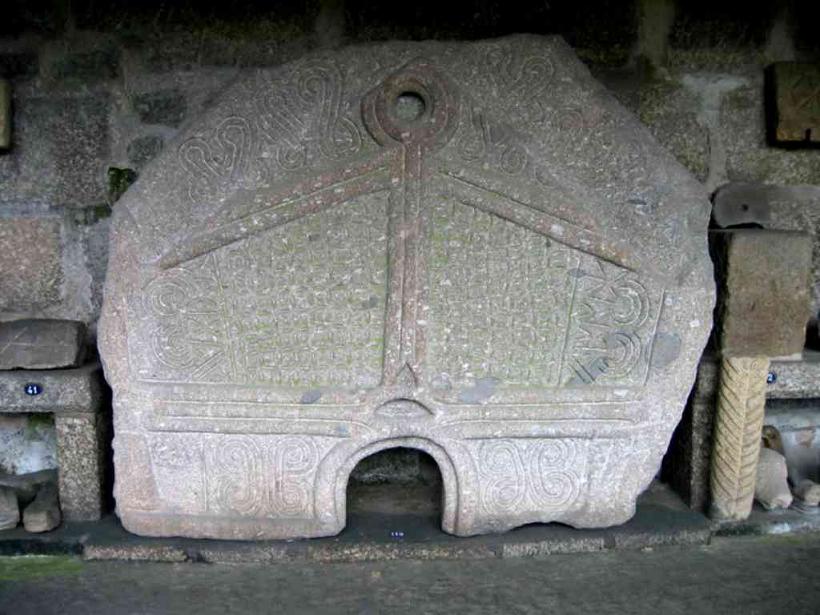 🇵🇹 PortugalEnchanted Mouramoura encantada
A supernatural maiden from Portuguese and Galician folklore who guards treasures and ancient stones.Being · Cursing and harm · Luck and prosperity Legendary
🇵🇹 PortugalEnchanted Mouramoura encantada
A supernatural maiden from Portuguese and Galician folklore who guards treasures and ancient stones.Being · Cursing and harm · Luck and prosperity Legendary
 🇫🇷 France and 1 moreDusios
A Gaulish spirit type later classified as an incubus demon by early Christian writersBeing · Cursing and harm · Power and authority Historical
🇫🇷 France and 1 moreDusios
A Gaulish spirit type later classified as an incubus demon by early Christian writersBeing · Cursing and harm · Power and authority Historical
 🇫🇷 FranceYan-gant-y-tan
A Breton demon who carries five candles and is said to bring bad luck.Being · Cursing and harm · Wonder and entertainment Historical
🇬🇧 United KingdomTrow
Nocturnal spirits of the Orkney and Shetland islands, known for mischief and musical abduction.Being · Cursing and harm · Wonder and entertainment Historical
🇫🇷 FranceYan-gant-y-tan
A Breton demon who carries five candles and is said to bring bad luck.Being · Cursing and harm · Wonder and entertainment Historical
🇬🇧 United KingdomTrow
Nocturnal spirits of the Orkney and Shetland islands, known for mischief and musical abduction.Being · Cursing and harm · Wonder and entertainment Historical
 🇷🇺 Russia and 2 moreSupernatural beings in Slavic religion
Mythic entities of nature, death, and fate in Slavic folklore and belief.Being · Protection · Cursing and harm Legendary
🇵🇹 Portugal and 1 moreCabra cabriola
A fire-breathing goat bogeyman used to frighten children in Portuguese and Brazilian folkloreBeing · Cursing and harm Living
🇷🇺 Russia and 2 moreSupernatural beings in Slavic religion
Mythic entities of nature, death, and fate in Slavic folklore and belief.Being · Protection · Cursing and harm Legendary
🇵🇹 Portugal and 1 moreCabra cabriola
A fire-breathing goat bogeyman used to frighten children in Portuguese and Brazilian folkloreBeing · Cursing and harm Living
 🇫🇷 FranceMargot the fairy
Earthly fairies of Brittany known for dancing, building monuments, and testing human guests.Being · Luck and prosperity · Cursing and harm Historical
🇫🇷 FranceMargot the fairy
Earthly fairies of Brittany known for dancing, building monuments, and testing human guests.Being · Luck and prosperity · Cursing and harm Historical
 🇮🇪 IrelandDevil Whale
A giant sea creature mistaken for an island that drags sailors to the deepBeing · Cursing and harm Legendary
🇳🇴 NorwayDeildegast
A Norwegian ghost bound to boundary stones it moved in lifeBeing · Cursing and harm Historical
🇮🇪 IrelandDevil Whale
A giant sea creature mistaken for an island that drags sailors to the deepBeing · Cursing and harm Legendary
🇳🇴 NorwayDeildegast
A Norwegian ghost bound to boundary stones it moved in lifeBeing · Cursing and harm Historical
 🇭🇺 Hungary and 1 moreSárkány
A winged reptilian beast from Hungarian folklore, linked to weather and literary heroes.Being · Cursing and harm · Wonder and entertainment Historical
🇭🇺 Hungary and 1 moreSárkány
A winged reptilian beast from Hungarian folklore, linked to weather and literary heroes.Being · Cursing and harm · Wonder and entertainment Historical
 🇷🇺 Russia and 5 moreFiredrakeognennyi zmei
A European dragon myth born from sightings of shooting stars and will-o'-the-wispsBeing · Cursing and harm · Luck and prosperity Historical
🇷🇺 Russia and 5 moreFiredrakeognennyi zmei
A European dragon myth born from sightings of shooting stars and will-o'-the-wispsBeing · Cursing and harm · Luck and prosperity Historical
Photo credits on this page
The small pictures above come from Wikimedia Commons under free licences. Some are cropped to fit.
- Boobrie: Ole Worm - Olaus Wormius, Public domain, source
- Supernatural beings in Slavic religion: Bartolomeo Giuliano, CC BY-SA 3.0, source
- Changeling: Henry Fuseli, Public domain, source
- Erymanthian Boar: Antimenes Painter, Public domain, source
- Tatzelwurm: Abrasax, CC BY-SA 3.0 de, source
- Lindworm: Unknown author, Public domain, source
- Strix: Prosthetic Head, CC BY-SA 4.0, source
- Iku-Turso: Hugo Simberg, Public domain, source
- Titivillus: Andrewrabbott, CC BY-SA 4.0, source
- Strzyga: Filip Gutowski, CC BY-SA 4.0, source
- Kulshedra: Bidgee, CC BY 3.0, source
- Cacodemon: Louis Le Breton, Public domain, source
- Gello: Filippino Lippi, Public domain, source
- Boginka: Walery Eljasz Radzikowski, Public domain, source
- Cancer (mythology): Diosphos Painter, Public domain, source
- Herensuge: Francisco Tomas Burgui, Public domain, source
- Bahkauv: Sascha Faber, CC BY-SA 4.0, source
- Skogsrå: Gunnar Creutz (Achird), CC BY-SA 3.0, source
- Wiedergänger: Unknown author, Public domain, source
- Yan-gant-y-tan: Louis Le Breton, Public domain, source
- Night raven: Kim Diaz Holm (den unge herr Holm), CC BY 4.0, source
- Dusios: Eric Hunt, CC BY-SA 2.5, source
- Devil Whale: Edmund Dulac, Public domain, source
- Sárkány: Albrecht Dürer, Public domain, source
- Firedrake: Ramesh Kumar R, CC BY-SA 4.0, source
- Chort: Unknown author, Public domain, source
- Saint Michael: Francesco Botticini, Public domain, source
- Vishap: Kulttuurinavigaattori, CC BY-SA 4.0, source
- Enchanted Moura: Henrique José Teixeira Matos, Public domain, source