Soul Collector
A mythical figure said to gather, guide, or judge the spirits of those who have passed away.
A soul collector is a supernatural entity found across world myths and folk tales that meets people at the end of their lives. These beings are described as guides, judges, or carriers who escort the departed into the afterlife. They appear in ancient Egyptian, Greek, and medieval European traditions, as well as in modern cinema and literature.
- Anubis served as a key soul guardian in ancient Egypt.
- Hermes and Charon guided spirits in traditional Greek beliefs.
- The Grim Reaper emerged from medieval European artistic traditions.
- Psychopomps are supernatural beings that escort the newly deceased.
- Similar concepts exist across the Near East, Asia, and the Americas.
What it is
A soul collector refers to any supernatural character in global folklore and religious stories tasked with handling human spirits after they leave their bodies. These entities act as escorts, arbiters, or captors during the shift from existence to whatever follows. Common examples include the Grim Reaper, the Greek messenger god Hermes, the jackal-headed deity Anubis, and various angelic messengers. They represent humanity's attempt to visualize the moment of passing.
Where it comes from
The idea of spirit attendants emerges from some of the oldest documented belief systems. Early societies created narratives about otherworldly helpers who watched over, defended, or evaluated the recently deceased. In the Nile valley, gods like Anubis managed these duties. Meanwhile, Hellenic lore introduced characters such as the boatman Charon and the divine herald Hermes. Comparable stories spread across the Middle East, Asian lands, European soil, and the continents of the Americas.
Soul Collector, drawn and placed
- Living
- Revived
- Fading
- Historical
- Legendary
- Performed
What it is for
People invoke these concepts to explain the unknown territory beyond mortality. Communities rely on the image of a collector to provide comfort or warning regarding the final journey. Whether viewed as a stern judge or a gentle guide, the figure offers a structured way to understand how the living separate from the dead and where those spirits travel next.
Who does it
Scholars of mythology and comparative religion analyze these archetypes to understand cultural attitudes toward mortality. Since soul collectors belong to the realm of legend and ancient theology rather than active ritual practice, no contemporary groups perform ceremonies to summon them. Researchers examine texts and artworks to trace how different eras imagined the boundary between life and death.
Peoples and places
Ancient Egyptians assigned spiritual guardianship to deities like Anubis. Greek culture utilized psychopomps, specifically Hermes and Charon, to ferry souls across rivers or boundaries. Over time, similar motifs appeared among diverse populations spanning the Near East, Asia, Europe, and the Americas. In later medieval Europe, artists and writers began merging these older ideas into a single, skeletal archetype known today as the Grim Reaper.
At a glance: who, where and when
Belief worlds
Occasions
What people believe
Within these traditions, the soul is treated as a distinct essence that requires direction once the physical form fails. The collector operates under cosmic rules, ensuring the departed do not wander aimlessly. Some beliefs cast these figures as fair evaluators of past deeds, while others portray them as inevitable forces of nature. The underlying assumption is that the transition requires an external agent to bridge the gap between worlds.
How scholars and sceptics see it
Anthropologists and historians view soul collectors as psychological projections of human fear and curiosity regarding extinction. By personifying death, cultures create a manageable narrative for an abstract concept. Critics and skeptics interpret these figures purely as literary devices or theological metaphors developed to enforce moral behavior or offer solace during grief. There is no empirical evidence supporting the existence of such entities.
Compare and confuse
The term overlaps with 'psychopomp,' a Greek word for soul carrier, and 'angel of death.' While psychopomps typically guide without judgment, figures like Anubis weigh hearts against feathers. The Grim Reaper differs by emphasizing the inevitability of demise through a skeletal appearance, whereas earlier Greek or Egyptian versions focused more on ritual transport or divine duty.
Today
Modern storytelling keeps these figures alive through books, movies, and popular culture. The Grim Reaper remains a ubiquitous symbol in Western media, often appearing in fantasy genres and horror films. Contemporary authors and game designers continue to adapt ancient psychopomp roles, blending old mythology with new digital formats to explore themes of legacy and finality.
Questions people ask about Soul Collector
What exactly is a soul collector?
A soul collector is a mythical or religious figure believed to meet individuals when they die. These entities gather, guide, or judge the departing spirit, helping it move from the world of the living to the afterlife.
Who are famous examples of these figures?
Well-known examples include the Grim Reaper, the Greek god Hermes, the boatman Charon, the Egyptian deity Anubis, and various angels of death found in different religious texts and folklore traditions around the globe.
Where did the idea of soul collectors come from?
The concept appears in some of the earliest recorded religions and ancient civilizations. Societies worldwide developed myths to explain how the dead were accompanied, protected, or judged after their physical lives ended.
How does the Grim Reaper relate to older beliefs?
The Grim Reaper evolved from medieval European art and religion. It merged earlier ideas of death personification with older concepts of psychopomps, creating a singular, skeletal figure that became popular in later folklore and literature.
Good reading and sources
The facts on this page come from the Wikipedia article "Soul Collector", written by its contributors and used under the CC BY-SA 4.0 licence, and from its Wikidata record (CC0). EveryJaadu rewrote the text in its own words, with AI assistance, and compares every page with the article to make sure no passage is copied. It may be reused under the same CC BY-SA 4.0 licence with a link back.
It may contain mistakes. Names and customs differ from one community to the next, and some knowledge is closed to outsiders and left out here. This page describes belief and practice. It does not say that any of it works, it is not a how-to, and it is not medical advice. If something is wrong, tell us. Last refreshed 2026-10-07.
More from Egypt
All the entries from Egypt 🇪🇬 Egypt and 1 moreLilithלִילִית
A feminine figure from Mesopotamian and Jewish mythology, often depicted as a night demon or spirit.Being · Cursing and harm Legendary
🇪🇬 Egypt and 1 moreLilithלִילִית
A feminine figure from Mesopotamian and Jewish mythology, often depicted as a night demon or spirit.Being · Cursing and harm Legendary
 🇪🇬 EgyptImhotepỉỉ-m-ḥtp
An ancient Egyptian architect deified as a god of healing and wisdomBeing · Healing · Power and authority Historical
🇪🇬 EgyptImhotepỉỉ-m-ḥtp
An ancient Egyptian architect deified as a god of healing and wisdomBeing · Healing · Power and authority Historical
 🇪🇬 EgyptAnubis𓇋𓈖𓊪𓃣
The jackal-headed god who guides souls and oversees mummification in ancient Egypt.Being · Protection · Speaking with spirits and the dead Historical
🇪🇬 EgyptDjedi
A fictional magician from the Westcar Papyrus who resurrects animals and foretells a king's lineage.Figure · Seeing and foretelling · Wonder and entertainment Legendary
🇪🇬 EgyptAnubis𓇋𓈖𓊪𓃣
The jackal-headed god who guides souls and oversees mummification in ancient Egypt.Being · Protection · Speaking with spirits and the dead Historical
🇪🇬 EgyptDjedi
A fictional magician from the Westcar Papyrus who resurrects animals and foretells a king's lineage.Figure · Seeing and foretelling · Wonder and entertainment Legendary
Related elsewhere
All being 🇮🇳 IndiaChakraचक्र
Meditation points in the subtle body used in Hindu and Buddhist yogaTradition · Speaking with spirits and the dead · Change and initiation Living
🇮🇳 IndiaChakraचक्र
Meditation points in the subtle body used in Hindu and Buddhist yogaTradition · Speaking with spirits and the dead · Change and initiation Living
 🇪🇸 Spain and 5 moreSt John's Eve
A Christian vigil marked by bonfires and plant gathering on the summer solstice eveRite · Protection · Speaking with spirits and the dead Living
🇪🇸 Spain and 5 moreSt John's Eve
A Christian vigil marked by bonfires and plant gathering on the summer solstice eveRite · Protection · Speaking with spirits and the dead Living
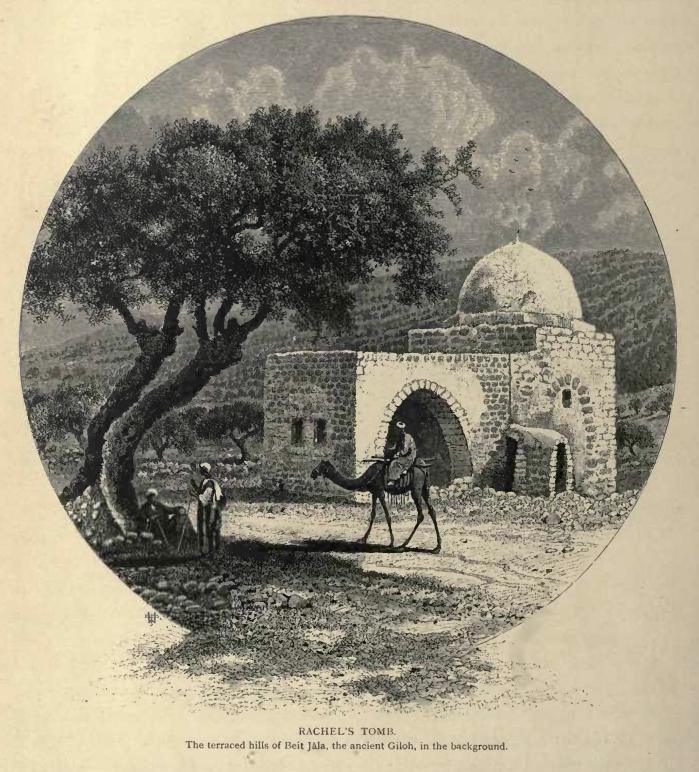 🇵🇸 Palestine and 1 moreRachel's TombQever Raḥel; Qabr Rāḥīl
A shared holy site near Bethlehem revered by Jews, Christians, and MuslimsTradition · Speaking with spirits and the dead · Protection Living
🇵🇸 Palestine and 1 moreRachel's TombQever Raḥel; Qabr Rāḥīl
A shared holy site near Bethlehem revered by Jews, Christians, and MuslimsTradition · Speaking with spirits and the dead · Protection Living
 🇳🇬 NigeriaOrunmilaỌ̀rúnmìlà
Yoruba deity of wisdom and the creator of the Ifá divination systemBeing · Seeing and foretelling · Speaking with spirits and the dead Living
🇳🇬 NigeriaOrunmilaỌ̀rúnmìlà
Yoruba deity of wisdom and the creator of the Ifá divination systemBeing · Seeing and foretelling · Speaking with spirits and the dead Living