
Cacus
from Ancient Greek kakos, meaning bad
A fire-breathing giant of Roman myth who stole cattle and was slain by Hercules
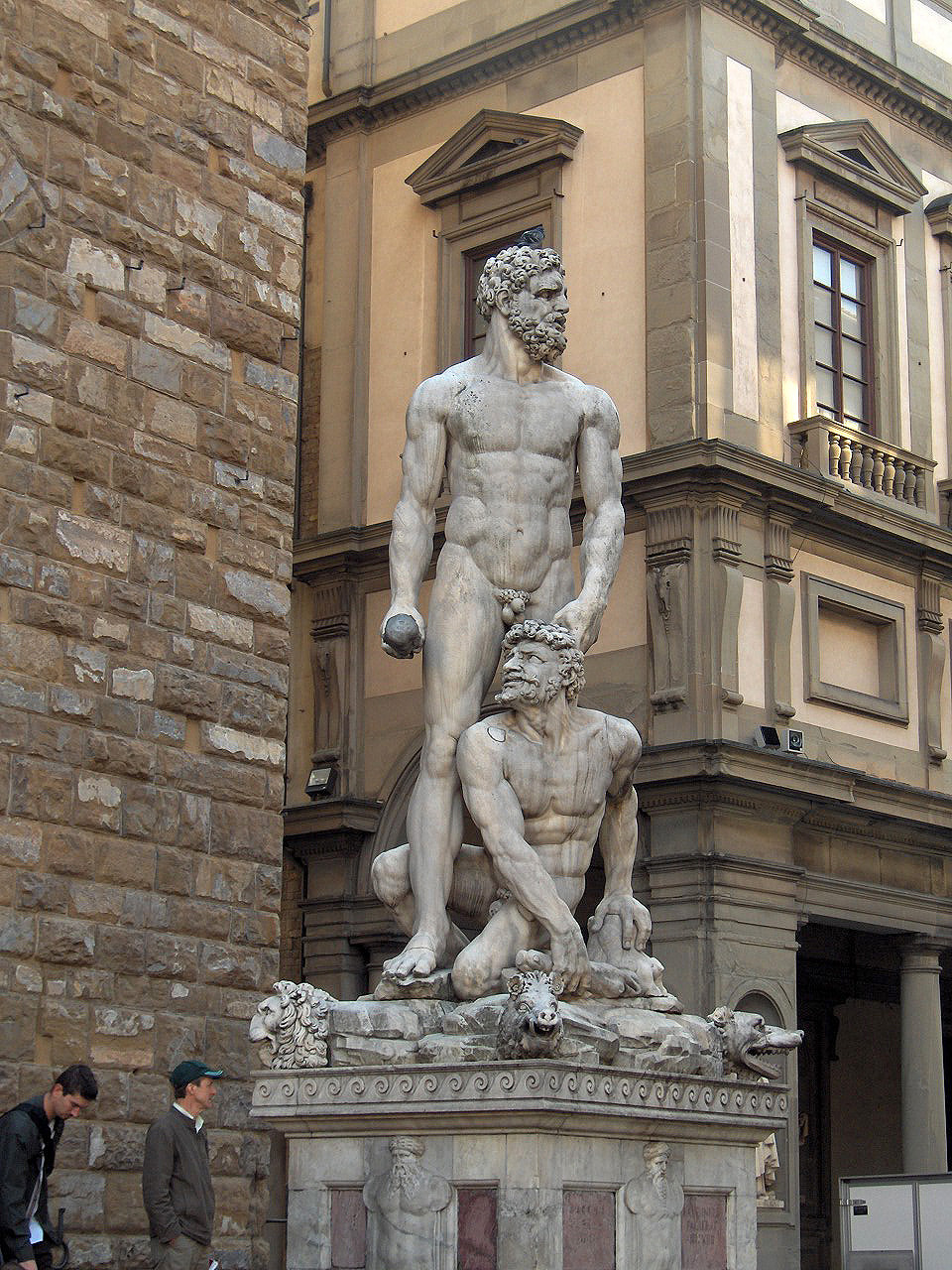
Cacus is a monster from Roman mythology described as a fire-breathing giant. He lived in a cave on the site that would become Rome and terrorized locals before being killed by the hero Hercules.
- Cacus breathed fire and smoke during his fight with Hercules
- He stole cattle by dragging them backward to hide their trail
- Hercules killed him by strangling him inside a smoky cave
- An altar called Ara Maxima was built where the battle occurred
- Dante placed him in Hell guarding thieves among fraudsters
What it is
Cacus is a figure in Roman mythology known as a fire-breathing giant. He is the son of Vulcan, also called Hephaestus by the Greeks. The name comes from a Greek word for bad or evil. He lived in a cave near the future city of Rome. Locals feared him because he ate human flesh and nailed victim heads to his door. The hero Hercules eventually killed him while passing through the area.
Where it comes from
The story appears in Virgil's Aeneid, told by the Arcadian king Evander. Other ancient writers like Solinus and Dionysius of Halicarnassus recorded versions too. Some accounts say Cacus lived at Salinae, later the Porta Trigemina. After the fight, Hercules built an altar called the Ara Maxima. This site became the Forum Boarium, the old cattle market of Rome.
How it is done
Hercules found his stolen cattle near Cacus' lair. The monster had dragged them backward to hide their trail. The herd cried out, and one cow answered from inside. Angry, Hercules moved toward the cave. Cacus blocked the entrance with a huge rock. Hercules tore open the mountain top to reach him. They fought with fire, rocks, and branches. Hercules finally leapt into the smoke and strangled the giant until his eyes popped out.
Tools and materials
Cacus used his ability to breathe fire and smoke against his enemy. He hid behind a massive boulder to block the cave entrance. Hercules used tree branches and large stones as weapons. Later stories added different tools. Dante described him with snakes and a dragon. Other tales mention him fathering giants or stealing magical staffs.
Cacus, drawn and placed
- Living
- Revived
- Fading
- Historical
- Legendary
- Performed
- Lineage
- Roman mythology
What it is for
Cacus represents danger and theft in Roman legend. He stole cattle from Hercules and harmed local people. His death marked the protection of the land. The Romans honored Hercules after the victory. They performed yearly rites at the altar he built. The site remained important for cattle trading and religious observance for centuries.
Who does it
No living practitioners perform rituals for Cacus today. He is studied by scholars of classical mythology. Ancient writers like Virgil and Plutarch recorded his story. Modern authors include him in novels and fantasy works. He appears in Dante's Inferno and Cervantes' Don Quixote as a symbol of theft.
Peoples and places
The myth belongs to Roman tradition but involves Arcadians. Evander, an Arcadian king, shared the story with Aeneas. The Aborigines and Arcadians celebrated Hercules' arrival. They crowned themselves with laurel after hearing of Cacus' death. The story explains early Roman religious customs in the area near the Tiber river.
At a glance: who, where and when
Belief worlds

What people believe
Cacus embodies chaotic forces that heroes must overcome. He is a monstrous outcast who defies natural order. His fire breath and cannibalism mark him as evil. Hercules restores order by killing him. The myth reinforces the idea of divine favor for the hero. It also justifies the sacred status of the location where the battle took place.
When it is done
The Romans held annual festivals to honor Hercules at the Ara Maxima. These rites commemorated the defeat of Cacus. The events are tied to the founding era of Rome. No specific calendar dates are given for Cacus himself. The celebrations occurred at the site of the ancient cattle market.
Questions people ask about Cacus
Who is Cacus in mythology?
Cacus is a fire-breathing giant from Roman mythology. He is the son of Vulcan and lived in a cave near Rome. He terrorized locals until the hero Hercules killed him.
How did Hercules find Cacus?
Hercules tracked his stolen cattle to the monster's lair. The cows cried out, and one answered from inside the cave. This revealed Cacus' hiding spot despite his efforts to hide the trail.
What does the name Cacus mean?
The name comes from the Ancient Greek word kakos. It means bad or evil. This reflects his role as a dangerous monster in Roman legends.
Where did the battle take place?
The fight happened on the Aventine Hill area. This location later became part of Rome. An altar called the Ara Maxima was built there to honor Hercules.
Good reading and sources
- Cacus on WikipediaEncyclopedia
- More photos on Wikimedia CommonsPhotos and video
- Wikidata recordOpen data
The facts on this page come from the Wikipedia article "Cacus", written by its contributors and used under the CC BY-SA 4.0 licence, and from its Wikidata record (CC0). EveryJaadu rewrote the text in its own words, with AI assistance, and compares every page with the article to make sure no passage is copied. It may be reused under the same CC BY-SA 4.0 licence with a link back.
It may contain mistakes. Names and customs differ from one community to the next, and some knowledge is closed to outsiders and left out here. This page describes belief and practice. It does not say that any of it works, it is not a how-to, and it is not medical advice. If something is wrong, tell us. Last refreshed 2026-10-08.
More from Italy
All the entries from Italy 🇮🇹 ItalyFortunaFortūna
The Roman goddess of luck and fate, shown with a wheel and a horn of plentyBeing · Luck and prosperity · Seeing and foretelling Historical
🇮🇹 ItalyFortunaFortūna
The Roman goddess of luck and fate, shown with a wheel and a horn of plentyBeing · Luck and prosperity · Seeing and foretelling Historical
 🇬🇷 Greece and 1 moreHecateἙκάτη
A Greek goddess of magic, crossroads, and the moon, often shown in three forms.Being · Protection · Power and authority Historical
🇬🇷 Greece and 1 moreHecateἙκάτη
A Greek goddess of magic, crossroads, and the moon, often shown in three forms.Being · Protection · Power and authority Historical
 🇫🇷 France and 1 moreCernunnos
An antlered Celtic deity depicted with torcs and serpents, known from Roman-era Gaul.Being · Power and authority · Luck and prosperity Historical
🇫🇷 France and 1 moreCernunnos
An antlered Celtic deity depicted with torcs and serpents, known from Roman-era Gaul.Being · Power and authority · Luck and prosperity Historical
 🇮🇹 ItalyJupiterIuppiter
The Roman sky father and king of the gods, associated with thunder and oathsBeing · Power and authority · Protection Historical
🇮🇹 ItalyJupiterIuppiter
The Roman sky father and king of the gods, associated with thunder and oathsBeing · Power and authority · Protection Historical
Related elsewhere
All being 🇪🇬 Egypt and 1 moreLilithלִילִית
A feminine figure from Mesopotamian and Jewish mythology, often depicted as a night demon or spirit.Being · Cursing and harm Legendary
🇪🇬 Egypt and 1 moreLilithלִילִית
A feminine figure from Mesopotamian and Jewish mythology, often depicted as a night demon or spirit.Being · Cursing and harm Legendary
 🇪🇬 EgyptCurse
A spoken wish for misfortune to befall a person or placeBelief · Cursing and harm · Luck and prosperity Historical
🇪🇬 EgyptCurse
A spoken wish for misfortune to befall a person or placeBelief · Cursing and harm · Luck and prosperity Historical
 🇹🇷 Turkey and 5 moreEvil eye
A curse caused by an envious look and the charms used to block itBelief · Protection · Cursing and harm Living
🇹🇷 Turkey and 5 moreEvil eye
A curse caused by an envious look and the charms used to block itBelief · Protection · Cursing and harm Living
 🇮🇳 India and 5 moreHoliहोली
A Hindu spring festival marked by coloured powders and bonfires to celebrate love and virtue.Tradition · Love and attraction · Cursing and harm Living
🇮🇳 India and 5 moreHoliहोली
A Hindu spring festival marked by coloured powders and bonfires to celebrate love and virtue.Tradition · Love and attraction · Cursing and harm Living