🇯🇵 Magic in Japan
362 entries from Japan, best known first, across 80 places of magic.
Onmyōdō is a Japanese system of divination and ritual magic rooted in the Chinese philosophies of yin-yang and the five elements. It evolved from astronomical and calendrical knowledge into a court institution that blended with Shinto beliefs to manage fortune, health, and spiritual protection.
- Abe no Seimei is the most famous onmyoji, active in the Heian period
- Shikigami are spirit servants summoned and controlled by practitioners
- Katatagae involves changing direction to avoid unlucky bearings
- The Tensha Shinto Prohibition Ordinance banned the practice in 1870
- Onmyoji handled kegare, spiritual pollution, unlike Shinto priests
Overview
This tradition began as an import from China and Korea during the sixth century, combining astronomy, calendar science, and elemental theory. Over time, it merged with indigenous Japanese beliefs, particularly Shinto and the worship of restless spirits known as goryo. The practice shifted from high-level state advisory work to include magical rites for protection and cursing. By the Heian period, it had become a distinct Japanese system that addressed both political decisions and personal well-being through the manipulation of auspicious forces.
Practices and beliefs
Practitioners used complex calculations based on celestial movements and seasonal changes to determine lucky or unlucky times and directions. They performed rituals to ward off evil influences, prevent disasters, and ensure agricultural success. A key feature was the summoning and control of shikigami, which were spirit servants used to carry out tasks or protect the practitioner. Divination helped guide major life events, such as moving capitals or choosing marriage dates, by identifying harmful energies in the environment.
Rites and charms
Rituals often involved purification and specific gestures to align with cosmic forces. Unlike Shinto priests who avoided impurity, onmyoji could handle kegare, or spiritual pollution, allowing them to perform protective ceremonies that others could not. These rites included casting talismans and conducting exorcisms to calm angry spirits. The community also observed strict rules about direction; if a person faced an unlucky bearing, they would change their path to avoid bad luck, a practice called katatagae.
Who practises
The main figures were onmyoji, civil servants appointed by the imperial court to manage these arts. They served as astronomers, diviners, and spiritual guards for the capital. Famous lineages, such as the Abe and Kamo families, dominated the field for centuries. Abe no Seimei remains the most celebrated figure, known for his exceptional skill in divination and magic. Today, while the official role has vanished, the title persists in popular culture as a symbol of occult mastery.
Regions and communities
The practice originated in the imperial capital and was centered around the court aristocracy. Its influence spread from the elite to the general public as the need for personal protection grew. The Abe and Kamo families held monopolies on the highest levels of the art within the capital region. Outside the court, local interpretations may have varied, but the core techniques remained tied to the centralized calendar and astronomical data maintained by the state.
The calendar
Daily life and major events were scheduled according to the onmyodo calendar. Specific days and hours were designated as auspicious or inauspicious for activities like starting a journey, building a house, or holding a funeral. The changing seasons dictated different types of rituals, with particular attention paid to transitional periods believed to be vulnerable to spiritual interference. Festivals and religious observances were often timed to coincide with favorable celestial alignments.
Law and the state
The system was officially part of the government structure under the Taiho Code, which defined the duties of onmyoji. In 1870, the Tensha Shinto Prohibition Ordinance banned the practice, labeling it superstition. After World War II, religious freedom allowed its revival, leading to the formation of modern organizations like Tensha Tsuchimikado Shinto in 1954. The legal status shifted from state mandate to private religious association.
Today
Modern Japan sees onmyodo primarily through popular media, including manga, anime, and novels that romanticize its history. While some groups claim continuity with the ancient traditions, the practice is largely a cultural heritage rather than a widespread religious activity. Scholars study it as a historical blend of science and magic, reflecting how pre-modern societies understood the natural world.
The facts in this overview come from the Wikipedia article "Onmyōdō", written by its contributors and used under the CC BY-SA 4.0 licence. EveryJaadu rewrote the text in its own words, with AI assistance, and compares every page with the article to make sure no passage is copied. It may be reused under the same CC BY-SA 4.0 licence with a link back.
Places of magic in Japan
 🇯🇵 JapanShirime尻目
A faceless yokai that hides an eye in its rear to startle travelersBeing · Wonder and entertainment Legendary
🇯🇵 JapanMiage-nyūdō見上入道
A yōkai on Sado Island that grows when looked up at and can be dismissed by specific chants or challenges.Being · Cursing and harm Legendary
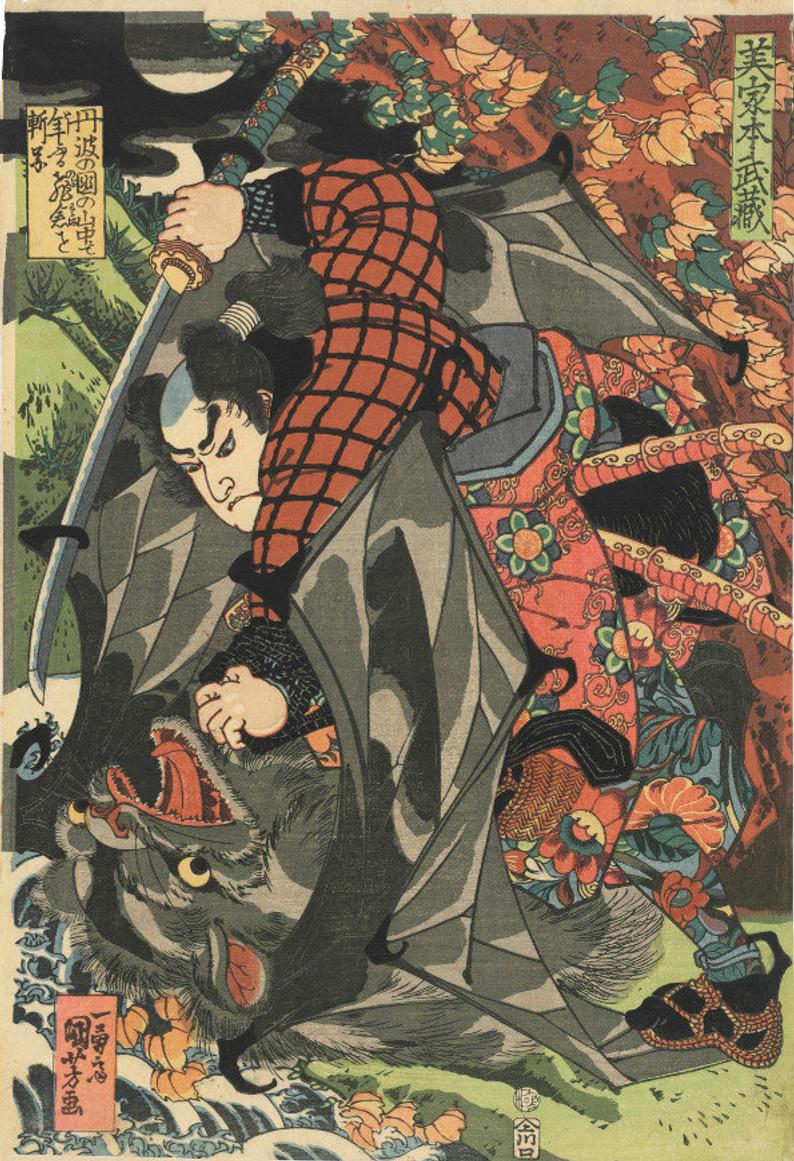 🇯🇵 JapanNobusuma野衾
A Japanese yōkai said to be a flying squirrel or bat that attacks travelers at night.Being · Cursing and harm · Luck and prosperity Legendary
🇯🇵 JapanAshinaga-Tenaga足長手長
A duo of yōkai with extreme limbs who fish together on the Japanese coastBeing Legendary
 🇯🇵 JapanHyōsubeひょうすべ
A hairy river spirit of Kyushu that eats eggplants and brings fever.Being · Cursing and harm Historical
 🇯🇵 JapanKoromodakoころもだこ
A Japanese sea yōkai that expands to sink boats and drown sailorsBeing · Cursing and harm Legendary
 🇯🇵 JapanGagoze元興寺の鬼
A yōkai of Nara said to be a lightning child or a monk demon from Gangō-jiBeing · Cursing and harm Historical
 🇯🇵 JapanOuni
A hair-covered demon woman from Japanese folklore artBeing Legendary
🇯🇵 JapanKunne cikapクンネチカッポ
A monstrous bird from Ainu myth, linked to a black river and heroic legend.Figure Legendary
🇯🇵 JapanOshiroibabā白粉ばばあ
A yōkai old woman from Nara folklore linked to white powder and mirrors.Being · Wonder and entertainment Historical
 🇯🇵 JapanTaka-nyūdō高入道
A towering monk spirit of Shikoku that grows when stared at and vanishes with a chant.Being · Wonder and entertainment Legendary
 🇨🇭 Switzerland and 5 moreFédération Internationale des Sociétés Magiques
Global body uniting magic clubs and organizing world competitionsTradition · Wonder and entertainment Living
🇯🇵 JapanTsurube-otoshi釣瓶落とし
A Japanese yokai that drops from trees to attack or devour humansBeing · Cursing and harm Historical
 🇯🇵 JapanHyakkai Zukan百怪図巻
An 1737 picture scroll of thirty Japanese yōkai by Sawaki SuushiText · Wonder and entertainment Historical
🇯🇵 JapanNure-onna濡女
A Japanese water spirit with a woman's face and a serpent body that lures victims with an infant.Being · Cursing and harm Legendary
🇯🇵 JapanTenome手の目
A Japanese yōkai with eyes on its palms, known from Edo-period illustrations and tales.Being · Cursing and harm Legendary
🇯🇵 JapanItsumade以津真天
A Japanese yōkai bird born from a medieval tale and modern folklore.Being Legendary
🇯🇵 JapanDodomeki百々目鬼
A Japanese yōkai woman with arms covered in bird eyes, cursed for theft.Being · Cursing and harm Legendary
🇯🇵 JapanOkuri-inu送り犬
A Japanese yōkai that follows travelers on mountain paths at nightBeing · Cursing and harm · Protection Legendary
 🇯🇵 JapanYamawaro山童
A mountain spirit of Western Japan, often linked to river kappa and known for pranks and lumberjack assistance.Being · Cursing and harm · Luck and prosperity Historical
🇯🇵 JapanOboroguruma朧車
A ghostly ox cart with a face that appears on misty nights in KyotoBeing Legendary
 🇯🇵 JapanYume no seirei夢の精霊
A Japanese yōkai believed to cause nightmares during the Edo periodBeing · Cursing and harm Historical
 🇯🇵 JapanWairaわいら
A Japanese yōkai depicted as a giant ox-like creature with sharp claws.Being Historical
 🇯🇵 JapanFuraribiふらり火
A fire yōkai depicted as a flaming bird in classical Japanese art and legendBeing · Cursing and harm Legendary
🇯🇵 JapanOnikuma鬼熊
A giant bear spirit from Japan that throws stones and steals livestockBeing · Cursing and harm Legendary
🇰🇷 South Korea and 3 moreCorner Game구석놀이
A four-player summoning game told as an urban legend across East AsiaRite · Speaking with spirits and the dead Legendary
 🇯🇵 JapanKasha火車
A Japanese yōkai that steals corpses from funerals and gravesBeing · Cursing and harm Historical
🇯🇵 JapanBake-kujira化鯨
A skeletal whale spirit from Japanese coastal folklore, said to avenge whaling.Being · Cursing and harm Legendary
 🇨🇳 China and 2 moreHu笏
A flat ceremonial baton used by East Asian officials and priests for ritual purposes.Charm · Power and authority · Wonder and entertainment Living
 🇯🇵 JapanYamabiko山彦
A mountain spirit believed to be the voice behind echoes in Japanese folklore.Being · Wonder and entertainment Legendary
 🇯🇵 Japan and 5 moreSmallpox demon疱瘡神 (Hōsōgami)
A spirit blamed for smallpox in medieval Japan and the rituals used to appease itBeing · Protection · Cursing and harm Historical
 🇺🇸 United States and 4 moreHaunted house
A house said to hold the spirits of its dead, and how the scares are investigatedBelief · Speaking with spirits and the dead · Wonder and entertainment Living
🇯🇵 JapanHitotsume-kozō一つ目小僧
A one-eyed child yōkai that startles people but is said to do no harmBeing · Protection Legendary
 🇯🇵 JapanNuribotoke塗仏
A blackened corpse yōkai said to slip out of a neglected household altarBeing Legendary
 🇯🇵 JapanŌkubi大首
A huge female head among Japan's yōkai, said to be a vengeful spirit that sickensBeing · Cursing and harm Legendary
🇯🇵 JapanAmefurikozō雨降小僧
A rain-boy yōkai of Japan, page to the rain god, said to call showers on wet nightsBeing Legendary
🇯🇵 JapanAbura-akago油赤子
A Japanese yōkai drawn as an infant lapping oil from a paper lampBeing Legendary
 🇯🇵 JapanIbaraki-dōji茨木童子
A Japanese oni of Heian tales, servant of Shuten-dōji who loses an armBeing · Cursing and harm Legendary
 🇯🇵 JapanShuten-dōji酒呑童子
A demon leader of Japanese legend, slain by a warrior after a drinking trickBeing · Cursing and harm Legendary
🇯🇵 JapanAzukiarai小豆洗い
A Japanese water yōkai heard washing beans, said to pull the curious into the waterBeing · Cursing and harm Legendary
 🇯🇵 JapanKonjaku Gazu Zoku Hyakki今昔画図続百鬼
An 18th-century Japanese book drawing yōkai: ghosts, spirits and monstersText Historical
🇯🇵 JapanFutakuchi-onnaふたくちおんな (二口女)
A Japanese yōkai: a woman with a second, hungry mouth hidden in her hairBeing · Change and initiation · Cursing and harm Legendary
 🇯🇵 JapanAmazake-babaa甘酒婆
A hag of northern Japanese legend whose night-time question brings sickness when answeredBeing · Protection · Cursing and harm Legendary
🇯🇵 JapanAkateko赤手児
A red hand said to come down from a tree, with a young woman's ghost belowBeing Legendary
🇯🇵 JapanMokumokuren目目連
A Japanese yōkai of eyes that crowds the tears in a paper screenBeing · Cursing and harm Legendary
 🇯🇵 JapanGazu Hyakki Tsurezure Bukuro百器徒然袋
A 1781 Japanese picture book in which crafted objects wake up as spiritsText · Wonder and entertainment Historical
 🇯🇵 JapanTeke Tekeテケテケ
A Japanese legend of a vengeful spirit who drags herself along on her elbowsBeing · Cursing and harm Legendary
🇯🇵 JapanReikon霊魂
The Shinto soul: it joins the ancestors after funeral rites, or haunts as a yūreiBeing · Speaking with spirits and the dead · Cursing and harm Living
Photo credits on this page
The small pictures above come from Wikimedia Commons under free licences. Some are cropped to fit.
- Teke Teke: Dr.Lantis, CC BY-SA 4.0, source
- Minamoto no Yorimitsu: Yoshitoshi, Public domain, source
- Waira: Brigham Young University, CC BY-SA 4.0, source
- Furaribi: Brigham Young University, CC BY-SA 4.0, source
- Yamabiko: Brigham Young University, CC BY-SA 4.0, source
- Koromodako: FITM, Public domain, source
- Nobusuma: Utagawa Kuniyoshi ( 歌川国芳 , Japanese, *1798, †1861), Public domain, source
- Ibaraki-dōji: Utagawa Kunisada, CC BY-SA 4.0, source
- Smallpox demon: 佐賀県立図書館, CC0, source
- Hyakkai Zukan: Sawaki Sūshi (佐脇嵩之, Japanese, *1707, †1772), Public domain, source
- Konjaku Gazu Zoku Hyakki: Toriyama Sekien ( 鳥山石燕 , Japanese, *1712, †1788), Public domain, source
- Kasha: Brigham Young University, CC BY-SA 4.0, source
- Nuribotoke: Brigham Young University, CC BY-SA 4.0, source
- Yume no seirei: Brigham Young University, CC BY-SA 4.0, source
- Amazake-babaa: Fred Cherrygarden, CC BY-SA 4.0, source
- Ouni: Brigham Young University, CC BY-SA 4.0, source
- Fédération Internationale des Sociétés Magiques: Jack de Nijs for Anefo, CC BY-SA 3.0 nl, source
- Taka-nyūdō: Hayami Shungyōsai (速水春暁斎, Japanese, *1767, †1823), Public domain, source
- Hu: Zhangzhugang, CC BY-SA 4.0, source
- Haunted house: John Anster Fitzgerald, Public domain, source
- Shirime: Yosa Buson ( 与謝蕪村 , Japanese, *1716, †1784), Public domain, source
- Yamawaro: Brigham Young University, CC BY-SA 4.0, source
- Gagoze: Brigham Young University, CC BY-SA 4.0, source
- Ōkubi: Unknown author, Public domain, source
- Gazu Hyakki Tsurezure Bukuro: Toriyama Sekien ( 鳥山石燕 ), Public domain, source
- Hyōsube: Brigham Young University, CC BY-SA 4.0, source
The weekly digest
Every Monday: seven entries you may not know, what is on the calendar this week, and one rite drawn step by step.