Shinto and Taoist: magic in this belief world
Ofuda and omamori, fu talismans, onmyodo, and the rites of temples and mountains.
Shinto and Taoism are two major East Asian religions, and both include rites that outsiders may label magic. Shinto shrines sell omamori and perform purification, and Taoist priests make fu talismans and perform rites for the living and the dead. Related practices include onmyodo in Japan and feng shui and divination in China. This page covers how these traditions work and how states have treated them. They differ greatly: Shinto is tied to place and community, while Taoism offers both a philosophy and an organised priesthood.
Shinto rites
Shinto centres on kami, the spirits and powers of places and ancestors, and on purification (harae). Shrines offer omamori, ofuda and fortune slips called omikuji, and priests perform rites for new cars, buildings and births. Many Japanese take part without describing themselves as believers, and the rites are woven into the calendar. Ordinary visitors buy a charm for a particular aim, such as safe childbirth, exam success or traffic safety, and may return it to the shrine after a year.
Taoist ritual and talismans
Taoism includes philosophy, monastic practice and a priestly tradition of liturgy and exorcism. Priests of lineages such as Zhengyi write fu, written talismans, and perform rites for protection and the dead. The I Ching and feng shui are also linked with Taoist thought, though they have separate histories. Several Chinese dynasties licensed Taoist priests and also tried to control them. Taoist masters have trained in lineages that run for many generations, and some rites are reserved for the ordained and not for the public.
Onmyodo and the state
Onmyodo, a Japanese system of divination and calendar-keeping drawn from Chinese yin-yang thought, served the imperial court. The famed Abe no Seimei lived in the Heian period. The Meiji government abolished the official onmyodo bureau in 1870 and separated Shinto from Buddhism, which reshaped practice. In China, Taoist temples were closed during the Cultural Revolution and have partly revived. Women have long served as shrine maidens in Shinto and as priests in several Taoist lineages, though the top posts are mostly held by men.
Commerce and the West
Feng shui and fortune-telling are large industries in Hong Kong, Taiwan and the diaspora, and Japanese lucky charms are bought by tourists. Scholars debate the line between religion and superstition, a distinction introduced in Asia by modern states in the late nineteenth and twentieth centuries. Practitioners tend to describe what they do as ritual service to the community. Taiwanese and Hong Kong temples and Japanese shrines are visited by large numbers of people, and communities overseas have built new shrines and temples.
Shinto and Taoist on EveryJaadu
The entries written up so far, best known first.
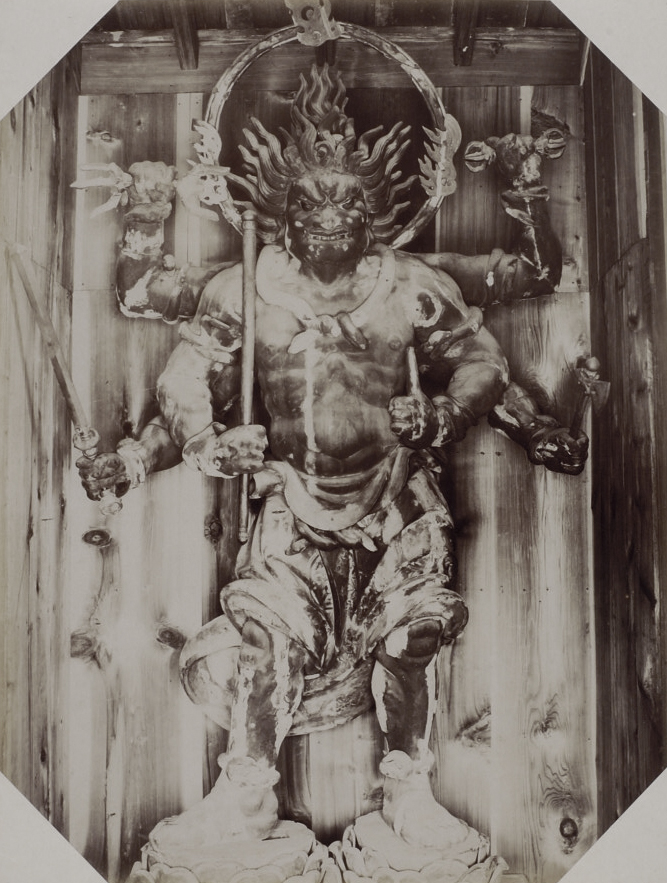 🇯🇵 JapanDaigensuihō大元帥法
An Esoteric Shingon Buddhist rite for military defense and cursing enemiesRite · Cursing and harm · Protection Historical
🇯🇵 JapanDaigensuihō大元帥法
An Esoteric Shingon Buddhist rite for military defense and cursing enemiesRite · Cursing and harm · Protection Historical
 🇯🇵 JapanMagatama勾玉
A curved Japanese bead used as jewelry, status symbol, and sacred object in Shinto.Charm · Power and authority · Speaking with spirits and the dead Living
🇯🇵 JapanMagatama勾玉
A curved Japanese bead used as jewelry, status symbol, and sacred object in Shinto.Charm · Power and authority · Speaking with spirits and the dead Living
 🇯🇵 JapanAmabieアマビエ
A prophetic sea creature from Japan that wards off disease with its imageFigure · Protection · Seeing and foretelling Legendary
🇰🇷 South KoreaMago Halmi마고할미
A giant creator goddess in Korean mythology associated with hemp weaving and the separation of heaven and earth.Figure · Wonder and entertainment Legendary
🇯🇵 JapanAmabieアマビエ
A prophetic sea creature from Japan that wards off disease with its imageFigure · Protection · Seeing and foretelling Legendary
🇰🇷 South KoreaMago Halmi마고할미
A giant creator goddess in Korean mythology associated with hemp weaving and the separation of heaven and earth.Figure · Wonder and entertainment Legendary
 🇨🇳 ChinaInterconnected-arm gibbon通臂猿
A mythical primate with linked arms that can extend one limb by pulling in the other.Figure · Power and authority Legendary
🇯🇵 JapanŌnyūdō大僧正
A giant monk spirit in Japanese folklore, ranging from helpful helpers to menacing shadows.Being · Cursing and harm · Healing Legendary
🇯🇵 JapanMakuragaeshi枕返し
A Japanese spirit that flips pillows and turns sleepers upside downBeing · Cursing and harm · Luck and prosperity Legendary
🇨🇳 ChinaInterconnected-arm gibbon通臂猿
A mythical primate with linked arms that can extend one limb by pulling in the other.Figure · Power and authority Legendary
🇯🇵 JapanŌnyūdō大僧正
A giant monk spirit in Japanese folklore, ranging from helpful helpers to menacing shadows.Being · Cursing and harm · Healing Legendary
🇯🇵 JapanMakuragaeshi枕返し
A Japanese spirit that flips pillows and turns sleepers upside downBeing · Cursing and harm · Luck and prosperity Legendary
 🇯🇵 JapanHitotsume-nyūdō独眼僧
A one-eyed Japanese monk spirit from folklore and legendBeing · Cursing and harm Legendary
🇯🇵 JapanHitotsume-nyūdō独眼僧
A one-eyed Japanese monk spirit from folklore and legendBeing · Cursing and harm Legendary
 🇯🇵 JapanFutomani太占
A Shinto divination method using heated deer shoulder blades to read future patternsOracle · Seeing and foretelling Living
🇯🇵 JapanFutomani太占
A Shinto divination method using heated deer shoulder blades to read future patternsOracle · Seeing and foretelling Living
 🇮🇷 Iran and 5 moreAxis mundi
A concept describing a central point connecting the earthly and heavenly realms.Belief · Speaking with spirits and the dead · Power and authority Historical
🇮🇷 Iran and 5 moreAxis mundi
A concept describing a central point connecting the earthly and heavenly realms.Belief · Speaking with spirits and the dead · Power and authority Historical
 🇪🇬 Egypt and 5 moreWorship of heavenly bodies
Veneration of stars, planets, and the sky as divine forces or deitiesTradition · Protection · Power and authority Historical
🇪🇬 Egypt and 5 moreWorship of heavenly bodies
Veneration of stars, planets, and the sky as divine forces or deitiesTradition · Protection · Power and authority Historical
 🇯🇵 JapanOmamori御守/お守り
Japanese amulets from shrines and temples for luck and protectionCharm · Protection · Luck and prosperity Living
🇯🇵 JapanOmamori御守/お守り
Japanese amulets from shrines and temples for luck and protectionCharm · Protection · Luck and prosperity Living
 🇯🇵 JapanKuzunoha葛の葉
A kitsune spirit and mother of the famous onmyōji Abe no Seimei in Japanese folkloreFigure · Wonder and entertainment Legendary
🇯🇵 JapanKuzunoha葛の葉
A kitsune spirit and mother of the famous onmyōji Abe no Seimei in Japanese folkloreFigure · Wonder and entertainment Legendary
 🇯🇵 Japan and 1 morePower spotパワースポット
A Japanese term for places believed to hold strong earth energy and healing power.Belief · Healing · Power and authority Living
🇯🇵 Japan and 1 morePower spotパワースポット
A Japanese term for places believed to hold strong earth energy and healing power.Belief · Healing · Power and authority Living
 🇯🇵 JapanAkabeko赤べこ
A bobbing papier-mâché toy from Japan believed to ward off illnessCharm · Protection · Healing Living
🇯🇵 JapanAkabeko赤べこ
A bobbing papier-mâché toy from Japan believed to ward off illnessCharm · Protection · Healing Living
 🇯🇵 JapanGoryō御霊
A Japanese belief in appeasing vengeful spirits through Shinto shrinesBelief · Protection · Speaking with spirits and the dead Historical
🇯🇵 JapanYakudoshi厄年
Traditional Japanese ages believed to bring bad luck and the rituals used to ward them offBelief · Protection Living
🇯🇵 JapanGoryō御霊
A Japanese belief in appeasing vengeful spirits through Shinto shrinesBelief · Protection · Speaking with spirits and the dead Historical
🇯🇵 JapanYakudoshi厄年
Traditional Japanese ages believed to bring bad luck and the rituals used to ward them offBelief · Protection Living
 🇨🇳 ChinaAo鰲
A colossal sea turtle of Chinese myth whose legs support the skyBeing · Protection · Wonder and entertainment Legendary
🇨🇳 ChinaAo鰲
A colossal sea turtle of Chinese myth whose legs support the skyBeing · Protection · Wonder and entertainment Legendary
 🇯🇵 JapanShinigami死神
A Japanese spirit or deity associated with inviting humans toward deathBeing · Cursing and harm Historical
🇯🇵 JapanShinigami死神
A Japanese spirit or deity associated with inviting humans toward deathBeing · Cursing and harm Historical
 🇨🇳 China and 2 moreThree-legged crow三足烏
A mythological bird representing the sun in East Asian traditionsFigure · Power and authority · Luck and prosperity Legendary
🇯🇵 JapanJanjanbiじゃんじゃん火
Atmospheric ghost lights from Nara Prefecture, said to be the spirits of lovers or a wronged commander.Belief Historical
🇨🇳 China and 2 moreThree-legged crow三足烏
A mythological bird representing the sun in East Asian traditionsFigure · Power and authority · Luck and prosperity Legendary
🇯🇵 JapanJanjanbiじゃんじゃん火
Atmospheric ghost lights from Nara Prefecture, said to be the spirits of lovers or a wronged commander.Belief Historical
 🇨🇳 China and 3 moreFengshui woodland風水林
A protected grove in East Asia believed to shape the local environment and bring luck to nearby communities.Tradition · Protection · Luck and prosperity Living
🇨🇳 China and 3 moreFengshui woodland風水林
A protected grove in East Asia believed to shape the local environment and bring luck to nearby communities.Tradition · Protection · Luck and prosperity Living
 🇯🇵 JapanKabura-ya鏑矢
A Japanese arrow with a whistling tip used in ritual archery and Shinto ritesSubstance · Protection · Speaking with spirits and the dead Living
🇯🇵 JapanKabura-ya鏑矢
A Japanese arrow with a whistling tip used in ritual archery and Shinto ritesSubstance · Protection · Speaking with spirits and the dead Living
 🇯🇵 JapanSuzu鈴
A hollow Japanese bell with inner pellets, used in Shinto rites and shrines.Charm · Protection · Speaking with spirits and the dead Living
🇯🇵 JapanSuzu鈴
A hollow Japanese bell with inner pellets, used in Shinto rites and shrines.Charm · Protection · Speaking with spirits and the dead Living
 🇯🇵 JapanSeimei Shrine晴明神社
A Shinto shrine in Kyoto dedicated to the legendary onmyōji Abe no SeimeiTradition · Speaking with spirits and the dead Living
🇯🇵 JapanSeimei Shrine晴明神社
A Shinto shrine in Kyoto dedicated to the legendary onmyōji Abe no SeimeiTradition · Speaking with spirits and the dead Living
 🇯🇵 JapanKayu ura粥占
A Japanese Shinto divination ritual using rice or bean gruel to predict the harvest.Rite · Seeing and foretelling · Luck and prosperity Living
🇯🇵 JapanKayu ura粥占
A Japanese Shinto divination ritual using rice or bean gruel to predict the harvest.Rite · Seeing and foretelling · Luck and prosperity Living
Photo credits on this page
The small pictures above come from Wikimedia Commons under free licences. Some are cropped to fit.
- Kabura-ya: urasimaru, CC BY-SA 2.0, source
- Three-legged crow: Jinsha Site Museum. Original author: ancient Shu people., Public domain, source
- Shinigami: 日: Jnn, CC BY 2.1 jp, source
- Ao: David Jackson, CC BY-SA 2.0 uk, source
- Omamori: Leongboy1, Public domain, source
- Daigensuihō: Kamakura-period artist; photo by Kudo Risaburo (工藤利三郎), Public domain, source
- Magatama: Kakidai, CC BY-SA 3.0, source
- Amabie: Unknown author, Public domain, source
- Interconnected-arm gibbon: Xuande Emperor, Public domain, source
- Hitotsume-nyūdō: Kashiwa Seiho (柏正甫), Public domain, source
- Futomani: Miura Hiroyuki, Public domain, source
- Axis mundi: Unknown author, Public domain, source
- Worship of heavenly bodies: Jean-Pierre Dalbéra, CC BY 2.0, source
- Kuzunoha: Print artist: Utagawa Kuniyoshi (歌川国芳) Print artist: Utagawa Hiroshige, Public domain, source
- Power spot: ccfarmer, CC BY 3.0, source
- Akabeko: Wdqh, CC BY-SA 4.0, source
- Goryō: Tsukioka Yoshitoshi (1839–1892), Public domain, source
- Fengshui woodland: 猫猫的日记本 (Cat's diary), CC BY-SA 3.0, source
- Suzu: Unknown author, CC0, source
- Seimei Shrine: Naokijp, CC BY-SA 4.0, source
- Kayu ura: Yatukiyurei, CC BY-SA 4.0, source