
Power spot
In its own language: パワースポット
from English "power" and "spot", adapted into Japanese as wasei-eigo
A Japanese term for places believed to hold strong earth energy and healing power.
Power spots are locations in Japan said to emit a special force from the ground. The concept blends ancient nature worship with modern new religious movements and New Age ideas about spiritual vortices.
- Term coined by Masuaki Kiyota in 1975
- Popularized in Japan during the early 1990s
- Mount Fuji and Ise Grand Shrine are key sites
- Sedona, Arizona is a famous overseas example
- Accessible to all genders and social statuses
What it is
A power spot is a specific location on Earth that is believed to radiate a unique force or energy. In Japan, these sites are often linked to traditional nature worship and Shugendō mountain asceticism. Practitioners believe the ground itself holds a potent qi that can be absorbed by visitors. The concept has expanded globally through New Age spirituality, where similar sites are called spiritual vortices. These places are thought to offer healing, self-recovery, and a direct connection to the earth's power without complex rituals.
Where it comes from
The modern term was coined in 1975 by Masuaki Kiyota, a figure claiming psychic abilities. It gained widespread popularity in the early 1990s alongside a boom in feng shui interest. Historically, the idea draws from ancient practices of worshipping mountains, rivers, and lakes. Pilgrimages to sites like Kumano Sanzan allowed common people to gain spiritual power previously restricted to trained Shugenja. The term is a wasei-eigo, a Japanese-made word using English roots, reflecting a blend of local tradition and global spiritual trends.
How it is done
Visitors travel to designated sacred sites to absorb the ambient energy. There are no strict rituals required; simply being present at the location is considered sufficient to receive benefits. Some spots are noted for having healing waters or speaking rocks. People may walk along fault lines or stand near specific geological formations to feel the magnetic or spiritual forces. The practice is informal, allowing anyone regardless of gender or social status to participate.
Tools and materials
The primary tools are natural features such as mountains, hot springs, ponds, and fault lines. Water is often cited as a medium for healing energy. Rocks and stones are viewed as conduits for communication with spirits. The earth itself is the central element, with its qi or magnetic properties forming the basis of the experience. No manufactured objects are typically used in the basic practice.
Power spot, drawn and placed
- Living
- Revived
- Fading
- Historical
- Legendary
- Performed
- Lineage
- Japanese new religious movements and nature worship
- Timing
- anytime
What it is for
People visit these spots to heal physical or emotional ailments and to recover their personal strength. The goal is to tap into the earth's power to improve one's life force. Unlike formal religious rites, this practice offers accessible spiritual power to the general public. It serves as a form of pilgrimage that does not require initiation or deep theological knowledge, making it popular among tourists and locals seeking spiritual balance.
Who does it
Any individual can act as a practitioner by visiting a site. There is no specialized training required to benefit from a power spot. This accessibility distinguishes it from older esoteric traditions that demanded years of study. Both men and women can visit these places equally. The rise of the term has been supported by media figures and spiritual association leaders who promote shrines and temples as modern spiritual centers.
Peoples and places
The concept is primarily Japanese but has influenced global New Age communities. In Japan, it connects to Shinto nature worship and Buddhist pilgrimage traditions. Overseas, similar beliefs exist in the United States, particularly in Sedona, Arizona, known for its energy vortices. Other locations like the Guiana Highlands and the Chocolate Hills in the Philippines are also recognized within this framework. The belief system bridges indigenous animism with contemporary spiritual tourism.
At a glance: who, where and when
Who does it
Peoples
Belief worlds
What people believe
The worldview rests on the idea that the earth emits a tangible energy field. This qi flows through specific geographical points, creating zones of high spiritual potency. Mountains are seen as homes for divine spirits and gateways to the land of the dead. Water bodies house water gods and spirits. The belief holds that humans can interact with these forces directly, absorbing vitality from the landscape rather than relying solely on deities or ancestors.
How scholars and sceptics see it
Scholars view power spots as a product of modern Japanese new religious movements. The term reflects a commercialization of spiritual geography. Anthropologists note the shift from exclusive esoteric practices to democratized spiritual experiences. Critics argue that the concept lacks empirical basis, attributing perceived effects to psychological suggestion. However, researchers acknowledge its role in preserving interest in traditional sacred sites and nature worship in a secularizing society.
Cautions and what is closed
There are no recorded health risks associated with visiting these sites. However, the commercialization of spiritual locations can lead to exploitation by tour operators. Some critics warn against the potential for fraud by individuals claiming special powers to guide visitors. The casual nature of the practice means there are no strict safety protocols, though standard travel precautions apply. The belief system itself does not involve harmful rituals or animal sacrifice.
Compare and confuse
Power spots are similar to Ley lines and Dragon veins in East Asian geomancy. They share concepts with Western spiritual vortices found in places like Sedona. The term is distinct from traditional junrei (pilgrimage) due to its focus on natural energy rather than religious icons. While related to Feng shui, it is more localized to specific geographic points rather than architectural alignment.
Questions people ask about Power spot
What is a power spot?
It is a location believed to emit strong earth energy or qi. Visitors go there to absorb this force for healing and personal power, a concept rooted in Japanese nature worship and modern spiritualism.
Where did the term originate?
The phrase was created in Japan in 1975 by Masuaki Kiyota. It is a wasei-eigo, combining English words to describe a place of spiritual energy, later spreading to global New Age circles.
Do I need to perform rituals?
No specific rituals are required. Simply visiting the site and being present is considered enough to connect with the energy. The practice is designed to be accessible to everyone without prior training.
Are there famous examples outside Japan?
Yes, Sedona in Arizona is widely known for its spiritual vortices. Other locations like the Guiana Highlands and the Chocolate Hills in the Philippines are also recognized within this global framework.
Good reading and sources
The facts on this page come from the Wikipedia article "Power spot (spirituality)", written by its contributors and used under the CC BY-SA 4.0 licence, and from its Wikidata record (CC0). EveryJaadu rewrote the text in its own words, with AI assistance, and compares every page with the article to make sure no passage is copied. It may be reused under the same CC BY-SA 4.0 licence with a link back.
It may contain mistakes. Names and customs differ from one community to the next, and some knowledge is closed to outsiders and left out here. This page describes belief and practice. It does not say that any of it works, it is not a how-to, and it is not medical advice. If something is wrong, tell us. Last refreshed 2026-10-09.
More from Japan
All the entries from Japan 🇨🇳 China and 2 moreNaming taboo避諱
A cultural rule against speaking or writing the names of rulers and ancestors in East AsiaBelief · Protection Historical
🇨🇳 China and 3 moreQi氣 / 气
A vital force in Chinese philosophy and medicine, believed to flow through all living things.Substance · Healing · Power and authority Living
🇨🇳 China and 2 moreNaming taboo避諱
A cultural rule against speaking or writing the names of rulers and ancestors in East AsiaBelief · Protection Historical
🇨🇳 China and 3 moreQi氣 / 气
A vital force in Chinese philosophy and medicine, believed to flow through all living things.Substance · Healing · Power and authority Living
 🇯🇵 JapanKitsunebi狐火
Atmospheric ghost lights in Japanese folklore, often linked to foxes and natural phenomena.Belief · Wonder and entertainment · Luck and prosperity Historical
🇯🇵 JapanKitsunebi狐火
Atmospheric ghost lights in Japanese folklore, often linked to foxes and natural phenomena.Belief · Wonder and entertainment · Luck and prosperity Historical
Related elsewhere
All belief 🇫🇷 FranceHoly GrailSaint Graal
A cup or stone from Arthurian tales that grants healing and eternal lifeFigure · Healing · Luck and prosperity Legendary
🇫🇷 FranceHoly GrailSaint Graal
A cup or stone from Arthurian tales that grants healing and eternal lifeFigure · Healing · Luck and prosperity Legendary
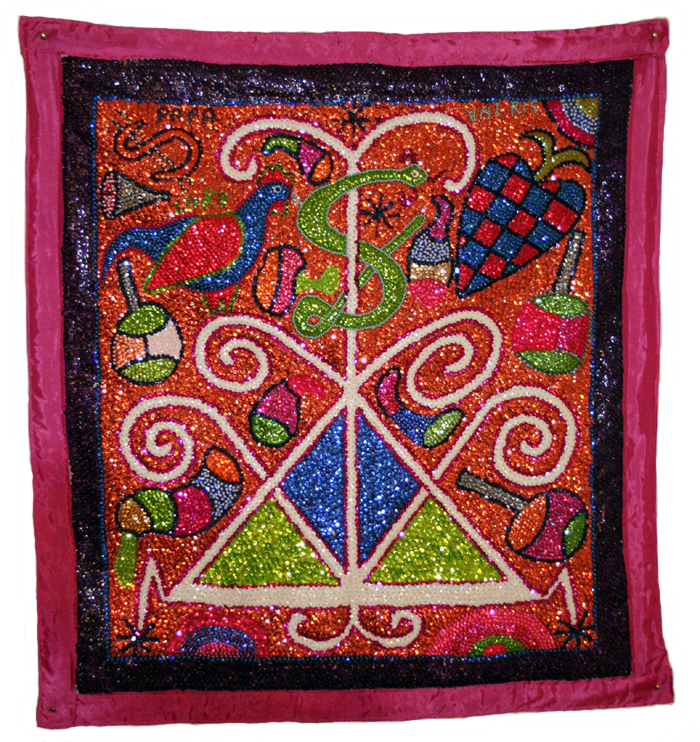 🇭🇹 Haiti and 2 moreHaitian VodouVodou
An Afro-Haitian religion blending West African traditions with Catholicism and FreemasonryTradition · Protection · Healing Living
🇭🇹 Haiti and 2 moreHaitian VodouVodou
An Afro-Haitian religion blending West African traditions with Catholicism and FreemasonryTradition · Protection · Healing Living
 🇮🇶 Iraq and 5 moreGrimoire
A textbook containing instructions for spells, rituals, and the creation of magical objects.Text · Protection · Healing Historical
🇮🇶 Iraq and 5 moreGrimoire
A textbook containing instructions for spells, rituals, and the creation of magical objects.Text · Protection · Healing Historical
 🇮🇳 India and 1 moreAmritaअमृत (Sanskrit)
A Sanskrit concept of immortality and the nectar that grants it across Indian religionsBelief · Healing · Power and authority Living
🇮🇳 India and 1 moreAmritaअमृत (Sanskrit)
A Sanskrit concept of immortality and the nectar that grants it across Indian religionsBelief · Healing · Power and authority Living