Shinto and Taoist: magic in this belief world
Ofuda and omamori, fu talismans, onmyodo, and the rites of temples and mountains.
Shinto and Taoism are two major East Asian religions, and both include rites that outsiders may label magic. Shinto shrines sell omamori and perform purification, and Taoist priests make fu talismans and perform rites for the living and the dead. Related practices include onmyodo in Japan and feng shui and divination in China. This page covers how these traditions work and how states have treated them. They differ greatly: Shinto is tied to place and community, while Taoism offers both a philosophy and an organised priesthood.
Shinto rites
Shinto centres on kami, the spirits and powers of places and ancestors, and on purification (harae). Shrines offer omamori, ofuda and fortune slips called omikuji, and priests perform rites for new cars, buildings and births. Many Japanese take part without describing themselves as believers, and the rites are woven into the calendar. Ordinary visitors buy a charm for a particular aim, such as safe childbirth, exam success or traffic safety, and may return it to the shrine after a year.
Taoist ritual and talismans
Taoism includes philosophy, monastic practice and a priestly tradition of liturgy and exorcism. Priests of lineages such as Zhengyi write fu, written talismans, and perform rites for protection and the dead. The I Ching and feng shui are also linked with Taoist thought, though they have separate histories. Several Chinese dynasties licensed Taoist priests and also tried to control them. Taoist masters have trained in lineages that run for many generations, and some rites are reserved for the ordained and not for the public.
Onmyodo and the state
Onmyodo, a Japanese system of divination and calendar-keeping drawn from Chinese yin-yang thought, served the imperial court. The famed Abe no Seimei lived in the Heian period. The Meiji government abolished the official onmyodo bureau in 1870 and separated Shinto from Buddhism, which reshaped practice. In China, Taoist temples were closed during the Cultural Revolution and have partly revived. Women have long served as shrine maidens in Shinto and as priests in several Taoist lineages, though the top posts are mostly held by men.
Commerce and the West
Feng shui and fortune-telling are large industries in Hong Kong, Taiwan and the diaspora, and Japanese lucky charms are bought by tourists. Scholars debate the line between religion and superstition, a distinction introduced in Asia by modern states in the late nineteenth and twentieth centuries. Practitioners tend to describe what they do as ritual service to the community. Taiwanese and Hong Kong temples and Japanese shrines are visited by large numbers of people, and communities overseas have built new shrines and temples.
Shinto and Taoist on EveryJaadu
The entries written up so far, best known first.
 🇨🇳 ChinaLan Caihe藍采和
An ambiguous Taoist immortal known for a flower basket and wandering songsBeing · Wonder and entertainment Legendary
🇨🇳 ChinaLan Caihe藍采和
An ambiguous Taoist immortal known for a flower basket and wandering songsBeing · Wonder and entertainment Legendary
 🇯🇵 Japan and 2 moreTanabataたなばた (七夕)
A Japanese celebration of star-crossed lovers and written wishesTradition · Luck and prosperity · Wonder and entertainment Living
🇯🇵 Japan and 2 moreTanabataたなばた (七夕)
A Japanese celebration of star-crossed lovers and written wishesTradition · Luck and prosperity · Wonder and entertainment Living
 🇨🇳 ChinaNüwa女媧
A Chinese mother goddess who created humanity and repaired the skyFigure · Wonder and entertainment Legendary
🇨🇳 ChinaNüwa女媧
A Chinese mother goddess who created humanity and repaired the skyFigure · Wonder and entertainment Legendary
 🇯🇵 JapanKitsuneきつね
A Japanese fox spirit known for shapeshifting and trickeryBeing · Cursing and harm · Protection Legendary
🇯🇵 JapanKitsuneきつね
A Japanese fox spirit known for shapeshifting and trickeryBeing · Cursing and harm · Protection Legendary
 🇯🇵 JapanAbe no Seimei安倍 晴明
A historical court official turned legendary Japanese onmyōji and folk heroFigure · Protection · Seeing and foretelling Legendary
🇯🇵 JapanAbe no Seimei安倍 晴明
A historical court official turned legendary Japanese onmyōji and folk heroFigure · Protection · Seeing and foretelling Legendary
 🇮🇳 India and 5 moreMandalaमण्डल
A sacred geometric design used in Indian religions for meditation and spiritual mapping.Tradition · Speaking with spirits and the dead · Wonder and entertainment Living
🇮🇳 India and 5 moreMandalaमण्डल
A sacred geometric design used in Indian religions for meditation and spiritual mapping.Tradition · Speaking with spirits and the dead · Wonder and entertainment Living
 🇸🇩 Sudan and 5 moreIncense
Aromatic plant materials burned to release fragrant smoke for ritual, scent, or timekeeping.Substance · Protection · Speaking with spirits and the dead Living
🇸🇩 Sudan and 5 moreIncense
Aromatic plant materials burned to release fragrant smoke for ritual, scent, or timekeeping.Substance · Protection · Speaking with spirits and the dead Living
 🇨🇳 ChinaHe Xiangu何仙姑
A female immortal from Chinese Taoist legend known for divination and lotus magicFigure · Seeing and foretelling · Healing Legendary
🇨🇳 ChinaHe Xiangu何仙姑
A female immortal from Chinese Taoist legend known for divination and lotus magicFigure · Seeing and foretelling · Healing Legendary
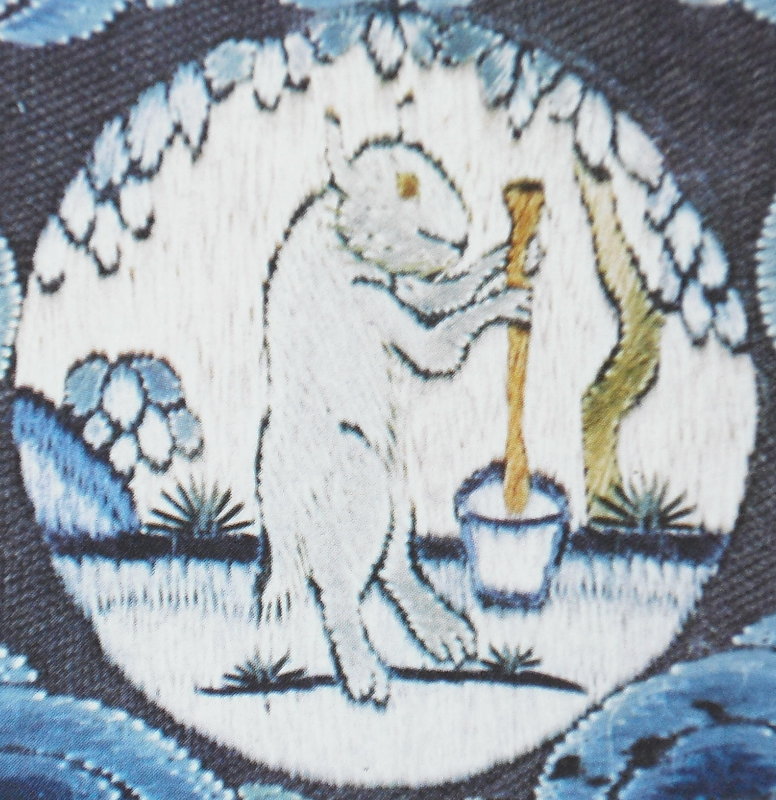 🇨🇳 China and 5 moreMoon rabbit月兔 (yuètù)
A mythical figure seen in lunar markings, pounding elixirs or rice cakes across Asia and the Americas.Being · Wonder and entertainment Living
🇨🇳 China and 5 moreMoon rabbit月兔 (yuètù)
A mythical figure seen in lunar markings, pounding elixirs or rice cakes across Asia and the Americas.Being · Wonder and entertainment Living
 🇨🇳 ChinaAo鰲
A colossal sea turtle of Chinese myth whose legs support the skyBeing · Protection · Wonder and entertainment Legendary
🇰🇷 South KoreaMago Halmi마고할미
A giant creator goddess in Korean mythology associated with hemp weaving and the separation of heaven and earth.Figure · Wonder and entertainment Legendary
🇨🇳 ChinaAo鰲
A colossal sea turtle of Chinese myth whose legs support the skyBeing · Protection · Wonder and entertainment Legendary
🇰🇷 South KoreaMago Halmi마고할미
A giant creator goddess in Korean mythology associated with hemp weaving and the separation of heaven and earth.Figure · Wonder and entertainment Legendary
 🇯🇵 JapanKuzunoha葛の葉
A kitsune spirit and mother of the famous onmyōji Abe no Seimei in Japanese folkloreFigure · Wonder and entertainment Legendary
🇯🇵 JapanKuzunoha葛の葉
A kitsune spirit and mother of the famous onmyōji Abe no Seimei in Japanese folkloreFigure · Wonder and entertainment Legendary
 🇯🇵 JapanBanchō Sarayashiki番町皿屋敷
A Japanese ghost story about a servant who dies unjustly and haunts her murderer by counting plates.Figure · Cursing and harm · Wonder and entertainment Legendary
🇯🇵 JapanBanchō Sarayashiki番町皿屋敷
A Japanese ghost story about a servant who dies unjustly and haunts her murderer by counting plates.Figure · Cursing and harm · Wonder and entertainment Legendary
Photo credits on this page
The small pictures above come from Wikimedia Commons under free licences. Some are cropped to fit.
- Lan Caihe: Internet Archive Book Images, No restrictions, source
- Ao: David Jackson, CC BY-SA 2.0 uk, source
- Incense: nakimusi, CC BY 2.0, source
- Onmyōdō: Unknown author, Public domain, source
- He Xiangu: Zhang Lu, Public domain, source
- Tanabata: Laika ac, CC BY-SA 2.0, source
- Nüwa: 山胖z, CC BY 3.0, source
- Kitsune: Yoshitoshi, Public domain, source
- Moon rabbit: An artist, Public domain, source
- Banchō Sarayashiki: Tsukioka Yoshitoshi, Okiku ,, Public domain, source
- Mandala: Marion Golsteijn, CC BY-SA 3.0, source
- Kuzunoha: Print artist: Utagawa Kuniyoshi (歌川国芳) Print artist: Utagawa Hiroshige, Public domain, source