Illness and misfortune: practices that mark them
What people do when someone falls ill or luck turns: consult, cleanse, ward.
Illness and misfortune are the moments when people most often turn to magic. When someone falls ill, a business fails, a child is lost or luck turns, families ask why, and consult a healer, diviner, priest or mediums. Examples include the Mexican limpia, the African consultation of a diviner, the Islamic ruqyah, the Hindu or Buddhist temple rites, the Korean gut and the Catholic blessing of the sick. This page covers the pattern and its risks. It is not medical advice, and illness needs real medical care.
Why and who
Many traditions ask two questions: how did this happen, and why to me? A medical account answers the first. Traditional systems often address the second, linking misfortune to relationships, envy, taboo or spirits. A consultation then names a cause and a remedy, which may involve cleansing, offerings, protective objects or a ceremony. A diviner may be consulted, a healer called, a priest asked to pray or a shrine visited, and in many households several of these happen at once.
Help and hope
Rites of crisis bring people together, give a role to the family and offer hope when treatment is limited. Researchers have documented comfort and reduced distress after ritual. Many people use medicine and ritual together, and many healers support that. The pattern becomes dangerous only when ritual displaces treatment. Many practitioners also give practical advice about rest, diet and family conflict, and some of this advice is sound and some is not.
Blame and exploitation
Crisis also creates a market for fear. Fraudulent healers tell clients they are cursed and sell expensive cleansing. Accusations of witchcraft often follow illness, with violence against the accused. Exorcism of people with mental illness has caused injuries and deaths, including documented cases in churches in several countries. In some societies, a bad event is the signal for a ritual of the whole community, with confession, reconciliation and shared offerings.
Care and context
Public health programmes now involve community healers in work on issues such as HIV, maternal health and mental health, since many people consult them first. Scholars of medical anthropology call this a plural system of care. The sensible approach is to seek qualified medical help promptly and treat other support as company. Public health bodies urge anyone with a serious illness or injury to seek a clinician at once, and to treat traditional help as complementary to that care and never as a replacement for it.
Illness and misfortune on EveryJaadu
The entries written up so far, best known first.
 🇺🇸 United States and 7 moreSatanic panic
A moral panic over unsubstantiated claims of Satanic cults abusing children in the late twentieth centuryBelief · Cursing and harm Historical
🇬🇧 United KingdomSpectral evidence
Court testimony based on visions of spirits during historical witch trialsBelief · Cursing and harm Historical
🇺🇸 United States and 7 moreSatanic panic
A moral panic over unsubstantiated claims of Satanic cults abusing children in the late twentieth centuryBelief · Cursing and harm Historical
🇬🇧 United KingdomSpectral evidence
Court testimony based on visions of spirits during historical witch trialsBelief · Cursing and harm Historical
 🇫🇷 France and 1 moreDruiddruides
A learned priestly class of the ancient Celts in Gaul and BritainTradition · Cursing and harm · Protection Historical
🇫🇷 France and 1 moreDruiddruides
A learned priestly class of the ancient Celts in Gaul and BritainTradition · Cursing and harm · Protection Historical
 🇮🇪 Ireland and 5 moreHoly well
A water source revered for healing and ritual across pagan and Christian traditionsTradition · Healing · Speaking with spirits and the dead Living
🇮🇪 Ireland and 5 moreHoly well
A water source revered for healing and ritual across pagan and Christian traditionsTradition · Healing · Speaking with spirits and the dead Living
 🇩🇪 Germany and 1 moreWitch's mark
A bodily mark believed to prove a pact with the Devil during early modern witch trialsBelief · Cursing and harm Historical
🇨🇳 China and 4 moreQimen Dunjia奇門遁甲
An ancient Chinese divination system mapping time and space for strategic decision-makingOracle · Seeing and foretelling · Power and authority Revived
🇩🇪 Germany and 1 moreWitch's mark
A bodily mark believed to prove a pact with the Devil during early modern witch trialsBelief · Cursing and harm Historical
🇨🇳 China and 4 moreQimen Dunjia奇門遁甲
An ancient Chinese divination system mapping time and space for strategic decision-makingOracle · Seeing and foretelling · Power and authority Revived
 🇬🇷 Greece and 5 moreNecromancy
A form of divination that seeks to speak with the dead for hidden knowledge.Tradition · Seeing and foretelling · Power and authority Historical
🇬🇷 Greece and 5 moreNecromancy
A form of divination that seeks to speak with the dead for hidden knowledge.Tradition · Seeing and foretelling · Power and authority Historical
 🇲🇲 Myanmar and 2 moreBurmese zodiacဇာတာ ရာသီခွင်
A traditional Burmese system of astronomy and astrology with lunar mansions and weekday signs.Tradition · Seeing and foretelling · Luck and prosperity Living
🇲🇲 Myanmar and 2 moreBurmese zodiacဇာတာ ရာသီခွင်
A traditional Burmese system of astronomy and astrology with lunar mansions and weekday signs.Tradition · Seeing and foretelling · Luck and prosperity Living
 🇳🇿 New Zealand and 5 moreFace tattoo
Marks inked on the face for spiritual protection, identity, rank, and rite of passageTradition · Protection · Power and authority Living
🇳🇿 New Zealand and 5 moreFace tattoo
Marks inked on the face for spiritual protection, identity, rank, and rite of passageTradition · Protection · Power and authority Living
 🇬🇹 Guatemala and 1 moreMaya calendar
A system of timekeeping used by ancient and modern Maya communities to track days, years, and historical cycles.Tradition · Seeing and foretelling · Luck and prosperity Living
🇬🇹 Guatemala and 1 moreMaya calendar
A system of timekeeping used by ancient and modern Maya communities to track days, years, and historical cycles.Tradition · Seeing and foretelling · Luck and prosperity Living
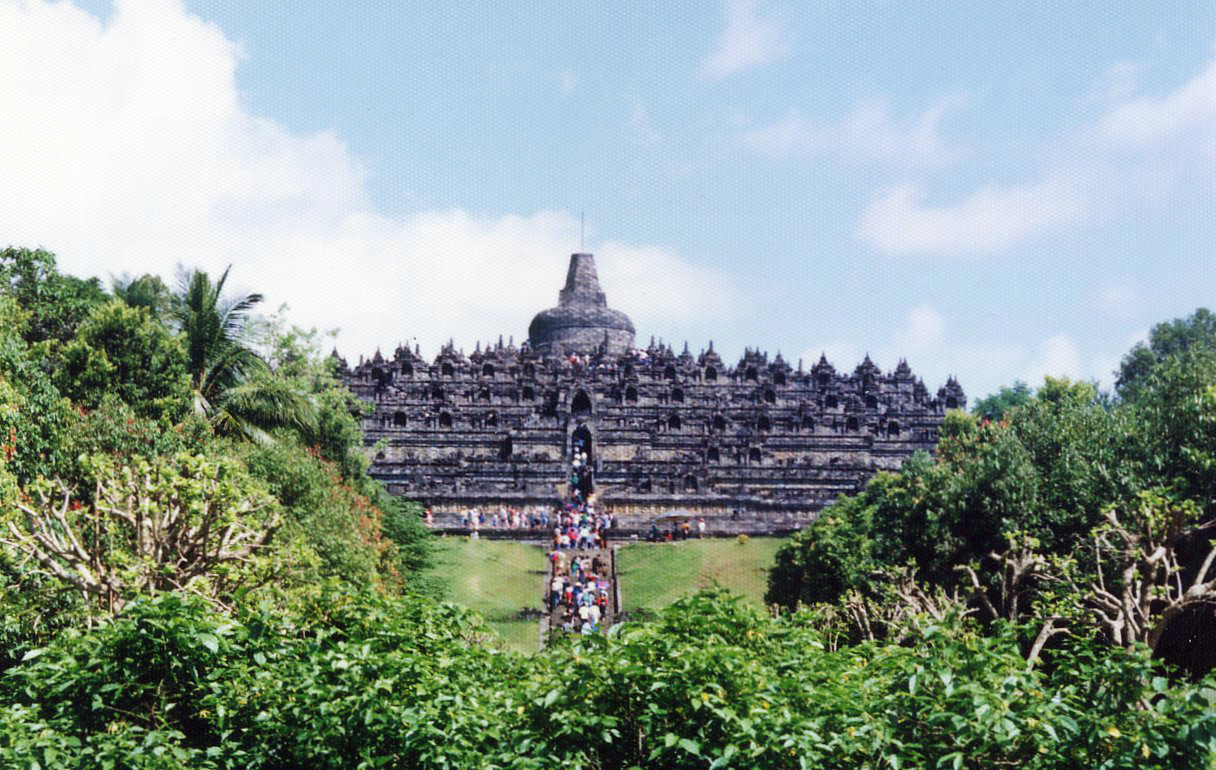 🇮🇩 Indonesia and 4 moreKejawènꦏꦗꦮꦺꦤ꧀ (Kajawèn)
A Javanese tradition blending animism, Hinduism, Buddhism and Islam into a path of inner harmony.Tradition · Protection · Speaking with spirits and the dead Living
🇮🇩 Indonesia and 4 moreKejawènꦏꦗꦮꦺꦤ꧀ (Kajawèn)
A Javanese tradition blending animism, Hinduism, Buddhism and Islam into a path of inner harmony.Tradition · Protection · Speaking with spirits and the dead Living
 🇨🇳 China and 4 moreFuji扶乩
Chinese planchette writing: gods and ancestors reply through a stylus on sandRite · Speaking with spirits and the dead · Seeing and foretelling Living
🇨🇳 China and 4 moreFuji扶乩
Chinese planchette writing: gods and ancestors reply through a stylus on sandRite · Speaking with spirits and the dead · Seeing and foretelling Living
 🇮🇹 Italy and 1 morePalladiumΠαλλάδιον (Palladion)
A wooden statue of Athena said to protect cities, stolen from Troy and brought to Rome.Charm · Protection Historical
🇮🇹 Italy and 1 morePalladiumΠαλλάδιον (Palladion)
A wooden statue of Athena said to protect cities, stolen from Troy and brought to Rome.Charm · Protection Historical
 🇺🇸 United StatesAshtar
A channeled extraterrestrial figure central to mid-century American ufology and New Age spiritualityBeing · Speaking with spirits and the dead · Seeing and foretelling Living
🇺🇸 United StatesAshtar
A channeled extraterrestrial figure central to mid-century American ufology and New Age spiritualityBeing · Speaking with spirits and the dead · Seeing and foretelling Living
 🇫🇷 France and 4 moreEctoplasm
A substance said to be excreted by mediums during séances, later exposed as common household materials.Substance · Speaking with spirits and the dead Historical
🇨🇳 ChinaChinese sorcery scares
A series of moral panics in Imperial China driven by fears of magical harm and hair cuttingBelief · Cursing and harm · Power and authority Historical
🇫🇷 France and 4 moreEctoplasm
A substance said to be excreted by mediums during séances, later exposed as common household materials.Substance · Speaking with spirits and the dead Historical
🇨🇳 ChinaChinese sorcery scares
A series of moral panics in Imperial China driven by fears of magical harm and hair cuttingBelief · Cursing and harm · Power and authority Historical
 🇷🇺 Russia and 2 moreBesomвеник
A twig broom used for sweeping, folk magic, and fire responseCharm · Protection · Wonder and entertainment Living
🇷🇺 Russia and 2 moreBesomвеник
A twig broom used for sweeping, folk magic, and fire responseCharm · Protection · Wonder and entertainment Living
 🇲🇲 MyanmarYadayaယတြာ
Rituals in Myanmar to avert misfortune using astrology and numerologyTradition · Protection · Luck and prosperity Living
🇲🇲 MyanmarYadayaယတြာ
Rituals in Myanmar to avert misfortune using astrology and numerologyTradition · Protection · Luck and prosperity Living
 🇩🇪 Germany and 3 moreCruentation
A medieval judicial test where a suspect touched a victim's body to see if it bled.Rite · Cursing and harm Historical
🇩🇪 Germany and 3 moreCruentation
A medieval judicial test where a suspect touched a victim's body to see if it bled.Rite · Cursing and harm Historical
Photo credits on this page
The small pictures above come from Wikimedia Commons under free licences. Some are cropped to fit.
- Cruentation: Unknown author, Public domain, source
- Sunda Wiwitan: Greenland4, Public domain, source
- Fuji: Unknown author, CC BY 4.0, source
- Mediumship: Harvey Metcalfe, Public domain, source
- Satanic panic: Hartmann Schedel (1440-1514), Public domain, source
- Holy well: The Speckled Bird, CC BY-SA 4.0, source
- Witch's mark: T. H. Matteson, Public domain, source
- Necromancy: Unknown author, CC BY 4.0, source
- Burmese zodiac: Photo Dharma, CC BY 2.0, source
- Face tattoo: Gottfried Lindauer, Public domain, source
- Maya calendar: MBisanz, CC BY-SA 3.0, source
- Palladium: Marie-Lan Nguyen ( Jastrow ), Public domain, source
- Ashtar: Evedawn99, Public domain, source
- Besom: https://en.wikipedia.org/wiki/David_Cox_(artist), Public domain, source
- Yadaya: Thai Government, CC BY 2.0, source
- Druid: Bernard de Montfaucon, Public domain, source