Witchcraft in Italy covers both the magic that people practised and the church courts that prosecuted them in the early modern period. Records from Vatican and city archives show the benandanti fertility cult of Friuli, rural blessers called segnatrici and segnatori, and spells cast for love; historians have built careers on these documents.
- In 1575 the Inquisition in Aquilea and Concordia heard of villages with self-styled benandanti
- Benandanti said they rode out in spirit four times a year, on the Ember days
- Carlo Ginzburg documented the cult in I Benandanti, published in Turin in 1966
- Segnature, a gesture-based rural blessing, is described as still alive and reviving
- Venetian courtesans were questioned over love magic meant to hold a man's affection
What it is
Italian witchcraft is a double subject: the magic that people in Italy practised in the early modern period, and the church courts that tried them for it. The two are known from the same paperwork. Prosecutions of witches and of people who used magic are widely recorded, and the files sit in Vatican and city archives. Out of those files comes a picture of village fertility cults, of rural blessers, and of spells cast for love or to recover lost things.
Where it comes from
On 21 March 1575 the vicar general and the Inquisitor for the provinces of Aquilea and Concordia were told that men in some villages called themselves benandanti and claimed to fight evil sorcery. That notice opens the documented history of the cult. Carlo Ginzburg made it widely known in I Benandanti (Turin, 1966), published in English as The Night Battles. Giovanni Romeo's 1990 study of inquisitors, exorcists and witches in Counter-Reformation Italy is described as a pioneering step in the field. In the past quarter century Monia Montechiarini has added names, trades and meeting details from trial records in a series of books.
How it is done
The benandanti said they went out in spirit while their bodies lay in trance. Four times a year, on the Ember days, they travelled to a gathering, riding hares, cats or other animals. There they fought the sorcerers called strighe and stregoni, who carried broomlike reeds, while the benandanti held fennel branches. A win in all four combats meant a good harvest; a loss meant scarcity. Women of the cult went instead with the processions of the dead, carrying messages between villagers and their ancestors. Village healers called segnatori and segnatrici worked differently, by gesture and spoken blessing.
Tools and materials
Fennel branches were the benandanti weapon, matched against the reed brooms of their opponents. The company carried a flag of white gilded ermine; the sorcerers' banner was yellow and showed four devils. A drum called members together. Every benandante was said to be born "with the shirt", wrapped in a caul, the membrane that occasionally covers a newborn's head, and this was taken as a mark of membership. In the love magic heard by the Holy Office, the items were bean throws, written incantations and animal offerings.
Witchcraft in Italy, drawn and placed
- Living
- Revived
- Fading
- Historical
- Legendary
- Performed
- Lineage
- Italian folk magic
- Timing
- four times a year, on Ember days, at night
What it is for
The stated aim of the benandanti was to keep the fields and the community fruitful and to undo the harm of sorcery; they said they healed people who had been bewitched. Victory in the four combats was held to decide whether the year brought abundance or famine. Other cases brought before the church courts concerned love: spells meant to hold a man's affection or to draw him home, and magic to free couples who could not consummate a marriage. Healing, recovering lost property and telling fortunes also appear in the trial papers.
Who does it
Benandanti said an angel from heaven invited them to join, and that they were taken into the company between the ages of twenty and twenty-eight. The group ran on military lines under a captain, and members were sworn to secrecy. At a meeting as many as five thousand could be present, some from nearby and most from distant provinces. The healers called segnatori and segnatrici were country people, often women. Among those questioned by the Holy Office were two Venetian courtesans, a neighbour named Lucretia, a priest from Latisana and a renegade priest and friar who read palms.
Peoples and places
The records come from the north-east and from the cities. Aquilea and Concordia, the provinces named in the 1575 report, belong to the Friuli area, and the benandanti are tied to Friuli in particular. Latisana is named as the home of one priest questioned, and Venice supplied courtesans, neighbours and denunciations, with its archives holding the Holy Office interviews. The Roman Inquisition, named for Rome, declared one friar a notorious heretic. Ginzburg also drew on Friuli for his study of the miller Menocchio. Meetings drew members from far outside the local districts.
At a glance: who, where and when
Who does it
Belief worlds
What people believe
Behind the trials lies a working view of the world in which the year's crops depend on a contest fought out of the body, and in which some people are marked for that work by the caul they arrive in. The benandanti saw themselves as Christians defending their neighbours, and told the inquisitors so. Their judges held a different model: a witch who flew at night, changed shape and met in secret. The Franciscans who investigated recognised the second picture and not the first, and over repeated hearings the accused gradually described themselves in the court's terms.
When it is done
The four benandanti meetings fell on the Ember days, the quarterly dates of the church year, and took place at night. Membership began with an invitation said to come from an angel, and the age of entry was given as somewhere between twenty and twenty-eight. The female members' journeys belonged to the processions of the dead rather than to the four combats. No other fixed date appears in the trial accounts. Healing and love magic, by contrast, were asked for whenever a need arose: an illness, a desertion, a lost object.
How scholars and sceptics see it
Microhistorians have made this material their own. Carlo Ginzburg, Guido Ruggiero, Maria Sofia Messana and Angelo Buttice are named among those whose careers rest on it, and Ginzburg's book on the benandanti was cited, argued over and admired long before it was translated. Giovanni Romeo's work on the Counter-Reformation is credited with opening inquisitorial and witchcraft studies in Italy. Monia Montechiarini has mined trial files for the people, trades and gatherings behind the charges. Angela Puca brings ethnographic fieldwork to the healing tradition, and argues in a 2024 book that segnature is a living form of Italian magic that has lasted by blending with Catholic practice.
Cautions and what is closed
The harm recorded here falls mostly on the accused. Church courts could imprison: the fortune teller Fra Aurelio di Siena was jailed and is thought to have died there. Reputation did damage too. Lucretia, a middle-aged neighbour, was cleared of wrongdoing, yet her odd habits and her part in other people's romances were enough to mark her as a witch. Ruggiero notes that a social order which paid little attention to the victimisation of poor women shaped who ended up in court. Courtesans were especially exposed to charges of love magic.
Compare and confuse
The benandanti are easily confused with the witches they fought. Both sides in the story flew at night and gathered in secret, and the difference was meant to lie in which side a person served. The Italian terms matter: strighe and stregoni are the sorcerers of the trial texts, benandanti the counter-fighters, and segnature the gesture-based blessing that has no combat in it at all. The love magic called binding was another matter again, treated by the courts as a way of forcing affection.
Law and persecution
Prosecution ran through the Inquisition. The Holy Office questioned suspects, the Roman Inquisition could label a person a notorious heretic, and sentences included imprisonment. The 1575 inquiry began when the vicar general and the Inquisitor of Aquilea and Concordia were formally notified of the benandanti. Testimony was written down, which is why the cases survive: the Venetian Archives hold the Holy Office interviews with Paolina di Rossi, and other files come from Vatican and city collections. Being tried could reshape what a defendant said about their own practice.
Today
Scholarship on Italian witchcraft is active rather than settled. Montechiarini's books on female crime, on Friuli and on Rome continue to add names from the files, and Puca's fieldwork describes segnature as a practice in the middle of a revival and systematisation, with social media and present-day spiritual circles playing a part. The trials themselves belong to the past, but the healing customs discussed in them are described as still alive in the countryside, blended with Catholic observance.
Questions people ask about Witchcraft in Italy
What is witchcraft in Italy and where does it come from?
It covers the magic practised in early modern Italy and the church courts that tried it. The documented history of the benandanti begins with a 1575 report to the Inquisitor of Aquilea and Concordia, and the trial files sit in Vatican and city archives.
Who were the benandanti?
A fertility cult in the Friuli area whose members said they left their bodies in trance four times a year to fight sorcerers with fennel branches. Carlo Ginzburg documented them from Inquisition files in I Benandanti, published in English as The Night Battles.
What happened to people accused?
The Holy Office questioned them and the Roman Inquisition could declare them heretics. Some were jailed, like the fortune teller Fra Aurelio di Siena, who is thought to have died in prison. A reputation alone could mark a woman as a witch.
Why did inquisitors see witches instead of defenders?
Judges worked from demonological treatises and inquisitorial manuals built up over three centuries. Night flight, shape-changing and secret meetings matched that model, and under repeated questioning the benandanti came to describe themselves as witches.
Is any of this still practised?
Segnature, the gesture-based blessing done by rural healers, is described as a living practice that has survived by blending with Catholicism and is now being revived and systematised, partly through social media and modern spiritual frameworks.
Good reading and sources
The facts on this page come from the Wikipedia article "Witchcraft in Italy", written by its contributors and used under the CC BY-SA 4.0 licence, and from its Wikidata record (CC0). EveryJaadu rewrote the text in its own words, with AI assistance, and compares every page with the article to make sure no passage is copied. It may be reused under the same CC BY-SA 4.0 licence with a link back.
It may contain mistakes. Names and customs differ from one community to the next, and some knowledge is closed to outsiders and left out here. This page describes belief and practice. It does not say that any of it works, it is not a how-to, and it is not medical advice. If something is wrong, tell us. Last refreshed 2026-10-19.
More from Italy
All the entries from Italy 🇩🇪 Germany and 5 moreMaypoleMaibaum
A tall wooden pole raised for European spring festivals, accompanied by dance and celebration.Tradition · Luck and prosperity · Love and attraction Living
 🇮🇹 ItalyFortunaFortūna
The Roman goddess of luck and fate, shown with a wheel and a horn of plentyBeing · Luck and prosperity · Seeing and foretelling Historical
 🇬🇷 Greece and 5 moreBay Laurelδάφνη
An aromatic Mediterranean plant used in cooking and as a symbol of victory and purification.Substance · Protection · Cleansing and purification Living
🇮🇹 Italy and 1 moreAradia
A figure of Italian folklore and modern pagan witchcraft, seen as a teacher of magic and liberation.Figure · Cursing and harm · Power and authority Revived
Related elsewhere
All tradition 🇺🇸 United StatesKahuna
A Hawaiian expert or priest, keeper of hidden knowledge in craft and spiritTradition · Healing · Seeing and foretelling Living
 🇨🇺 Cuba and 4 moreSanteríaRegla de Ocha
An Afro-Cuban religion blending Yoruba spirits with Catholic saintsTradition · Protection · Healing Living
 🇨🇱 Chile and 1 moreMachi
Mapuche spiritual authorities and healers who bridge herbal knowledge and spirit realmsTradition · Healing · Speaking with spirits and the dead Living
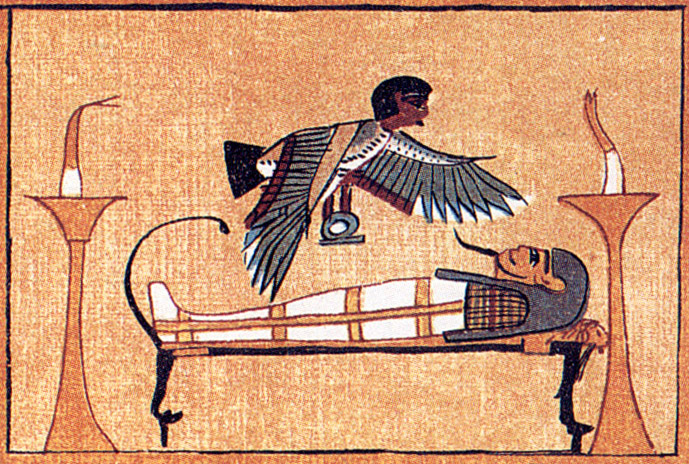 🇪🇬 Egypt and 1 moreSoul flight
A shamanic trance journey in which the soul is said to leave the bodyRite · Healing · Seeing and foretelling Living