Power and authority
Magic as kingship, priesthood and status: the sorcerer-king, the court astrologer, the rainmaker.
Magic as power and authority is the use of ritual to make or hold rank: kings with sacred duties, court astrologers, rainmakers, chiefs who are said to hold spiritual force, and priests who keep a state religion. It includes the Egyptian pharaoh, the Mongol shamans at the court of the khan, the Chinese Taoist masters, the Zulu and Shona spirit mediums, and the astrologers who advised Mughal and European rulers. This page asks how magic and politics feed each other. Where this happens, magic is less about individual wishes and more about who is allowed to speak for the unseen.
Sacred rulers
In many kingdoms the ruler was believed to hold a power linked to harvest, rain or victory. Pharaohs performed rites to keep order, and the Divine Right of kings in Europe included the royal touch, a rite by which French and English monarchs touched people with scrofula. Chinese emperors held the Mandate of Heaven, which natural omens could confirm or withdraw. The Mongol khans consulted shamans and diviners. Kings also commissioned astrologers to choose coronation dates.
Advisers and rivals
Courts employed diviners, astrologers and mages. John Dee advised Elizabeth I, and Indian and Persian kings kept court astrologers. Such advisers also faced risk: in Rome, astrologers were expelled several times, and accusations of sorcery were used to remove rivals at courts from Byzantium to Ming China. Magic offered influence to people with little formal rank. Sorcery charges were used against queens and ministers in several courts, and the fall of a favourite was often explained by a spell.
Resistance and the state
Spirit mediums have led resistance. In Zimbabwe, the spirit mediums Nehanda and Kaguvi were central to the 1896 uprising against British rule, and Nehanda was hanged in 1898. In Kenya and Tanzania, the Maji Maji rebellion of 1905 drew on a water said to protect against bullets. Colonial states responded with witchcraft ordinances, which often banned healers and protected nobody. In Africa, chiefs are often described as guardians of a land and its rain, and ruling families have held rites for the whole community.
Modern politics
Some leaders consult astrologers or healers, and political use of the occult is reported from India to Latin America. Accusations of witchcraft are used against opponents and in land disputes. Scholars read these links as part of how power is made visible and legitimate. Citizens may wish to ask who benefits when magic is used in public life. Many states now regulate healers and diviners, or use them for public health messages, which shows how much influence they still have.
Power and authority on EveryJaadu
The entries written up so far, best known first.
 🇨🇳 China and 3 moreChinese dragon龍
A legendary water deity and imperial symbol in East Asian cultureBeing · Protection · Luck and prosperity Historical
🇨🇳 China and 3 moreChinese dragon龍
A legendary water deity and imperial symbol in East Asian cultureBeing · Protection · Luck and prosperity Historical
 🇮🇶 Iraq and 1 moreLamassu𒀭𒆗 (dlamma)
A Mesopotamian guardian spirit, a winged bull with a human head, set to watch the gatesBeing · Protection · Power and authority Historical
🇮🇶 Iraq and 1 moreLamassu𒀭𒆗 (dlamma)
A Mesopotamian guardian spirit, a winged bull with a human head, set to watch the gatesBeing · Protection · Power and authority Historical
 🇮🇸 Iceland and 1 moreNornsnornir
Fate-weaving figures from Norse myth who shape human destiny and tend the world tree.Being · Cursing and harm · Luck and prosperity Historical
🇮🇸 Iceland and 1 moreNornsnornir
Fate-weaving figures from Norse myth who shape human destiny and tend the world tree.Being · Cursing and harm · Luck and prosperity Historical
 🇬🇧 United KingdomHob
A small household spirit of Northern England and the Anglo-Scottish border.Being · Power and authority Historical
🇬🇧 United KingdomHob
A small household spirit of Northern England and the Anglo-Scottish border.Being · Power and authority Historical
 🇮🇳 India and 3 moreDakiniḍākinī
A goddess figure in Hinduism and Buddhism, ranging from flesh-eating demoness to enlightened energy.Being · Cursing and harm · Power and authority Historical
🇮🇳 India and 3 moreDakiniḍākinī
A goddess figure in Hinduism and Buddhism, ranging from flesh-eating demoness to enlightened energy.Being · Cursing and harm · Power and authority Historical
 🇬🇷 Greece and 1 moreHecateἙκάτη
A Greek goddess of magic, crossroads, and the moon, often shown in three forms.Being · Protection · Power and authority Historical
🇬🇷 Greece and 1 moreHecateἙκάτη
A Greek goddess of magic, crossroads, and the moon, often shown in three forms.Being · Protection · Power and authority Historical
 🇪🇬 EgyptWadjetwꜢḏyt
The green cobra goddess who protected Lower Egypt and the pharaohs.Being · Protection · Power and authority Historical
🇪🇬 EgyptWadjetwꜢḏyt
The green cobra goddess who protected Lower Egypt and the pharaohs.Being · Protection · Power and authority Historical
 🇦🇺 AustraliaKurdaitchakwertatye
A ritual executioner and feathered shoes of the Arrernte people in Central Australia.Tradition · Cursing and harm · Power and authority Historical
🇦🇺 AustraliaKurdaitchakwertatye
A ritual executioner and feathered shoes of the Arrernte people in Central Australia.Tradition · Cursing and harm · Power and authority Historical
 🇵🇪 Peru and 1 moreViracochaWiraqucha
The supreme creator deity of the Andes, associated with the sea and civilization.Being · Power and authority · Wonder and entertainment Historical
🇵🇪 Peru and 1 moreViracochaWiraqucha
The supreme creator deity of the Andes, associated with the sea and civilization.Being · Power and authority · Wonder and entertainment Historical
 🇮🇳 India and 2 moreSuryaसूर्य
The sun as a Hindu deity and the source of light and knowledgeBeing · Power and authority · Healing Historical
🇪🇬 EgyptHekaḥkꜣw
The ancient Egyptian deification of magic, medicine, and primordial creative powerBeing · Healing · Protection Historical
🇮🇳 India and 2 moreSuryaसूर्य
The sun as a Hindu deity and the source of light and knowledgeBeing · Power and authority · Healing Historical
🇪🇬 EgyptHekaḥkꜣw
The ancient Egyptian deification of magic, medicine, and primordial creative powerBeing · Healing · Protection Historical
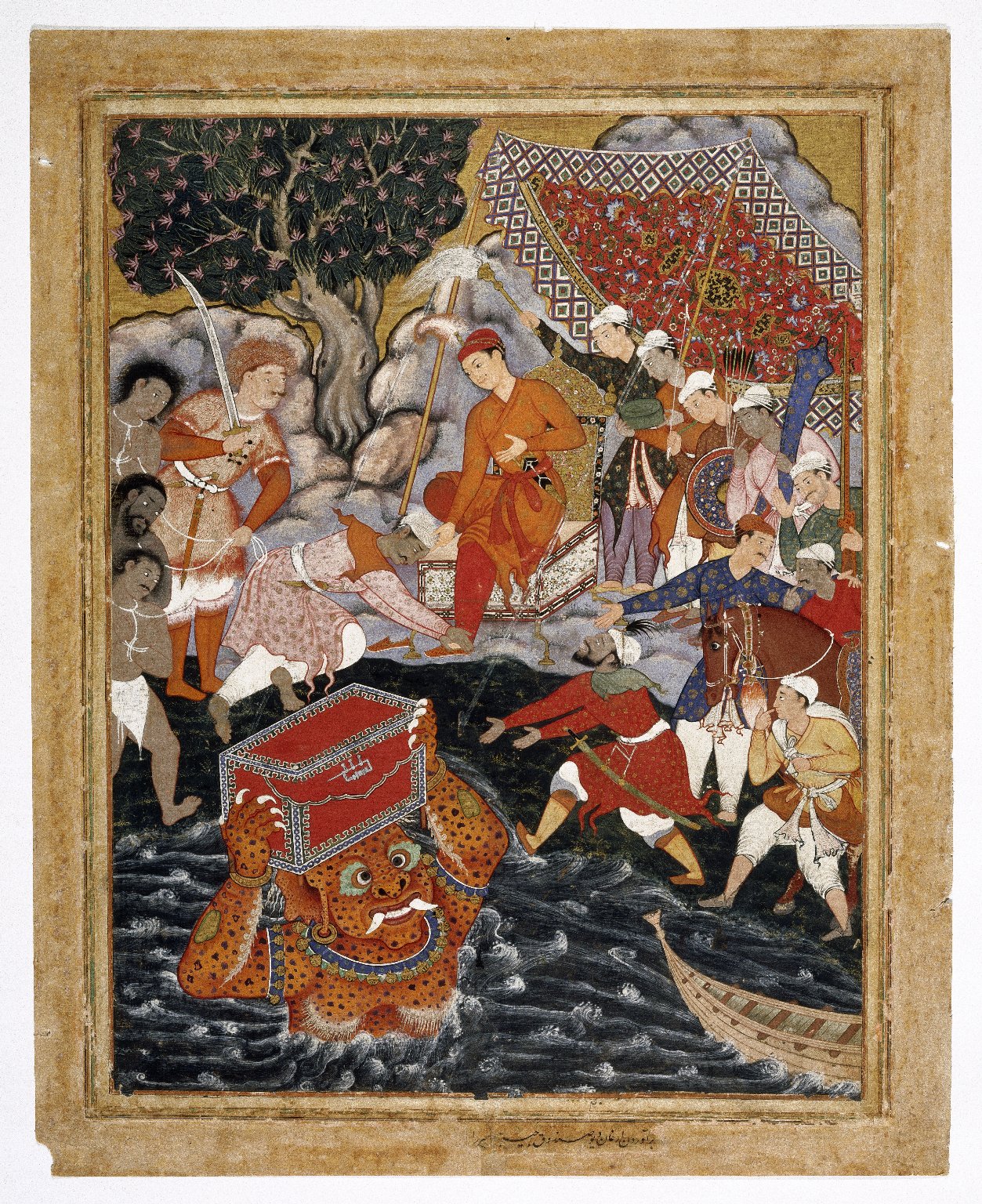 🇪🇬 Egypt and 3 moreIfritعفريت
A class of powerful chthonic spirits in Islamic tradition and folkloreBeing · Cursing and harm · Power and authority Historical
🇪🇬 Egypt and 3 moreIfritعفريت
A class of powerful chthonic spirits in Islamic tradition and folkloreBeing · Cursing and harm · Power and authority Historical
 🇪🇬 Egypt and 2 moreIsisꜣst (Egyptian)
Egyptian goddess of magic, mourning and kingship, mother of HorusBeing · Protection · Healing Historical
🇪🇬 Egypt and 2 moreIsisꜣst (Egyptian)
Egyptian goddess of magic, mourning and kingship, mother of HorusBeing · Protection · Healing Historical
 🇸🇪 Sweden and 3 moreTyrTýr
A Germanic deity of war and oaths, known for sacrificing his hand to a wolfBeing · Power and authority Historical
🇸🇪 Sweden and 3 moreTyrTýr
A Germanic deity of war and oaths, known for sacrificing his hand to a wolfBeing · Power and authority Historical
 🇪🇬 Egypt and 2 moreAmunjmn (Old/Middle Egyptian); Amoun (Coptic)
The hidden creator god of ancient Egypt, later fused with the sun deity Ra.Being · Power and authority · Protection Historical
🇪🇬 Egypt and 2 moreAmunjmn (Old/Middle Egyptian); Amoun (Coptic)
The hidden creator god of ancient Egypt, later fused with the sun deity Ra.Being · Power and authority · Protection Historical
 🇸🇪 Sweden and 2 moreMjölnirMjǫllnir
The hammer of the Norse thunder god Thor, used as a weapon and for blessingsBeing · Cursing and harm · Protection Historical
🇯🇵 JapanShikigami式神
A conjured spirit from Japanese Onmyōdō, often bound to paper or animal form.Being · Power and authority · Cursing and harm Historical
🇸🇪 Sweden and 2 moreMjölnirMjǫllnir
The hammer of the Norse thunder god Thor, used as a weapon and for blessingsBeing · Cursing and harm · Protection Historical
🇯🇵 JapanShikigami式神
A conjured spirit from Japanese Onmyōdō, often bound to paper or animal form.Being · Power and authority · Cursing and harm Historical
 🇮🇱 Israel and 2 moreLeviathanלִוְיָתָן (Livyaṯān)
A primordial sea monster from ancient Near Eastern myth and biblical textBeing · Cursing and harm · Power and authority Historical
🇮🇱 Israel and 2 moreLeviathanלִוְיָתָן (Livyaṯān)
A primordial sea monster from ancient Near Eastern myth and biblical textBeing · Cursing and harm · Power and authority Historical
 🇨🇱 ChileMoaimoꞌai
Monolithic ancestor statues of Rapa Nui, carved from volcanic stone between the fifteenth and sixteenth centuries.Being · Power and authority · Protection Historical
🇨🇱 ChileMoaimoꞌai
Monolithic ancestor statues of Rapa Nui, carved from volcanic stone between the fifteenth and sixteenth centuries.Being · Power and authority · Protection Historical
 🇯🇵 JapanInugami犬神
A Japanese spirit of dog possession and folk sorceryBelief · Cursing and harm · Power and authority Historical
🇯🇵 JapanInugami犬神
A Japanese spirit of dog possession and folk sorceryBelief · Cursing and harm · Power and authority Historical
 🇮🇹 Italy and 1 moreSaturnSāturnus
Roman god of time and agriculture, linked to the Saturnalia festivalBeing · Luck and prosperity · Power and authority Historical
🇮🇹 Italy and 1 moreSaturnSāturnus
Roman god of time and agriculture, linked to the Saturnalia festivalBeing · Luck and prosperity · Power and authority Historical
 🇮🇳 India and 1 moreYoginiयोगिनी
A female master of yoga and tantra, or a fierce goddess aspect in Indian temples.Tradition · Power and authority · Protection Historical
🇮🇳 India and 1 moreYoginiयोगिनी
A female master of yoga and tantra, or a fierce goddess aspect in Indian temples.Tradition · Power and authority · Protection Historical
 🇮🇹 ItalyJupiterIuppiter
The Roman sky father and king of the gods, associated with thunder and oathsBeing · Power and authority · Protection Historical
🇮🇹 ItalyJupiterIuppiter
The Roman sky father and king of the gods, associated with thunder and oathsBeing · Power and authority · Protection Historical
 🇫🇷 France and 1 moreCernunnos
An antlered Celtic deity associated with nature and fertilityBeing · Power and authority · Luck and prosperity Historical
🇫🇷 France and 1 moreCernunnos
An antlered Celtic deity associated with nature and fertilityBeing · Power and authority · Luck and prosperity Historical
 🇪🇬 EgyptImhotepỉỉ-m-ḥtp
An ancient Egyptian architect deified as a god of healing and wisdomBeing · Healing · Power and authority Historical
🇪🇬 EgyptImhotepỉỉ-m-ḥtp
An ancient Egyptian architect deified as a god of healing and wisdomBeing · Healing · Power and authority Historical
 🇮🇷 Iran and 3 moreDaeva𐬛𐬀𐬉𐬎𐬎𐬀
A Zoroastrian entity that evolved from rejected gods to personifications of evil.Being · Cursing and harm · Power and authority Historical
🇮🇷 Iran and 3 moreDaeva𐬛𐬀𐬉𐬎𐬎𐬀
A Zoroastrian entity that evolved from rejected gods to personifications of evil.Being · Cursing and harm · Power and authority Historical
 🇪🇬 Egypt and 1 moreUraeusjꜥrt
An ancient Egyptian rearing cobra emblem of royal power and divine protectionCharm · Protection · Power and authority Historical
🇪🇬 Egypt and 1 moreUraeusjꜥrt
An ancient Egyptian rearing cobra emblem of royal power and divine protectionCharm · Protection · Power and authority Historical
 🇮🇳 India and 4 moreMakaraमकर
A legendary sea-creature in Hindu mythology and a symbol of water and thresholdsBeing · Protection · Power and authority Historical
🇮🇳 India and 4 moreMakaraमकर
A legendary sea-creature in Hindu mythology and a symbol of water and thresholdsBeing · Protection · Power and authority Historical
 🇮🇱 Israel and 5 moreAstaroth
An arch-demon in Western occultism, derived from the ancient goddess Astarte.Being · Power and authority · Cursing and harm Historical
🇮🇷 Iran and 2 moreYazata𐬫𐬀𐬰𐬀𐬙𐬀
A Zoroastrian term for divine beings worthy of worship and venerationBeing · Speaking with spirits and the dead · Power and authority Historical
🇪🇪 Estonia and 1 moreKalevaKalev
A primordial giant and ancestral figure in the mythologies of Estonia and FinlandBeing · Power and authority Historical
🇫🇮 Finland and 1 moreHiisi
A Finnic spirit of sacred places that evolved into a demonic giant in folkloreBeing · Cursing and harm · Power and authority Historical
🇮🇱 Israel and 5 moreAstaroth
An arch-demon in Western occultism, derived from the ancient goddess Astarte.Being · Power and authority · Cursing and harm Historical
🇮🇷 Iran and 2 moreYazata𐬫𐬀𐬰𐬀𐬙𐬀
A Zoroastrian term for divine beings worthy of worship and venerationBeing · Speaking with spirits and the dead · Power and authority Historical
🇪🇪 Estonia and 1 moreKalevaKalev
A primordial giant and ancestral figure in the mythologies of Estonia and FinlandBeing · Power and authority Historical
🇫🇮 Finland and 1 moreHiisi
A Finnic spirit of sacred places that evolved into a demonic giant in folkloreBeing · Cursing and harm · Power and authority Historical
 🇮🇱 Israel and 1 moreTeraphimתרפים
Ancient Hebrew household figures linked to ancestry, property rights and divinationBeing · Seeing and foretelling · Luck and prosperity Historical
🇮🇱 Israel and 1 moreTeraphimתרפים
Ancient Hebrew household figures linked to ancestry, property rights and divinationBeing · Seeing and foretelling · Luck and prosperity Historical
 🇯🇵 JapanAllocer
A duke of demons in grimoires who teaches sciences and commands legionsBeing · Power and authority Historical
🇯🇵 JapanAllocer
A duke of demons in grimoires who teaches sciences and commands legionsBeing · Power and authority Historical
 🇮🇩 IndonesiaAntabogaꦄꦤ꧀ꦠꦨꦺꦴꦒ
A serpent deity of Javanism and Sundanism who created the world turtle and rice goddessBeing · Power and authority Historical
🇮🇩 IndonesiaAntabogaꦄꦤ꧀ꦠꦨꦺꦴꦒ
A serpent deity of Javanism and Sundanism who created the world turtle and rice goddessBeing · Power and authority Historical
 🇪🇬 EgyptSet animalsha
A mysterious creature from ancient Egypt, linked to the god Set and chaos.Being · Power and authority Historical
🇪🇬 EgyptSet animalsha
A mysterious creature from ancient Egypt, linked to the god Set and chaos.Being · Power and authority Historical
 🇷🇺 RussiaTriple-headed eagle
A heraldic and mythological bird with three heads, appearing in Russian symbolism and European manuscripts.Being · Power and authority Historical
🇷🇺 RussiaTriple-headed eagle
A heraldic and mythological bird with three heads, appearing in Russian symbolism and European manuscripts.Being · Power and authority Historical
 🇫🇷 France and 1 moreDusios
A Gaulish spirit type later classified as an incubus demon by early Christian writersBeing · Cursing and harm · Power and authority Historical
🇫🇷 France and 1 moreDusios
A Gaulish spirit type later classified as an incubus demon by early Christian writersBeing · Cursing and harm · Power and authority Historical
 🇬🇷 GreeceMoiraiΜοίρες
Greek personifications of destiny who spin, measure, and cut the thread of life.Being · Power and authority Historical
🇬🇷 GreeceMoiraiΜοίρες
Greek personifications of destiny who spin, measure, and cut the thread of life.Being · Power and authority Historical
 🇬🇷 Greece and 1 moreHephaestusἭφαιστος
The Greek smith god who forged divine weapons and crafted automata for the gods.Being · Power and authority Historical
🇬🇷 Greece and 1 moreHephaestusἭφαιστος
The Greek smith god who forged divine weapons and crafted automata for the gods.Being · Power and authority Historical
 🇮🇱 IsraelMelchom
A demon of hell and former Ammonite idol described in the Dictionnaire InfernalBeing · Power and authority Historical
🇮🇱 IsraelMelchom
A demon of hell and former Ammonite idol described in the Dictionnaire InfernalBeing · Power and authority Historical
 🇮🇹 ItalyAngitia
A Sabine and Roman goddess of healing and snake magic in central ItalyBeing · Healing · Power and authority Historical
🇮🇹 ItalyAngitia
A Sabine and Roman goddess of healing and snake magic in central ItalyBeing · Healing · Power and authority Historical
 🇵🇱 Poland and 1 moreKarzełekСкарбник, Кладенец
A Slavic mine spirit that guards treasures and guides miners.Being · Protection · Power and authority Historical
🇵🇱 Poland and 1 moreKarzełekСкарбник, Кладенец
A Slavic mine spirit that guards treasures and guides miners.Being · Protection · Power and authority Historical
 🇮🇹 ItalyŚuri𐌑𐌖𐌛 (Etruscan)
An ancient Etruscan deity of volcanic fire, the underworld, and healingBeing · Protection · Healing Historical
🇮🇹 ItalyŚuri𐌑𐌖𐌛 (Etruscan)
An ancient Etruscan deity of volcanic fire, the underworld, and healingBeing · Protection · Healing Historical
 🇬🇷 GreeceDaimonδαίμων
A Greek spirit or divine force that mediates between gods and humansBeing · Protection · Speaking with spirits and the dead Historical
🇮🇳 IndiaEtheric body
A subtle energy layer said to sustain the physical form and connect it to higher states.Being · Power and authority Historical
🇬🇷 GreeceDaimonδαίμων
A Greek spirit or divine force that mediates between gods and humansBeing · Protection · Speaking with spirits and the dead Historical
🇮🇳 IndiaEtheric body
A subtle energy layer said to sustain the physical form and connect it to higher states.Being · Power and authority Historical
Photo credits on this page
The small pictures above come from Wikimedia Commons under free licences. Some are cropped to fit.
- Antaboga: fir0002 flagstaffotos [at] gmail.com Canon 20D + Tamron 28-75mm f/2.8, GFDL 1.2, source
- Śuri: Marie-Lan Nguyen, Public domain, source
- Cernunnos: Nationalmuseet, Roberto Fortuna og Kira Ursem, Public domain, source
- Imhotep: Rama, CC BY-SA 3.0 fr, source
- Norns: file: James Steakley ; artwork: Gustav Heidenreich, Public domain, source
- Hob: Jo Turner, CC BY-SA 2.0, source
- Dakini: Didier Descouens, Public domain, source
- Div: Unknown Calligrapher, Public domain, source
- Hecate: Henryk Siemiradzki, Public domain, source
- Lamassu: Daderot, CC0, source
- Wadjet: Rama, CC BY-SA 3.0 fr, source
- Kurdaitcha: Unknown author, CC BY 4.0, source
- Viracocha: Pattych ( talk ), CC BY-SA 3.0, source
- Surya: Ravi Varma Press, Public domain, source
- Ifrit: Unknown author, Public domain, source
- Isis: Ägyptischer Maler um 1360 v. Chr., Public domain, source
- Tyr: Gunnar Creutz, CC BY-SA 4.0, source
- Amun: MusikAnimal, CC BY-SA 4.0, source
- Uraeus: Bjørn Christian Tørrissen, CC BY-SA 3.0, source
- Astaroth: M. Jarrault, Public domain, source
- Angitia: Marica Massaro, CC BY-SA 4.0, source
- Allocer: Louis Le Breton, Public domain, source
- Dusios: Eric Hunt, CC BY-SA 2.5, source
- Mjölnir: Mårten Eskil Winge, Public domain, source
- Melchom: Louis Le Breton, Public domain, source
- Karzełek: Krystian Hasterok, CC BY 2.5, source
- Daimon: François-André Vincent, Public domain, source
- Moirai: John Melhuish Strudwick, Public domain, source
- Hephaestus: Foundry Painter (name vase), Public domain, source
- Leviathan: Gustave Doré, Public domain, source
- Moai: Rivi, CC BY-SA 3.0, source
- Chinese dragon: Unknown author, CC0, source
- Inugami: Sawaki Suushi (佐脇嵩之, Japanese, *1707, †1772), Public domain, source
- Teraphim: Athanasius Kircher, Public domain, source
- Saturn: Robert Lowe, CC BY 2.0, source
- Yogini: Soumendra Barik, CC BY-SA 3.0, source
- Makara: Subbhashinee S, CC BY-SA 3.0, source
- Jupiter: ArchaiOptix, CC BY-SA 4.0, source
- Triple-headed eagle: Неизвестный автор. (фото обложки сборника: Александр Храмов), Public domain, source
- Set animal: Unknown author, Public domain, source