
Uraeus
In its own language: jꜥrt
from Egyptian jꜥrt, meaning rearing cobra, via Ancient Greek ouraios
An ancient Egyptian rearing cobra emblem of royal power and divine protection
The uraeus is an ancient Egyptian rearing cobra emblem representing the goddess Wadjet, worn by pharaohs on their crowns to signify divine authority and protection. Tradition held that the serpent shielded the ruler by spitting fire at foes, embodying the burning solar eye of Ra.
- Represented the cobra goddess Wadjet and served as an emblem of sovereign legitimacy in ancient Egypt.
- Believed to protect the pharaoh by spitting fire at enemies from the solar eye of Ra.
- Joined with the vulture goddess Nekhbet to form the Two Ladies, joint guardians of unified Egypt.
- A solid gold uraeus inlaid with lapis lazuli and carnelian was found at El-Lahun in 1919.
What it is
The uraeus is an upright, rearing cobra figure that served as an emblem of rule, divinity, and sacred power in ancient Egypt. It represented Wadjet, an early cobra deity who guarded Lower Egypt. Monarchs wore this serpent upon their headbands and crowns to declare their legitimate claim to the throne and to claim heavenly safeguarding. Following the union of the two Egyptian lands, the cobra was often paired with Nekhbet, the vulture deity of Upper Egypt. Together, these Two Ladies acted as national guardians. In solar lore, the serpent was also viewed as the eye of Ra, defending the king by spitting flames at his foes.
Where it comes from
The emblem traces back to early Egyptian history and the worship of Wadjet at Per-Wadjet in the Nile Delta, a place later named Buto. Records confirm that rulers wore the cobra figure as far back as the Old Kingdom during the third millennium BCE. When Upper and Lower Egypt merged, the southern vulture patron Nekhbet was placed alongside Wadjet upon the royal crown. A famous archaeological specimen belonged to Senusret II. Worker Hosni Ibrahim unearthed this solid gold ornament from tomb rubble at the El-Lahun pyramid in 1919, providing the earliest intact pharaonic crown piece found before Tutankhamun.
How it is done
Rulers mounted the serpent ornament directly onto headwear, including the royal Blue Crown, using small loops attached to the cobra tail. The snake body either rested across the crown top or encircled the monarch's brow. Beyond royal regalia, artisans fashioned the motif into personal amulets and tomb jewellery, such as the burial goods of the priest Djedptahiufankh. Scribes also drew the rearing cobra as a hieroglyphic character. This sign designated various goddesses, priestesses, and shrines, and appeared in repeating rows along sacred banners, monument walls, and public proclamations like the Rosetta Stone.
Tools and materials
Craftsmen usually shaped the cobra emblem from cast gold, though silver was occasionally chosen. Ornaments were set with colourful mineral inlays. For example, the piece made for Senusret II used deep blue lapis lazuli for the snake head, dark red carnelian across the hood, and bright turquoise accents. Its eyes were carved from black granite. Two metal loops were soldered behind the lower tail so the object could be lashed securely onto royal headgear.
Uraeus, drawn and placed
- Living
- Revived
- Fading
- Historical
- Legendary
- Performed
- Lineage
- Ancient Egyptian religion
What it is for
The uraeus functioned primarily as a protective talisman and a sign of royal authority. Egyptians believed the cobra guarded the ruler against mortal and spiritual dangers by spitting fire at enemies. Wearing it established that a ruler had the blessing of Wadjet and held legitimate command over the country. Kings wore the emblem on the Blue Crown during military campaigns, as tradition held that a mortal monarch required extra celestial defence on the battlefield and in religious ceremonies with the gods.
Who does it
The uraeus was worn principally by Egyptian pharaohs, who were viewed as living manifestations of the sun god Ra. Sculptures and reliefs also show certain Egyptian goddesses adorned with the cobra, especially those closely associated with Wadjet. High priests, including the Twenty-First Dynasty priest Djedptahiufankh, used the emblem in funerary jewellery. Scribes and temple priests employed the cobra symbol in formal hieroglyphic writing to mark sacred names, divinity titles, and protective shrines.
Peoples and places
The tradition belonged to the people of ancient Egypt across both the Nile Delta and the southern valley. Wadjet's cult arose in Lower Egypt at Per-Wadjet, while the vulture patron Nekhbet belonged to the south. After the regions unified, both cultures shared the combined symbols on royal regalia. The serpent emblem also spread through trade and cultural contact across the region: winged uraeus charms and amulets have been recovered by archaeologists in the land of Israel.
At a glance: who, where and when
Who does it
Peoples


What people believe
Egyptian theology regarded the cobra as the physical embodiment of Wadjet, a fierce protectress. Rulers were identified with the sun god Ra, whose blazing solar eyes were conceptualised as protective uraei. In this worldview, the cobra on the king's brow channelled divine fire to strike down hostile forces. Religious thought kept the cults of Wadjet and Nekhbet distinct, honouring both as the Nebty, or Two Ladies, whose unified presence watched over the cosmic and earthly order of the realm.
How scholars and sceptics see it
Biblical scholars and historians note strong parallels between Egyptian uraei and the winged seraphim mentioned in the Hebrew Bible. These angelic beings are often linked to serpents in ancient Semitic thought, and researchers propose that their imagery developed from Egyptian winged cobra motifs. This connection is supported by archaeological finds of multi-winged uraeus amulets across the land of Israel, illustrating how Egyptian religious iconography influenced neighbouring Levantine religious traditions.
Compare and confuse
The uraeus is often paired or contrasted with the vulture goddess Nekhbet, who represented Upper Egypt. When depicted side by side on royal headpieces, the two goddesses were known collectively as the Nebty. In regional religious imagery, winged forms of the uraeus bear strong iconographic similarities to the seraphim found in Hebrew, Christian, and Islamic texts, which scholars believe share a common visual and symbolic ancestry with the Egyptian serpent.
Questions people ask about Uraeus
What is a uraeus?
The uraeus is an ancient Egyptian emblem showing a rearing cobra with an expanded hood. It stood for sovereign rule, divine authority, and the protection of the serpent goddess Wadjet on royal crowns and amulets.
Where does the uraeus originate?
The emblem originated in ancient Egypt, rooted in the worship of the goddess Wadjet at Per-Wadjet in the Nile Delta. Historical records confirm its presence on royal crowns as early as the third millennium BCE.
What protective power was the uraeus believed to have?
Egyptians believed the uraeus acted as the fiery eye of the sun god Ra. When worn on the pharaoh's crown, the serpent was thought to safeguard the ruler by spitting fire at threatening enemies.
What materials were used to make a uraeus?
Royal uraei were crafted from precious metals, especially gold and sometimes silver. They were decorated with inlays of semi-precious stones such as turquoise, dark carnelian, lapis lazuli, and granite.
Good reading and sources
- Uraeus on WikipediaEncyclopedia
- More photos on Wikimedia CommonsPhotos and video
- Wikidata recordOpen data
The facts on this page come from the Wikipedia article "Uraeus", written by its contributors and used under the CC BY-SA 4.0 licence, and from its Wikidata record (CC0). EveryJaadu rewrote the text in its own words, with AI assistance, and compares every page with the article to make sure no passage is copied. It may be reused under the same CC BY-SA 4.0 licence with a link back.
It may contain mistakes. Names and customs differ from one community to the next, and some knowledge is closed to outsiders and left out here. This page describes belief and practice. It does not say that any of it works, it is not a how-to, and it is not medical advice. If something is wrong, tell us. Last refreshed 2026-10-06.
More from Egypt
All the entries from Egypt 🇪🇬 Egypt and 1 moreLilithלִילִית
A feminine figure from Mesopotamian and Jewish mythology, often depicted as a night demon or spirit.Being · Cursing and harm Legendary
🇪🇬 Egypt and 1 moreLilithלִילִית
A feminine figure from Mesopotamian and Jewish mythology, often depicted as a night demon or spirit.Being · Cursing and harm Legendary
 🇪🇬 EgyptCurse
A spoken wish for misfortune to befall a person or placeBelief · Cursing and harm · Luck and prosperity Historical
🇪🇬 EgyptCurse
A spoken wish for misfortune to befall a person or placeBelief · Cursing and harm · Luck and prosperity Historical
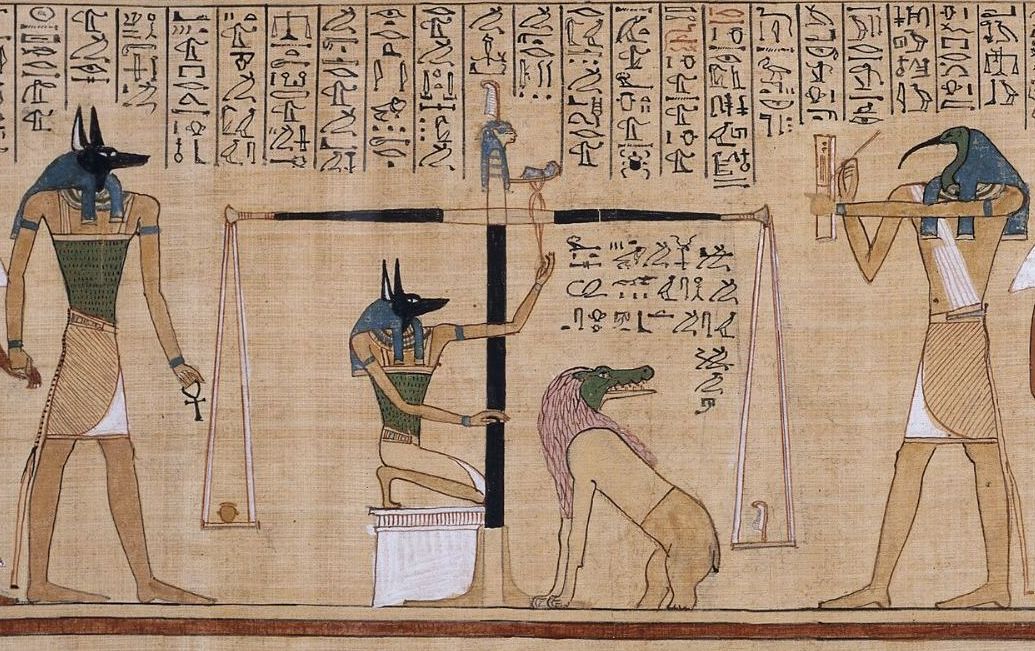 🇪🇬 EgyptAncient Egyptian afterlife beliefs
A system of rituals and texts guiding the soul through the underworld to eternal rebirthTradition · Protection · Speaking with spirits and the dead Historical
🇪🇬 EgyptAncient Egyptian afterlife beliefs
A system of rituals and texts guiding the soul through the underworld to eternal rebirthTradition · Protection · Speaking with spirits and the dead Historical
 🇪🇬 EgyptAnubis𓇋𓈖𓊪𓃣
The jackal-headed god who guides souls and oversees mummification in ancient Egypt.Being · Protection · Speaking with spirits and the dead Historical
🇪🇬 EgyptAnubis𓇋𓈖𓊪𓃣
The jackal-headed god who guides souls and oversees mummification in ancient Egypt.Being · Protection · Speaking with spirits and the dead Historical
Related elsewhere
All charm 🇨🇳 China and 3 moreChinese dragon龍
A legendary water deity and imperial symbol in East Asian cultureBeing · Protection · Luck and prosperity Historical
🇨🇳 China and 3 moreChinese dragon龍
A legendary water deity and imperial symbol in East Asian cultureBeing · Protection · Luck and prosperity Historical
 🇮🇳 India and 2 moreHomaहोम
A fire ritual found across Asian religions where offerings are burned as a votive exchange with the divine.Rite · Protection · Speaking with spirits and the dead Living
🇮🇳 India and 2 moreHomaहोम
A fire ritual found across Asian religions where offerings are burned as a votive exchange with the divine.Rite · Protection · Speaking with spirits and the dead Living
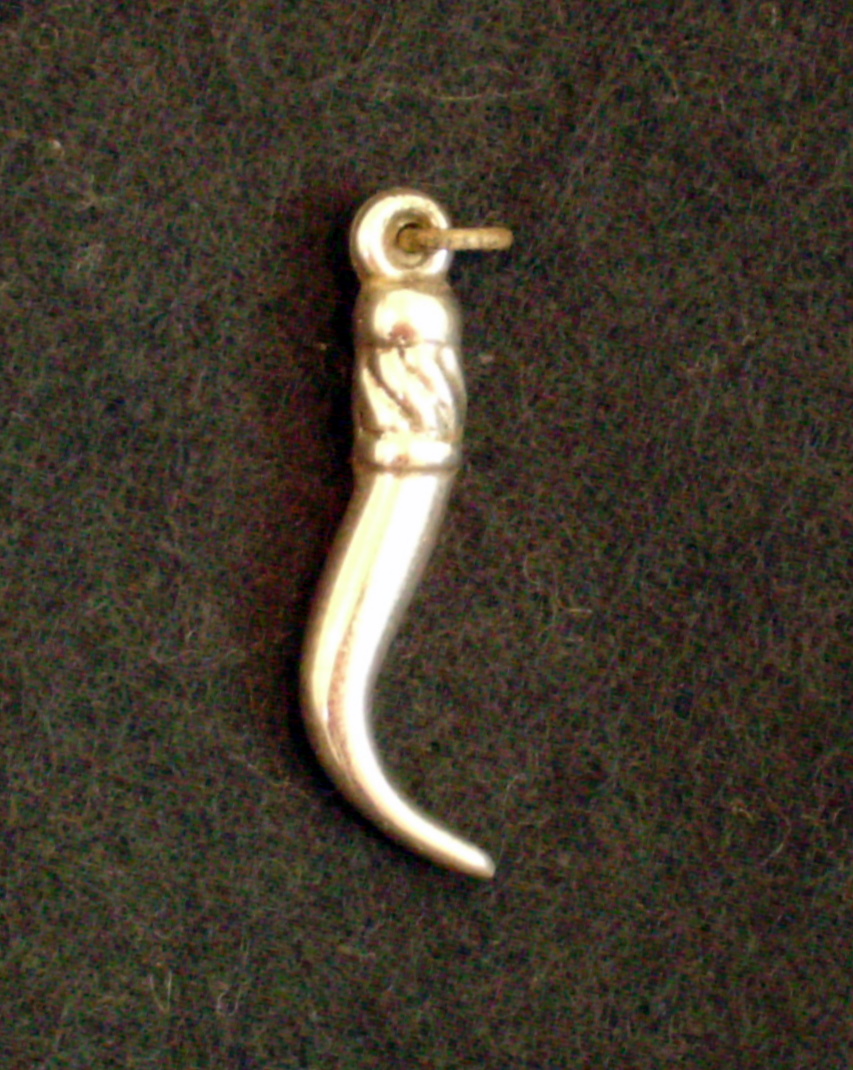 🇮🇹 ItalyCornicello
A twisted horn charm worn in Italy to ward off the evil eye and invite luck.Charm · Protection · Luck and prosperity Living
🇮🇹 ItalyCornicello
A twisted horn charm worn in Italy to ward off the evil eye and invite luck.Charm · Protection · Luck and prosperity Living
 🇫🇷 France and 5 moreYule log
A large wooden log burned in the hearth during winter festivals across Europe and North America.Tradition · Protection · Luck and prosperity Living
🇫🇷 France and 5 moreYule log
A large wooden log burned in the hearth during winter festivals across Europe and North America.Tradition · Protection · Luck and prosperity Living