
Stentoften Runestone
A seventh-century Swedish stone inscribed with a curse and harvest blessings in Proto-Norse
The Stentoften Runestone is an ancient monument found in Blekinge, Sweden, bearing a Proto-Norse inscription. It records offerings made by chieftains and includes a severe warning against disturbing the site.
- Discovered in 1823 by dean O. Hammer in Blekinge, Sweden
- Inscribed with a curse and harvest blessings in Proto-Norse
- Dates to the seventh century using transitional runes
- Linked to chieftains Haþuwulfz and Hariwulfz
- Part of a group of four similar runestones in the region
What it is
The Stentoften Runestone is a historical artifact from Sweden that serves as a record of ancient beliefs and warnings. Discovered in Blekinge, it is cataloged as DR 357 in runic databases. The stone features an inscription in Proto-Norse, an early form of the North Germanic language. The text combines requests for a fruitful year with a stern curse intended to protect the sacred nature of the site. It stands as a key example of early Scandinavian runic tradition and the use of writing for magical or protective purposes.
Where it comes from
Scholars generally date the inscription to the seventh century. It uses a transitional form of runes that sits between the Elder Futhark and the Younger Futhark systems. The stone was found lying face down in 1823 by O. Hammer, surrounded by five large stones arranged in a pentagon. This placement suggests it was part of a larger ceremonial monument, similar to the nearby Björketorp Runestone. The specific runic styles link it to a local tradition in the Blekinge area during that period.
How it is done
The inscription was carved into the stone surface using specific runic characters. The text addresses dwellers and guests of the land, mentioning names like Haþuwulfz and Hariwulfz. It describes giving a 'ful year' or harvest. The carving also includes a direct threat to anyone who breaks the seal of the site. The arrangement of the stone among others indicates a ritual setting where the text itself acted as a guardian or boundary marker.
Tools and materials
The primary tool is the runic alphabet, specifically an intermediate script used in seventh-century Scandinavia. The inscription mentions the j-rune, which represents the concept of *jēra, meaning harvest or a bountiful year. Some interpretations suggest the text references animal sacrifices performed to ensure agricultural success.
Stentoften Runestone, drawn and placed
- Living
- Revived
- Fading
- Historical
- Legendary
- Performed
- Lineage
- Norse runestone
- Timing
- 7th century
What it is for
The stone serves multiple purposes: securing a good harvest and protecting the sanctity of the location. It invokes blessings for the land while simultaneously threatening harm to violators. The curse warns that maleficence and insidious death await those who disturb the site. It reflects a worldview where written words held power to influence fate and enforce social or spiritual laws.
Who does it
The inscription mentions chieftains such as Haþuwulfz and Hariwulfz, whose names combine elements meaning 'warrior' and 'wolf'. These lycophoric names may relate to warrior initiation rituals or wolf symbolism in religious practices. The actual carver remains unknown, but the style suggests a specialized runemaster familiar with the regional tradition. Modern study is conducted by scholars and runologists.
Peoples and places
The stone is associated with the people of Blekinge in southern Sweden. It shares stylistic and thematic links with three other runestones from the same region: the Björketorp, Istaby, and Gummarp stones. These monuments likely reflect the activities of a specific clan or group of chieftains active in the seventh century. The Björketorp stone, located further east, shares the same message despite lacking personal names.
At a glance: who, where and when
Who does it
Peoples
Belief worlds
Occasions
What people believe
The text reveals a belief system where words could bind fate and protect sacred spaces. The mention of 'nine bucks' and 'nine stallions' alongside harvest blessings points to fertility rituals. The curse implies a spiritual force that punishes transgressors. The use of transitional runes suggests a community maintaining archaic traditions even as linguistic forms evolved. The arrangement of stones in a pentagon may hold symbolic significance related to protection or cosmology.
How scholars and sceptics see it
Runologists analyze the stone to understand the evolution of the runic alphabet and early Norse society. Michael Schulte notes that the archaic text on Stentoften creates a more dramatic effect than later versions. Researchers study the lycophoric names to explore connections between warrior culture and religious symbolism. The loss of similar stones in the Copenhagen Fire of 1728 highlights the importance of preserving these historical records.
Cautions and what is closed
The stone itself poses no danger, but its inscription contains a curse meant to deter disturbance. Historically, the site was marked by surrounding stones to indicate its sacred status. Modern visitors should respect the monument as a protected heritage site. There are no reports of fraud or health risks associated with the stone today.
Compare and confuse
The Stentoften Runestone is often compared to the Björketorp Runestone due to their shared message and runic style. Both belong to the Blekinge group of seventh-century monuments. Unlike many runestones that commemorate the dead, this one focuses on curses and blessings. It differs from later Viking Age stones by using a transitional runic script and Proto-Norse language.
Law and persecution
The stone is a protected archaeological site in Sweden. It was moved to the church of Sölvesborg in 1864 for preservation. Legal protections ensure its survival and allow for scholarly study. No specific laws regarding the curse exist, as it is viewed as a historical artifact rather than a binding legal document.
Questions people ask about Stentoften Runestone
What is the Stentoften Runestone?
It is a seventh-century runestone from Blekinge, Sweden, inscribed with a curse and blessings in Proto-Norse. It is cataloged as DR 357 and is linked to local chieftains and ritual practices.
Where was the stone found?
It was discovered in Stentoften, Blekinge, Sweden, in 1823. It was found lying face down among five large stones arranged in a pentagon, suggesting a larger ceremonial monument.
What does the inscription say?
The text mentions chieftains giving a fruitful year and concealing runes of power. It ends with a curse warning that maleficence and death will strike anyone who disturbs the site.
Why are the names important?
Names like Haþuwulfz and Hariwulfz combine 'battle' or 'warrior' with 'wolf'. Scholars suggest these lycophoric names relate to warrior initiation rituals or wolf symbolism in seventh-century religion.
Good reading and sources
- Stentoften Runestone on WikipediaEncyclopedia
- More photos on Wikimedia CommonsPhotos and video
- Wikidata recordOpen data
The facts on this page come from the Wikipedia article "Stentoften Runestone", written by its contributors and used under the CC BY-SA 4.0 licence, and from its Wikidata record (CC0). EveryJaadu rewrote the text in its own words, with AI assistance, and compares every page with the article to make sure no passage is copied. It may be reused under the same CC BY-SA 4.0 licence with a link back.
It may contain mistakes. Names and customs differ from one community to the next, and some knowledge is closed to outsiders and left out here. This page describes belief and practice. It does not say that any of it works, it is not a how-to, and it is not medical advice. If something is wrong, tell us. Last refreshed 2026-10-07.
More from Sweden
All the entries from Sweden 🇸🇪 Sweden and 4 moreEmanuel Swedenborg
An 18th-century Swedish scientist who became a mystic and claimed to visit the afterlife.Text · Speaking with spirits and the dead · Change and initiation Living
🇸🇪 Sweden and 4 moreEmanuel Swedenborg
An 18th-century Swedish scientist who became a mystic and claimed to visit the afterlife.Text · Speaking with spirits and the dead · Change and initiation Living
 🇩🇪 Germany and 3 moreRunesᚱᚢᚾᛟ
An ancient Germanic script used for writing and magical signs.Text · Seeing and foretelling · Power and authority Historical
🇩🇪 Germany and 3 moreRunesᚱᚢᚾᛟ
An ancient Germanic script used for writing and magical signs.Text · Seeing and foretelling · Power and authority Historical
 🇫🇷 France and 2 moreÉliphas Lévi
A French writer who shaped modern occult thought and ceremonial magic.Text · Power and authority · Speaking with spirits and the dead Historical
🇫🇷 France and 2 moreÉliphas Lévi
A French writer who shaped modern occult thought and ceremonial magic.Text · Power and authority · Speaking with spirits and the dead Historical
 🇸🇪 SwedenGlemminge stone
A Viking Age runestone in Sweden bearing a Younger Futhark inscription and a curse.Text · Cursing and harm Historical
🇸🇪 SwedenGlemminge stone
A Viking Age runestone in Sweden bearing a Younger Futhark inscription and a curse.Text · Cursing and harm Historical
Related elsewhere
All text 🇪🇬 EgyptCurse
A spoken wish for misfortune to befall a person or placeBelief · Cursing and harm · Luck and prosperity Historical
🇺🇸 United StatesPukwudgie
A short forest spirit from Algonquian lore, known for mischief and danger.Being · Cursing and harm · Luck and prosperity Legendary
🇪🇬 EgyptCurse
A spoken wish for misfortune to befall a person or placeBelief · Cursing and harm · Luck and prosperity Historical
🇺🇸 United StatesPukwudgie
A short forest spirit from Algonquian lore, known for mischief and danger.Being · Cursing and harm · Luck and prosperity Legendary
 🇮🇳 India and 5 moreHoliहोली
A Hindu spring festival marked by coloured powders and bonfires to celebrate love and virtue.Tradition · Love and attraction · Cursing and harm Living
🇮🇳 India and 5 moreHoliहोली
A Hindu spring festival marked by coloured powders and bonfires to celebrate love and virtue.Tradition · Love and attraction · Cursing and harm Living
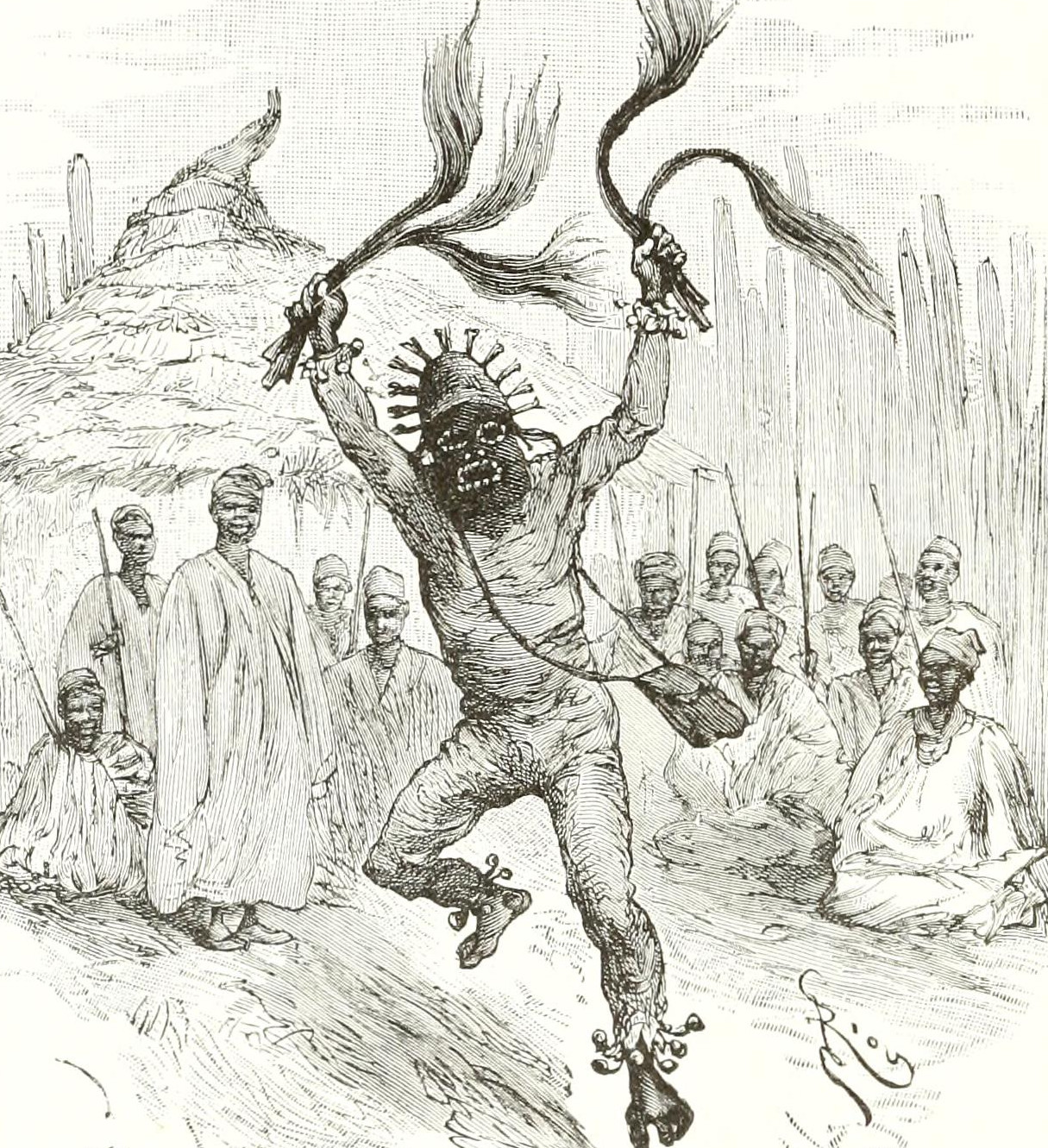 🇺🇸 United States and 2 moreLouisiana Voodoo
An African diasporic religion practiced in Louisiana from the 18th to early 20th centuriesTradition · Healing · Protection Historical
🇺🇸 United States and 2 moreLouisiana Voodoo
An African diasporic religion practiced in Louisiana from the 18th to early 20th centuriesTradition · Healing · Protection Historical