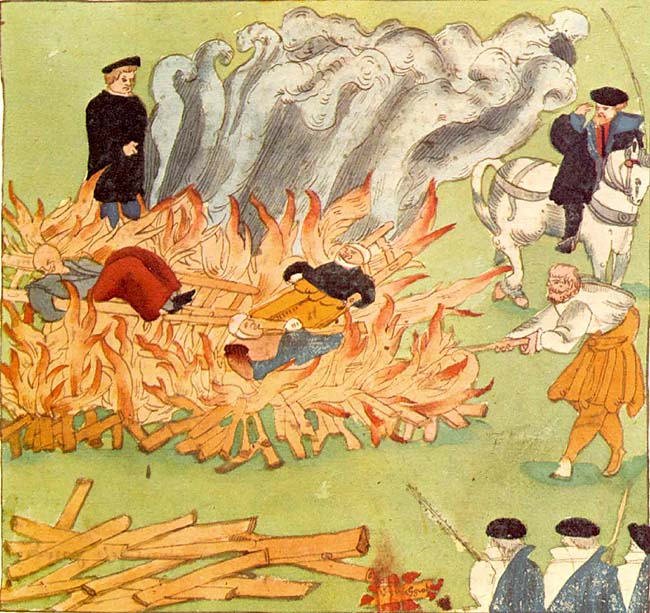
Malleus Maleficarum
from Latin malleus (hammer) and maleficarum (of female sorcerers)
A 15th-century manual on witchcraft written by Heinrich Kramer
The Malleus Maleficarum is a famous treatise on witchcraft written in 1486 by the German cleric Heinrich Kramer. It was published in Speyer and quickly became the primary guide for secular courts prosecuting witches across Europe.
- Written by Heinrich Kramer in 1486
- First published in Speyer, Germany
- Rejected by the Inquisition
- Used by secular courts for trials
- Includes a forged university approval
What it is
This book is the most well-known historical document about witchcraft. It was written by Heinrich Kramer, a Catholic priest from Germany. The title translates to Hammer of Witches. Many scholars see it as a collection of earlier ideas rather than a new invention. It claims to represent the official view of the Church. However, it was actually rejected by many church leaders. The text focuses on how to identify and punish those accused of magic.
Where it comes from
Heinrich Kramer wrote this book after failing to prosecute witches in Tyrol. He was expelled from Innsbruck and called crazy by local bishops. He wrote this text to justify his actions and prove that witchcraft was real. He wanted to convince judges to use his specific methods for finding witches. Some people later claimed Jacob Sprenger helped write it, but this is debated. The book was first printed in Speyer in 1486.
How it is done
The text provides a legal framework for accusing people of heresy through magic. It suggests using torture to force confessions from the accused. It argues that death is the only way to stop the evil caused by witches. Secular courts used these rules to try people. The Inquisition did not use this book because they rejected its methods. The book treats witchcraft as a serious crime against God and society.
Tools and materials
The main tool is the Latin text itself. It includes a papal bull from Pope Innocent VIII. This bull gives authority to Kramer and Sprenger. It also includes a fake approval letter from the University of Cologne. These documents were used to give the book an air of official power. The text relies on religious arguments about demons and Satan.
Malleus Maleficarum, drawn and placed
- Living
- Revived
- Fading
- Historical
- Legendary
- Performed
- Lineage
- Catholic demonological literature
- Timing
- during the Renaissance witch trials
What it is for
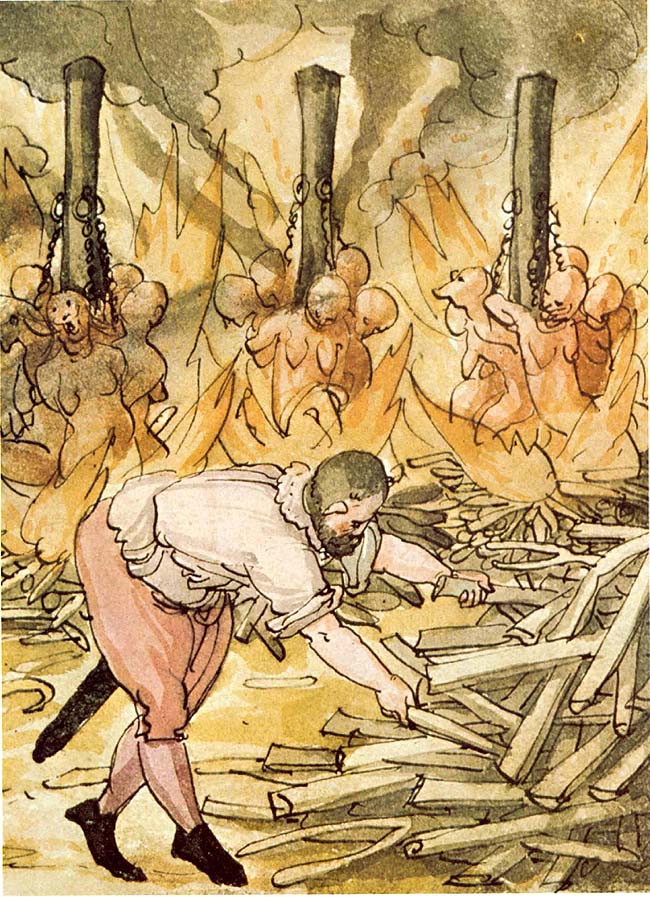
The book aims to help judges find and convict witches. It wants to end the perceived evil of sorcery. It teaches that women are more likely to be witches. It encourages harsh punishments like burning at the stake. The goal was to protect society from demonic influence. It was used by secular authorities to justify brutal trials.
Who does it
Heinrich Kramer was the main author. He was a Catholic clergyman and inquisitor. He faced opposition from other church members. Jacob Sprenger was later added as a co-author. His involvement is not certain. The book was used by secular judges and magistrates. They followed its advice to conduct trials.
Peoples and places
The book originated in Germany. It became popular across Renaissance Europe. Secular courts in many countries used it. It influenced Protestant and Catholic regions alike. Martin Luther supported its views on witches. The text spread through printed copies. It shaped the legal approach to witchcraft for centuries.
At a glance: who, where and when


What people believe
The book believes witches make pacts with Satan. It sees magic as a form of heresy. It claims demons attack humans through witches. Prayer and exorcism are ways to fight back. The text treats witchcraft as a real and dangerous threat. It denies that magic is just a delusion. This view contrasted with earlier Church teachings.
When it is done
The book does not specify particular dates for rituals. It was used during periods of intense witch hunting. The worst trials happened between 1560 and 1630. Belief in witches faded after the Enlightenment. The text remained relevant until the late 18th century.
How scholars and sceptics see it
Historians note that the Inquisition rejected this book. They saw its methods as illegal and unethical. Modern scholars say it was misused by secular courts. Some early writers thought it represented the Church's true view. This is incorrect. The book was condemned by theologians in Cologne. It was praised by one Pope but ignored by others.
Cautions and what is closed
The book led to many executions and suffering. It encouraged torture and false accusations. Its methods were often illegal under canon law. It targeted women disproportionately. The text contributed to widespread fear and persecution. Many innocent people were harmed by its influence.
Compare and confuse
It differs from earlier Church texts that called magic a delusion. It aligns with later demonological works. It is similar to Protestant views on witchcraft. Other manuals existed but were less influential. The Inquisition had its own procedures which differed greatly.
Law and persecution
Secular courts adopted its legal advice. The Inquisition refused to use it. It was banned by some local bishops. The book helped change laws against witchcraft. It made witchcraft a capital crime in many places. Its influence lasted until the decline of witch trials.
Questions people ask about Malleus Maleficarum
Who wrote the Malleus Maleficarum?
Heinrich Kramer, a German Catholic priest, wrote the book. He published it in 1486. Some later editions listed Jacob Sprenger as a co-author, but this is disputed by historians.
What is the meaning of the title?
The Latin title means Hammer of Witches. It refers to the book's intent to crush the perceived evil of witchcraft through legal and religious means.
Did the Church support this book?
No. Theologians at the University of Cologne condemned it. The Inquisition rejected its methods. Only Pope Innocent VIII gave general authority to Kramer before the book was finished.
How was the book used?
Secular courts used it as a guide for prosecuting witches. It recommended torture and death sentences. The Inquisition did not use it because they found its procedures illegal.
Good reading and sources
- Malleus Maleficarum on WikipediaEncyclopedia
- More photos on Wikimedia CommonsPhotos and video
- Wikidata recordOpen data
The facts on this page come from the Wikipedia article "Malleus Maleficarum", written by its contributors and used under the CC BY-SA 4.0 licence, and from its Wikidata record (CC0). EveryJaadu rewrote the text in its own words, with AI assistance, and compares every page with the article to make sure no passage is copied. It may be reused under the same CC BY-SA 4.0 licence with a link back.
It may contain mistakes. Names and customs differ from one community to the next, and some knowledge is closed to outsiders and left out here. This page describes belief and practice. It does not say that any of it works, it is not a how-to, and it is not medical advice. If something is wrong, tell us. Last refreshed 2026-10-05.
More from Germany
All the entries from Germany 🇬🇧 United Kingdom and 5 moreAleister Crowley
English occultist and founder of the religion of ThelemaText · Power and authority · Change and initiation Living
🇬🇧 United Kingdom and 5 moreAleister Crowley
English occultist and founder of the religion of ThelemaText · Power and authority · Change and initiation Living
 🇸🇪 Sweden and 4 moreEmanuel Swedenborg
An 18th-century Swedish scientist who became a mystic and claimed to visit the afterlife.Text · Speaking with spirits and the dead · Change and initiation Living
🇸🇪 Sweden and 4 moreEmanuel Swedenborg
An 18th-century Swedish scientist who became a mystic and claimed to visit the afterlife.Text · Speaking with spirits and the dead · Change and initiation Living
Related elsewhere
All text 🇳🇬 Nigeria and 4 moreJuju
A West African spiritual belief system involving charms and ritualsTradition · Healing · Luck and prosperity Living
🇳🇬 Nigeria and 4 moreJuju
A West African spiritual belief system involving charms and ritualsTradition · Healing · Luck and prosperity Living
 🇨🇬 Republic of the CongoNkisi
Spirit containers and power figures from the Congo Basin used for justice and healingCharm · Protection · Healing Living
🇮🇱 Israel and 5 moreBirkat haMinimברכת המינים
A Jewish liturgical curse against apostates and Christians within the daily standing prayerRite · Cursing and harm · Binding and oaths Historical
🇨🇬 Republic of the CongoNkisi
Spirit containers and power figures from the Congo Basin used for justice and healingCharm · Protection · Healing Living
🇮🇱 Israel and 5 moreBirkat haMinimברכת המינים
A Jewish liturgical curse against apostates and Christians within the daily standing prayerRite · Cursing and harm · Binding and oaths Historical
 🇱🇰 Sri LankaMara
A Buddhist figure representing the forces that block spiritual awakening and keep beings trapped in rebirth.Being · Cursing and harm · Binding and oaths Living
🇱🇰 Sri LankaMara
A Buddhist figure representing the forces that block spiritual awakening and keep beings trapped in rebirth.Being · Cursing and harm · Binding and oaths Living