
On the Demonomania of the Sorcerers
In its own language: De la démonomanie des sorciers
Jean Bodin's 1580 treatise on witches, demons and their prosecution
A French treatise on witchcraft and demonology by the jurist and political philosopher Jean Bodin, first printed in 1580. It sets out a legal definition of the witch, sorts spirits and demonic powers, and argues for harsh punishment, and it was widely used in prosecutions.
- A treatise on witchcraft and demonology by jurist Jean Bodin, first printed in 1580
- Ten editions of the book had appeared by 1604
- Johann Fischart translated it into German in 1581
- François Du Jon's Latin version appeared the same year
- Its fourth book urges torture and painful execution for witches
What it is
On the Demonomania of the Sorcerers is a French book about witchcraft and demons, written by Jean Bodin, a jurist and political philosopher. It first appeared in 1580 and is arranged in four books. It belongs to the demonological writing of its day: part legal argument, part survey of spirits and forbidden arts. Inside it Bodin tries to say what a witch is, what magic can do, how harmful magic might be prevented, and how courts should deal with the people accused. The book is a record of prosecution as much as of belief, since it treats witchcraft as a crime to be defined, judged and punished.
Where it comes from
The work was first printed in French in 1580, in France. It found readers quickly: ten editions had appeared by 1604. Johann Fischart brought out a German version in 1581 as De Daemonomania magorum, and in that same year François Du Jon produced a Latin one, De magorum dæmonomania libri IV. Those translations carried the argument past a French-speaking public. Of the books on witches from those years, few are thought to have travelled as far, and it is described as a much-consulted guide for the hunting and trying of witches.
How it is done
Bodin lays the work out in four books. The first sets out definitions, saying what a witch and witchcraft are held to be; it also lists spirits, divided into kindly and harmful kinds, and the powers said to come from calling on demons, foretelling and prophecy among them. The second book turns to magic, naming its varieties, white and black among them, and discussing demons being summoned and pacts made with them, as well as the idea that a person can turn into a werewolf. The third offers preventions and remedies for the harm witches are said to cause, exorcism included. The fourth concerns courts and punishment.
On the Demonomania of the Sorcerers, drawn and placed
- Living
- Revived
- Fading
- Historical
- Legendary
- Performed
- Lineage
- demonology and witchcraft literature
What it is for
The book was written to serve judges and magistrates as much as scholars. Its readers are offered a working definition of the witch, a map of what demons are believed to do, and arguments about how accusations should be handled in court. Bodin writes to oppose magic, not merely to describe it: certain practices are treated as crimes, the harm they are said to cause is to be blocked or undone, and severe penalties are pressed for. Because it joined legal reasoning to demonology, the book came to be used by people engaged in prosecuting witches.
Who does it
The author was Jean Bodin, a French jurist and political philosopher, not a churchman or a magician. He writes as a legal expert, and the book carries that stamp: definitions, distinctions and arguments about penalties. His position on punishment is severe. In the fourth book he argues for torture and for execution carried out in painful forms. Coming from a recognised legal scholar, the reasoning on witches was taken up by others who judged such cases.
Peoples and places
This is a French book: written in French, printed in France, first issued in 1580. It reached other readerships through translation, since Johann Fischart's German text and François Du Jon's Latin one both appeared in 1581. Its reach beyond France came by that route. The people who fill its pages are witches, demons and the judges who handle such cases, rather than any named community or locality.
At a glance: who, where and when
Who does it
What people believe
Behind the argument sits a world full of spirits. Bodin sorts them into two camps, the benevolent and the malevolent, and he sets out the powers said to be gained by turning to demons. Foretelling the future and prophesying are named among those powers. Magic itself is divided into kinds, white and black, and the making of pacts with demons is treated as a real exchange. The book also takes up the claim that a human being can become a werewolf, and it discusses exorcism, the driving out of a spirit that has taken hold of a person.
How scholars and sceptics see it
The book is described as coming to serve as a standard guide for the hunting and trial of witches, and its circulation is thought likely to have exceeded that of any other book on witches of the period. It also carries what is counted among the earliest legal definitions of the witch. Those two features give it its place in histories of witchcraft: a learned text that shaped how accusations were handled and how courts treated the people brought before them.
Cautions and what is closed
The fourth book is the harshest part. Bodin recommends torture for those accused and executions designed to be painful. Because the book was widely used by courts, its arguments lent support to proceedings that caused real suffering and death. That is its plain record: a learned case for judicial violence against people accused of witchcraft. The practices it endorses belong to its own period, and the text stands as evidence of how such reasoning was assembled and justified.
Law and persecution
Bodin writes as a jurist, and law runs through the whole work. The opening book offers what is described as one of the earliest legal definitions of a witch: someone who knowingly sets out to accomplish something through devilish means. The closing book turns to how courts should treat such people, and there Bodin takes a hard line, urging torture during proceedings and painful forms of execution at the end. The book therefore sits where demonology meets criminal procedure.
Today
By 1604 the book had reached ten editions, and the German and Latin versions of 1581 had already carried it beyond French readers. It is now read as a historical record: a document for the study of demonology and of the reasoning that lay behind witch prosecutions. The 1580 printing is available in digital form through Gallica, the online library of the Bibliothèque nationale de France.
Questions people ask about On the Demonomania of the Sorcerers
What is On the Demonomania of the Sorcerers?
A French book about witchcraft and demons, written by the jurist and political philosopher Jean Bodin and first printed in 1580. It runs to four books and deals with defining witches, describing magic and demons, preventing harm, and punishing the guilty.
Where does it come from?
It comes from France and was written in French, with the first edition dated 1580. A German translation by Johann Fischart and a Latin one by François Du Jon both followed in 1581, which spread the argument to readers of other languages.
What does the book say a witch is?
It offers one of the earliest legal definitions: a witch is a person who knowingly sets out to accomplish something through devilish means. Bodin, a jurist, treats witchcraft as a crime that courts must define, judge and punish.
Did Bodin argue for severe punishment?
Yes. The fourth book concerns the legal handling of witches, and there Bodin recommends torture and executions carried out in painful forms. That severity is part of why the book is remembered in histories of witch prosecution.
What do the four books cover?
The first defines witches and ranks spirits. The second covers magic, demon summoning, pacts and werewolf belief. The third gives remedies against harmful magic and discusses exorcism. The fourth sets out how courts should punish.
Good reading and sources
The facts on this page come from the Wikipedia article "On the Demonomania of the Sorcerers", written by its contributors and used under the CC BY-SA 4.0 licence, and from its Wikidata record (CC0). EveryJaadu rewrote the text in its own words, with AI assistance, and compares every page with the article to make sure no passage is copied. It may be reused under the same CC BY-SA 4.0 licence with a link back.
It may contain mistakes. Names and customs differ from one community to the next, and some knowledge is closed to outsiders and left out here. This page describes belief and practice. It does not say that any of it works, it is not a how-to, and it is not medical advice. If something is wrong, tell us. Last refreshed 2026-10-17.
More from France
All the entries from France 🇫🇷 FranceThree Books of Occult PhilosophyDe occulta philosophia libri III
A Renaissance treatise on elemental, celestial and divine magicText · Healing · Speaking with spirits and the dead Historical
🇫🇷 FranceThree Books of Occult PhilosophyDe occulta philosophia libri III
A Renaissance treatise on elemental, celestial and divine magicText · Healing · Speaking with spirits and the dead Historical
 🇸🇪 Sweden and 4 moreEmanuel Swedenborg
An 18th-century Swedish scientist who became a mystic and claimed to visit the afterlife.Text · Speaking with spirits and the dead · Change and initiation Living
🇸🇪 Sweden and 4 moreEmanuel Swedenborg
An 18th-century Swedish scientist who became a mystic and claimed to visit the afterlife.Text · Speaking with spirits and the dead · Change and initiation Living
 🇬🇧 United Kingdom and 5 moreAleister Crowley
English occultist and founder of the religion of ThelemaText · Power and authority · Change and initiation Living
🇬🇧 United Kingdom and 5 moreAleister Crowley
English occultist and founder of the religion of ThelemaText · Power and authority · Change and initiation Living
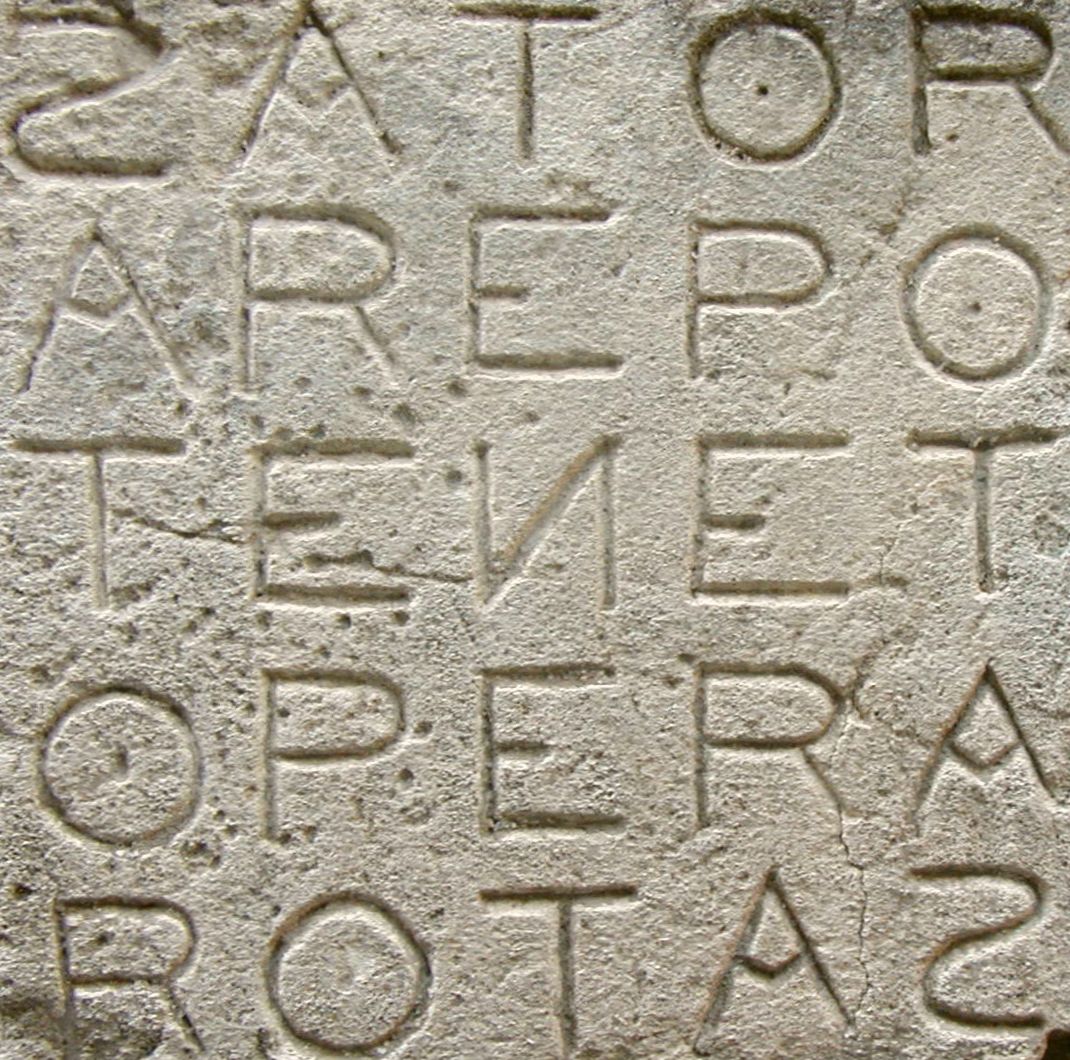 🇮🇹 Italy and 5 moreSator Square
A five-word Latin palindrome found in Roman ruins and medieval churchesCharm · Protection · Healing Historical
🇮🇹 Italy and 5 moreSator Square
A five-word Latin palindrome found in Roman ruins and medieval churchesCharm · Protection · Healing Historical
Related elsewhere
All text 🇪🇬 EgyptCurse
A spoken wish for harm, often backed by ritual or divine authorityBelief · Cursing and harm · Protection Historical
🇪🇬 EgyptCurse
A spoken wish for harm, often backed by ritual or divine authorityBelief · Cursing and harm · Protection Historical
 🇹🇷 Turkey and 5 moreEvil eye
A curse caused by an envious look and the charms used to block itBelief · Protection · Cursing and harm Living
🇹🇷 Turkey and 5 moreEvil eye
A curse caused by an envious look and the charms used to block itBelief · Protection · Cursing and harm Living
 🇨🇬 Republic of the CongoNkisi
Spirit containers and power figures from the Congo Basin used for justice and healingCharm · Protection · Healing Living
🇨🇬 Republic of the CongoNkisi
Spirit containers and power figures from the Congo Basin used for justice and healingCharm · Protection · Healing Living
 🇨🇳 China and 2 moreXiezhi獬豸
A one-horned beast from East Asia that separates the guilty from the innocentBeing · Cursing and harm · Protection Legendary
🇨🇳 China and 2 moreXiezhi獬豸
A one-horned beast from East Asia that separates the guilty from the innocentBeing · Cursing and harm · Protection Legendary