Dhu'l-Khalasa
In its own language: ذُو الْخَلَصَة
A pre-Islamic shrine in Yemen destroyed by early Muslim forces.
Dhu'l-Khalasa was a temple and deity worshipped by the Banu Daws tribe in pre-Islamic Arabia. Islamic sources describe it as a non-Meccan Kaaba that was demolished in 632 CE on the order of Muhammad.
- Known as the Southern Kaaba in pre-Islamic Arabia.
- Destroyed in 632 CE by Jarir ibn Abdullah al-Bajali.
- Associated with the Banu Daws tribe and divination arrows.
- Mentioned in Sahih al-Bukhari as a sign of the end times.
- Violent demolition killed hundreds of tribal defenders.
What it is
Dhu'l-Khalasa refers to both a deity and the temple dedicated to that deity in pre-Islamic Arabia. The name translates to 'Possessor of the Khalasa.' Islamic historical accounts present conflicting interpretations: some identify Dhu'l-Khalasa as the god's name, others as the building itself, and a third view suggests it named the worshipping community. The structure was known as the Southern Kaaba, distinguishing it from the Meccan sanctuary. It served as a focal point for the Banu Daws tribe's religious practices before the rise of Islam.
Where it comes from
The cult is attested exclusively in later Islamic literature, particularly in hadith collections and Hisham ibn al-Kalbi's Book of Idols. No pre-Islamic inscriptions or contemporary records confirm its existence. Scholars note that these accounts were written decades after the events they describe, often serving polemical purposes to define early Islamic identity against pagan practices. The origins of the specific rituals or the deity's nature remain unknown outside these textual traditions.
How it is done
The temple functioned as a site for divination and fertility rites. Accounts mention the use of divination arrows to seek guidance, such as when the poet Imru' al-Qais consulted the idol regarding vengeance. Pilgrims are described as circumambulating the shrine. The practice involved specific tribal custodians who maintained the site and performed rituals associated with the deity's perceived power over life and conflict.
Tools and materials
Divination arrows were central to the temple's ritual activity. These arrows were cast to determine outcomes or receive omens. The physical structure included idols housed within the building. The site was defended by armed tribesmen, indicating its status as a fortified sacred space requiring protection from external threats or desecration.
Dhu'l-Khalasa, drawn and placed
- Living
- Revived
- Fading
- Historical
- Legendary
- Performed
What it is for
Worshippers sought guidance for personal and tribal matters, including decisions about warfare and vengeance. The deity was invoked in contexts involving justice and retribution. Fertility rites were also associated with the shrine, reflecting concerns about reproduction and agricultural success. The temple acted as a spiritual anchor for the Banu Daws and allied tribes in the region.
Who does it
The temple was maintained by the Banu Daws and supported by allied groups like the Bajilah and Khath'am. Custodians protected the site and managed rituals. Diviners used the arrows to interpret divine will. The demolition was carried out by Jarir ibn Abdullah al-Bajali, acting on direct orders from Muhammad, highlighting the shift in religious authority from local tribal shrines to centralized Islamic command.
Peoples and places
The primary worshippers were the Banu Daws tribe. Other groups, including the Bajilah and Khath'am, were involved in defending the shrine during its destruction. The practice was specific to pre-Islamic Arabian polytheism, contrasting with the monotheistic beliefs emerging in the region. The temple's role as the Southern Kaaba positioned it as a regional counterpart to the Meccan sanctuary.
At a glance: who, where and when
Who does it
Belief worlds
What people believe
Islamic tradition views Dhu'l-Khalasa as an idol representing false worship. Hadith literature links the shrine to eschatological signs, describing women dancing around it before the end times. The destruction is framed as a necessary act to purge the land of polytheism. The narrative emphasizes the supremacy of Islamic monotheism over previous pagan systems, portraying the temple's removal as a divine mandate.
When it is done
The temple was active during the Jahiliyyah, the pre-Islamic period of ignorance. Its destruction occurred in April and May 632 CE, corresponding to 10 AH in the Islamic calendar. This timing coincides with the final campaigns of Muhammad to eliminate pagan centers of worship across Arabia.
How scholars and sceptics see it
Historians analyze Dhu'l-Khalasa through the lens of Islamic polemic. Gerald Hawting and other scholars suggest the accounts may reflect later theological debates rather than accurate historical records. The reliance on hadith and secondary texts raises questions about the reliability of details regarding the deity's nature and the temple's rituals. Critics of Hisham ibn al-Kalbi question his credibility as a narrator.
Cautions and what is closed
The demolition resulted in significant violence. Jarib ibn Abdullah engaged in combat with the defenders, killing hundreds of men from the Bajilah and Khath'am tribes. The temple was burned, and the idols were destroyed. The event marks a violent transition in religious history, where sacred sites were forcibly dismantled. The accounts highlight the lethal consequences of resisting the new religious order.
Compare and confuse
Dhu'l-Khalasa is compared to the Kaaba in Mecca, earning the title Southern Kaaba. It shares characteristics with other pre-Islamic shrines that were targeted for destruction. Similar narratives exist regarding the Al-Uzza temple. The concept of multiple Kaabas reflects the decentralized nature of pre-Islamic Arabian religion, where various tribes maintained their own sanctuaries.
Law and persecution
The temple's destruction was ordered by Muhammad, reflecting the legal and religious authority of the early Muslim community. Resistance to the demolition was treated as rebellion against Islamic authority. The event established a precedent for the elimination of pagan sites. Survivors were given the choice to convert or face death, illustrating the coercive nature of the religious transformation.
Questions people ask about Dhu'l-Khalasa
What was Dhu'l-Khalasa?
It was a temple and deity worshipped by the Banu Daws tribe in pre-Islamic Yemen. Islamic sources call it the Southern Kaaba, distinguishing it from the Meccan sanctuary. It served as a center for divination and tribal rituals before its destruction in 632 CE.
Who worshipped at Dhu'l-Khalasa?
The Banu Daws tribe primarily worshipped there. Allied groups like the Bajilah and Khath'am were also involved, particularly in defending the shrine during its eventual demolition by Muslim forces under Muhammad's orders.
How was Dhu'l-Khalasa destroyed?
Jarir ibn Abdullah al-Bajali led a force to Yemen and attacked the temple. After fighting defenders, he burned the building and destroyed the idols. The event resulted in the deaths of hundreds of tribal members who resisted the demolition.
Why is it called the Southern Kaaba?
Islamic tradition designated it the Southern Kaaba to distinguish it from the main Kaaba in Mecca, which was sometimes called the Northern or Syrian Kaaba. This title highlights its importance as a major pilgrimage site in pre-Islamic Arabia.
Good reading and sources
The facts on this page come from the Wikipedia article "Dhu'l-Khalasa", written by its contributors and used under the CC BY-SA 4.0 licence, and from its Wikidata record (CC0). EveryJaadu rewrote the text in its own words, with AI assistance, and compares every page with the article to make sure no passage is copied. It may be reused under the same CC BY-SA 4.0 licence with a link back.
It may contain mistakes. Names and customs differ from one community to the next, and some knowledge is closed to outsiders and left out here. This page describes belief and practice. It does not say that any of it works, it is not a how-to, and it is not medical advice. If something is wrong, tell us. Last refreshed 2026-10-06.
More from Yemen
All the entries from Yemen 🇮🇱 Israel and 5 moreTefillinתְּפִלִּין
Black leather boxes containing Torah scrolls, worn by Jewish men during weekday prayers.Charm · Speaking with spirits and the dead · Protection Living
🇮🇱 Israel and 5 moreTefillinתְּפִלִּין
Black leather boxes containing Torah scrolls, worn by Jewish men during weekday prayers.Charm · Speaking with spirits and the dead · Protection Living
 🇫🇷 France and 5 moreKabbalahקַבָּלָה
An esoteric school of thought within Judaism focused on the hidden meanings of scripture and the divine.Tradition · Speaking with spirits and the dead · Change and initiation Living
🇫🇷 France and 5 moreKabbalahקַבָּלָה
An esoteric school of thought within Judaism focused on the hidden meanings of scripture and the divine.Tradition · Speaking with spirits and the dead · Change and initiation Living
 🇪🇬 Egypt and 5 moreZārزار
A spirit possession tradition and healing ritual in the Horn of Africa and Middle EastTradition · Healing · Speaking with spirits and the dead Living
🇪🇬 Egypt and 5 moreZārزار
A spirit possession tradition and healing ritual in the Horn of Africa and Middle EastTradition · Healing · Speaking with spirits and the dead Living
 🇨🇳 China and 3 moreTasseography
A divination method that reads fortunes in the sediment of tea or coffee cupsOracle · Seeing and foretelling · Luck and prosperity Living
🇨🇳 China and 3 moreTasseography
A divination method that reads fortunes in the sediment of tea or coffee cupsOracle · Seeing and foretelling · Luck and prosperity Living
Related elsewhere
All text 🇮🇸 Iceland and 2 moreSeiðr
A Norse magic of fate and spirit, practiced by seers and sorcerers in the Viking Age.Tradition · Seeing and foretelling · Cursing and harm Revived
🇮🇸 Iceland and 2 moreSeiðr
A Norse magic of fate and spirit, practiced by seers and sorcerers in the Viking Age.Tradition · Seeing and foretelling · Cursing and harm Revived
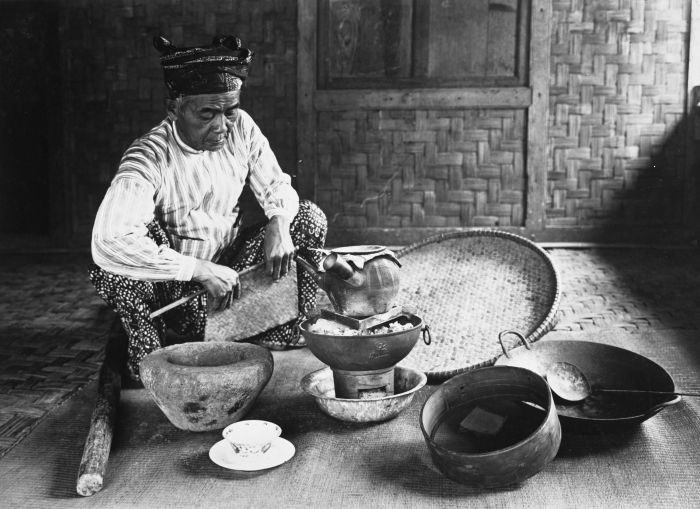 🇮🇩 Indonesia and 2 moreDukun
A traditional healer and spirit medium in Indonesian folk practiceTradition · Healing · Seeing and foretelling Living
🇮🇩 Indonesia and 2 moreDukun
A traditional healer and spirit medium in Indonesian folk practiceTradition · Healing · Seeing and foretelling Living
 🇸🇸 South Sudan and 1 moreAzande witchcraft
A Zande belief that certain people harm others by an inherited power, judged by oraclesBelief · Cursing and harm · Seeing and foretelling Living
🇸🇸 South Sudan and 1 moreAzande witchcraft
A Zande belief that certain people harm others by an inherited power, judged by oraclesBelief · Cursing and harm · Seeing and foretelling Living