Beliefs, omens and superstitions
Luck and unluck, the evil eye, knocking on wood and the small customs people keep without asking why.
Beliefs, omens and superstitions are the small customs people keep without asking why: knocking on wood, salt over the shoulder, avoiding the number thirteen, the evil eye, a black cat crossing the road, a first visitor of the new year. They are found on every continent and are rarely tied to a priest or book. This page looks at where they come from, what the word superstition hides, and why they persist.
What they look like
Beliefs differ by place. The number four is avoided in China, Japan and Korea because it sounds like the word for death, while thirteen is avoided in much of the West. In India, a sneeze before leaving home may delay a journey, and a lemon and chillies are hung over a shop. The evil eye is feared under many names: nazar, mal de ojo, ayin hara. First-footing at new year in Scotland is said to bring luck to a house.
Whose word is superstition
The word superstition has a history. Roman writers used it for religion they disliked, and Christian writers for forbidden practice. Today it often means someone else's belief. Many religions regard some of their own customs as faith and others as superstition, and where the line falls depends on the speaker. Using the word can mark a speaker as modern and a neighbour as backward. Tests of common superstitions show that people who hold them are not less educated or less rational than others, and many hold them lightly.
Why people keep them
Psychologists find that superstition rises with uncertainty and stakes, which is why athletes, sailors, students and gamblers are known for them. Anthropologist Bronislaw Malinowski observed in the 1920s that Trobriand fishermen used rites in dangerous deep-sea fishing and not in safe lagoon fishing. Most people who follow small customs say they do so partly in jest and partly just in case. Similar customs turn up in places that have never met each other, which suggests that people everywhere respond to risk in similar ways.
When belief causes harm
Most superstitions are harmless. Some are not: beliefs about witchcraft have led to killings in parts of Africa, India and Papua New Guinea, and beliefs about albinism have led to attacks in Tanzania and Malawi. Others cost people money, as when a fee is demanded to lift a bad omen. Education, law and trusted community leaders have all been part of reducing harm. Campaigns by health workers, teachers and community radio have been effective where they listen first and explain later.
Belief on EveryJaadu
The entries written up so far, best known first.
 🇮🇳 IndiaShamanism in Ayyavazhi
A divination practice within the Hindu denomination of Ayyavazhi in South India.Rite · Seeing and foretelling · Speaking with spirits and the dead Living
 🇮🇱 Israel and 4 moreChaiחי
A Hebrew word and symbol meaning 'alive', used as an amulet and in Jewish culture.Charm · Protection · Luck and prosperity Living
 🇯🇵 Japan and 1 morePower spotパワースポット
A Japanese term for places believed to hold strong earth energy and healing power.Belief · Healing · Power and authority Living
 🇬🇧 United Kingdom and 4 moreSpiritualism
A metaphysical belief that spirits communicate with the living through mediums.Belief · Speaking with spirits and the dead Living
 🇩🇪 Germany and 5 moreWitchcraft accusations against children
Historical and modern persecution of children blamed for witchcraftBelief · Cursing and harm Living
🇬🇧 United KingdomUwaisiأُوَيْس
A Sufi method of spiritual transmission between master and disciple without physical contact.Tradition · Speaking with spirits and the dead · Power and authority Living
🇮🇷 IranFaravaharفَرَوَهَر
Zoroastrian guardian spirits: ancestor-warriors and each person's unseen twinBeing · Protection · Speaking with spirits and the dead Living
🇺🇸 United StatesLaw of attraction
A New Thought belief that focused thoughts draw matching experiences into lifeBelief · Healing · Luck and prosperity Living
 🇩🇪 Germany and 5 moreLutzelfrau
A German Alpine witch who brings fruit or punishes childrenFigure · Protection · Cursing and harm Living
🇮🇹 ItalyWitchcraft in Italy
Inquisition trials, a fertility cult and love magic in early modern ItalyTradition · Protection · Healing Living
🇯🇵 JapanYakudoshi厄年
Traditional Japanese ages believed to bring bad luck and the rituals used to ward them offBelief · Protection Living
🇮🇩 Indonesia and 1 moreJailangkung
An Indonesian séance using a straw effigy to communicate with spirits of the dead.Rite · Speaking with spirits and the dead Living
🇫🇮 FinlandEtiäinen
A Finnish belief in a premonitory apparition that precedes a person's arrivalBelief · Seeing and foretelling Living
 🇨🇳 ChinaYao folk religion梅山教
The ethnic religion of the Yao, blended with Taoism since the 13th centuryTradition · Protection · Cleansing and purification Living
 🇬🇧 United KingdomTwo of Coins
A tarot card representing balance, juggling duties, and the struggle to maintain equilibrium.Belief · Seeing and foretelling Living
 🇨🇳 ChinaXiongdi Gong兄弟公
Sea guardians of Hainan, remembered as 108 brothers killed by piratesBeing · Protection Living
 🇮🇱 IsraelMatzevahמַצֵּבָה
A standing stone used as a sacred marker or grave monument in ancient and Jewish traditionCharm · Speaking with spirits and the dead · Protection Living
 🇮🇳 IndiaSuperstition in India
Common beliefs and rituals across India that influence daily life and major eventsBelief · Protection · Luck and prosperity Living
 🇮🇳 India and 3 moreOmॐ
A sacred syllable chanted in Hindu, Buddhist, Jain and Sikh practiceBelief · Speaking with spirits and the dead Living
🇮🇳 IndiaGreat White Brotherhood
An unseen company of spiritual teachers said to guide human developmentBelief · Speaking with spirits and the dead · Change and initiation Living
 🇬🇧 United Kingdom and 5 moreWedding superstitions
Folk beliefs and omens tied to marriage customs across many culturesBelief · Protection · Luck and prosperity Living
 🇲🇿 Mozambique and 1 moreNdau witchcraft and sorcery
A system of spirit belief and traditional healing among the Ndau people of Mozambique and ZimbabweTradition · Healing · Protection Living
🇸🇦 Saudi ArabiaAbu Fanousأبو فانوس
A wandering light of the Arabian desert, said to lure travellers and vanishBeing · Cursing and harm · Protection Living
🇬🇭 Ghana and 2 moreSakawa
A Ghanaian term for internet fraud linked to traditional ritualsBelief · Luck and prosperity · Cursing and harm Living
 🇮🇳 India and 1 moreDamnation
A state of divine punishment or separation from the sacred after deathBelief · Cursing and harm Living
 🇵🇪 PeruYachay
Peruvian Amazon phlegm said to hold a shaman's power as darts that harm or healSubstance · Cursing and harm · Healing Living
 🇹🇷 Turkey and 5 moreRelics of Muhammad
Objects linked to Muhammad, kept and venerated for blessingCharm · Luck and prosperity · Power and authority Living
 🇺🇸 United StatesHaint blue
A pale blue-green paint kept on porches to turn ghosts and boo hags awayCharm · Protection Living
 🇪🇹 Ethiopia and 2 moreChristian demonology
How Christian writers mapped demons: their fall, numbers, bodies and tricksTradition · Protection · Cleansing and purification Living
 🇻🇺 Vanuatu and 3 moreMana
A spiritual force of power and authority in Oceanic culturesBelief · Power and authority Living
 🇦🇺 Australia and 3 moreNelson (cricket)
A cricket superstition about the score 111 and the leg-raising ritual to ward it offBelief · Luck and prosperity Living
🇮🇳 IndiaCausal plane
A high spiritual realm in Theosophy and New Age cosmologyBelief · Speaking with spirits and the dead · Change and initiation Living
 🇲🇽 Mexico and 1 moreAnima SolaÁnimas del purgatorio
A soul in purgatory depicted in art and prayer across Catholic and Afro-Caribbean traditionsBelief · Speaking with spirits and the dead Living
 🇺🇸 United States and 2 moreElectronic voice phenomenon
Sounds on recordings interpreted as spirit voices by enthusiasts and dismissed as noise by scientistsBelief · Speaking with spirits and the dead Living
🇸🇪 SwedenSpirit world
A realm inhabited by spirits, as described in Spiritualist beliefBelief · Speaking with spirits and the dead Living
🇺🇸 United StatesAscended master
Enlightened humans said to have risen through initiations to a higher stateBeing · Change and initiation · Speaking with spirits and the dead Living
🇯🇲 Jamaica and 4 moreJumbee
A shadowy spirit of the dead in Caribbean folklore, often linked to evil deeds.Belief · Cursing and harm Living
🇯🇵 JapanHasshaku-sama八尺様
A giant ghost-lady from Japanese internet folklore who hunts children in the countryside.Belief · Cursing and harm Living
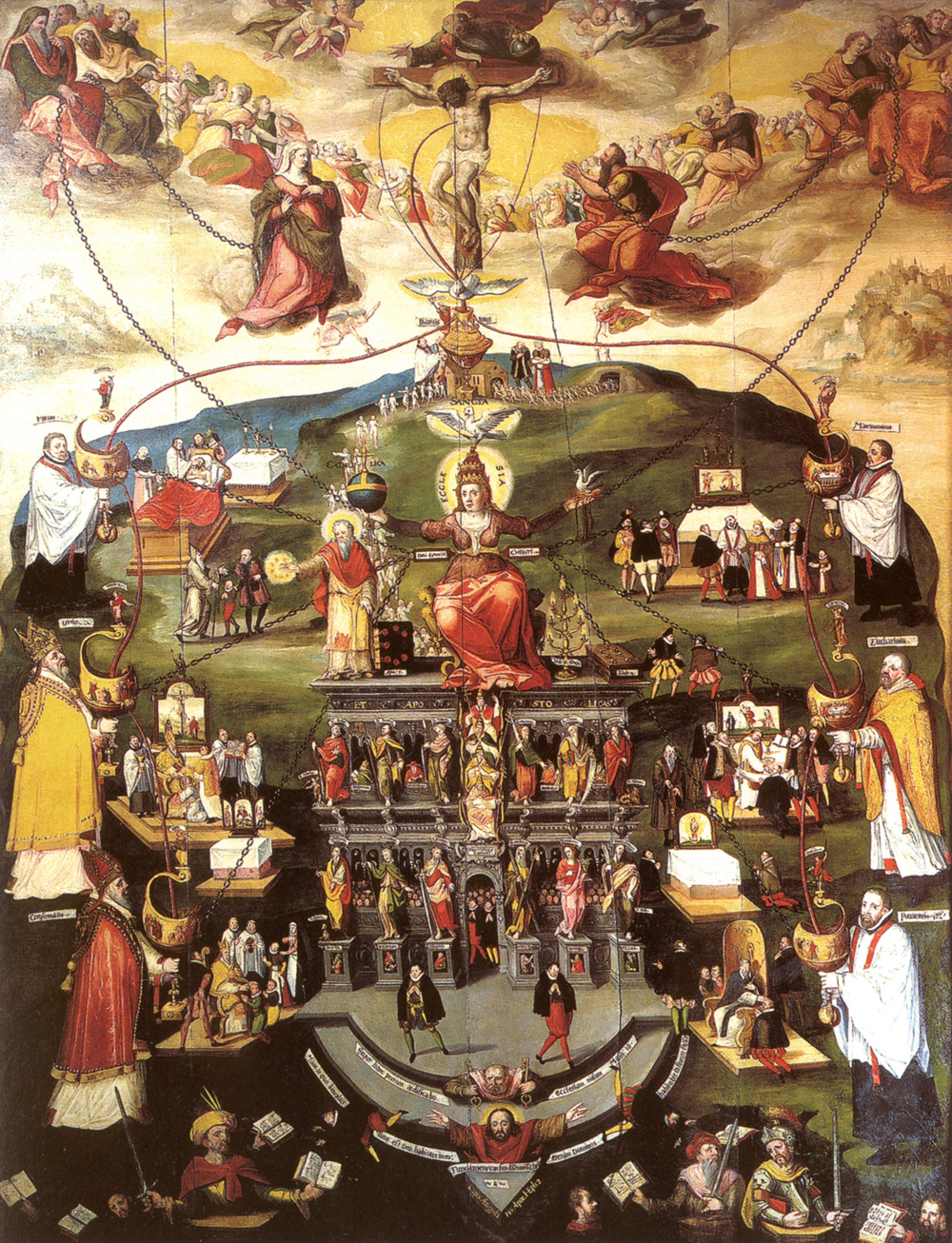 🇬🇷 GreeceSacred mysteriesμυστήριον
Secret ceremonies and divine doctrines held to exceed human reasonBelief · Speaking with spirits and the dead · Change and initiation Living
🇪🇬 EgyptQuran code
A claim that the Quran's word and letter counts reveal a design built on the number 19Belief · Speaking with spirits and the dead Living
 🇮🇳 IndiaPranaप्राण
A Sanskrit concept of vital energy found in yoga and AyurvedaBelief · Healing · Power and authority Living
🇺🇸 United States and 5 moreReligious discrimination against modern pagans
Persecution and bias faced by contemporary pagan communities across multiple nationsBelief Living
 🇦🇺 AustraliaGold Coast sports curse
A jinx blamed for folded, failing and fleeing sports clubs on the Gold CoastBelief · Cursing and harm Living
🇮🇱 IsraelShekhinahשְׁכִינָה
The divine presence of God dwelling among people in Jewish and Islamic thoughtBelief · Speaking with spirits and the dead · Power and authority Living
 🇬🇧 United KingdomGreen Man
A leaf-clad figure of English pageants, and the carved heads in churchesFigure · Love and attraction Living
🇬🇧 United KingdomShoes on a table
A superstition that placing footwear on a table invites bad luck or disrespectBelief · Luck and prosperity Living
 🇪🇬 EgyptBarakahبركة
A spiritual blessing power in Islam and Arabic ChristianityBelief · Protection · Power and authority Living
🇮🇩 IndonesiaKediri curse
An Indonesian urban legend: presidents who visit Kediri are said to lose their jobsBelief · Cursing and harm Living
Photo credits on this page
The small pictures above come from Wikimedia Commons under free licences. Some are cropped to fit.
- Shamanism in Ayyavazhi: Vaikunda Raja, CC BY-SA 3.0, source
- Chai: BASWIM, CC BY 3.0, source
- Power spot: ccfarmer, CC BY 3.0, source
- Spiritualism: Internet Archive Book Images, No restrictions, source
- Witchcraft accusations against children: Radbot, CC BY-SA 3.0, source
- Lutzelfrau: Karel Rozum, Public domain, source
- Yao folk religion: Daderot, Public domain, source
- Two of Coins: Augusto Rius in 1889 [1] for Heraclio Fournier, CC BY-SA 4.0, source
- Xiongdi Gong: Okkisafire, CC BY-SA 4.0, source
- Matzevah: Gilslovik, CC BY-SA 4.0, source
- Superstition in India: Ji-Elle, CC BY-SA 4.0, source
- Om: Anandajoti Bhikkhu, CC BY 2.0, source
- Wedding superstitions: Anonymous Unknown author, Public domain, source
- Ndau witchcraft and sorcery: Mycelium101, CC BY-SA 3.0, source
- Damnation: Didier Descouens, Public domain, source
- Yachay: Veton PICQ, CC BY-SA 3.0, source
- Relics of Muhammad: Georges Jansoone ( JoJan, CC BY 3.0, source
- Haint blue: Lake Lou, CC BY 2.0, source
- Christian demonology: Attributed to Michelangelo, Public domain, source
- Mana: Unknown author, Public domain, source
- Nelson (cricket): Lemuel Francis Abbott, Public domain, source
- Anima Sola: Muñoz LC, CC BY-SA 4.0, source
- Electronic voice phenomenon: Omegatron, CC BY-SA 3.0, source
- Sacred mysteries: Johannes Hopffe, Public domain, source
- Prana: Tamilmama, CC BY-SA 4.0, source
- Gold Coast sports curse: Michael Coghlan, CC BY-SA 2.0, source
- Green Man: Unknown author, CC BY-SA 3.0, source
- Barakah: عامر شاہین, CC BY-SA 3.0, source