Jailangkung
from Chinese Càilángōng, meaning vegetable basket deity
An Indonesian séance using a straw effigy to communicate with spirits of the dead.
Jailangkung is an Indonesian folk ritual where participants summon spirits through a basket effigy. It blends Chinese spirit basket divination with Javanese animism and serves as both a serious spiritual practice and a popular game among youth.
- Uses a basket effigy to house summoned spirits
- Combines Chinese divination with Javanese animism
- Male spirit is jailangkung; female is jailangse
- Popular nocturnal game among Indonesian students
- Inspired the 2001 horror film Jelangkung
What it is
Jailangkung is a ritual practice found in Indonesia that allows people to speak with deceased spirits. Participants use a small figure made from a basket and cloth to act as a vessel for these entities. The term also refers to the male spirit itself, while a female spirit is known as jailangse. This method of contact is considered a form of folk magic and spiritual dialogue within local communities.
Where it comes from
The custom stems from Chinese spirit basket divination, which dates back to the fifth century. It re-emerged in Indonesian urban areas during the early 1950s after disappearing elsewhere. Scholars note similarities to the Javanese tradition of nini towong, which involves female grandmother spirits. The modern version combines Chinese origins with local Javanese animistic beliefs about rulers and subjects.
How it is done
Practitioners recite mantras to invite spirits into the basket effigy. Once summoned, the spirit uses a slate and chalk to write messages for the living. Some variations involve offering food and tea to encourage communication. Other methods ask the effigy to point at letters on paper or knock on a table to spell out words.
Tools and materials
The central tool is a basket wrapped in a shirt to create an effigy. A writing slate and chalk are essential for the spirit to convey written messages. Offerings such as food and tea may be placed nearby to facilitate the interaction. In alternative versions, pieces of paper with alphabet letters are used for pointing or knocking.
Jailangkung, drawn and placed
- Living
- Revived
- Fading
- Historical
- Legendary
- Performed
- Lineage
- Chinese spirit basket divination and Javanese nini towong
- Timing
- at night or daily
What it is for
The primary goal is to commune with the dead and receive guidance or messages. It is used for serious spiritual inquiry as well as casual entertainment. Young people often play it as a nocturnal game to ask humorous questions. Religious and medical authorities have criticized this playful use due to concerns about mental health impacts.
Who does it
The practice is performed by ordinary households and individuals seeking spiritual connection. It is particularly popular among high school and university students in Java. Both men and women participate, though the spirits invoked can be male or female depending on the specific tradition being followed.
Peoples and places
The ritual is deeply rooted in Indonesian culture, with significant presence in urban centers. It reflects a blend of Chinese immigrant traditions and indigenous Javanese beliefs. Singaporean anthropologists have documented its widespread recognition among Indonesian informants. The practice has also been noted in historical contexts, such as among political prisoners in the 1970s.
At a glance: who, where and when
Who does it
Peoples
Belief worlds
Occasions
What people believe
Participants believe that spirits can inhabit the basket effigy when summoned correctly. The tradition acknowledges both male and female spirits, reflecting a dual influence from Chinese and Javanese cosmologies. Male spirits are sometimes linked to concepts of authority, while female spirits connect to ancestral grandmother figures. The efficacy of the ritual relies on proper invocation and respect for the entities.
When it is done
The ritual can be performed at any time, though it is often conducted at night. It is not tied to specific festivals but rather to personal desire or curiosity. Students frequently engage in it as a late-night pastime. The flexibility of timing allows it to serve both serious spiritual needs and recreational social gatherings.
How scholars and sceptics see it
Anthropologists like Margaret Chan have studied the practice to understand cultural transmission between Chinese immigrants and local populations. Writers such as Hersri Setiawan have observed its role in social history, including its presence in prisons. Researchers analyze how the ritual merges distinct religious traditions into a unique local form of spirit communication.
Cautions and what is closed
Medical and religious authorities have raised concerns about the psychological effects of the ritual. Some participants have reportedly experienced behavioral problems after engaging in the practice. Critics argue that the game can lead to fear or mental distress, particularly among young people. These warnings have led to denunciations by Christian and Muslim leaders.
Compare and confuse
Jailangkung is related to other forms of spirit writing and divination, such as Fuji and Kokkuri. It shares features with the Ouija board in its use of slates and automatic writing. However, it is distinct in its reliance on a physical effigy and its specific cultural blend of Chinese and Javanese elements.
Law and persecution
There is no specific legislation banning the practice, but it faces social and institutional opposition. Religious groups and medical professionals have publicly criticized its popularity among youth. Despite this, it remains a visible part of Indonesian folk culture and has even influenced the horror film genre through movies like Jelangkung.
Today
The ritual continues to be practiced in Indonesia, maintaining its status as a folk tradition. Its depiction in the 2001 film Jelangkung sparked a revival of interest in Indonesian horror cinema. The practice persists among students and households, adapting to modern contexts while retaining its core elements of spirit communication and effigy use.
Questions people ask about Jailangkung
What is Jailangkung?
It is an Indonesian ritual where people communicate with spirits using a basket effigy. The spirit writes messages on a slate or points to letters.
Where does it come from?
It originates from Chinese spirit basket divination and was adapted in Indonesia during the 1950s, blending with local Javanese traditions.
Is it dangerous?
Authorities warn it can cause behavioral issues. Medical and religious leaders criticize its use as a game due to potential psychological harm.
Who performs it?
It is done by households and students in Indonesia. Both men and women participate, invoking either male or female spirits.
Good reading and sources
The facts on this page come from the Wikipedia article "Jailangkung", written by its contributors and used under the CC BY-SA 4.0 licence, and from its Wikidata record (CC0). EveryJaadu rewrote the text in its own words, with AI assistance, and compares every page with the article to make sure no passage is copied. It may be reused under the same CC BY-SA 4.0 licence with a link back.
It may contain mistakes. Names and customs differ from one community to the next, and some knowledge is closed to outsiders and left out here. This page describes belief and practice. It does not say that any of it works, it is not a how-to, and it is not medical advice. If something is wrong, tell us. Last refreshed 2026-10-09.
More from Indonesia
All the entries from Indonesia 🇮🇩 IndonesiaNyepiᬜᬾᬧᬶ
A Balinese day of total silence, fasting, and self-reflection to mark the new year.Rite · Cleansing and purification · Speaking with spirits and the dead Living
🇮🇩 IndonesiaNyepiᬜᬾᬧᬶ
A Balinese day of total silence, fasting, and self-reflection to mark the new year.Rite · Cleansing and purification · Speaking with spirits and the dead Living
 🇮🇩 IndonesiaBabi ngepet
A Javanese myth about a person who turns into a boar to steal wealthBeing · Luck and prosperity · Cursing and harm Legendary
🇮🇩 IndonesiaKediri curse
An Indonesian urban legend: presidents who visit Kediri are said to lose their jobsBelief · Cursing and harm Living
🇮🇩 IndonesiaBabi ngepet
A Javanese myth about a person who turns into a boar to steal wealthBeing · Luck and prosperity · Cursing and harm Legendary
🇮🇩 IndonesiaKediri curse
An Indonesian urban legend: presidents who visit Kediri are said to lose their jobsBelief · Cursing and harm Living
 🇮🇩 IndonesiaOgoh-ogohᬳᭀᬕᭀᬄ ᬳᭀᬕᭀᬄ
Balinese sculptures paraded and burned to cleanse the environment before NyepiTradition · Cursing and harm · Cleansing and purification Living
🇮🇩 IndonesiaOgoh-ogohᬳᭀᬕᭀᬄ ᬳᭀᬕᭀᬄ
Balinese sculptures paraded and burned to cleanse the environment before NyepiTradition · Cursing and harm · Cleansing and purification Living
Related elsewhere
All rite 🇮🇳 IndiaChakraचक्र
Meditation points in the subtle body used in Hindu and Buddhist yogaTradition · Speaking with spirits and the dead · Change and initiation Living
🇮🇳 IndiaChakraचक्र
Meditation points in the subtle body used in Hindu and Buddhist yogaTradition · Speaking with spirits and the dead · Change and initiation Living
 🇸🇳 Senegal and 1 moreSerer religionA ƭat Roog
The traditional faith of the Serer people, centred on the supreme deity Roog and ancestral veneration.Tradition · Protection · Speaking with spirits and the dead Living
🇸🇳 Senegal and 1 moreSerer religionA ƭat Roog
The traditional faith of the Serer people, centred on the supreme deity Roog and ancestral veneration.Tradition · Protection · Speaking with spirits and the dead Living
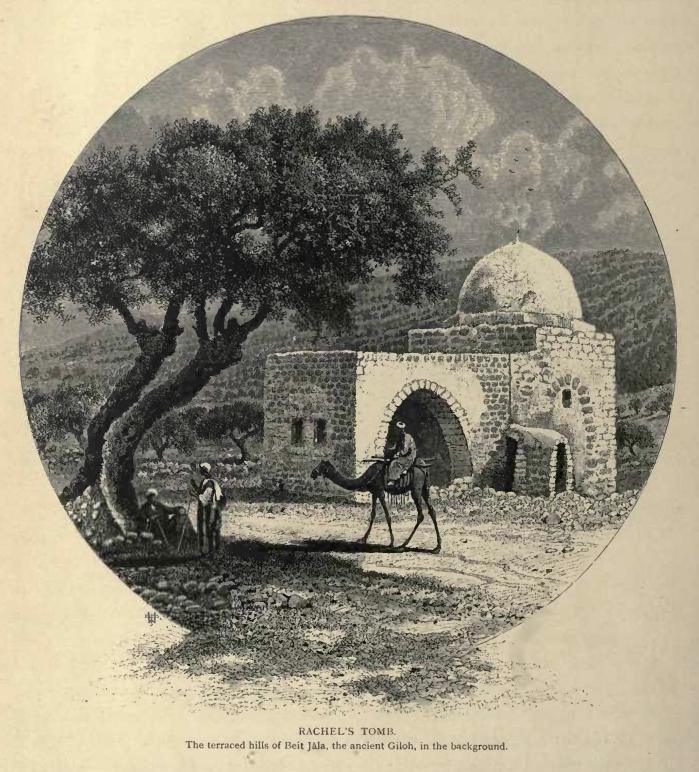 🇵🇸 Palestine and 1 moreRachel's TombQever Raḥel; Qabr Rāḥīl
A shared holy site near Bethlehem revered by Jews, Christians, and MuslimsTradition · Speaking with spirits and the dead · Protection Living
🇵🇸 Palestine and 1 moreRachel's TombQever Raḥel; Qabr Rāḥīl
A shared holy site near Bethlehem revered by Jews, Christians, and MuslimsTradition · Speaking with spirits and the dead · Protection Living
 🇮🇶 Iraq and 5 moreGrimoire
A textbook containing instructions for spells, rituals, and the creation of magical objects.Text · Protection · Healing Historical
🇮🇶 Iraq and 5 moreGrimoire
A textbook containing instructions for spells, rituals, and the creation of magical objects.Text · Protection · Healing Historical