🇹🇹 Magic in Trinidad and Tobago
14 entries from Trinidad and Tobago, best known first, across 3 places of magic.
The Spiritual Baptist tradition grows from African ancestral customs woven into Baptist Christianity across the Caribbean. Followers view their faith as fully Christian while keeping older ritual patterns. The movement developed separately in plantation communities and among freed American settlers, spreading northward through migration while maintaining its core focus on spirit invocation and communal worship.
- Former American soldiers founded the Trinidad branch after 1815.
- A 1917 law banned outdoor worship until repeal in 1951.
- March 30 stands as a national holiday in Trinidad and Tobago.
- Saint Vincent followers go by the name shakers.
- Leaders wear extra vestments to show higher church rank.
Overview
This faith emerged from African spiritual patterns meeting Protestant Christianity in the British West Indies. Plantation communities blended older ceremonial habits with Baptist teachings, creating a distinct path that remains openly Christian. A separate branch arrived in Trinidad with former American soldiers who settled after the War of 1812. Their version mixed Second Great Awakening preaching with Gullah traditions, a coastal African American culture, before British missionaries arrived. Though outsiders sometimes group it with Orisha worship, a system focused on ancestral spirits, the two remain separate. The tradition shares Caribbean roots with neighboring folk movements but keeps its own structure and vocabulary.
Practices and beliefs
Members gather for loud singing, extended prayer, and spoken teaching. Worship centers on calling upon the Holy Spirit to guide the congregation. Participants wear layered garments that mark personal progress and connect them to specific saints or spiritual qualities. Head wraps, long gowns, and woven cords are adjusted as knowledge deepens. Healing gatherings take place in dedicated spaces where congregants seek comfort and guidance. The community relies on vocal expression rather than written liturgy to carry its teachings forward.
Rites and charms
Services follow a steady rhythm of call and response chanting. Leaders guide the room through periods of quiet reflection and sudden bursts of song. Newcomers receive instruction on proper dress and respectful conduct. As members advance, they add new layers to their clothing, including sashes and aprons that signal deeper understanding. Open air meetings serve as public markers of faith. The ceremonies avoid private secrecy, favoring collective participation and shared vocal energy throughout the gathering.
Who practises
Leadership follows a clear hierarchy of shepherds, reverends, bishops, and apostles. Those who hold higher ranks wear additional vestments like surplices, loose white robes worn over other garments, to show higher church rank. Guidance flows from experienced teachers to newer members through direct instruction. Local elders oversee daily operations and settle questions about doctrine. The community values those who demonstrate steady learning and faithful service. Training happens inside regular meetings rather than through isolated apprenticeships.
Regions and communities
Island branches grew from different historical paths. Most Caribbean groups formed inside working plantations where enslaved people preserved African habits. Trinidad developed from a settlement of freed American troops who brought northern Baptist styles. Barbados adopted the faith decades later through a single leader who reported a personal vision. North American and British cities now host active congregations shaped by immigrant networks. Some locals blend this faith with Orisha worship, though official leaders keep the two systems apart.
The calendar
The community marks time through spiritual milestones rather than fixed agricultural seasons. Each year brings a special day honoring the end of legal restrictions. Members update their garments to reflect personal growth during yearly cycles. Life transitions receive attention through guided teaching and communal support. The calendar stays flexible, allowing local chapters to adjust schedules around weather and travel needs while keeping the core annual observance intact.
Law and the state
Authorities banned the faith in 1917 through a specific ordinance that restricted outdoor gatherings and loud worship. The restriction lasted until 1951 when lawmakers finally removed it. Government officials later recognized the community by granting land for central offices and establishing an annual day off. Police and courts no longer interfere with services. The faith operates openly in all regions where it has taken root. Official recognition helps protect the tradition from outside interference.
Today
Migration carried the faith to Canadian cities and American states where immigrants built new meeting houses. Congregations maintain their original structure while adapting to urban life. Barbados counts it as one of its native religious paths alongside other local movements. The annual holiday draws official attention and public acknowledgment. Communities continue to grow through family ties and neighborhood outreach rather than large scale campaigns.
The facts in this overview come from the Wikipedia article "Spiritual Baptist", written by its contributors and used under the CC BY-SA 4.0 licence. EveryJaadu rewrote the text in its own words, with AI assistance, and compares every page with the article to make sure no passage is copied. It may be reused under the same CC BY-SA 4.0 licence with a link back.
Places of magic in Trinidad and Tobago
 🇯🇲 Jamaica and 5 moreObeah
A Caribbean tradition of ritual healing and spell-casting with African rootsTradition · Protection · Healing Living
🇯🇲 Jamaica and 5 moreObeah
A Caribbean tradition of ritual healing and spell-casting with African rootsTradition · Protection · Healing Living
 🇮🇳 India and 6 moreChurel
A female revenant of South Asian folklore, feared for luring men awayBeing · Cursing and harm Legendary
🇮🇳 India and 6 moreChurel
A female revenant of South Asian folklore, feared for luring men awayBeing · Cursing and harm Legendary
 🇹🇹 Trinidad and Tobago and 3 moreCaribbean folklore
The blended tales and spirits of the Caribbean islandsTradition · Wonder and entertainment Living
🇹🇹 Trinidad and Tobago and 3 moreCaribbean folklore
The blended tales and spirits of the Caribbean islandsTradition · Wonder and entertainment Living
 🇳🇬 Nigeria and 5 moreOgunÒgún
A West African deity of iron, war and metalworking found in Yoruba and diaspora traditionsBeing · Protection · Cursing and harm Living
🇳🇬 Nigeria and 5 moreOgunÒgún
A West African deity of iron, war and metalworking found in Yoruba and diaspora traditionsBeing · Protection · Cursing and harm Living
 🇯🇵 Japan and 3 moreManeki-neko招き猫
A Japanese figurine of a beckoning cat believed to bring luck and prosperityCharm · Luck and prosperity · Protection Living
🇯🇵 Japan and 3 moreManeki-neko招き猫
A Japanese figurine of a beckoning cat believed to bring luck and prosperityCharm · Luck and prosperity · Protection Living
 🇮🇳 India and 5 moreHoliहोली
A Hindu spring festival marked by coloured powders and bonfires to celebrate love and virtue.Tradition · Love and attraction · Cursing and harm Living
🇮🇳 India and 5 moreHoliहोली
A Hindu spring festival marked by coloured powders and bonfires to celebrate love and virtue.Tradition · Love and attraction · Cursing and harm Living
 🇹🇹 Trinidad and Tobago and 5 moreSpiritual Baptist
An Afro-Caribbean Christian faith blending African traditions with Baptist worshipTradition · Speaking with spirits and the dead · Protection Living
🇹🇹 Trinidad and Tobago and 5 moreSoucouyant
A shape-shifting vampire spirit of Caribbean folklore that sheds its skin to fly as a fireballBeing · Cursing and harm Living
🇹🇹 Trinidad and Tobago and 5 moreSpiritual Baptist
An Afro-Caribbean Christian faith blending African traditions with Baptist worshipTradition · Speaking with spirits and the dead · Protection Living
🇹🇹 Trinidad and Tobago and 5 moreSoucouyant
A shape-shifting vampire spirit of Caribbean folklore that sheds its skin to fly as a fireballBeing · Cursing and harm Living
 🇹🇹 Trinidad and Tobago and 4 moreTrinidad Orisha
A syncretic Afro-Caribbean faith blending Yoruba spirit work with Christian and other traditions in Trinidad.Tradition · Speaking with spirits and the dead · Healing Living
🇹🇹 Trinidad and Tobago and 1 moreDouen
A faceless creature with backwards feet from Trinidad and Tobago folkloreBeing · Cursing and harm Legendary
🇯🇲 Jamaica and 1 moreNine-Night
A nine-day Caribbean wake rooted in Akan tradition to celebrate the deceased and guide their spirit home.Rite · Speaking with spirits and the dead Living
🇹🇹 Trinidad and Tobago and 4 moreTrinidad Orisha
A syncretic Afro-Caribbean faith blending Yoruba spirit work with Christian and other traditions in Trinidad.Tradition · Speaking with spirits and the dead · Healing Living
🇹🇹 Trinidad and Tobago and 1 moreDouen
A faceless creature with backwards feet from Trinidad and Tobago folkloreBeing · Cursing and harm Legendary
🇯🇲 Jamaica and 1 moreNine-Night
A nine-day Caribbean wake rooted in Akan tradition to celebrate the deceased and guide their spirit home.Rite · Speaking with spirits and the dead Living
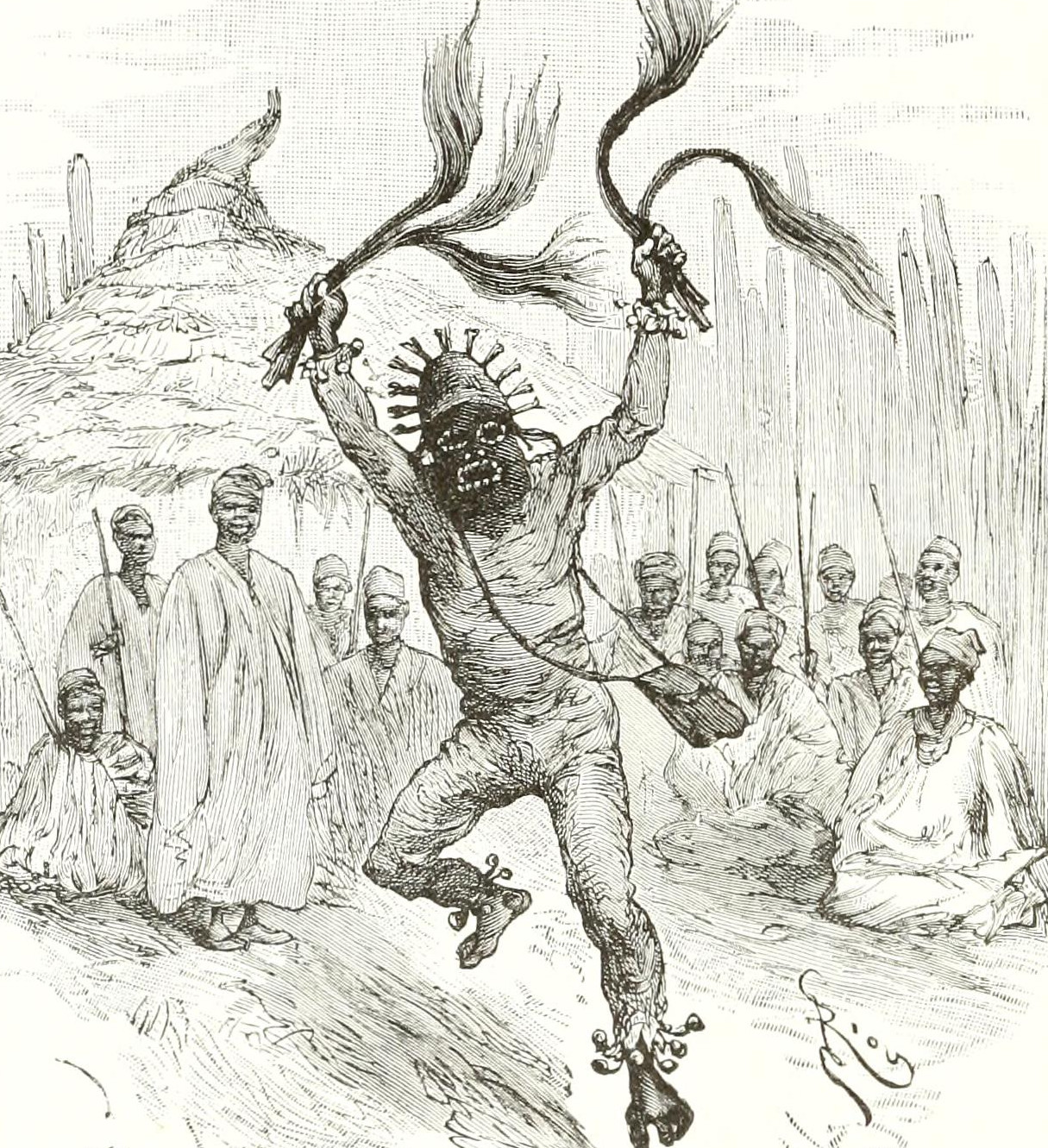 🇹🇹 Trinidad and Tobago and 1 moreTrinidadian Vodunu
A West African Vodun tradition practiced in Trinidad and Tobago with Catholic elementsTradition · Speaking with spirits and the dead · Power and authority Living
🇹🇹 Trinidad and Tobago and 2 moreMama D'Leau
A river spirit of the Caribbean islands who protects aquatic life and heals people.Being · Healing · Protection Legendary
🇹🇹 Trinidad and Tobago and 1 moreTrinidadian Vodunu
A West African Vodun tradition practiced in Trinidad and Tobago with Catholic elementsTradition · Speaking with spirits and the dead · Power and authority Living
🇹🇹 Trinidad and Tobago and 2 moreMama D'Leau
A river spirit of the Caribbean islands who protects aquatic life and heals people.Being · Healing · Protection Legendary
 🇮🇳 India and 5 moreSailors' superstitions
A global collection of omens, charms and taboos used by mariners to manage the risks of life at seaBelief · Protection · Luck and prosperity Living
🇮🇳 India and 5 moreSailors' superstitions
A global collection of omens, charms and taboos used by mariners to manage the risks of life at seaBelief · Protection · Luck and prosperity Living
Photo credits on this page
The small pictures above come from Wikimedia Commons under free licences. Some are cropped to fit.
- Holi: Jitenderasingh, CC BY-SA 4.0, source
- Louisiana Voodoo: I cropped, original authors are Ridpath, John Clark, CC BY-SA 4.0, source
- Egungun: Ìṣẹ̀ṣeAssembly, CC BY-SA 4.0, source
- Obeah: Various, published by David Nutt, Public domain, source
- Churel: Joe Mabel, CC BY-SA 3.0, source
- Ogun: Chado07, CC BY-SA 4.0, source
- Maneki-neko: Su--May, CC BY 2.0, source
- Caribbean folklore: Biblioteca Juvenil Mayaguez ( talk · contribs ), CC BY-SA 4.0, source
- Sailors' superstitions: Siren Painter (eponymous vase), Public domain, source
The weekly digest
Every Monday: seven entries you may not know, what is on the calendar this week, and one rite drawn step by step.