🇳🇿 Magic in New Zealand
10 entries from New Zealand, best known first, across 7 places of magic.
In Māori culture, a tohunga is an expert in religious or secular arts, serving as priest, healer, or artisan. This role holds deep spiritual authority within a society governed by tapu, the concept of sacred restriction and prohibition.
- Tohunga means expert in any skill, religious or secular
- Knowledge passed orally through wananga schools
- Tapu governs sacred restrictions and prohibitions
- Tohunga Suppression Act enforced 1907 to 1962
- Taonga pūoro used to call upon divine assistance
Overview
The term describes a specialist with mastery over specific skills, ranging from carving and weaving to navigation and healing. These individuals act as bridges between the physical world and the spiritual realm. The practice relies on oral transmission of knowledge through generations, preserving ancient wisdom without written records. It shares cognate terms with other Polynesian cultures, such as kahuna in Hawaii, indicating a shared regional heritage of specialized expertise and spiritual leadership.
Practices and beliefs
Practitioners use karakia (prayers), pātere (chants), and waiata (songs) to communicate with atua (gods). They employ taonga pūoro, traditional musical instruments, to invoke divine assistance. Knowledge covers both temporal skills like canoe building and spiritual rites. Specific classes exist for foretelling the future, studying celestial bodies, and leading war parties. Tattooing and language mastery are also recognized as specialized domains requiring expert guidance.
Rites and charms
Rituals are conducted within the framework of tapu, which dictates sacred restrictions and prohibitions. Tohunga maintain high personal tapu due to their contact with spirits. Handling the dead creates extreme tapu, requiring specific feeding methods to avoid contaminating food. Ceremonies often take place in remote areas of settlements, away from general living spaces. The performance of rites requires strict adherence to traditional protocols passed down through oral instruction at wananga, places of learning.
Who practises
Tohunga include priests, healers, carvers, navigators, and teachers. They may also hold social status as chiefs or nobles. Selection involves natural ability and extensive training in oral traditions. Female practitioners have historically been overlooked by scholars but are recognized in modern research. The community respects their knowledge, though fear of witchcraft exists among some groups. Charlatans exploiting vulnerability contributed to historical tensions regarding these experts.
Regions and communities
The concept applies broadly across Māori communities in New Zealand. Southern Māori dialect uses the variant tōhuka. The system mirrors practices in other Polynesian islands, such as the kahuna in Hawaiian culture and tahu'a in Tahitian society. Regional variations exist in local customs and specific ritual applications, but the core definition of expert specialization remains consistent across these connected cultural spheres.
The calendar
Specific festivals or seasonal timing for magical practices are not detailed in the provided material. Rites appear tied to life events, spiritual needs, and professional duties rather than a fixed calendar of magical observances. The text does not describe annual cycles of ritual activity or specific dates associated with supernatural interventions.
Law and the state
The Tohunga Suppression Act of 1907 restricted traditional practices due to settler prejudice and disease concerns. Many tohunga stopped transmitting knowledge, leading to significant loss of tradition. The act was repealed in 1962, but much language and custom had already been corrupted or lost. Modern efforts focus on recovering these traditions through kaumatua and kuia who preserved knowledge orally despite legal restrictions.
Today
Contemporary recognition includes renewed scholarly interest in female tohunga roles. Oral traditions continue through elders who maintained knowledge during suppression periods. Cultural revival efforts aim to restore lost practices and languages. The legacy persists as a symbol of indigenous expertise and spiritual authority, adapting to modern contexts while respecting traditional boundaries and sacred obligations.
The facts in this overview come from the Wikipedia article "Tohunga", written by its contributors and used under the CC BY-SA 4.0 licence. EveryJaadu rewrote the text in its own words, with AI assistance, and compares every page with the article to make sure no passage is copied. It may be reused under the same CC BY-SA 4.0 licence with a link back.
Places of magic in New Zealand
 🇳🇿 New ZealandTaniwha
Supernatural beings of Māori lore, acting as guardians or dangerous predators in water and earthBeing · Protection · Cursing and harm Living
🇳🇿 New ZealandTaniwha
Supernatural beings of Māori lore, acting as guardians or dangerous predators in water and earthBeing · Protection · Cursing and harm Living
 🇷🇺 Russia and 5 moreAmber
Fossilized tree resin used in jewelry and folk healing traditionsSubstance · Protection · Healing Living
🇷🇺 Russia and 5 moreAmber
Fossilized tree resin used in jewelry and folk healing traditionsSubstance · Protection · Healing Living
 🇺🇸 United States and 7 moreSatanic panic
A moral panic over unsubstantiated claims of Satanic cults abusing children in the late twentieth centuryBelief · Cursing and harm Historical
🇺🇸 United States and 7 moreSatanic panic
A moral panic over unsubstantiated claims of Satanic cults abusing children in the late twentieth centuryBelief · Cursing and harm Historical
 🇳🇿 New Zealand and 5 moreFace tattoo
Marks inked on the face for spiritual protection, identity, rank, and rite of passageTradition · Protection · Power and authority Living
🇳🇿 New Zealand and 5 moreFace tattoo
Marks inked on the face for spiritual protection, identity, rank, and rite of passageTradition · Protection · Power and authority Living
 🇺🇸 United States and 2 moreDavenport brothers
A pair of American stage magicians who performed spirit cabinet illusions in the late nineteenth century.Illusion · Wonder and entertainment · Speaking with spirits and the dead Historical
🇺🇸 United States and 2 moreDavenport brothers
A pair of American stage magicians who performed spirit cabinet illusions in the late nineteenth century.Illusion · Wonder and entertainment · Speaking with spirits and the dead Historical
 🇳🇿 New ZealandPatupaiarehe
Pale-skinned forest spirits of Māori mythology who live in mist and mountainsBeing · Speaking with spirits and the dead Legendary
🇳🇿 New ZealandKarakia
Māori recitations used for spiritual guidance, protection, and formal greetingsTradition · Protection · Speaking with spirits and the dead Living
🇳🇿 New ZealandTohunga Suppression Act 1907
A New Zealand law banning traditional Māori healers and faith practitionersText · Cursing and harm · Protection Historical
🇳🇿 New ZealandPatupaiarehe
Pale-skinned forest spirits of Māori mythology who live in mist and mountainsBeing · Speaking with spirits and the dead Legendary
🇳🇿 New ZealandKarakia
Māori recitations used for spiritual guidance, protection, and formal greetingsTradition · Protection · Speaking with spirits and the dead Living
🇳🇿 New ZealandTohunga Suppression Act 1907
A New Zealand law banning traditional Māori healers and faith practitionersText · Cursing and harm · Protection Historical
 🇻🇺 Vanuatu and 5 moreKava culture
A shared ritual across Oceania where a root brew marks ceremony, respect, and social gathering.Tradition · Speaking with spirits and the dead · Luck and prosperity Living
🇻🇺 Vanuatu and 5 moreKava culture
A shared ritual across Oceania where a root brew marks ceremony, respect, and social gathering.Tradition · Speaking with spirits and the dead · Luck and prosperity Living
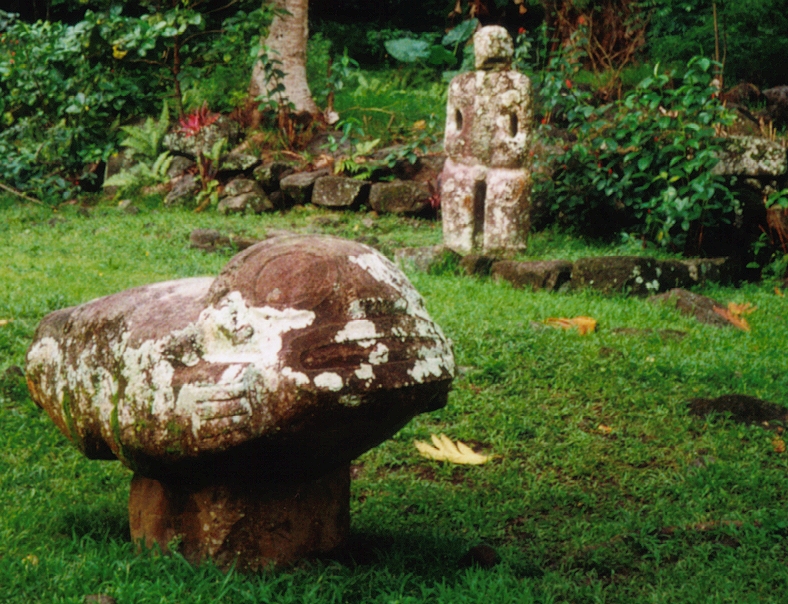 🇳🇿 New Zealand and 2 morePolynesian mythology
The oral traditions and legends of the Polynesian peoples across the PacificTradition · Speaking with spirits and the dead Living
🇳🇿 New Zealand and 2 morePolynesian mythology
The oral traditions and legends of the Polynesian peoples across the PacificTradition · Speaking with spirits and the dead Living
Photo credits on this page
The small pictures above come from Wikimedia Commons under free licences. Some are cropped to fit.
- Amber: uploaded with permission, CC BY-SA 3.0, source
- Taniwha: Pseudopanax at en.wikipedia, Public domain, source
- Satanic panic: Hartmann Schedel (1440-1514), Public domain, source
- Face tattoo: Gottfried Lindauer, Public domain, source
- Davenport brothers: Unknown author, Public domain, source
- Patupaiarehe: Archives New Zealand, CC BY-SA 2.0, source
- Kava culture: Jaejay77, CC BY-SA 4.0, source
- Polynesian mythology: Makemake at de.wikipedia, CC BY-SA 3.0, source
The weekly digest
Every Monday: seven entries you may not know, what is on the calendar this week, and one rite drawn step by step.