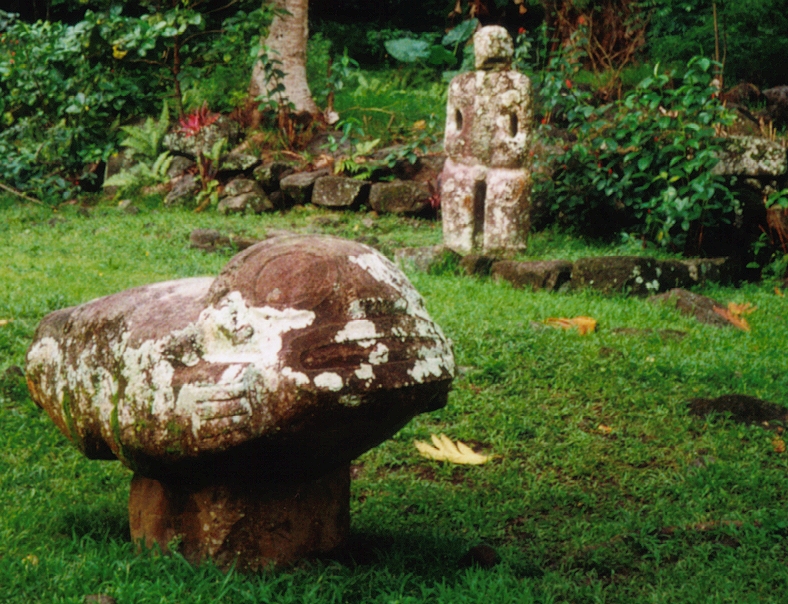
Polynesian mythology
The oral traditions and legends of the Polynesian peoples across the Pacific
Polynesian mythology covers the stories passed down by the people of the Polynesian Triangle and its outliers. It includes tales of gods, ancestors, and culture heroes that explain the world and justify social order.
- Proto-Polynesian spoken around 1000 BC in Tonga and Samoa
- Settlement of New Zealand occurred around 1300 AD
- Stories justify political legitimacy through genealogies
- Missionaries fixed fluid oral traditions into written versions
- Chiefs burned family books to control historical narratives
What it is
Polynesian mythology is the body of oral traditions held by the peoples of Polynesia. This region spans a vast triangle in the Central and South Pacific Ocean, including islands like New Zealand, Hawaii, and Tahiti. The stories recount the adventures of gods, known as atua, and deified ancestors from ancient times. These narratives serve to explain the origins of the world, the natural environment, and the social structures of the communities. They are not static texts but flexible performances that adapt to the needs of the narrator and the audience.
Where it comes from
The languages of Polynesia descend from Proto-Polynesian, likely spoken around 1000 BC in the Tonga and Samoa area. From there, populations spread eastward to the Cook Islands, Tahiti, and the Marquesas. Later voyages reached Rapa Nui, Hawai‘i, and New Zealand, with settlement in New Zealand occurring around 1300 AD. The mythologies share common themes but feature local variations. For instance, the marriage of Sky and Earth appears in many forms, such as Rangi and Papa in New Zealand. Stories often involve magic fishhooks pulling islands from the sea or trickster figures like Māui.
How it is done
The traditions are transmitted orally through speech, song, and chant. There is no single fixed version of any tale. Narratives change based on the setting, the speaker, and the listeners. This flexibility allows the stories to remain relevant to the current situation. Genealogies are recited to establish lineage and political legitimacy. When writing was introduced by missionaries and officials, these fluid accounts were fixed on paper. This process often created an authoritative version that suppressed other valid interpretations held by different clans or tribes.
Tools and materials
The primary tool is the spoken word, characterized by allegory, metaphor, parable, and hyperbole. Personification is used to describe natural forces. In some island groups, specific objects like magic fishhooks appear in creation stories. Later, written records known as pukapuka whakapapa in Māori or puta tumu in tropical Polynesia were used to record genealogies and tribal history. These books were often guarded closely by household heads to maintain control over their lineage's narrative.
Polynesian mythology, drawn and placed
- Living
- Revived
- Fading
- Historical
- Legendary
- Performed
- Lineage
- Austronesian
What it is for
The myths justify and legitimize the present social and political order. Genealogies emphasize the seniority of ruling chiefly lines, granting them the right to exploit land and resources. If a new line rises to power, it may adopt prestigious ancestors from previous dynasties to bolster its claim. The stories also connect people to geographic features, describing landscapes as petrified remains of supernatural beings. They provide a framework for understanding the relationship between the living, the ancestors, and the environment.
Who does it
Traditionally, knowledge was held by chiefs, elders, and specialists who memorized and performed the narratives. In modern contexts, scholars and anthropologists study these traditions. The writings of figures like Wiremu Te Rangikāheke in New Zealand influenced official versions of Māori legends compiled by Governor George Grey. Chiefs like Makea Takau in Rarotonga used written records to consolidate power, ordering the destruction of competing family books to ensure their version became the sole accepted history.
Peoples and places
The mythology belongs to the Polynesian peoples, who speak related Austronesian languages. Cultural similarities exist in social organization, childrearing, and technology, reflected in shared mythological themes. However, each island group has distinct stories. The Māori of New Zealand have the legend of Rangi and Papa. Samoan and Tongan traditions include stories of Tangaroa, the god of the sea. Hawaiian mythology features figures like Hina. These variations demonstrate how common tales are reworked locally while maintaining a shared cultural heritage.
At a glance: who, where and when
What people believe
The worldview centers on atua (gods) and deified ancestors who shape the world. Time is divided into pō (ancient darkness) and ao (light). The universe is populated by spirits and beings linked to nature. Stories of seduction, battles, and migrations explain human history and divine intervention. The boundary between myth and remembered history is fluid, with demi-gods and culture heroes shading into historical figures. The oral tradition allows for multiple truths, where different versions can coexist depending on the perspective of the storyteller.
When it is done
The traditions are tied to the concept of pō, the time of ancient origins, rather than seasonal cycles. Events in the myths, such as the settlement of islands or the rise of chiefly lines, mark historical milestones rather than recurring annual occasions. The performance of stories is linked to social gatherings and the need to affirm lineage and status.
How scholars and sceptics see it
Anthropologists and ethnologists have collected and published these accounts since the 19th century. Scholars note that fixing oral traditions in writing changes their nature, creating a single authoritative version. Researchers like Patrick Vinton Kirch study the archaeological history of the Pacific to understand pre-contact societies. The work of Martha Beckwith on Hawaiian mythology and Robert D. Craig’s dictionary are key references. Scholars recognize that missionary and official collections often distorted the fluid, adaptive nature of the original oral traditions.
Cautions and what is closed
The transition to written records led to the loss or destruction of many traditional accounts. Chiefs sometimes ordered the burning of family books to eliminate dissenting histories. This suppression removed alternative versions of lineage and origin stories. The fixation of one narrative by colonial authorities or local elites can marginalize other valid cultural perspectives. Modern scholarship aims to recover these diverse voices and understand the political motivations behind the preservation or destruction of certain texts.
Compare and confuse
Polynesian mythology shares roots with other Austronesian traditions across the Pacific. It is distinct from Melanesian and Micronesian mythologies, though all are part of broader Pacific cultures. The use of genealogies to justify political power is similar to practices in other hierarchical societies. The figure of the trickster, like Māui, appears in various forms across indigenous cultures. The tension between oral flexibility and written authority is a common theme in the study of indigenous traditions worldwide.
Law and persecution
However, the historical suppression of certain narratives by chiefs and colonial officials had significant social consequences. The burning of pukapuka whakapapa demonstrates how control over written records could enforce political dominance. Today, these traditions are recognized as part of the cultural heritage of Polynesian peoples, though their transmission remains primarily within communities and academic study.
Today
Polynesian mythology continues to be practiced and studied today. Diaspora communities maintain connections to these stories. Academic institutions publish research and translations of traditional texts. There is ongoing effort to preserve oral traditions against the homogenizing effect of written records. Contemporary Polynesians engage with these myths as part of their identity, balancing traditional knowledge with modern scholarly interpretations. The legacy of figures like Wiremu Te Rangikāheke and Makea Takau influences how history is recorded and understood.
Questions people ask about Polynesian mythology
What is Polynesian mythology?
It is the collection of oral traditions from the Polynesian peoples of the Pacific. These stories recount the adventures of gods and ancestors, explaining the world and social order.
Where does it come from?
It originates from the Proto-Polynesian language spoken around 1000 BC in the Tonga and Samoa area. Populations then spread across the Pacific, carrying these traditions with them.
How are the stories told?
They are transmitted orally through speech and chant. There is no fixed version; narratives adapt to the narrator, audience, and current social needs.
Why are genealogies important?
Genealogies justify the political legitimacy of ruling lines. They establish seniority and the right to control resources, often borrowing ancestors from previous dynasties.
How did writing affect these traditions?
Writing fixed fluid oral accounts into single authoritative versions. This process often suppressed alternative interpretations and led to the destruction of competing family records.
Good reading and sources
- Polynesian mythology on WikipediaEncyclopedia
- More photos on Wikimedia CommonsPhotos and video
- Wikidata recordOpen data
The facts on this page come from the Wikipedia article "Polynesian mythology", written by its contributors and used under the CC BY-SA 4.0 licence, and from its Wikidata record (CC0). EveryJaadu rewrote the text in its own words, with AI assistance, and compares every page with the article to make sure no passage is copied. It may be reused under the same CC BY-SA 4.0 licence with a link back.
It may contain mistakes. Names and customs differ from one community to the next, and some knowledge is closed to outsiders and left out here. This page describes belief and practice. It does not say that any of it works, it is not a how-to, and it is not medical advice. If something is wrong, tell us. Last refreshed 2026-10-05.
More from New Zealand
All the entries from New Zealand 🇻🇺 Vanuatu and 5 moreKava culture
A shared ritual across Oceania where a root brew marks ceremony, respect, and social gathering.Tradition · Speaking with spirits and the dead · Luck and prosperity Living
🇻🇺 Vanuatu and 5 moreKava culture
A shared ritual across Oceania where a root brew marks ceremony, respect, and social gathering.Tradition · Speaking with spirits and the dead · Luck and prosperity Living
 🇳🇿 New Zealand and 5 moreFace tattoo
Marks inked on the face for spiritual protection, identity, rank, and rite of passageTradition · Protection · Power and authority Living
🇳🇿 New Zealand and 5 moreFace tattoo
Marks inked on the face for spiritual protection, identity, rank, and rite of passageTradition · Protection · Power and authority Living
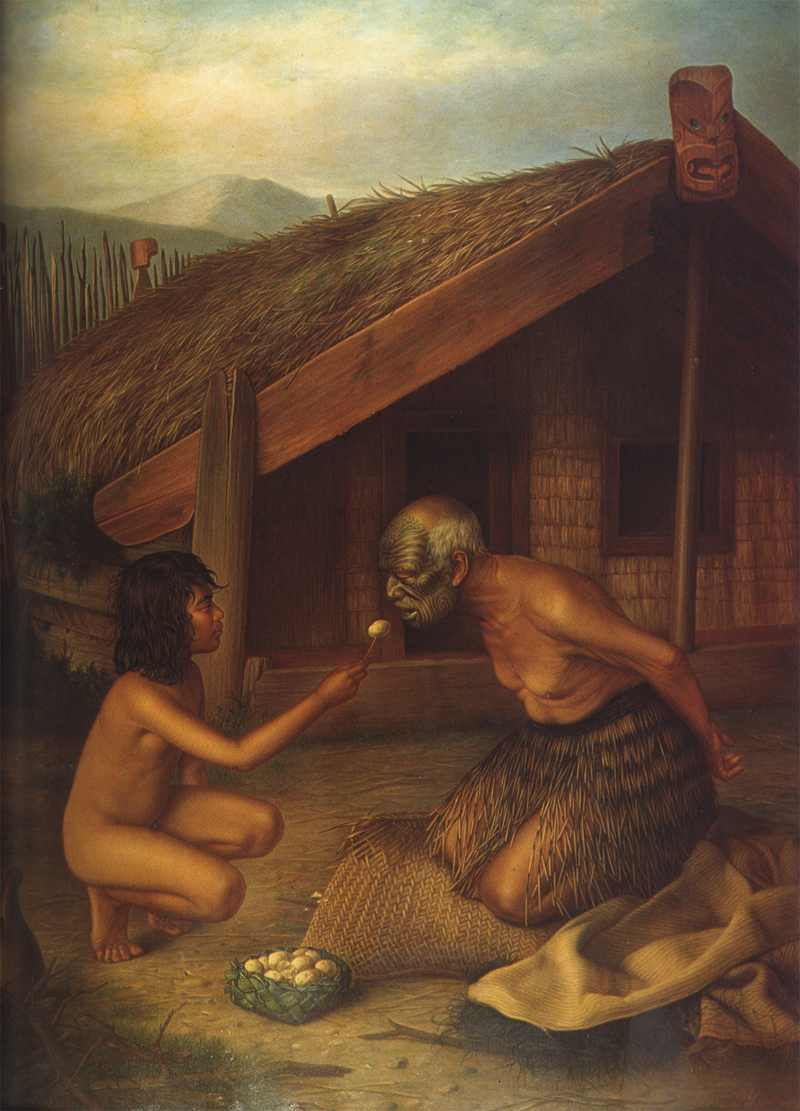 🇳🇿 New ZealandTohunga
A Māori expert practitioner of sacred or secular arts, from priests to carvers.Tradition · Healing · Seeing and foretelling Living
🇳🇿 New ZealandTohunga
A Māori expert practitioner of sacred or secular arts, from priests to carvers.Tradition · Healing · Seeing and foretelling Living
Related elsewhere
All tradition 🇮🇳 IndiaChakraचक्र
Meditation points in the subtle body used in Hindu and Buddhist yogaTradition · Speaking with spirits and the dead · Change and initiation Living
🇮🇳 IndiaChakraचक्र
Meditation points in the subtle body used in Hindu and Buddhist yogaTradition · Speaking with spirits and the dead · Change and initiation Living
 🇮🇳 India and 2 moreHomaहोम
A fire ritual found across Asian religions where offerings are burned as a votive exchange with the divine.Rite · Protection · Speaking with spirits and the dead Living
🇮🇳 India and 2 moreHomaहोम
A fire ritual found across Asian religions where offerings are burned as a votive exchange with the divine.Rite · Protection · Speaking with spirits and the dead Living
 🇵🇸 Palestine and 1 moreRachel's TombQever Raḥel; Qabr Rāḥīl
A shared holy site near Bethlehem revered by Jews, Christians, and MuslimsTradition · Speaking with spirits and the dead · Protection Living
🇵🇸 Palestine and 1 moreRachel's TombQever Raḥel; Qabr Rāḥīl
A shared holy site near Bethlehem revered by Jews, Christians, and MuslimsTradition · Speaking with spirits and the dead · Protection Living
 🇳🇬 NigeriaOrunmilaỌ̀rúnmìlà
Yoruba deity of wisdom and the creator of the Ifá divination systemBeing · Seeing and foretelling · Speaking with spirits and the dead Living
🇳🇬 NigeriaOrunmilaỌ̀rúnmìlà
Yoruba deity of wisdom and the creator of the Ifá divination systemBeing · Seeing and foretelling · Speaking with spirits and the dead Living