Scholars and sceptics
Anthropologists, historians and investigators who study magic and test its claims.
Scholars and sceptics are the people who study magic from outside the practice: anthropologists, historians, folklorists, psychologists, scholars of religion and investigators who test claims. They have names such as E. E. Evans-Pritchard, Marcel Mauss, Bronislaw Malinowski, Mary Douglas, Keith Thomas and Carlo Ginzburg, and also investigators such as James Randi. This page covers what they have found, how they disagree, and what their work has cost and changed. Their work has changed how the whole subject is understood.
Early theories
Nineteenth-century writers such as James Frazer treated magic as a mistaken early science, a view now widely rejected as arrogant and inaccurate. Later anthropologists, including Evans-Pritchard in his 1937 study of the Azande, showed that magical belief can be a consistent way of reasoning about misfortune. Mauss and Malinowski stressed its social role. Fieldwork, archives, laboratory studies and surveys are their main methods, and each field has its own debates and schools.
The history of witch trials
Historians have revised their view of the witch trials. Keith Thomas and Alan Macfarlane studied English village accusations, Carlo Ginzburg found the benandanti in Friuli, and Ronald Hutton has argued about the numbers and causes, and Silvia Federici links the persecution to the rise of capitalism, a thesis historians dispute. The older figure of nine million victims has been dropped, and estimates now run to tens of thousands of executions.
Testing claims
Sceptics test whether claims hold up. James Randi offered a prize for evidence of paranormal power that was never won, and organisations such as the Committee for Skeptical Inquiry investigate fraud. Researchers study why people believe: pattern-seeking, uncertainty and the wish to control events. The best sceptics aim to understand people, not to mock them. Sceptics hold that claims should be tested, and they have a long record of exposing cases such as spirit photography and fake healers.
Ethics of study
Scholars were often colonial officials or missionaries, and their reports shaped how Indigenous religions were named. Contemporary researchers work with communities, ask consent and respect closed knowledge. Practitioners sometimes object to being explained, and sceptics sometimes to being called closed-minded. The conversation continues, and this guide aims to stay neutral on whether magic works. Their critics reply that science cannot measure everything that matters to a community, and that explaining a ritual away is not the same as understanding it.
Scholars and sceptics on EveryJaadu
The entries written up so far, best known first.
 🇮🇶 Iraq and 1 moreRabisu
A wind spirit in Akkadian myth sent to correct human transgressionsBeing · Cursing and harm · Cleansing and purification Historical
🇮🇶 Iraq and 1 moreRabisu
A wind spirit in Akkadian myth sent to correct human transgressionsBeing · Cursing and harm · Cleansing and purification Historical
 🇮🇱 Israel and 2 moreLeviathanלִוְיָתָן (Livyaṯān)
A primordial sea monster from ancient Near Eastern myth and biblical textBeing · Cursing and harm · Power and authority Historical
🇮🇱 Israel and 2 moreLeviathanלִוְיָתָן (Livyaṯān)
A primordial sea monster from ancient Near Eastern myth and biblical textBeing · Cursing and harm · Power and authority Historical
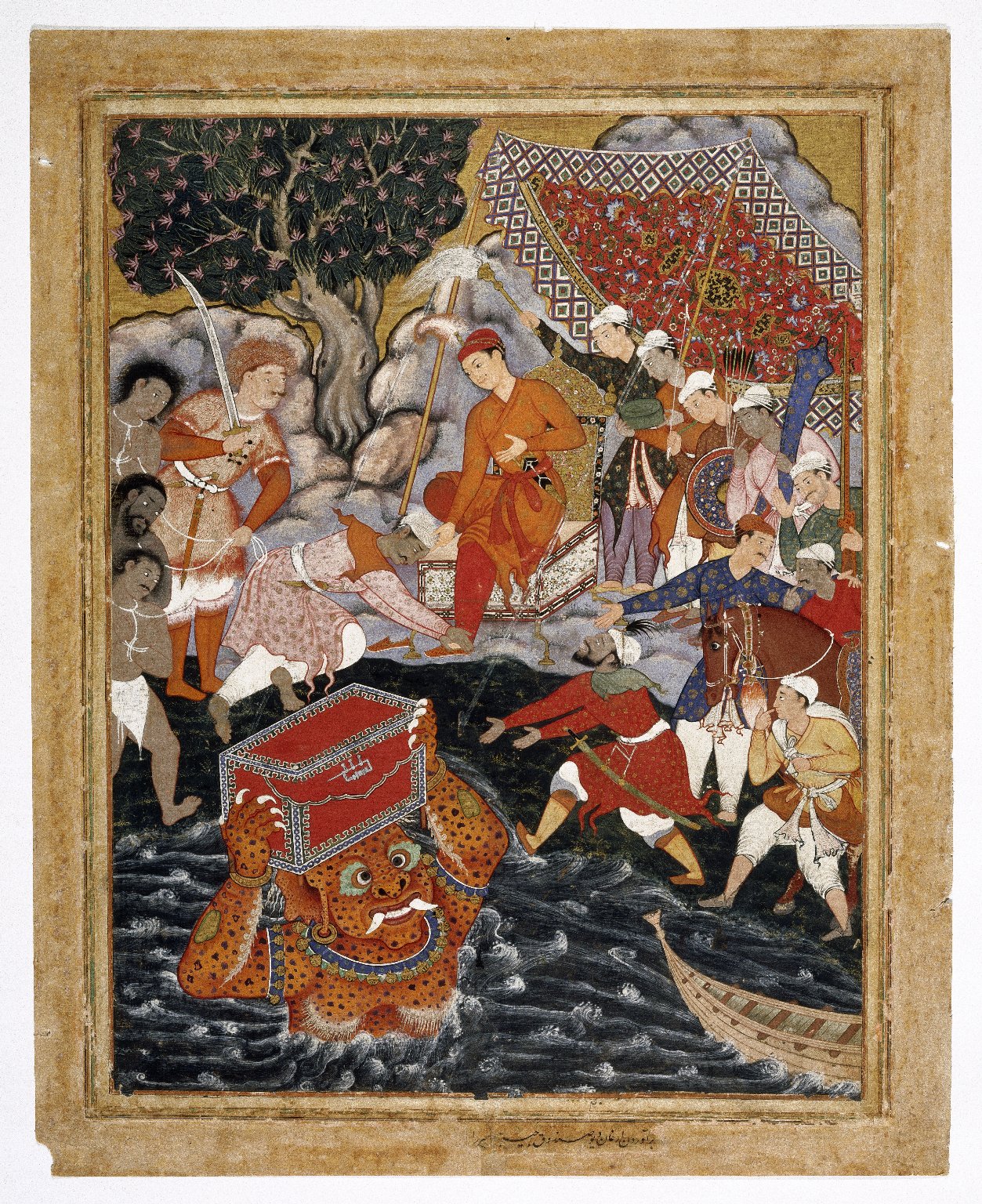 🇪🇬 Egypt and 3 moreIfritعفريت
A class of powerful chthonic spirits in Islamic tradition and folkloreBeing · Cursing and harm · Power and authority Historical
🇪🇬 Egypt and 3 moreIfritعفريت
A class of powerful chthonic spirits in Islamic tradition and folkloreBeing · Cursing and harm · Power and authority Historical
 🇮🇷 Iran and 3 moreDaeva𐬛𐬀𐬉𐬎𐬎𐬀
A Zoroastrian entity that evolved from rejected gods to personifications of evil.Being · Cursing and harm · Power and authority Historical
🇮🇷 Iran and 3 moreDaeva𐬛𐬀𐬉𐬎𐬎𐬀
A Zoroastrian entity that evolved from rejected gods to personifications of evil.Being · Cursing and harm · Power and authority Historical
 🇪🇬 Egypt and 1 moreQareenقرين
A spiritual companion or double assigned to every human in Islamic beliefBeing · Cursing and harm · Power and authority Living
🇸🇾 SyriaLilulilû (Akkadian), lilu (Sumerian)
A class of Mesopotamian spirits linked to unfulfilled lives and illnessBeing · Cursing and harm · Healing Historical
🇪🇬 Egypt and 1 moreQareenقرين
A spiritual companion or double assigned to every human in Islamic beliefBeing · Cursing and harm · Power and authority Living
🇸🇾 SyriaLilulilû (Akkadian), lilu (Sumerian)
A class of Mesopotamian spirits linked to unfulfilled lives and illnessBeing · Cursing and harm · Healing Historical
 🇮🇱 Israel and 5 moreAstaroth
An arch-demon in Western occultism, derived from the ancient goddess Astarte.Being · Power and authority · Cursing and harm Historical
🇹🇷 Turkey and 4 moreAl BastyAlbastı
A female spirit of guilt and childbirth found in Turkic and Caucasian folkloreBeing · Cursing and harm Historical
🇮🇱 Israel and 5 moreAstaroth
An arch-demon in Western occultism, derived from the ancient goddess Astarte.Being · Power and authority · Cursing and harm Historical
🇹🇷 Turkey and 4 moreAl BastyAlbastı
A female spirit of guilt and childbirth found in Turkic and Caucasian folkloreBeing · Cursing and harm Historical
 🇪🇬 Egypt and 2 moreAbyzou
A female demon of envy who targets newborns and pregnant women in late antique magic.Being · Cursing and harm · Protection Historical
🇮🇱 IsraelAgrat bat Mahlatאגרת בת מחלת
A demon in Jewish tradition who rules over destructive spirits and night hours.Being · Cursing and harm Historical
🇪🇬 Egypt and 1 moreMahalathמָחֲלַת
A queen of demons in Jewish mysticism and the mother of AgratBeing · Cursing and harm Historical
🇮🇱 Israel and 1 moreSe'irimשעירים
Demons of Hebrew tradition linked to wild goats and ruined placesBeing · Cursing and harm Historical
🇮🇱 IsraelQlippothקְלִיפּוֹת
Impure spiritual forces in Jewish mysticism, opposites of the holy sefirotBeing · Cursing and harm Historical
🇪🇬 EgyptEn-Naddahaالنداهة
A water spirit of the Nile who lures men to their doom with a hypnotic callBeing · Cursing and harm Fading
🇪🇬 Egypt and 2 moreAbyzou
A female demon of envy who targets newborns and pregnant women in late antique magic.Being · Cursing and harm · Protection Historical
🇮🇱 IsraelAgrat bat Mahlatאגרת בת מחלת
A demon in Jewish tradition who rules over destructive spirits and night hours.Being · Cursing and harm Historical
🇪🇬 Egypt and 1 moreMahalathמָחֲלַת
A queen of demons in Jewish mysticism and the mother of AgratBeing · Cursing and harm Historical
🇮🇱 Israel and 1 moreSe'irimשעירים
Demons of Hebrew tradition linked to wild goats and ruined placesBeing · Cursing and harm Historical
🇮🇱 IsraelQlippothקְלִיפּוֹת
Impure spiritual forces in Jewish mysticism, opposites of the holy sefirotBeing · Cursing and harm Historical
🇪🇬 EgyptEn-Naddahaالنداهة
A water spirit of the Nile who lures men to their doom with a hypnotic callBeing · Cursing and harm Fading
Photo credits on this page
The small pictures above come from Wikimedia Commons under free licences. Some are cropped to fit.
- Qareen: عامر شاہین, CC BY-SA 3.0, source
- Rabisu: editor Austen Henry Layard , drawing by L. Gruner, Public domain, source
- Div: Unknown Calligrapher, Public domain, source
- Ifrit: Unknown author, Public domain, source
- Astaroth: M. Jarrault, Public domain, source
- Abyzou: Paul Perdirizet (1870-4 juin 1938), Public domain, source
- Leviathan: Gustave Doré, Public domain, source