Speaking with spirits and the dead
Mediumship, ancestor rites, possession and the offerings made to the unseen.
Speaking with spirits and the dead is the aim of mediumship, ancestor rites, possession and necromancy. It runs from the spirit mediums of Korea and Brazil to Vodou possession, Chinese ancestor offerings, the Mexican Day of the Dead, Victorian spiritualism and the Witch of Endor of the Bible. It is a central practice in some living religions and a frequent target of fraud in others. This page covers who speaks to the dead and how they are judged.
Ways of contact
Methods differ. In possession, a spirit or deity is said to speak through the body of a medium, as in Vodou, Candomblé, Haitian and Brazilian rites, and in Korean gut. In trance or dream, a shaman travels to the spirit world. In offerings and festivals, families feed and talk to ancestors, as in the Hungry Ghost month in China and the ofrenda in Mexico. Spiritualism added the seance and the table-rapping of the 1840s.
Who may
In many societies, women lead: Korean mudang, Okinawan yuta, Brazilian mães de santo and the Western spiritualist mediums of the nineteenth century, who found in mediumship a public role denied elsewhere. Elsewhere, the role is for elders and ancestors' descendants. Some traditions require initiation, and some say contact with the dead is not for outsiders to attempt. Spirits and ancestors are not always friendly: mediums report angry, hungry or lost beings, and rites exist for settling them, such as offerings for neglected ancestors in China and Vietnam.
Authority and fear
Religions disagree. Christianity, Judaism and Islam each forbid certain contact with the dead while honouring prayer for them. Spiritist movements around Kardec in Brazil and France treat communication as a doctrine. Colonial authorities banned possession cults in many places, often labelling them devil worship, and some Pentecostal churches today condemn them in the same terms. The rites are widely found in Africa too, where ancestors are consulted at the family shrine and are held to watch over the living.
Fraud, grief and study
Grieving people are vulnerable. Fraudulent mediums, from the Fox sisters, who confessed in 1888, to modern cold readers, have taken money by exploiting loss. Researchers point to cold reading and to the ideomotor effect behind the Ouija board. Many bereaved people also report real comfort from rites that keep a bond with the dead, and counsellors acknowledge that continuing bonds are common. Doctors and psychologists note that a grief reaction can include hearing or sensing the dead, which is common and not in itself a sign of illness.
Speaking with spirits and the dead on EveryJaadu
The entries written up so far, best known first.
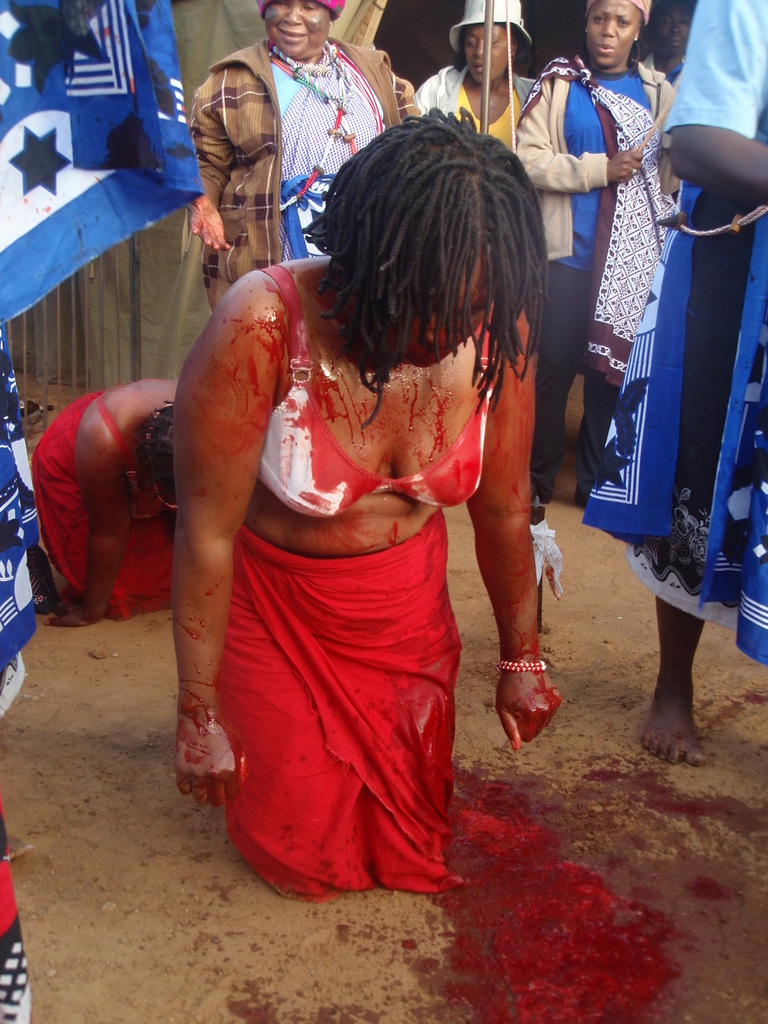 🇿🇦 South AfricaUkuthwasa
A Southern African spiritual calling and initiation for traditional healersRite · Healing · Speaking with spirits and the dead Living
 🇪🇹 Ethiopia and 5 moreZārزار (Arabic), ዛር (Ge'ez)
A spirit possession tradition and healing ritual in the Horn of Africa and Middle EastTradition · Healing · Speaking with spirits and the dead Living
 🇮🇳 India and 5 moreSpirit possession
A state where a human body is controlled by an external spirit or deityBelief · Healing · Seeing and foretelling Living
 🇸🇦 Saudi Arabia and 1 moreDhikrذِكْر
Islamic remembrance of God through repeated recitation and prayerRite · Speaking with spirits and the dead · Power and authority Living
 🇲🇳 Mongolia and 2 moreMongolian shamanismBöö Mörgöl
The animistic and shamanic ethnic religion of the Mongols, involving spirit worship and ritual intercession.Tradition · Protection · Healing Living
 🇺🇸 United StatesGhost DanceNanissaanah
A circular movement seeking spiritual renewal and reunion with ancestorsRite · Speaking with spirits and the dead · Change and initiation Living
 🇳🇬 Nigeria and 1 moreBoriBòòríí
A traditional Hausa spirit possession system and healing practice in West AfricaTradition · Healing · Protection Living
 🇺🇸 United StatesRing shout
A sacred circle dance of African American origin using rhythmic movement and call-and-response singingRite · Speaking with spirits and the dead · Power and authority Living
 🇮🇳 India and 2 moreYantraयन्त्र
A geometric diagram from Indian traditions used for worship and meditationCharm · Protection · Speaking with spirits and the dead Living
 🇨🇭 SwitzerlandMagic circle
A ritual boundary drawn or visualised to create sacred space and protectionTradition · Protection · Speaking with spirits and the dead Living
 🇨🇱 Chile and 1 moreMachi
Mapuche spiritual authorities and healers who bridge herbal knowledge and spirit realmsTradition · Healing · Speaking with spirits and the dead Living
 🇺🇸 United States and 3 moreSandpainting
A ritual art of pouring colored sand to create temporary images for healing or spiritual teachingTradition · Healing · Speaking with spirits and the dead Living
 🇫🇷 France and 1 moreLaying on of handsסמיכה
A physical gesture used across religions to convey authority, healing, or spiritual presence.Rite · Healing · Power and authority Living
🇯🇵 Japan and 1 moreKuji-in九字印
A system of nine syllables and hand gestures used for protection and spiritual alignment in Japanese esoteric traditionsRite · Protection · Speaking with spirits and the dead Historical
🇯🇵 JapanKitsunetsuki狐憑き
A Japanese folk belief in which a fox spirit enters and controls a human host.Belief · Cursing and harm · Speaking with spirits and the dead Historical
 🇮🇪 Ireland and 1 moreKeeningcaoineadh
A Gaelic vocal lament for the dead, performed by hired mourners in Ireland and ScotlandRite · Speaking with spirits and the dead Historical
🇷🇴 RomaniaTanacu exorcism
A 2005 Romanian Orthodox ritual that ended in a nun's death and a murder convictionRite · Speaking with spirits and the dead · Cursing and harm Historical
 🇮🇳 IndiaShamanism in Ayyavazhi
A divination practice within the Hindu denomination of Ayyavazhi in South India.Rite · Seeing and foretelling · Speaking with spirits and the dead Living
Photo credits on this page
The small pictures above come from Wikimedia Commons under free licences. Some are cropped to fit.
- Shamanism in Ayyavazhi: Vaikunda Raja, CC BY-SA 3.0, source
- Zār: Emad Nemati, CC BY-SA 4.0, source
- Spirit possession: Unknown author, CC BY 4.0, source
- Dhikr: Eugène Baugnies, Public domain, source
- Mongolian shamanism: Enrique Bendicho, CC BY-SA 4.0, source
- Ghost Dance: Unknown author, Public domain, source
- Bori: Tremearne, A. J. N. (Arthur John Newman), 1877-1915, Public domain, source
- Ring shout: Attributed to John Rose, Public domain, source
- Keening: W.H. Brooke, Public domain, source
- Sandpainting: Mnolf, CC BY-SA 3.0, source
- Laying on of hands: User:Lipsio, CC BY 3.0, source
- Witch: John William Waterhouse, Public domain, source
- Yantra: Photo by Daniel Conrad (Chromacon), artwork by Daniel Conrad under dir, Public domain, source
- Machi: Unknown author, Public domain, source
- Ukuthwasa: Mycelium101, CC BY-SA 3.0, source