🇿🇦 Magic in South Africa
34 entries from South Africa, best known first, across 18 places of magic.
Rooted in Bantu cosmology, folk healing in Southern Africa centres on ancestral spirits who guide the living and influence daily life. Practitioners blend spiritual mediation with botanical remedies to restore balance after illness or social conflict. This tradition operates alongside modern clinical medicine, with most communities consulting both systems to maintain harmony between the visible and invisible worlds.
- Sangomas focus on divination while inyanga specialize in plant medicines.
- About two hundred thousand traditional healers practice in South Africa.
- Bone throwing reveals ancestral messages to diagnose patient afflictions.
- Burning dried leaves helps summon spirits during healing ceremonies.
- Muthi combines botanical extracts with animal fats and mineral compounds.
Overview
The practice spans Nguni, Sotho, and Tsonga communities across the region. Healing rests on a worldview where sickness stems from broken relationships with departed relatives, contact with unclean objects, or hidden malice. Practitioners act as mediators who negotiate peace between human patients and restless spirits. Historical shifts like urban migration and colonial rule have merged once separate skills into a single profession. Today the approach shares core ideas with neighbouring Bantu groups, emphasising communal wellbeing over individual cure.
Practices and beliefs
Healers employ bone casting, dream analysis, and trance states to locate the source of trouble. They prepare muthi, a term meaning tree, using thousands of local plants mixed with animal fats or minerals. Some remedies carry symbolic weight, such as lion fat given to youth for bravery. Purification methods include herbal baths, steam inhalation, controlled vomiting, nasal powders, and skin applications. Divination tools range from vertebrae and shells to coins and dice, each pattern read as a message from the spirit realm.
Rites and charms
Sessions begin inside a sacred hut or a small portable shrine where offerings are made. Healers burn dried leaves to call upon elders, then dance and chant until entering a focused state. Animal slaughter may follow to show gratitude and settle debts with the dead. Patients fast or abstain from certain activities before receiving treatment. The healer throws marked stones or bones across the floor, reads their arrangement, and prescribes a path forward based on the interpreted symbols.
Who practises
Both men and women take up the role after experiencing a prolonged illness that signals a spiritual summons. Trainees undergo a lengthy learning period under experienced mentors. Communities hold them in high esteem, viewing them as essential guides for birth, death, and social disputes. Outsiders sometimes mistake early training symptoms for mental illness, though insiders recognise the calling as a distinct cultural path. The profession remains large, with hundreds of thousands active across the country.
Regions and communities
Local languages shape the titles used for specialists. Xhosa speakers distinguish between plant gatherers and bone casters, while Sotho and Venda groups use different native words for the same roles. Tsonga communities apply similar dual terms. Geographic boundaries once kept these traditions separate, but city life and cross-cultural marriage have blended them. Modern practitioners routinely switch between herbal dispensing and spiritual consultation regardless of their regional origin.
Today
Roughly two hundred thousand specialists serve the public, working alongside licensed clinics. Most residents visit them for physical complaints, emotional stress, or family disputes, often combining their advice with hospital care. Urban growth and changing social structures have streamlined older divisions, allowing one healer to manage both medical and ceremonial duties. The trade continues to adapt without losing its foundational focus on ancestral communication.
The facts in this overview come from the Wikipedia article "Traditional healers of Southern Africa", written by its contributors and used under the CC BY-SA 4.0 licence. EveryJaadu rewrote the text in its own words, with AI assistance, and compares every page with the article to make sure no passage is copied. It may be reused under the same CC BY-SA 4.0 licence with a link back.
 🇨🇩 Democratic Republic of the Congo and 4 moreNganga
A spiritual healer and ritual specialist in Kongo religion and its diaspora traditionsTradition · Healing · Seeing and foretelling Living
 🇮🇳 India and 5 moreHeliotrope
A green and red mineral aggregate known as bloodstone and used in amuletsSubstance · Protection · Healing Historical
 🇿🇦 South Africa and 4 moreWitch doctor
A traditional healer who identifies supernatural causes of illness and performs rituals to restore balance.Tradition · Healing · Protection Living
 🇿🇦 South Africa and 5 moreTraditional healers of Southern Africa
Practitioners who blend herbal medicine with ancestral divination in Southern AfricaTradition · Healing · Protection Living
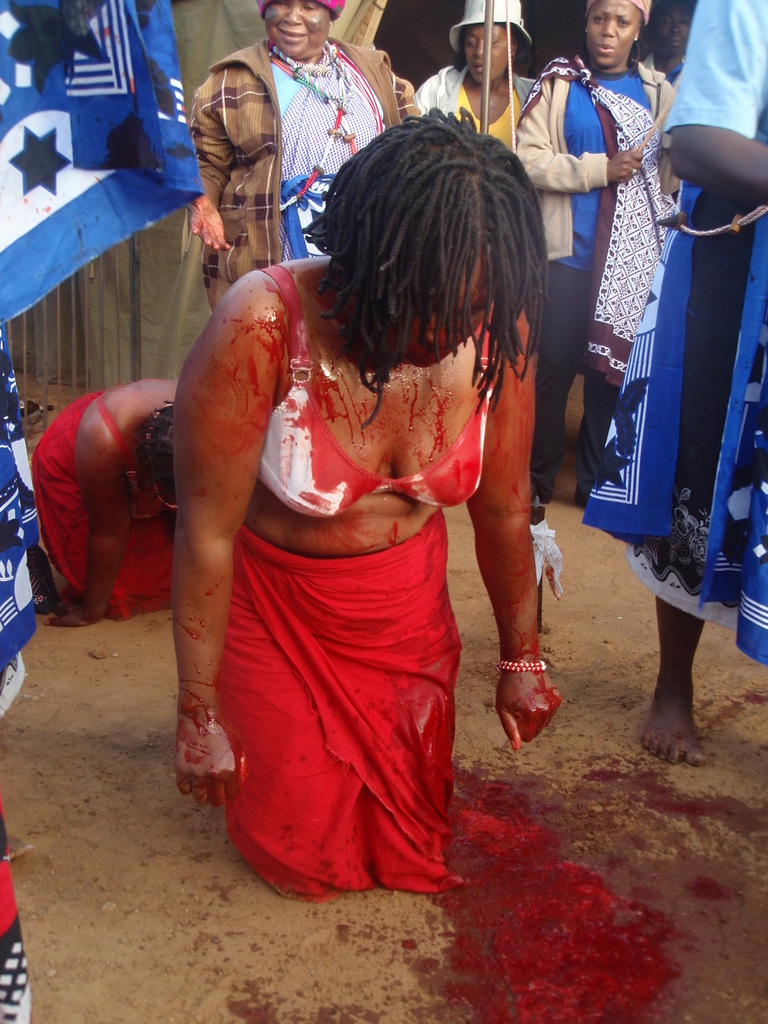 🇿🇦 South AfricaUkuthwasa
A Southern African spiritual calling and initiation for traditional healersRite · Healing · Speaking with spirits and the dead Living
 🇮🇱 Israel and 5 moreChild sacrifice
The ritual killing of children to appease deities or supernatural forcesRite · Cursing and harm · Speaking with spirits and the dead Historical
 🇺🇸 United States and 5 moreSpiritualist church
A worship service led by a medium to communicate with the deceasedTradition · Speaking with spirits and the dead · Healing Living
 🇿🇦 South Africa and 1 moreSacred caves of the Basotho
Cave networks in South Africa and Lesotho used by the Basotho for ancestral rituals and healingTradition · Healing · Protection Living
🇿🇦 South AfricaAmadlozi
Ancestors of the Nguni people who guide and protect their descendantsBeing · Protection · Speaking with spirits and the dead Living
 🇿🇦 South AfricaDivination bonesditaola (Sotho-Tswana), amathambo (isiZulu)
Bones and carved objects used by traditional healers in South Africa to foresee the futureSeeing and foretelling · Speaking with spirits and the dead Living
Photo credits on this page
The small pictures above come from Wikimedia Commons under free licences. Some are cropped to fit.
- Witch doctor: Lucjan Wędrychowski, Public domain, source
- Simbi: MiddleOfAfrica, CC BY-SA 4.0, source
- Sacred caves of the Basotho: JMK, CC BY-SA 3.0, source
- Divination bones: Mycelium101, CC BY-SA 3.0, source
- Spiritualist church: Jim.henderson, CC0, source
- Heliotrope: Ra'ike (see also: de:Benutzer:Ra'ike ), CC BY-SA 3.0, source
- Ukuthwasa: Mycelium101, CC BY-SA 3.0, source
- Child sacrifice: Julius Schnorr von Carolsfeld, Public domain, source
The weekly digest
Every Monday: seven entries you may not know, what is on the calendar this week, and one rite drawn step by step.