🇷🇺 Magic in Russia
115 entries from Russia, best known first, across 15 places of magic.
Shamanism in Siberia is a diverse set of practices among indigenous groups, often blending with Islam or Buddhism. It centers on spirit journeys and healing, with distinct traditions among Uralic, Samoyedic, Turkic, and Tungusic peoples.
- Female shaman terms share a root linked to the hearth goddess Etügen.
- Nganasan shamans used three different crowns for different spiritual realms.
- Shamanic songs mimic animal sounds like birds, wolves, and polar bears.
- Skeleton-like dress overlays symbolize shamanic rebirth in several cultures.
- The word 'shaman' derives from Proto-Turkic *bögü via Evenk.
Overview
Siberia is considered the heartland of shamanism, where many ethnic groups maintain these religio-cultural practices today. The tradition is highly diverse, shaped by linguistic families like Uralic, Samoyedic, Turkic, and Tungusic. While some groups have adopted Islam or Buddhism, core elements remain. The practice involves communicating with spirits for healing and guidance. Female shamans are prominent, with linguistic roots suggesting women may have practiced first. The tradition shares features with neighboring cultures, such as the Sami joiks, but retains unique local characteristics in music, dress, and ritual objects.
Practices and beliefs
Shamans undertake spirit journeys to rescue lost souls, reenacting dreams from their training. Healing séances involve mimicking natural sounds, such as bird calls or reindeer noises, to invoke helping spirits. Music includes overtone singing and songs that imitate animals like wolves or polar bears. Divination and contact with upper, lower, or dead worlds are common functions. Specific tools include drums with two transoms and headdresses adorned with effigies of human organs or bones, symbolizing rebirth. Songs often contain magical spell-like mumbling styles.
Rites and charms
Rites include clean tent ceremonies held after the polar night, involving sacrifices. Initiating songs describe the shaman's transformation, mentioning details like a dress with seven vertebrae. Seances are accompanied by women imitating animal sounds to provide fertility or aid the shaman's journey. Shamans wear specific crowns for different realms: upper world, underworld, or childbirth. Rituals often involve transforming into helper animals, such as a polar bear, through sound mimesis and costume.
Who practises
Practitioners include male shamans (böö, saman) and female shamans (udagan), with the latter term sharing a root across many languages. Types of shamans vary by function: those contacting the upper world, the underworld, or the dead. Healers, diviners, and sacral rite specialists are distinguished. Some shamans are chosen through dreams or illness. Historical records note notable figures like Dyukhade Kosterkin. In some groups, like the Ket, shamans are associated with specific helper animals like deer or bears.
Regions and communities
Practices differ by linguistic group. Uralic speakers like the Khanty and Mansi show remnants, while Samoyedic groups like the Nganasans and Nenets maintained living traditions longer. Turkic peoples in Altai and Tuva blend shamanism with Islam or Buddhism. Tungusic groups have their own folklore, such as the Tale of the Nisan Shaman. Regional variations exist in drum structure, headdress design, and the influence of neighboring cultures like Buryat or Abakan-Turkic peoples.
The calendar
Specific rites are tied to seasons, such as the clean tent ceremony after the polar night. Childbirth occasions require specific ceremonial crowns. Life events like death and resurrection are addressed through shamanic intervention. Festivals are not explicitly detailed, but seasonal transitions and community needs drive the timing of seances and sacrifices.
Law and the state
The text does not provide information on legal status, persecution, or state treatment of shamanism in Siberia.
Today
Shamanism persists among indigenous groups, though it has declined in some areas. The last Nganasan seances were recorded in the 1970s. Folklore memories were collected in the 1960s. Some languages, like Kamassian, are extinct, affecting cultural transmission. Modern practitioners maintain traditions, while scholars study historical records and folklore to understand the belief system.
The facts in this overview come from the Wikipedia article "Shamanism in Siberia", written by its contributors and used under the CC BY-SA 4.0 licence. EveryJaadu rewrote the text in its own words, with AI assistance, and compares every page with the article to make sure no passage is copied. It may be reused under the same CC BY-SA 4.0 licence with a link back.
 🇷🇸 Serbia and 5 moreVampire
An undead creature from folklore that feeds on the blood or life force of the livingBeing · Cursing and harm · Luck and prosperity Legendary
🇷🇸 Serbia and 5 moreVampire
An undead creature from folklore that feeds on the blood or life force of the livingBeing · Cursing and harm · Luck and prosperity Legendary
 🇷🇺 Russia and 3 moreFirebird
A glowing bird of Slavic folklore that brings both fortune and peril to those who seek itFigure · Wonder and entertainment · Luck and prosperity Legendary
🇷🇺 Russia and 3 moreFirebird
A glowing bird of Slavic folklore that brings both fortune and peril to those who seek itFigure · Wonder and entertainment · Luck and prosperity Legendary
 🇪🇬 Egypt and 1 moreBehemothבְּהֵמוֹת
A primeval land-monster from the Book of Job and later Jewish legendBeing · Power and authority Legendary
🇪🇬 Egypt and 1 moreBehemothבְּהֵמוֹת
A primeval land-monster from the Book of Job and later Jewish legendBeing · Power and authority Legendary
 🇷🇺 Russia and 1 moreLikhoЛихо
A Slavic spirit of bad luck and misfortune, often depicted as a one-eyed creature.Being · Cursing and harm Legendary
🇷🇺 Russia and 1 moreLikhoЛихо
A Slavic spirit of bad luck and misfortune, often depicted as a one-eyed creature.Being · Cursing and harm Legendary
 🇷🇺 Russia and 3 moreLeshyлеший
A forest spirit from Slavic folklore who guards the woods and misleads travelers.Being · Protection · Cursing and harm Legendary
🇷🇺 Russia and 3 moreLeshyлеший
A forest spirit from Slavic folklore who guards the woods and misleads travelers.Being · Protection · Cursing and harm Legendary
 🇭🇷 Croatia and 5 moreVilavila (Serbian: вила), víla (Bulgarian: ви́ла)
Slavic nature spirits known for healing, storms, and deadly dancesBeing · Protection · Cursing and harm Legendary
🇭🇷 Croatia and 5 moreVilavila (Serbian: вила), víla (Bulgarian: ви́ла)
Slavic nature spirits known for healing, storms, and deadly dancesBeing · Protection · Cursing and harm Legendary
 🇷🇺 Russia and 3 moreVodyanoyводяной
A water spirit of Slavic folklore that dwells in rivers and lakesBeing · Cursing and harm · Luck and prosperity Legendary
🇷🇺 Russia and 3 moreVodyanoyводяной
A water spirit of Slavic folklore that dwells in rivers and lakesBeing · Cursing and harm · Luck and prosperity Legendary
 🇨🇿 Czech Republic and 4 moreGolemגּוֹלֶם
An animated clay figure from Jewish folklore created to serve or protectBeing · Protection · Power and authority Legendary
🇨🇿 Czech Republic and 4 moreGolemגּוֹלֶם
An animated clay figure from Jewish folklore created to serve or protectBeing · Protection · Power and authority Legendary
 🇷🇺 Russia and 4 moreRusalkaрусалка
A water spirit of Slavic folklore, often linked to drowned women and seasonal ritesBeing · Cursing and harm · Luck and prosperity Legendary
🇷🇺 Russia and 4 moreRusalkaрусалка
A water spirit of Slavic folklore, often linked to drowned women and seasonal ritesBeing · Cursing and harm · Luck and prosperity Legendary
 🇷🇺 Russia and 4 moreBaba Yaga
A complex Slavic witch figure who lives in a moving hut and flies in a mortar.Figure · Cursing and harm · Protection Legendary
🇷🇺 Russia and 4 moreBaba Yaga
A complex Slavic witch figure who lives in a moving hut and flies in a mortar.Figure · Cursing and harm · Protection Legendary
 🇷🇺 RussiaKikimoraКикимора
A female house spirit in Slavic folklore that reflects the state of a home.Being · Cursing and harm · Protection Legendary
🇺🇦 Ukraine and 1 moreVedmakвядзьмак
A Slavic male warlock or witch with shamanic roots and shape-shifting powersBeing · Healing · Cursing and harm Legendary
🇵🇱 Poland and 1 moreDydko
A Polish folk creature evolved from a Slavic house demon into a night-time scarecrow.Being · Cursing and harm Legendary
🇷🇺 RussiaKikimoraКикимора
A female house spirit in Slavic folklore that reflects the state of a home.Being · Cursing and harm · Protection Legendary
🇺🇦 Ukraine and 1 moreVedmakвядзьмак
A Slavic male warlock or witch with shamanic roots and shape-shifting powersBeing · Healing · Cursing and harm Legendary
🇵🇱 Poland and 1 moreDydko
A Polish folk creature evolved from a Slavic house demon into a night-time scarecrow.Being · Cursing and harm Legendary
 🇷🇺 Russia and 1 moreVegetable Lamb of Tartary
A legendary plant-animal from Central Asia said to grow sheep as fruitFigure · Wonder and entertainment Legendary
🇷🇺 Russia and 1 moreVegetable Lamb of Tartary
A legendary plant-animal from Central Asia said to grow sheep as fruitFigure · Wonder and entertainment Legendary
 🇷🇺 RussiaGolden apple
A mythical fruit that sparks quests, wars, and linguistic confusion across culturesFigure · Cursing and harm · Luck and prosperity Legendary
🇷🇺 RussiaIndrikИндрик-зверь
A legendary Russian beast said to rule all animals from a sacred mountainBeing · Wonder and entertainment Legendary
🇷🇺 RussiaGolden apple
A mythical fruit that sparks quests, wars, and linguistic confusion across culturesFigure · Cursing and harm · Luck and prosperity Legendary
🇷🇺 RussiaIndrikИндрик-зверь
A legendary Russian beast said to rule all animals from a sacred mountainBeing · Wonder and entertainment Legendary
 🇷🇺 Russia and 1 moreBabayБабай
A night spirit in Slavic folklore used to frighten children into sleepingFigure · Cursing and harm Legendary
🇷🇺 Russia and 4 moreIriyВырай
A mythical Slavic realm where souls and birds gather for the winterBelief · Speaking with spirits and the dead Legendary
🇷🇴 Romania and 2 moreZmeu
A humanoid dragon from Romanian folklore that kidnaps maidens and steals treasures.Being · Cursing and harm · Love and attraction Legendary
🇷🇺 Russia and 1 moreBabayБабай
A night spirit in Slavic folklore used to frighten children into sleepingFigure · Cursing and harm Legendary
🇷🇺 Russia and 4 moreIriyВырай
A mythical Slavic realm where souls and birds gather for the winterBelief · Speaking with spirits and the dead Legendary
🇷🇴 Romania and 2 moreZmeu
A humanoid dragon from Romanian folklore that kidnaps maidens and steals treasures.Being · Cursing and harm · Love and attraction Legendary
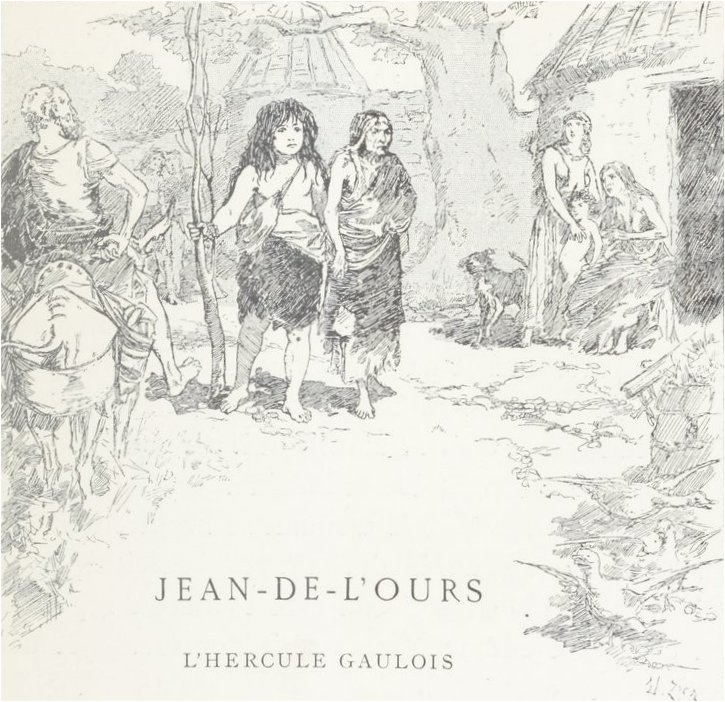 🇫🇷 France and 4 moreJean de l'Ours
A half-bear folk hero who rescues princesses from an underworld giant.Figure · Power and authority Legendary
🇷🇺 RussiaShishigaшишига
A female swamp spirit of Russian and Komi folklore that brings misfortune and death.Being · Cursing and harm Legendary
🇷🇺 RussiaMoryanaМоря́на
A female sea spirit in Slavic folklore who controls winds and calms stormsBeing · Power and authority Legendary
🇷🇺 Russia and 1 moreLikhoradkaЛихорадка
A fever spirit in Slavic myth who brings illness and sicknessBeing · Cursing and harm Legendary
🇷🇺 RussiaPitsen
A shapeshifting forest spirit of the Siberian Tatars that brings luck or leads travelers astrayBeing · Luck and prosperity · Cursing and harm Legendary
🇷🇺 Russia and 1 moreChuvash dragonВӗрӗҫӗлен
A mythological serpent from Chuvash legends that can fly and breathe fire.Being · Wonder and entertainment Legendary
🇫🇷 France and 4 moreJean de l'Ours
A half-bear folk hero who rescues princesses from an underworld giant.Figure · Power and authority Legendary
🇷🇺 RussiaShishigaшишига
A female swamp spirit of Russian and Komi folklore that brings misfortune and death.Being · Cursing and harm Legendary
🇷🇺 RussiaMoryanaМоря́на
A female sea spirit in Slavic folklore who controls winds and calms stormsBeing · Power and authority Legendary
🇷🇺 Russia and 1 moreLikhoradkaЛихорадка
A fever spirit in Slavic myth who brings illness and sicknessBeing · Cursing and harm Legendary
🇷🇺 RussiaPitsen
A shapeshifting forest spirit of the Siberian Tatars that brings luck or leads travelers astrayBeing · Luck and prosperity · Cursing and harm Legendary
🇷🇺 Russia and 1 moreChuvash dragonВӗрӗҫӗлен
A mythological serpent from Chuvash legends that can fly and breathe fire.Being · Wonder and entertainment Legendary
 🇷🇺 Russia and 2 moreSupernatural beings in Slavic religion
Mythic entities of nature, death, and fate in Slavic folklore and belief.Being · Protection · Cursing and harm Legendary
🇷🇺 RussiaAbzar iyesiAbzar іyesi
A Turkic courtyard spirit that guards farmsteads and livestockBeing · Protection · Power and authority Legendary
🇷🇺 Russia and 2 moreSupernatural beings in Slavic religion
Mythic entities of nature, death, and fate in Slavic folklore and belief.Being · Protection · Cursing and harm Legendary
🇷🇺 RussiaAbzar iyesiAbzar іyesi
A Turkic courtyard spirit that guards farmsteads and livestockBeing · Protection · Power and authority Legendary
 🇨🇳 China and 3 moreSwan maiden
A folk motif where a man steals a bird-woman's feather cloak to force marriage.Figure · Love and attraction · Cursing and harm Legendary
🇨🇳 China and 3 moreSwan maiden
A folk motif where a man steals a bird-woman's feather cloak to force marriage.Figure · Love and attraction · Cursing and harm Legendary
 🇵🇱 Poland and 1 morePan Twardowski
A Polish sorcerer who bargained with the Devil and ended up on the MoonFigure · Power and authority Legendary
🇵🇱 Poland and 1 morePan Twardowski
A Polish sorcerer who bargained with the Devil and ended up on the MoonFigure · Power and authority Legendary
 🇸🇪 Sweden and 4 moreStarkadStarkaðr
A Norse warrior cursed to commit crimes across three lifetimesFigure · Cursing and harm Legendary
🇷🇺 Russia and 1 moreKuma LisaКума Лиса
A trickster fox from Slavic folklore who outwits other animalsFigure · Wonder and entertainment Legendary
🇷🇺 RussiaMeduzaМедуза
A Russian mythic figure with a woman's head and a serpent body, linked to trickery.Being · Cursing and harm Legendary
🇸🇪 Sweden and 4 moreStarkadStarkaðr
A Norse warrior cursed to commit crimes across three lifetimesFigure · Cursing and harm Legendary
🇷🇺 Russia and 1 moreKuma LisaКума Лиса
A trickster fox from Slavic folklore who outwits other animalsFigure · Wonder and entertainment Legendary
🇷🇺 RussiaMeduzaМедуза
A Russian mythic figure with a woman's head and a serpent body, linked to trickery.Being · Cursing and harm Legendary
 🇧🇬 Bulgaria and 1 moreIspolinисполин
A legendary giant from Bulgarian folklore, said to be the second generation of Earth's inhabitants.Figure Legendary
🇬🇱 Greenland and 2 moreThe Goose Wife
A circumpolar myth of a hunter and a woman who sheds her bird skinFigure · Wonder and entertainment Legendary
🇧🇬 Bulgaria and 1 moreIspolinисполин
A legendary giant from Bulgarian folklore, said to be the second generation of Earth's inhabitants.Figure Legendary
🇬🇱 Greenland and 2 moreThe Goose Wife
A circumpolar myth of a hunter and a woman who sheds her bird skinFigure · Wonder and entertainment Legendary
Photo credits on this page
The small pictures above come from Wikimedia Commons under free licences. Some are cropped to fit.
- Golem: user Thander, Public domain, source
- Firebird: Philippe Giabbanelli, CC BY 3.0, source
- Supernatural beings in Slavic religion: Bartolomeo Giuliano, CC BY-SA 3.0, source
- Baba Yaga: Ivan Bilibin, Public domain, source
- Vampire: Edvard Munch, Public domain, source
- Kikimora: Гиппиус Татьяна Николаевна (1877-1957), Public domain, source
- Likho: Mhapon, CC BY-SA 4.0, source
- Leshy: Γραφέας, CC BY-SA 4.0, source
- Vila: Scan by NYPL, Public domain, source
- Vodyanoy: Ivan Bilibin, Public domain, source
- Behemoth: Louis Le Breton, Public domain, source
- Rusalka: Andrey Shishkin, CC BY 3.0, source
- Babay: Kyoukaa, CC BY-SA 4.0, source
- Jean de l'Ours: Édouard François Zier (1856–1924), illustrator, Public domain, source
- Pan Twardowski: Pit1233, Public domain, source
- Starkad: User:Skadinaujo, Public domain, source
- Vegetable Lamb of Tartary: Unknown author, Public domain, source
- Ispolin: Joshua Davis, CC BY-SA 2.0, source
- Golden apple: Guido Reni, Public domain, source
- Swan maiden: Walter Crane, Public domain, source
The weekly digest
Every Monday: seven entries you may not know, what is on the calendar this week, and one rite drawn step by step.