🇱🇹 Magic in Lithuania
19 entries from Lithuania, best known first, across 2 places of magic.
Lithuanian mythology stems from ancient polytheism, centered on nature and celestial forces. After Christianization, these beliefs survived in folklore, songs, and seasonal customs rather than organized religion.
- Perkūnas is the thunder god derived from Indo-European roots
- Romuva was a central religious center for Baltic peoples
- Sundays were consecrated to the sun without temples
- Cremation was a common burial custom linked to Sovij
- Kriwe priests led rituals in sacred groves
Overview
Ancient Lithuanians practiced a polytheistic faith deeply connected to the natural world. The religion merged pre-Indo-European earth traditions with Indo-European sky worship. Key figures included Dievas, the supreme sky god, and Perkūnas, the thunder deity. This belief system shared strong ties with other Baltic cultures like the Prussians and Latvians. Over centuries, the old gods faded from formal worship but remained embedded in local customs. Scholars view these remnants as vital links to early Indo-European history. The oral nature of the tradition means much was lost before writing became common among locals.
Practices and beliefs
Worship occurred in sacred groves and near holy fires rather than in temples. People consecrated Sundays to the sun, which was seen as a rejuvenating spirit. Rituals involved offerings at altars called alkas. Divination and ethical codes were recorded in chronicles. Songs played a central role in preserving myths and religious knowledge. Folklore kept stories of gods like Žemyna, the earth goddess, alive long after official conversion.
Rites and charms
Funerals often involved cremation, a custom linked to the myth of Sovij. Priests known as Kriwe led ceremonies in major religious centers like Romuva. Holy oaks and groves were protected as homes for deities. Missionaries sometimes destroyed these sites during conversion efforts. Seasonal festivals marked agricultural cycles and solar events. Salt and sweeping rituals appear in later folklore, reflecting older protective customs.
Who practises
Priests held high status, especially in Prussian and Lithuanian communities. The Kriwe served as a powerful spiritual leader in Romuva. Farmers and villagers participated in communal rites at groves. Women may have held roles related to earth deities like Žemyna. Later, folk singers and storytellers preserved the myths through verse. Scholars note that priests performed specific funeral and harvest rituals.
Regions and communities
The Samogitia region resisted Christianity longer than others, adopting it only by force. Romuva served as a central hub for Baltic religion. Prussian clans had distinct priestly lineages compared to Lithuanians. Livonia also maintained its own religious structures under Baltic influence. Regional variations existed in how gods were named and worshipped. Oral traditions differed slightly between neighboring ethnic groups.
The calendar
Sundays were dedicated entirely to the sun. Agricultural seasons dictated ritual timing. Harvest festivals honored Kurkas, the grain god. Life events like births and deaths required specific rites. The lunar calendar guided astronomical observations despite solar worship. Festive songs marked the passage of time and seasonal changes.
Law and the state
Christian missionaries viewed pagan practices as infidelity. The Teutonic Order used legal treaties to suppress old religions. Sacred groves were felled as part of conversion campaigns. Local customary law initially protected some pagan rights. Over time, state laws enforced Christian norms. Persecution varied by region and period of conquest.
Today
Modern interest focuses on reconstructing Baltic mythology through linguistics and archaeology. Folklore collections preserve fragments of old songs and tales. Some groups revive traditional nature-based spirituality. Scholars debate the accuracy of historical sources. The legacy remains visible in national culture and language.
The facts in this overview come from the Wikipedia article "Lithuanian mythology", written by its contributors and used under the CC BY-SA 4.0 licence. EveryJaadu rewrote the text in its own words, with AI assistance, and compares every page with the article to make sure no passage is copied. It may be reused under the same CC BY-SA 4.0 licence with a link back.
 🇷🇺 Russia and 5 moreBaba YagaБаба Яга
A Slavic witch who lives in a turning hut and flies in a mortarFigure · Cursing and harm · Protection Legendary
🇷🇺 Russia and 5 moreBaba YagaБаба Яга
A Slavic witch who lives in a turning hut and flies in a mortarFigure · Cursing and harm · Protection Legendary
 🇮🇳 India and 1 moreCard throwing
The performance art of launching playing cards with speed and precision as stage magic.Illusion · Wonder and entertainment Living
🇮🇳 India and 1 moreCard throwing
The performance art of launching playing cards with speed and precision as stage magic.Illusion · Wonder and entertainment Living
 🇸🇪 Sweden and 5 moreMidsummerJāņi; Joninės; Jaanipäev; Enyovden; Litha; Juhannus
A summer solstice festival marked by bonfires, maypole dancing, and feasting across Europe.Tradition · Protection · Luck and prosperity Living
🇸🇪 Sweden and 5 moreMidsummerJāņi; Joninės; Jaanipäev; Enyovden; Litha; Juhannus
A summer solstice festival marked by bonfires, maypole dancing, and feasting across Europe.Tradition · Protection · Luck and prosperity Living
 🇩🇪 Germany and 7 moreWalpurgis NightWalpurgisnacht
A spring vigil marking the eve of Saint Walpurga's feast day with bonfires and student festivalsRite · Protection · Speaking with spirits and the dead Living
🇺🇸 United States and 1 moreHorace Goldin
A stage magician known for his fast style and the sawing illusion.Illusion · Wonder and entertainment Historical
🇩🇪 Germany and 7 moreWalpurgis NightWalpurgisnacht
A spring vigil marking the eve of Saint Walpurga's feast day with bonfires and student festivalsRite · Protection · Speaking with spirits and the dead Living
🇺🇸 United States and 1 moreHorace Goldin
A stage magician known for his fast style and the sawing illusion.Illusion · Wonder and entertainment Historical
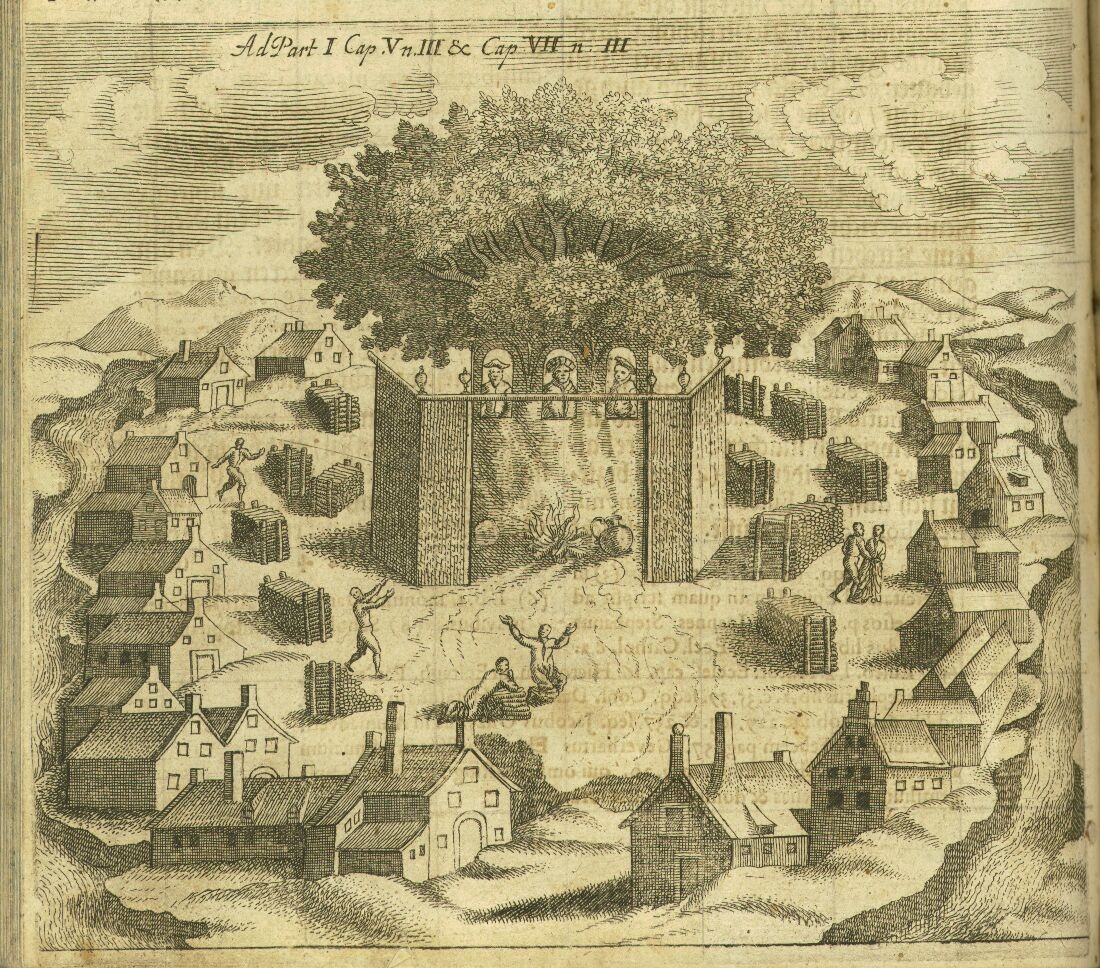 🇱🇹 Lithuania and 1 moreLithuanian mythologyLietuvių mitologija
The ancient polytheistic beliefs of the Baltic people, preserved in folklore and early chroniclesTradition · Speaking with spirits and the dead · Luck and prosperity Historical
🇱🇹 Lithuania and 1 moreLithuanian mythologyLietuvių mitologija
The ancient polytheistic beliefs of the Baltic people, preserved in folklore and early chroniclesTradition · Speaking with spirits and the dead · Luck and prosperity Historical
 🇱🇻 Latvia and 1 moreLatvian mythology
A collection of myths about gods, spirits, and the afterlife from the Baltic region.Tradition · Speaking with spirits and the dead · Power and authority Living
🇱🇻 Latvia and 1 moreLatvian mythology
A collection of myths about gods, spirits, and the afterlife from the Baltic region.Tradition · Speaking with spirits and the dead · Power and authority Living
 🇪🇪 Estonia and 5 moreFern flower
A mythical bloom said to bring fortune and unlock secrets, found only on midsummer night.Belief · Luck and prosperity · Love and attraction Living
🇪🇪 Estonia and 5 moreFern flower
A mythical bloom said to bring fortune and unlock secrets, found only on midsummer night.Belief · Luck and prosperity · Love and attraction Living
 🇫🇷 France and 5 moreKabbalahקַבָּלָה
An esoteric school of thought within Judaism focused on the hidden meanings of scripture and the divine.Tradition · Speaking with spirits and the dead · Change and initiation Living
🇫🇷 France and 5 moreKabbalahקַבָּלָה
An esoteric school of thought within Judaism focused on the hidden meanings of scripture and the divine.Tradition · Speaking with spirits and the dead · Change and initiation Living
 🇷🇺 Russia and 5 moreAxe of Perun
Bronze axe-shaped pendants worn in honor of the Slavic god PerunCharm · Power and authority Historical
🇷🇺 Russia and 5 moreAxe of Perun
Bronze axe-shaped pendants worn in honor of the Slavic god PerunCharm · Power and authority Historical
 🇷🇺 Russia and 3 moreChortчёрт
A Slavic demon spirit with horns and hooves, known in folklore as a trickster or minor evil force.Being · Cursing and harm · Luck and prosperity Historical
🇷🇺 Russia and 3 moreChortчёрт
A Slavic demon spirit with horns and hooves, known in folklore as a trickster or minor evil force.Being · Cursing and harm · Luck and prosperity Historical
 🇱🇹 Lithuania and 2 moreLaumaLaumė
A Baltic fairy-like spirit of the sky, weather, and newborn children.Being · Protection · Healing Historical
🇱🇹 Lithuania and 2 moreLaumaLaumė
A Baltic fairy-like spirit of the sky, weather, and newborn children.Being · Protection · Healing Historical
 🇷🇺 Russia and 5 moreRinging Cedars' Anastasianismдвижение «Анастасия»
A Russian new religious movement based on books about a Siberian mystic and nature worshipTradition · Protection · Speaking with spirits and the dead Living
🇷🇺 Russia and 5 moreRinging Cedars' Anastasianismдвижение «Анастасия»
A Russian new religious movement based on books about a Siberian mystic and nature worshipTradition · Protection · Speaking with spirits and the dead Living
 🇫🇷 France and 1 moreDusios
A Gaulish spirit type later classified as an incubus demon by early Christian writersBeing · Cursing and harm · Power and authority Historical
🇫🇷 France and 1 moreDusios
A Gaulish spirit type later classified as an incubus demon by early Christian writersBeing · Cursing and harm · Power and authority Historical
 🇱🇹 Lithuania and 1 moreAšvieniai
Twin horse deities of Baltic mythology who pull the sun chariotBeing · Protection Legendary
🇱🇹 Lithuania and 1 moreAšvieniai
Twin horse deities of Baltic mythology who pull the sun chariotBeing · Protection Legendary
 🇷🇺 Russia and 5 moreFiredrakeognennyi zmei
A European dragon myth born from sightings of shooting stars and will-o'-the-wispsBeing · Cursing and harm · Luck and prosperity Historical
🇷🇺 Russia and 5 moreFiredrakeognennyi zmei
A European dragon myth born from sightings of shooting stars and will-o'-the-wispsBeing · Cursing and harm · Luck and prosperity Historical
 🇵🇱 Poland and 4 moreMoranaМорена
A Slavic goddess of winter and death, whose effigy is drowned to welcome springFigure · Cursing and harm · Power and authority Living
🇵🇱 Poland and 4 moreMoranaМорена
A Slavic goddess of winter and death, whose effigy is drowned to welcome springFigure · Cursing and harm · Power and authority Living
 🇱🇹 Lithuania and 2 moreEglė the Queen of SerpentsEglė žalčių karalienė
A Lithuanian folk tale about a woman who marries a serpent king and turns her family into trees.Figure · Wonder and entertainment Historical
🇱🇹 Lithuania and 3 moreThe Swan Queen
A Lithuanian fairy tale about a bird maiden who becomes human and returns to the skyFigure · Wonder and entertainment Historical
🇱🇹 Lithuania and 2 moreEglė the Queen of SerpentsEglė žalčių karalienė
A Lithuanian folk tale about a woman who marries a serpent king and turns her family into trees.Figure · Wonder and entertainment Historical
🇱🇹 Lithuania and 3 moreThe Swan Queen
A Lithuanian fairy tale about a bird maiden who becomes human and returns to the skyFigure · Wonder and entertainment Historical
Photo credits on this page
The small pictures above come from Wikimedia Commons under free licences. Some are cropped to fit.
- Lauma: Raki_Man, CC BY 3.0, source
- Eglė the Queen of Serpents: Huw, CC BY 2.0, source
- Baba Yaga: Ivan Bilibin, Public domain, source
- Card throwing: Felbify, CC BY 3.0, source
- Midsummer: Kora27, CC BY-SA 4.0, source
- Walpurgis Night: Luis Ricardo Falero, Public domain, source
- Latvian mythology: Dezidor, CC BY 3.0, source
- Axe of Perun: VoivodeZmey, Public domain, source
- Firedrake: Ramesh Kumar R, CC BY-SA 4.0, source
- Ašvieniai: Wojsyl , 2005, CC BY-SA 3.0, source
- Fern flower: Antoni Piotrowski, Public domain, source
- Kabbalah: Joseph ben Abraham Gikatilla, Paulus Riccius, Leonhard Beck, Public domain, source
- Chort: Unknown author, Public domain, source
- Ringing Cedars' Anastasianism: Лобачев Владимир, CC BY-SA 3.0, source
- Dusios: Eric Hunt, CC BY-SA 2.5, source
- Morana: Marta Malina Moraczewska, CC BY-SA 4.0, source
The weekly digest
Every Monday: seven entries you may not know, what is on the calendar this week, and one rite drawn step by step.