
Kabbalah
In its own language: קַבָּלָה
from Hebrew qabbālā, meaning 'receiving' or 'acceptation'
An esoteric school of thought within Judaism focused on the hidden meanings of scripture and the divine.
Kabbalah is a system of Jewish mysticism that seeks to understand the nature of the divine and the structure of the universe. It emerged in medieval Occitania and Spain as an interpretation of the Hebrew Bible and Rabbinic literature.
- Native name is קַבָּלָה, meaning receiving.
- Zohar is the foundational text of the tradition.
- Isaac Luria founded contemporary Lurianic Kabbalah.
- Sefer Yetzirah predates medieval Kabbalistic works.
- Gershom Scholem pioneered academic study of the field.
What it is
Kabbalah represents a branch of Jewish thought dedicated to exploring the inner dimensions of religious texts and the divine. Practitioners, known as Mekubbalim, view these teachings as the secret core of the Torah. The tradition encompasses various methods for understanding God and the cosmos. It ranges from theoretical speculation about the divine realm to practical rituals involving letters and names. Scholars distinguish between different streams, such as theosophical Kabbalah, which describes the structure of heaven, and meditative practices aimed at spiritual union. Some branches also include magical elements, though these are often restricted or discouraged by mainstream authorities.
Where it comes from
The tradition developed in the twelfth and thirteenth centuries in southern France and northern Spain. Early works like the Bahir appeared among the sages of Provence. The movement gained prominence with the publication of the Zohar, a foundational text attributed to Rabbi Moses de León in the late thirteenth century. This period coincided with a flourishing of Jewish culture in Al-Andalus. Later, in the sixteenth century, Isaac Luria reinterpreted these teachings in Ottoman Palestine, creating a new influential strand known as Lurianic Kabbalah. Academic study of these texts began in earnest during the twentieth century, largely driven by historian Gershom Scholem.
How it is done
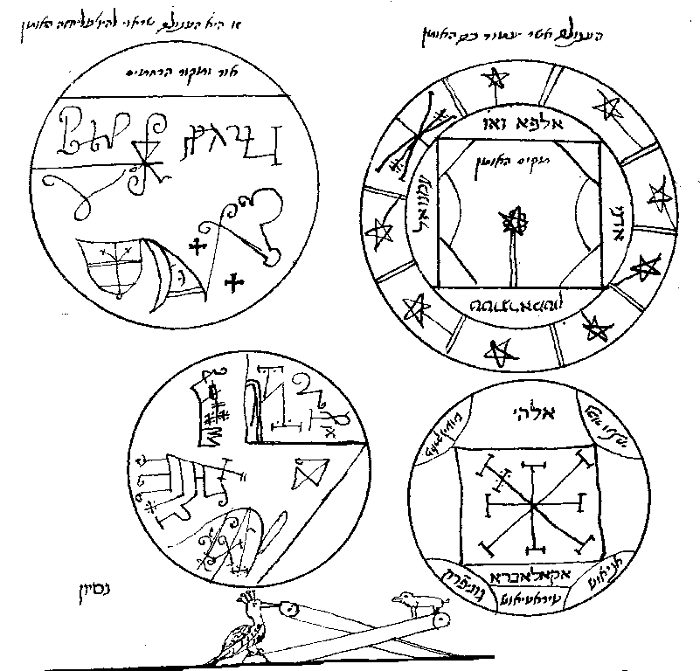
Study involves analyzing scripture through multiple layers of interpretation. Meditative practitioners may focus on combinations of Hebrew letters to achieve altered states of consciousness. Practical Kabbalah involves the use of talismans and specific rituals intended to influence spiritual realms. These magical acts were historically considered dangerous and were often kept in unpublished manuscripts or restricted to those deemed ritually pure.
Tools and materials
Central texts include the Zohar, the Bahir, the Sefer Yetzirah, and the Pardes Rimonim. The Sefer Yetzirah, dating from the early medieval period, uses alphabetic and numerical systems to describe creation. In magical traditions, specific names of God and angelic invocations serve as key components for ritual work.
Kabbalah, drawn and placed
- Living
- Revived
- Fading
- Historical
- Legendary
- Performed
- Lineage
- Jewish mysticism
What it is for
Adherents believe Kabbalah reveals the hidden purpose behind religious observance and the structure of the universe. Theosophical schools aim to harmonize heavenly forces through human conduct. Practical traditions attempt to repair the world or protect against harm using magical means. Overall, the goal is to impart metaphysical meaning to normative Judaism and connect the practitioner to the divine source.
Who does it
A traditional follower is called a Mekubbal, meaning receiver. Historically, knowledge was transmitted orally before being written down. Modern practice varies widely; some engage in scholarly study while others pursue intense meditation. Isaac Luria's teachings were passed down through his student Hayyim ben Joseph Vital. The Arizal, referring to Luria, prohibited certain magical practices until a state of universal purity is achieved. Today, scholars analyze these texts historically, while religious communities continue to study them as sacred wisdom.
Peoples and places
The tradition originated among Jews in medieval France and Spain. It spread to the Rhineland and later to Ottoman Palestine. Hasidic Judaism, emerging in the eighteenth century, popularized Lurianic concepts for a broader audience. Non-Jewish Christian Hebraists and Hermetic occultists later adapted these ideas, creating separate traditions like Christian Kabbalah and Hermetic Qabalah. These external movements merged Jewish concepts with other theological frameworks, diverging significantly from original Jewish contexts.
At a glance: who, where and when


What people believe
Kabbalists view the universe as a microcosm reflecting a divine macrocosm. Human actions are believed to have theurgic effects on the spiritual realms. The concept of tzimtzum describes divine contraction to make space for creation. Tikkun olam refers to the repair of the world through righteous deeds. The sephirot represent attributes through which the infinite interacts with the finite. Different schools offer varying explanations for these abstract concepts, but all accept them as valid paths to understanding the divine.
How scholars and sceptics see it
Academic research treats Kabbalah as a historical development within Jewish thought. Gershom Scholem established the field of Jewish mysticism studies in the twentieth century. Scholars categorize the tradition into theosophical, meditative, and practical strands. They trace influences from earlier Hekhalot literature and the Sefer Yetzirah. Non-Jewish adaptations are studied as part of Western esotericism. Researchers emphasize the diversity of Kabbalistic thought and reject unified definitions, noting competing interpretations throughout history.
Cautions and what is closed
Practical Kabbalah involving magic was historically censored and restricted. The Arizal forbade its use due to risks associated with lower spiritual realms. Traditional authorities warn against misuse of sacred names and rituals. Modern fraudsters sometimes exploit Kabbalistic symbols for commercial gain. The closed nature of some initiatory knowledge limits access for outsiders. Scholars note that magical practices were often marginalized even within Jewish communities.
Compare and confuse
Kabbalah is distinct from earlier Merkabah mysticism and rationalist philosophy. It shares similarities with Hermetic Qabalah and Christian Kabbalah but differs in theological foundations. Practical Kabbalah resembles other forms of talismanic magic found in medieval Europe. The fourfold method of interpretation parallels exegetical techniques used in other religious traditions. Lurianic Kabbalah influenced Hasidic thought, whereas Abulafia's meditation remained a marginal stream.
Questions people ask about Kabbalah
What does the word Kabbalah mean?
It comes from the Hebrew word qabbālā, which translates to 'receiving' or 'acceptation'. It refers to the transmission of secret teachings within Jewish tradition.
Where did Kabbalah originate?
It emerged in the twelfth and thirteenth centuries in southern France and Spain. Early texts like the Bahir appeared among sages in Provence before spreading to other regions.
Who wrote the main Kabbalistic texts?
Key works include the Zohar, attributed to Rabbi Moses de León, and the Sefer Yetzirah, an ancient anonymous text. Isaac Luria's teachings were recorded by his students.
Is Kabbalah only for Jews?
Originally it was a Jewish tradition. However, non-Jewish groups like Christian Hebraists and Hermetic occultists adapted its concepts, creating separate esoteric systems.
What are the different types of Kabbalah?
Scholars identify theosophical Kabbalah focusing on divine structure, meditative Kabbalah for spiritual union, and practical Kabbalah involving magical rituals and talismans.
Good reading and sources
- Kabbalah on WikipediaEncyclopedia
- More photos on Wikimedia CommonsPhotos and video
- Wikidata recordOpen data
The facts on this page come from the Wikipedia article "Kabbalah", written by its contributors and used under the CC BY-SA 4.0 licence, and from its Wikidata record (CC0). EveryJaadu rewrote the text in its own words, with AI assistance, and compares every page with the article to make sure no passage is copied. It may be reused under the same CC BY-SA 4.0 licence with a link back.
It may contain mistakes. Names and customs differ from one community to the next, and some knowledge is closed to outsiders and left out here. This page describes belief and practice. It does not say that any of it works, it is not a how-to, and it is not medical advice. If something is wrong, tell us. Last refreshed 2026-10-06.
More from France
All the entries from France 🇬🇧 United Kingdom and 5 moreAleister Crowley
English occultist and founder of the religion of ThelemaText · Power and authority · Change and initiation Living
🇬🇧 United Kingdom and 5 moreAleister Crowley
English occultist and founder of the religion of ThelemaText · Power and authority · Change and initiation Living
 🇫🇷 France and 1 moreNostradamus
A French astrologer and physician known for a book of poetic propheciesText · Seeing and foretelling · Power and authority Historical
🇫🇷 France and 1 moreNostradamus
A French astrologer and physician known for a book of poetic propheciesText · Seeing and foretelling · Power and authority Historical
 🇮🇹 Italy and 5 moreTarottarocchi
A set of playing cards used for games and divinationTradition · Seeing and foretelling · Luck and prosperity Living
🇮🇹 Italy and 5 moreTarottarocchi
A set of playing cards used for games and divinationTradition · Seeing and foretelling · Luck and prosperity Living
 🇮🇹 Italy and 2 moreKey of SolomonClavicula Salomonis
A Renaissance grimoire attributed to King Solomon, detailing ritual preparations and invocations.Text · Cursing and harm · Love and attraction Historical
🇮🇹 Italy and 2 moreKey of SolomonClavicula Salomonis
A Renaissance grimoire attributed to King Solomon, detailing ritual preparations and invocations.Text · Cursing and harm · Love and attraction Historical
Related elsewhere
All tradition 🇮🇳 IndiaChakraचक्र
Meditation points in the subtle body used in Hindu and Buddhist yogaTradition · Speaking with spirits and the dead · Change and initiation Living
🇮🇳 IndiaChakraचक्र
Meditation points in the subtle body used in Hindu and Buddhist yogaTradition · Speaking with spirits and the dead · Change and initiation Living
 🇳🇬 NigeriaOrunmilaỌ̀rúnmìlà
Yoruba deity of wisdom and the creator of the Ifá divination systemBeing · Seeing and foretelling · Speaking with spirits and the dead Living
🇳🇬 NigeriaOrunmilaỌ̀rúnmìlà
Yoruba deity of wisdom and the creator of the Ifá divination systemBeing · Seeing and foretelling · Speaking with spirits and the dead Living
 🇮🇳 India and 2 moreKalachakraདུས་ཀྱི་འཁོར་ལོ།
A Tibetan Buddhist tantric deity and system of yogic time cyclesTradition · Change and initiation · Speaking with spirits and the dead Living
🇮🇳 India and 2 moreKalachakraདུས་ཀྱི་འཁོར་ལོ།
A Tibetan Buddhist tantric deity and system of yogic time cyclesTradition · Change and initiation · Speaking with spirits and the dead Living
 🇮🇱 Israel and 4 moreIsaac Luriaיִצְחָק בן שלמה אשכנזי לוּרְיָא
A sixteenth-century rabbi who founded modern Kabbalah through oral teachings in Safed.Text · Speaking with spirits and the dead · Change and initiation Living
🇮🇱 Israel and 4 moreIsaac Luriaיִצְחָק בן שלמה אשכנזי לוּרְיָא
A sixteenth-century rabbi who founded modern Kabbalah through oral teachings in Safed.Text · Speaking with spirits and the dead · Change and initiation Living