🇮🇪 Magic in Ireland
136 entries from Ireland, best known first, across 66 places of magic.
Irish folklore weaves pre-Christian myth with Christian morality, preserving beliefs in fairies and the Otherworld through oral tradition. It serves as a vital record of daily life, craft, and communal identity across generations.
- Béaloideas means oral instruction and defines Irish folklore.
- Fairies are seen as descendants of the Tuatha Dé Danann.
- The Irish Folklore Commission was established in 1935.
- Hawthorn trees are considered sacred fairy dwellings.
- Schoolchildren collected tales for the National Folklore Archive.
Overview
Irish folklore, known locally as béaloideas or oral instruction, covers the stories, music, and customs that explain the world to its people. It blends ancient pagan ideas with later Christian teachings, creating a unique cultural blend. The tradition relies on spoken word rather than written text, passing knowledge from one generation to the next. This system preserves not just myths but also practical skills and social norms. It functions as a core part of national identity, uniting communities through shared history and belief.
Practices and beliefs
Belief centers on the Aos Sí, or fairy race, thought to be descendants of ancient gods. Solitary spirits like the banshee, who cries before death, and the leprechaun, a shoe-making sprite, are well known. People avoid disturbing fairy forts and hawthorn trees, which serve as portals to the Otherworld. Craft practices include weaving baskets and making Brigid's crosses for protection. Herb lore and traditional healing methods are also part of this inherited knowledge.
Rites and charms
Stories are shared during fireside gatherings called cèilidh, accompanied by music and dance. These events mark important times like weddings, wakes, and holidays such as Halloween and May Day. Keening, a mournful song, is performed at wakes to honor the dead. Crafts like plaiting straw are done on specific feast days, such as St. Bridget's Day. These rituals reinforce community bonds and respect for the spiritual realm.
Who practises
Knowledge is held by elders and storytellers within small communities. In the twentieth century, the Irish Folklore Commission organized schoolchildren to collect these tales from older relatives. This effort preserved the voices of ordinary people who maintained the traditions. Collectors and archivists later standardized these methods, ensuring the survival of local dialects and regional variations.
Regions and communities
The Gaeltacht areas, including the Aran Islands, retained strong Irish-language traditions. Collectors noted differences between English-speaking regions and Gaelic-speaking west coast communities. Local legends often tied specific hills, mounds, and trees to fairy activity. Regional variations in fairy names and types reflect the diverse history of settlement across the island.
The calendar
Key dates include Samhain (Halloween), Bealtaine (May Day), and St. Patrick's Day. These festivals mark seasonal changes and connect the living with the spirit world. St. Bridget's Day sees the creation of protective crosses. Wakes and weddings also serve as occasions for performing traditional songs and sharing family histories.
Law and the state
The state supports folklore preservation through government commissions and archives. There are no laws against practicing folk beliefs, though superstitions about disturbing fairy sites persist. Colonial attitudes once dismissed these beliefs as mere superstition, but modern Ireland recognizes them as cultural heritage.
Today
Folklore remains a living part of Irish identity, celebrated in festivals and education. The National Folklore Archive holds millions of pages of collected material. Modern interest focuses on preserving the language and oral traditions against globalization. Tourism sometimes commercializes symbols like leprechauns, but communities continue to value the deeper cultural meanings.
The facts in this overview come from the Wikipedia article "Irish folklore", written by its contributors and used under the CC BY-SA 4.0 licence. EveryJaadu rewrote the text in its own words, with AI assistance, and compares every page with the article to make sure no passage is copied. It may be reused under the same CC BY-SA 4.0 licence with a link back.
Places of magic in Ireland
 🇬🇧 United Kingdom and 4 moreCorn dolly
A straw figure made from the last sheaf of a harvest to house the crop spiritTradition · Protection · Luck and prosperity Revived
 🇮🇪 Ireland and 1 moreBeltaneBealtaine
A Gaelic festival marking the start of summer with protective bonfires and livestock ritualsTradition · Protection · Luck and prosperity Revived
 🇬🇧 United Kingdom and 4 moreCunning folk
European practitioners of folk medicine and helpful magic from the Middle Ages to the twentieth centuryTradition · Protection · Healing Historical
 🇬🇧 United Kingdom and 1 moreWell dressing
A rural English custom of decorating water sources with natural designsTradition · Protection · Speaking with spirits and the dead Living
🇬🇧 United Kingdom and 1 moreScottish folkloreBeul-aithris na h-Alba
The myths, creatures and beliefs of the Scottish people, recorded from ancient times to the present.Tradition · Seeing and foretelling · Protection Living
 🇮🇪 Ireland and 4 moreWinter solstice
The shortest day and longest night of the year, marked by rites of solar returnTradition · Seeing and foretelling · Protection Living
 🇮🇪 Ireland and 4 moreMay Day
A European spring festival marking the start of summer with flowers, poles and fire.Tradition · Protection · Luck and prosperity Living
 🇫🇷 France and 1 moreDruiddruides
A learned priestly class of the ancient Celts in Gaul and BritainTradition · Cursing and harm · Protection Historical
 🇬🇧 United Kingdom and 5 moreDruidry
A modern nature religion inspired by ancient Celtic priests and Romantic idealsTradition · Protection · Speaking with spirits and the dead Living
 🇲🇽 Mexico and 5 moreFolk Catholicism
Local religious customs that blend official Church teaching with indigenous or regional traditions.Tradition · Protection · Healing Living
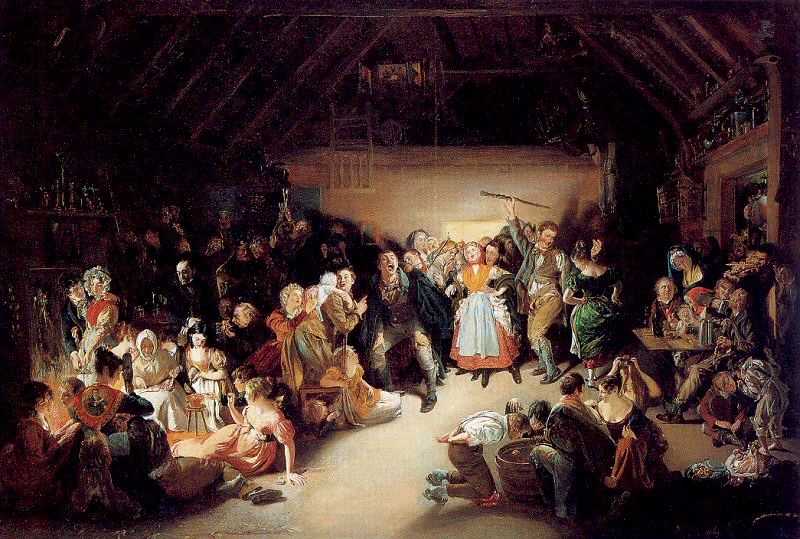 🇮🇪 Ireland and 1 moreSamhain
A Gaelic festival marking the end of harvest and the start of winter, observed on November 1st.Tradition · Protection · Speaking with spirits and the dead Living
 🇮🇪 Ireland and 4 moreCairncarn
A human-made pile of stones used as a marker, memorial, or ritual object across many cultures.Tradition · Protection · Speaking with spirits and the dead Living
🇬🇧 United Kingdom and 4 moreTelling the bees
A Western European custom of informing hives about major household eventsTradition · Protection · Luck and prosperity Living
🇺🇦 Ukraine and 5 moreBullroarer
A wooden slat on a string that produces a roaring sound for ritual and communication.Tradition · Protection · Speaking with spirits and the dead Living
Photo credits on this page
The small pictures above come from Wikimedia Commons under free licences. Some are cropped to fit.
- Rada lwa: Calvin Hennick, for WBUR Boston, CC BY 3.0, source
- May Day: Bryan Ledgard, CC BY 2.0, source
- Druid: Bernard de Montfaucon, Public domain, source
- Corn dolly: Renata ( talk ), Public domain, source
- Winter solstice: Image by Przemyslaw " Blueshade " Idzkiewicz, CC BY-SA 2.0, source
- Druidry: TheJaySpearing, CC BY-SA 4.0, source
- Cunning folk: Midnightblueowl at English Wikipedia, CC BY-SA 3.0, source
- Beltane: Stefan Schäfer, Lich, CC BY-SA 3.0, source
- Well dressing: User:WhaleyTim, CC BY-SA 3.0, source
- Samhain: Daniel Maclise, Public domain, source
- Cairn: Andrew Bossi, CC BY-SA 2.5, source
The weekly digest
Every Monday: seven entries you may not know, what is on the calendar this week, and one rite drawn step by step.