
Corn dolly
from the practice of placing the woven figure into the first furrow of new fields
A woven straw figure made from the last sheaf of a European harvest to house the crop spirit.
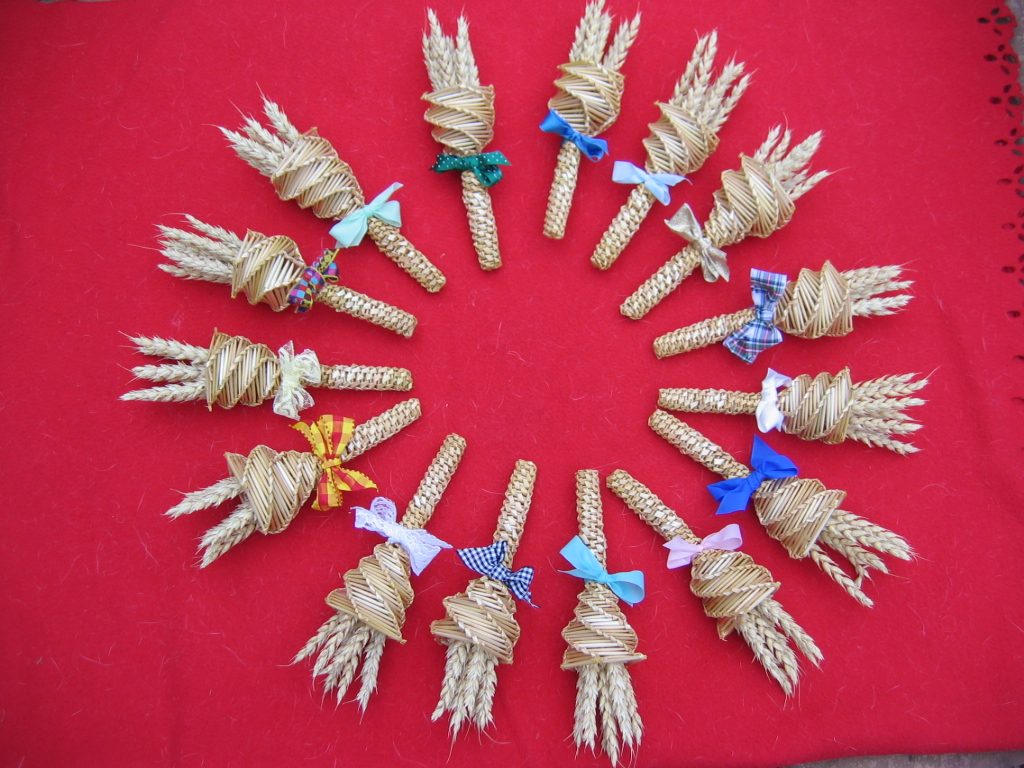
Corn dollies are traditional straw figures crafted in Europe before the widespread use of machinery. They were woven from the final sheaves of cereal crops to provide a winter home for the grain's spirit, ensuring its return in the next planting season.
- Made from the last sheaf of the harvest crop.
- Believed to house the spirit of the grain.
- Ploughed into the first furrow in spring.
- Craft is now considered endangered.
- Revived in the UK during the 1950s.
What it is
A corn dolly is a woven figure made from dried cereal stalks. It originated as part of pre-Christian harvest rituals across Europe. Farmers created these shapes from the very last sheaf cut during the gathering season. The object was believed to contain the soul or spirit of the grain itself. By weaving this final portion into a doll-like form, the community provided a shelter for the spirit during the cold months. This act ensured that the life force of the crop would survive the winter and return with the spring planting.
Where it comes from
Scholars like James Frazer noted that these customs likely predate Christianity in Northern Europe. Before the arrival of Christian practices, pagan communities held that a spirit resided within the standing crop. Harvesting effectively destroyed this spirit's home. To remedy this, they fashioned a temporary dwelling from the remaining stalks. Wilhelm Mannhardt collected numerous examples of these beliefs. The practice involved specific roles, such as the oldest woman shaping the figure or the last cutter being called the 'Old Woman'. These traditions persisted until mechanisation changed farming methods.
How it is done
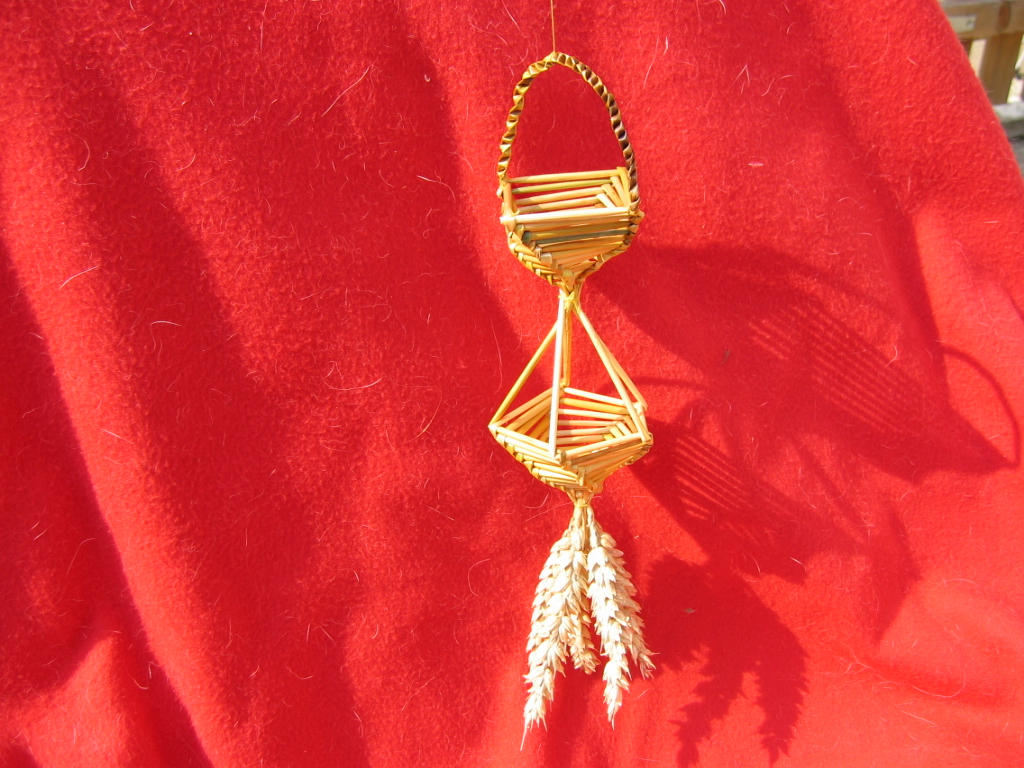
The maker selected the final sheaves of wheat, rye, or other grains. These stalks were then plaited, braided, or tied into various shapes. Common forms included human figures, animals, or geometric patterns. In some regions, the figure was dressed in cloth or carried on a pole. After the harvest feast, the dolly was often placed in the barn or hung in the farmhouse. Some accounts suggest it was later returned to the earth by being ploughed into the first furrow of the new year, symbolising the spirit's re-entry into the soil.
Tools and materials
The primary material was the cereal crop itself. In Great Britain, makers used wheat, oats, rye, and barley. Irish harvesters sometimes used rushes instead. In southern France, palm leaves were employed. Traditional long-stemmed varieties were preferred because they were hollow and flexible. Modern combine harvesters replaced these with shorter, pithy strains, making the craft more difficult. Some farmers now grow heritage varieties specifically for thatching and crafting purposes.
Corn dolly, drawn and placed
- Living
- Revived
- Fading
- Historical
- Legendary
- Performed
- Lineage
- European pagan harvest customs
- Timing
- at the end of the harvest season
What it is for
The central intent was to protect the grain spirit and ensure agricultural fertility. Practitioners believed the spirit needed a safe place to rest over winter. Without this shelter, the crop might fail the following season. The dolly also served as a communal focus during the harvest celebration. It marked the completion of the hard work of gathering the food supply. In some areas, specific figures like the 'Countryman's favour' were given as tokens of affection, linking the harvest to personal relationships.
Who does it
Traditionally, any farm worker could make a corn dolly, but certain roles were assigned. The person who cut the final sheaf often held a special status, sometimes mocked or celebrated as the 'Old Woman' or 'Carlin'. In some villages, the oldest married woman shaped the figure. Younger people might carry it on poles or wear wreaths made from its finest ears. The craft required skill in plaiting and tying. Today, it is practiced by enthusiasts and rural craftspeople rather than professional farm labourers.
Peoples and places
The tradition was widespread across Europe. In Germany and Flanders, figures were called 'vetulas' or 'Old Women'. Scottish harvesters created the 'Kirn Dolly' or 'Straw Bear'. Welsh communities made the 'Caseg Fedi' or harvest mare. Turkish regions produced the 'Kusa Dasi'. Israeli groups had the 'Hay Jude'. Each culture adapted the basic concept to local materials and names. The variations reflect distinct regional identities while sharing the core belief in the grain's spirit.
At a glance: who, where and when
Who does it
Belief worlds
Occasions


What people believe
The underlying worldview posits that plants possess a vital essence or consciousness. This essence resides in the living crop and must be respected during destruction. The harvest is not merely a collection of food but a capture of life. The spirit demands recognition and shelter. Pagan Europeans viewed this exchange as a necessary pact with nature. The dolly acts as a vessel for this non-human agency. Returning the spirit to the field maintains the cycle of growth and sustenance.
When it is done
The craft is strictly tied to the harvest season. It occurs only when the cereal crops are fully ripe and ready for cutting. The timing varies by region and weather but generally falls in late summer or early autumn. The creation happens at the very end of the working day. The figure remains in the household or barn throughout the winter. Its fate is sealed when the new ploughing begins in spring, completing the annual cycle.
How scholars and sceptics see it
Anthropologists view corn dollies as evidence of sympathetic magic. The form mimics the desired outcome: a plentiful harvest. Historians note the decline of the practice due to industrial farming. Psychologists may interpret the rituals as coping mechanisms for the uncertainty of agriculture. Skeptics see them as cultural folklore without supernatural efficacy. The study of these objects helps trace the transition from agrarian societies to modern industrial ones.
Cautions and what is closed
The craft is listed as endangered by heritage associations. The loss of traditional wheat varieties threatens the availability of suitable materials. Modern farming techniques have reduced the need for manual sheaf binding. There are no significant health risks associated with the craft itself. However, the commercialisation of the tradition can lead to appropriation. Authentic practitioners worry about the dilution of the original meanings and methods.
Compare and confuse
Corn dollies are similar to the Slavic Didukh, which also houses spirits in a sheaf. They differ from the Green Man, which represents vegetation through foliage rather than grain. Unlike the Wicker Man, which involves large-scale effigies and potentially sacrifice, corn dollies are small and woven. They share the 'corn mother' archetype with other European harvest figures. The term 'corn' here refers generically to grain, not just maize.
Questions people ask about Corn dolly
What is a corn dolly?
It is a woven straw figure made from the final sheaves of a European harvest. It serves as a symbolic home for the grain's spirit during the winter months.
Why were corn dollies made?
They were made to protect the spirit of the crop. Believers thought this ensured the spirit would return to the field and guarantee a future harvest.
Where did this tradition come from?
It originates in pre-Christian pagan Europe. Scholars link it to ancient beliefs that the grain possessed a conscious spirit needing shelter after being cut.
Is the craft still practiced today?
Yes, though it is endangered. It was revived in the mid-20th century by enthusiasts. Modern makers use heritage wheat varieties to replicate traditional techniques.
Good reading and sources
- Corn dolly on WikipediaEncyclopedia
- More photos on Wikimedia CommonsPhotos and video
- Wikidata recordOpen data
The facts on this page come from the Wikipedia article "Corn dolly", written by its contributors and used under the CC BY-SA 4.0 licence, and from its Wikidata record (CC0). EveryJaadu rewrote the text in its own words, with AI assistance, and compares every page with the article to make sure no passage is copied. It may be reused under the same CC BY-SA 4.0 licence with a link back.
It may contain mistakes. Names and customs differ from one community to the next, and some knowledge is closed to outsiders and left out here. This page describes belief and practice. It does not say that any of it works, it is not a how-to, and it is not medical advice. If something is wrong, tell us. Last refreshed 2026-10-05.
More from the United Kingdom
All the entries from the United Kingdom 🇬🇧 United KingdomEnochian magic
A Renaissance system of ceremonial magic based on angelic revelations recorded by John Dee and Edward Kelley.Tradition · Speaking with spirits and the dead · Power and authority Living
🇬🇧 United KingdomEnochian magic
A Renaissance system of ceremonial magic based on angelic revelations recorded by John Dee and Edward Kelley.Tradition · Speaking with spirits and the dead · Power and authority Living
 🇬🇧 United Kingdom and 5 moreAleister Crowley
English occultist and founder of the religion of ThelemaText · Power and authority · Change and initiation Living
🇬🇧 United Kingdom and 5 moreAleister Crowley
English occultist and founder of the religion of ThelemaText · Power and authority · Change and initiation Living
 🇫🇷 France and 2 moreÉliphas Lévi
A French writer who shaped modern occult thought and ceremonial magic.Text · Power and authority · Speaking with spirits and the dead Historical
🇫🇷 France and 2 moreÉliphas Lévi
A French writer who shaped modern occult thought and ceremonial magic.Text · Power and authority · Speaking with spirits and the dead Historical
 🇬🇧 United Kingdom and 3 moreJet
A black gemstone carved into amulets and mourning jewellery for centuriesCharm · Protection · Luck and prosperity Historical
🇬🇧 United Kingdom and 3 moreJet
A black gemstone carved into amulets and mourning jewellery for centuriesCharm · Protection · Luck and prosperity Historical
Related elsewhere
All tradition 🇮🇳 India and 2 moreHomaहोम
A fire ritual found across Asian religions where offerings are burned as a votive exchange with the divine.Rite · Protection · Speaking with spirits and the dead Living
🇮🇳 India and 2 moreHomaहोम
A fire ritual found across Asian religions where offerings are burned as a votive exchange with the divine.Rite · Protection · Speaking with spirits and the dead Living
 🇲🇦 Morocco and 5 moreWild rueاسپند
A desert plant whose seeds hold psychoactive alkaloids and serve as incense in the Middle East.Substance · Protection · Speaking with spirits and the dead Living
🇲🇦 Morocco and 5 moreWild rueاسپند
A desert plant whose seeds hold psychoactive alkaloids and serve as incense in the Middle East.Substance · Protection · Speaking with spirits and the dead Living
 🇨🇳 China and 1 moreAncestor veneration in China中國傳統宗法性宗教
Rites for dead kin who are thought to watch over the familyTradition · Protection · Speaking with spirits and the dead Living
🇨🇳 China and 1 moreAncestor veneration in China中國傳統宗法性宗教
Rites for dead kin who are thought to watch over the familyTradition · Protection · Speaking with spirits and the dead Living
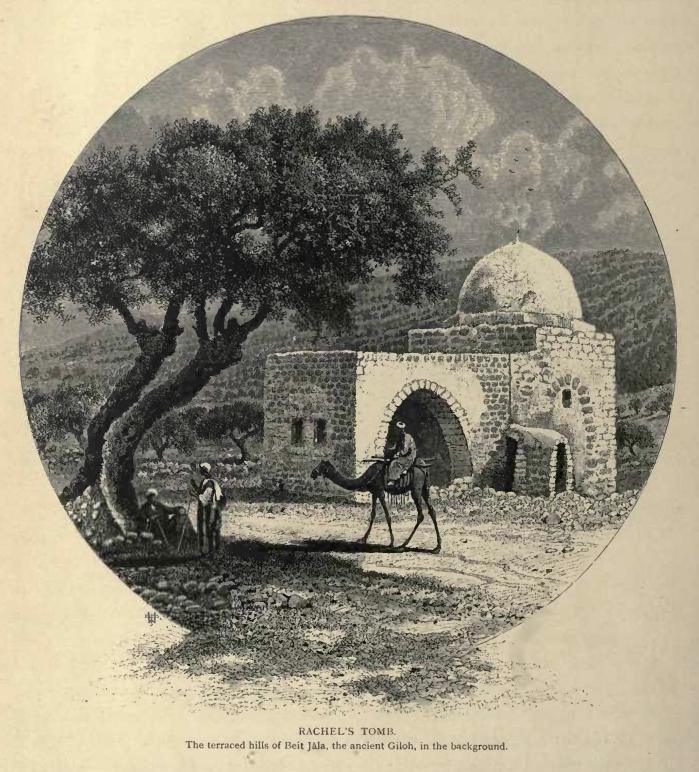 🇵🇸 Palestine and 1 moreRachel's TombQever Raḥel; Qabr Rāḥīl
A shared holy site near Bethlehem revered by Jews, Christians, and MuslimsTradition · Speaking with spirits and the dead · Protection Living
🇵🇸 Palestine and 1 moreRachel's TombQever Raḥel; Qabr Rāḥīl
A shared holy site near Bethlehem revered by Jews, Christians, and MuslimsTradition · Speaking with spirits and the dead · Protection Living