Esoteric and occult: magic in this belief world
Hermeticism, alchemy, ceremonial magic, theosophy and the Western occult tradition.
Esoteric and occult traditions are the Western learned currents of Hermeticism, Kabbalah, alchemy, astrology, ceremonial magic, Rosicrucianism, theosophy, anthroposophy, Thelema and the tarot. Their authors claimed hidden knowledge open to the initiated. Scholars call the field Western esotericism. This page covers its sources, its personalities and its problems. The field is large and often misunderstood, since popular culture blends occult, horror and fantasy. Tarot, astrology, Hermeticism and other currents belong here, and they have shaped the arts, psychology and popular culture.
Roots
The field draws on Greek and Egyptian texts of late antiquity, the Hermetic writings, Jewish and Christian Kabbalah, Arabic texts on astrology and talismans, and Renaissance revival. Marsilio Ficino translated the Corpus Hermeticum in 1463, and Isaac Casaubon showed in 1614 that it was later than once thought. Modern groups arose in the nineteenth century, including the Theosophical Society in 1875. Hermeticism takes its name from Hermes Trismegistus, and it taught that the universe is linked through correspondences between heaven and earth, a view that echoes through astrology, alchemy and magic.
Orders and leaders
Lodges, orders and charismatic leaders dominate its modern history: Helena Blavatsky, Rudolf Steiner, Aleister Crowley, and the Golden Dawn. Some were open to women as equals, which was rare at the time. Others fostered personality cults or abuse. Occult ideas have also been absorbed by political movements, including some with far-right aims, a legacy scholars have documented. Kabbalah, in both its Jewish form and its Christian variants, offered a map of the divine and a language of letters and names that Western occultists adopted.
Relation to church and science
Esotericism has stood outside the Church and science alike. The Church condemned ceremonial magic, while early scientists such as Newton and Boyle studied alchemy. Writers such as Frances Yates and Wouter Hanegraaff have traced the influence of occult thought on the Renaissance, on psychology and on art. Jung's interest in alchemy shaped depth psychology. Many modern occultists say their path is not a faith but a method, and use the language of psychology and symbol, so that the line between spiritual practice and self-development is thin.
Today
Tarot, astrology and the language of energy are widespread, and online communities teach ceremonial work. Commerce is heavy, and fraud occurs when courses or readings promise results for large sums. Scholars treat esotericism as an object of study, sceptics ask for evidence, and practitioners describe a path of self-knowledge. Academics increasingly study the tradition as a significant part of European intellectual life, and its archives are being opened to scholars.
Esoteric and occult on EveryJaadu
The entries written up so far, best known first.
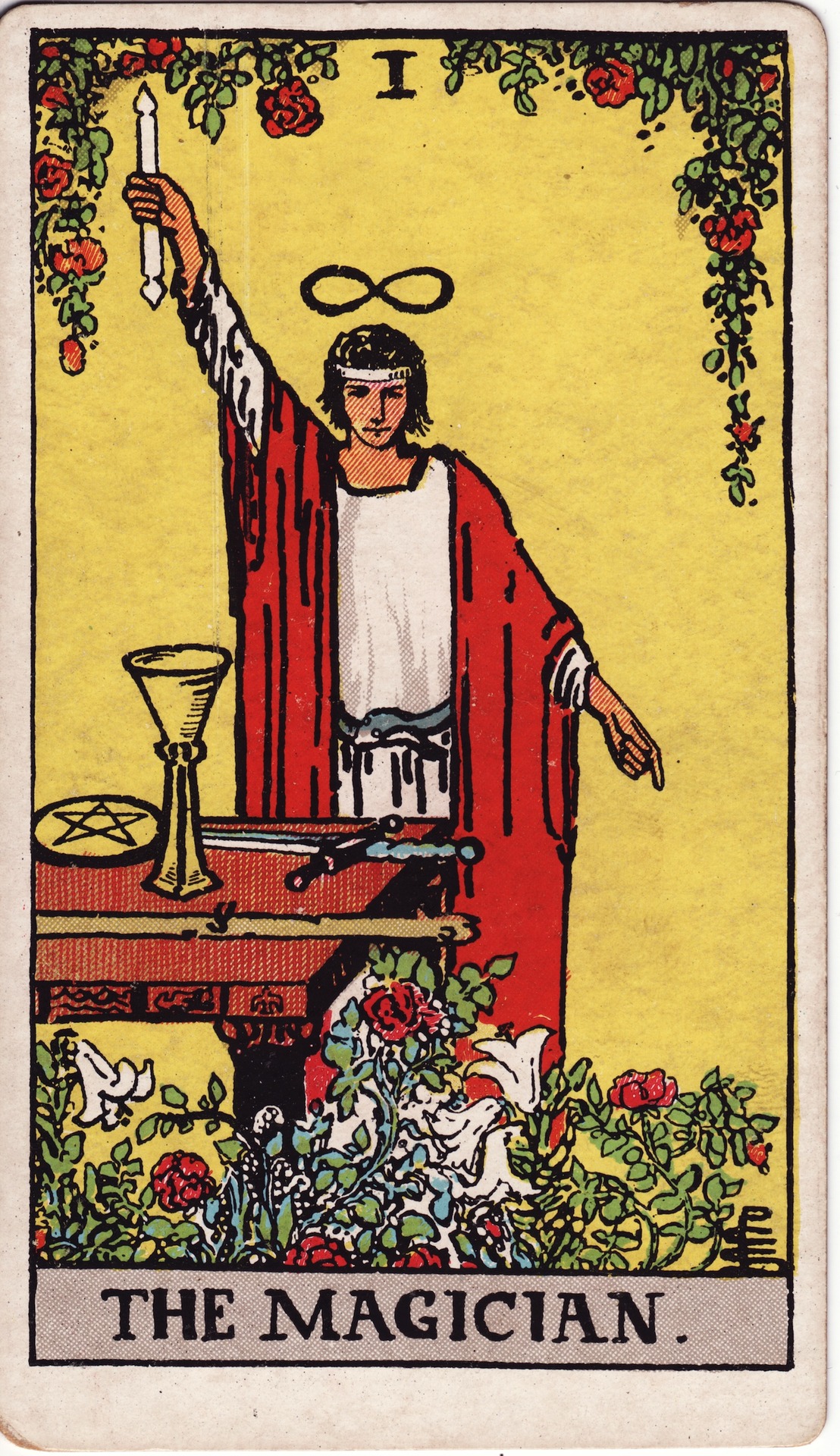 🇮🇹 ItalyThe MagicianLe Bateleur
A tarot trump symbolizing power and the link between spirit and matterText · Power and authority · Wonder and entertainment Living
 🇺🇸 United States and 5 moreMediumship
The practice of mediating communication between the living and spirits of the dead.Tradition · Speaking with spirits and the dead · Healing Living
 🇹🇷 Turkey and 2 moreApollonius of TyanaἈπολλώνιος ὁ Τυανεύς
A first-century philosopher and miracle worker whose life became a legend of divine power.Figure · Wonder and entertainment Historical
 🇮🇹 Italy and 1 moreThe Fool
A tarot card of unique status, depicting a wanderer or madman outside the numbered sequence.Text · Wonder and entertainment Historical
 🇺🇸 United States and 2 moreSéance
A gathering to communicate with spirits, ranging from religious services to stage performances.Rite · Speaking with spirits and the dead · Healing Living
 🇩🇪 Germany and 5 moreBiodynamic agriculture
An organic farming system with esoteric roots and spiritual practicesTradition · Healing · Power and authority Living
 🇨🇭 Switzerland and 4 moreEurythmy
An expressive movement art that translates music and speech into gestureTradition · Wonder and entertainment · Change and initiation Living
 🇨🇳 ChinaElemental
Mythic beings linked to earth, water, air, and fire in Renaissance occultism.Being · Wonder and entertainment Historical
 🇺🇸 United States and 5 moreNeoshamanism
A modern spiritual movement adapting shamanic techniques for Western seekers outside their traditional cultures.Tradition · Healing · Change and initiation Living
🇺🇸 United States and 5 moreNeoshamanism
A modern spiritual practice adapting shamanic techniques for personal growth outside traditional cultures.Tradition · Healing · Power and authority Living
🇺🇸 United States and 3 more11:11
A clock time believed to signal spiritual alignment or synchronicity in numerology and New Age thoughtBelief · Wonder and entertainment · Power and authority Living
 🇮🇹 ItalyGli ExperimentiGli Experimenti de la Ex.ma S.r Caterina da Furlj Matre de lo inllux.mo S.r Giouanni de Medici
A 16th-century manuscript of alchemical, medicinal, and cosmetic recipes by Caterina SforzaText · Healing · Power and authority Historical
 🇬🇷 Greece and 2 moreClassical elements
Ancient theories that explain all matter as combinations of earth, water, fire, air, and aetherBelief · Wonder and entertainment Historical
 🇮🇳 India and 1 moreFire (classical element)
A classical substance of heat and transformation in Greek, Indian, and Western esoteric traditionsSubstance · Change and initiation · Power and authority Historical
 🇨🇭 Switzerland and 1 moreSylphsylphes
An air spirit from Paracelsian alchemy and later literatureBeing · Wonder and entertainment Legendary
 🇮🇹 ItalyAlchemical DoorPorta Alchemica
A Roman gate covered in alchemical symbols and legends of transmutationCharm · Power and authority · Wonder and entertainment Historical
🇪🇬 EgyptEnochian chess
A four-player chess variant used by the Hermetic Order of the Golden Dawn for divination and playTradition · Wonder and entertainment Historical
 🇨🇳 China and 2 moreHu笏
A flat ceremonial baton used by East Asian officials and priests for ritual purposes.Charm · Power and authority · Wonder and entertainment Living
🇮🇹 ItalyDe Umbris Idearum
A 1582 treatise by Giordano Bruno on memory, magic and philosophyText · Power and authority · Wonder and entertainment Historical
 🇩🇪 Germany and 5 moreNazi UFOs
A conspiracy theory linking Nazi Germany to advanced flying discs and alien contact.Belief · Wonder and entertainment Historical
🇮🇷 IranBalaibalanباليبلن
An early constructed language from the Islamic world, likely created for sacred or poetic purposes.Text · Speaking with spirits and the dead · Wonder and entertainment Historical
🇺🇸 United StatesKa-Bala
A 1967 talking board game that claims to tell the future with a spinning marble and tarot cards.Illusion · Seeing and foretelling · Wonder and entertainment Historical
 🇬🇧 United Kingdom and 1 moreGiants (esotericism)
Spiritual beings linked to lost continents and root races in occult literatureBeing · Wonder and entertainment Historical
 🇪🇬 Egypt and 1 moreOuroborosοὐροβόρος
An ancient image of a serpent eating its own tail, symbolizing cycles and wholenessFigure · Power and authority · Wonder and entertainment Historical
 🇫🇷 France and 1 moreDogme et Rituel de la Haute Magie
A foundational treatise on ritual magic by Éliphas Lévi, structured around the tarot.Text · Power and authority · Wonder and entertainment Historical
 🇺🇸 United StatesHail Satan
A Satanic exclamation used as ritual greeting, rebel cry, and pop-culture punchlineBelief · Power and authority · Cursing and harm Living
🇺🇸 United StatesThe Occult: A History
A 1971 survey of occult figures and latent human powers by Colin WilsonText · Wonder and entertainment Historical
Photo credits on this page
The small pictures above come from Wikimedia Commons under free licences. Some are cropped to fit.
- Neoshamanism: Carptrash, CC BY-SA 4.0, source
- Séance: Unknown author, Public domain, source
- Biodynamic agriculture: Martist, CC BY-SA 4.0, source
- Mediumship: Harvey Metcalfe, Public domain, source
- The Fool: Johann Georg Rauch, Public domain, source
- Nazi UFOs: Nesnad, CC0, source
- Giants (esotericism): Athanasius Kircher, Public domain, source
- Ouroboros: Djehouty, CC BY-SA 4.0, source
- Dogme et Rituel de la Haute Magie: Eliphas Levi, Public domain, source
- Hail Satan: Paul Sableman, CC BY 2.0, source
- The Magician: Pamela Colman Smith, Public domain, source
- Elemental: No machine-readable author provided. Ragesoss assumed (based on copyri, Public domain, source
- Gli Experimenti: Mattman723, CC BY-SA 3.0, source
- Apollonius of Tyana: Zde, CC BY-SA 4.0, source
- Eurythmy: Awslibrary, CC BY-SA 4.0, source
- Classical elements: Unknown author, Public domain, source
- Fire (classical element): Correogsk, CC BY-SA 3.0, source
- Sylph: Copyright by Rufus Watles & L.C. Sanger, lithograph by Sarony, Major &, Public domain, source
- Alchemical Door: Sailko, CC BY 2.5, source
- Hu: Zhangzhugang, CC BY-SA 4.0, source