
Classical elements
from Greek stoicheion, meaning smallest division or letter
Ancient theories that explain all matter as combinations of earth, water, fire, air, and aether
The classical elements are ancient philosophical systems that classify all physical substances into basic components like earth, water, fire, and air. These frameworks originated in Greece, India, Egypt, and other cultures to explain the nature of the material world.
- Empedocles proposed the four-element set around 450 BC
- Aristotle added aether as a fifth heavenly substance
- Hindu tradition links elements to the five senses
- Plato connected elements to Platonic solids
- Modern science replaced them with atomic theory
What it is
The classical elements are ancient theories proposing that all matter consists of simpler substances. In Greece, these were typically earth, water, fire, and air, with aether added later as a fifth heavenly substance. Other cultures, such as those in India and Tibet, used similar lists to describe the complexity of the physical world. These concepts served as foundational explanations for how the universe was constructed and how different materials behaved.
Where it comes from
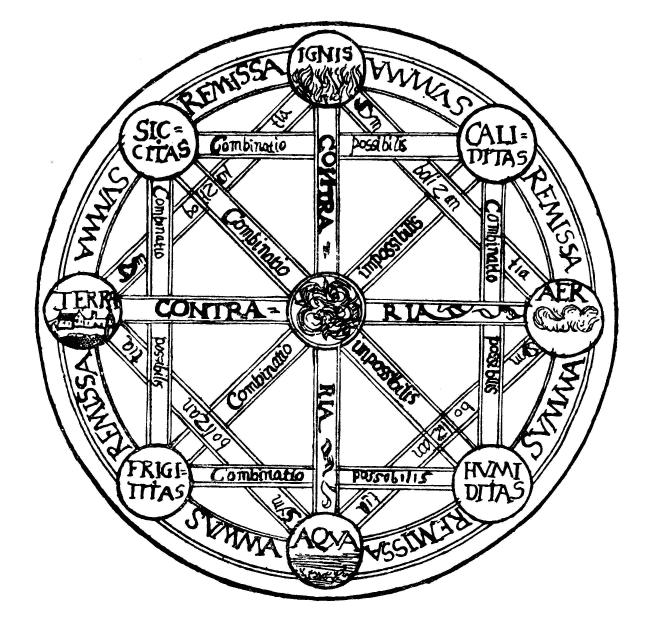
Early Pre-Socratic philosophers independently debated which single substance formed the basis of everything. Thales believed it was water, while Anaximenes favored air. Empedocles first proposed the four-element set around 450 BC. Plato later introduced the term element and linked them to geometric shapes. Aristotle expanded this by adding aether and defining qualities like hot and cold. The system spread through Hellenistic Egypt and influenced medieval European thought before being replaced by modern chemistry.
Tools and materials
The systems utilize specific substances as their primary tools of classification. Earth represents solidity and weight. Water signifies fluidity and cohesion. Fire stands for heat and energy. Air embodies mobility and expansion. Aether is described as an unchangeable, heavenly substance. In Hindu traditions, these five great elements also correspond to the senses, acting as the medium through which sensations are experienced.
Classical elements, drawn and placed
- Living
- Revived
- Fading
- Historical
- Legendary
- Performed
- Lineage
- Hellenistic philosophy
What it is for
In medicine, they helped define health as a balance of bodily fluids. Philosophers used them to understand cosmology and the structure of the heavens. They provided a framework for categorizing observable phenomena and linking physical properties to abstract concepts like geometry and sensory experience.
Who does it
Scholars, philosophers, and medical practitioners developed and refined these ideas. Ancient thinkers like Hippocrates applied them to diagnose and treat patients by balancing bodily humors. Later scientists used experimental observation to test these classifications. Modern researchers study them as historical frameworks that influenced the development of atomic theory and the scientific revolution.
Peoples and places
Greek philosophers established the four-element model, which became dominant in Europe. Indian traditions incorporated five elements into Ayurveda and Buddhist texts, linking them to senses and liberation. Egyptian Hermetic texts associated animals with specific elements. Manichaean cosmology portrayed the elements as armor and sons of the First Man. These diverse cultures adapted the core concept to fit their unique spiritual and philosophical needs.
At a glance: who, where and when
Who does it


What people believe
The worldview posits that the physical universe is composed of fundamental building blocks. In Greek thought, these elements possess opposing qualities like hot and cold. Hindu belief holds that the body dissolves back into these elements upon death. Buddhism views them as bases for understanding suffering and sensation. Manichaeism sees them as divine forces forming the structure of creation and the human soul.
How scholars and sceptics see it
Modern science rejects the classical elements as accurate descriptions of matter. Atomic theory classifies substances into chemical elements like oxygen and iron. The states of matter, solid, liquid, gas, and plasma, roughly correspond to the ancient categories but describe atomic behavior rather than elemental composition. Historians view these systems as early attempts to rationalize the natural world through observation and logic.
Compare and confuse
The classical elements are often confused with modern states of matter. While solid, liquid, gas, and plasma share attributes with earth, water, air, and fire, they are based on atomic energy levels. The concept is also distinct from alchemical symbols, though they share some historical overlap. Different cultures used varying names, such as wind for air or space for aether, reflecting local linguistic nuances.
Today
The classical elements persist in cultural memory and alternative philosophies. They appear in astrology, traditional medicine, and fantasy literature. Academic study focuses on their historical impact on science and religion.
Questions people ask about Classical elements
What are the classical elements?
They are ancient theories classifying all matter into basic substances like earth, water, fire, and air. Some systems include a fifth element called aether. These frameworks originated in Greece and India to explain the physical world.
Where did the concept originate?
The concept emerged independently among Pre-Socratic Greek philosophers and in ancient Indian traditions. It spread to Egypt and influenced medieval European thought through figures like Aristotle and Plato.
How do they relate to modern science?
Modern science does not support them as accurate classifications. Atomic theory uses chemical elements instead. The classical categories roughly match states of matter but describe different physical principles.
Good reading and sources
- Library of Congress CatalogLibrary of Congress, Article
- Encountering the '5 elements' in Japan's national parksNational Geographic, Article
- Classical element on WikipediaEncyclopedia
- More photos on Wikimedia CommonsPhotos and video
- Wikidata recordOpen data
The facts on this page come from the Wikipedia article "Classical element", written by its contributors and used under the CC BY-SA 4.0 licence, and from its Wikidata record (CC0). EveryJaadu rewrote the text in its own words, with AI assistance, and compares every page with the article to make sure no passage is copied. It may be reused under the same CC BY-SA 4.0 licence with a link back.
It may contain mistakes. Names and customs differ from one community to the next, and some knowledge is closed to outsiders and left out here. This page describes belief and practice. It does not say that any of it works, it is not a how-to, and it is not medical advice. If something is wrong, tell us. Last refreshed 2026-10-06.
More from Greece
All the entries from Greece 🇹🇷 Turkey and 5 moreEvil eye
A curse believed to be cast by a jealous glare and the charms used to stop itBelief · Protection Living
🇹🇷 Turkey and 5 moreEvil eye
A curse believed to be cast by a jealous glare and the charms used to stop itBelief · Protection Living
 🇬🇷 GreeceOrphismὈρφικά
A Greek mystery tradition based on the myth of Dionysus and the soul's journeyTradition Historical
🇬🇷 GreeceOrphismὈρφικά
A Greek mystery tradition based on the myth of Dionysus and the soul's journeyTradition Historical
 🇮🇪 Ireland and 5 moreCairn
A human-made stack of stones used as a marker, memorial, or religious symbol across many cultures.Tradition · Protection · Speaking with spirits and the dead Living
🇮🇪 Ireland and 5 moreCairn
A human-made stack of stones used as a marker, memorial, or religious symbol across many cultures.Tradition · Protection · Speaking with spirits and the dead Living
 🇬🇷 Greece and 5 moreBay Laurelδάφνη
An aromatic Mediterranean plant used in cooking and as a symbol of victory and purification.Substance · Protection · Cleansing and purification Living
🇬🇷 Greece and 5 moreBay Laurelδάφνη
An aromatic Mediterranean plant used in cooking and as a symbol of victory and purification.Substance · Protection · Cleansing and purification Living
Related elsewhere
All belief 🇪🇬 Egypt and 1 moreSphinx
A mythical hybrid with a human head and lion body, serving as guardian or riddler in Egyptian and Greek traditions.Being · Protection · Wonder and entertainment Legendary
🇨🇱 ChileChilean mythology
The myths and legends of Chile, blending indigenous roots with colonial influences.Tradition · Wonder and entertainment Living
🇷🇺 Russia and 3 moreNart sagaНарты кадджытæ
A collection of epic tales from the North Caucasus about a legendary group of heroes.Text · Wonder and entertainment Historical
🇪🇬 Egypt and 1 moreSphinx
A mythical hybrid with a human head and lion body, serving as guardian or riddler in Egyptian and Greek traditions.Being · Protection · Wonder and entertainment Legendary
🇨🇱 ChileChilean mythology
The myths and legends of Chile, blending indigenous roots with colonial influences.Tradition · Wonder and entertainment Living
🇷🇺 Russia and 3 moreNart sagaНарты кадджытæ
A collection of epic tales from the North Caucasus about a legendary group of heroes.Text · Wonder and entertainment Historical
 🇨🇳 ChinaLan Caihe藍采和
An ambiguous Taoist immortal known for a flower basket and wandering songsBeing · Wonder and entertainment Legendary
🇨🇳 ChinaLan Caihe藍采和
An ambiguous Taoist immortal known for a flower basket and wandering songsBeing · Wonder and entertainment Legendary