Diviners and readers
Babalawos, astrologers, card readers and others who read signs.
Diviners and readers are the people who interpret signs: the Ifa babalawo, the sangoma with her bones, the astrologer, the tarot reader, the palm reader, the Chinese fortune-teller and the oracle priestess. They answer questions about marriage, business, illness and loss. This page looks at how they are trained, who they serve, how they are paid, and the line between guidance and fraud. Their trade is as old as writing.
Training and tools
Training varies. A babalawo studies for years and memorises thousands of verses. An astrologer in India may study classical texts or inherit a practice. A tarot reader may learn from books and a community. Tools include cowries, bones, cards, charts, shells, tea leaves and the lines of the hand. Most readers say their tools open a conversation, and some say a spirit speaks through them. Many keep a strict code of confidentiality, as a priest or counsellor would.
Clients and trust
Clients tend to come at moments of uncertainty. In India, astrologers are consulted for weddings and for names, and in West Africa Ifa is consulted for naming a child. Diviners often act as counsellors, hearing family stories and framing a decision. Some are trusted for decades, while others are strangers in a street, and the difference matters for how fraud is spotted. Fees range from a coin or a chicken to several hundred pounds, and a reading may be offered in a shop, a temple, a market stall or an app.
Regulation and religion
Rules vary widely. Some religious authorities forbid divination, and some states license or tax readers. Fortune-tellers have been prosecuted for fraud in the United States, the United Kingdom, India and elsewhere, particularly in cases that involve large payments to lift a curse. Others practise within religion and are protected, such as Ifa within Yoruba religion. Diviners often keep close to the dominant religion, and many Ifa and Vodou diviners are also baptised Christians.
How scholars read it
Psychologists describe cold reading, in which a reader draws on small cues. Anthropologists describe divination as a social process that can break deadlocks and share responsibility. Many diviners deny they predict the future and speak instead of showing possibilities. Advice on health, law or money from a reader is no replacement for qualified advice. Many say they are paid for their time and skill, as a counsellor might be, and not for any guarantee.
Diviners and readers on EveryJaadu
The entries written up so far, best known first.
 🇨🇫 Central African Republic and 5 moreWitchcraft in Africa
Beliefs about supernatural harm and the social responses to accusations across the continentBelief · Cursing and harm · Protection Living
🇨🇫 Central African Republic and 5 moreWitchcraft in Africa
Beliefs about supernatural harm and the social responses to accusations across the continentBelief · Cursing and harm · Protection Living
 🇸🇪 Sweden and 2 moreGermanic seeressvǫlva
Diviners and sorceresses of early Germanic and Norse societyTradition · Seeing and foretelling · Power and authority Revived
🇸🇪 Sweden and 2 moreGermanic seeressvǫlva
Diviners and sorceresses of early Germanic and Norse societyTradition · Seeing and foretelling · Power and authority Revived
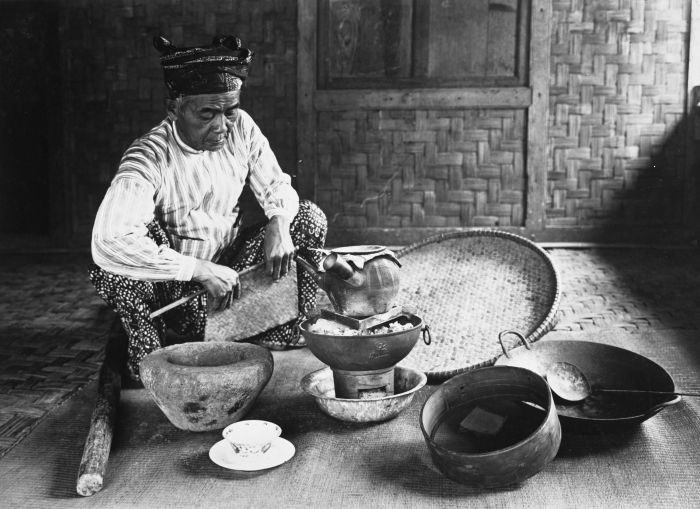 🇮🇩 Indonesia and 2 moreDukun
A traditional healer and spirit medium in Indonesian folk practiceTradition · Healing · Seeing and foretelling Living
🇮🇩 Indonesia and 2 moreDukun
A traditional healer and spirit medium in Indonesian folk practiceTradition · Healing · Seeing and foretelling Living
 🇸🇸 South Sudan and 1 moreAzande witchcraft
A Zande belief that certain people harm others by an inherited power, judged by oraclesBelief · Cursing and harm · Seeing and foretelling Living
🇸🇸 South Sudan and 1 moreAzande witchcraft
A Zande belief that certain people harm others by an inherited power, judged by oraclesBelief · Cursing and harm · Seeing and foretelling Living
 🇨🇳 China and 1 moreScapulimancy
Divination using animal shoulder blades, practiced across Asia and the Americas.Oracle · Seeing and foretelling · Cursing and harm Living
🇨🇳 China and 1 moreScapulimancy
Divination using animal shoulder blades, practiced across Asia and the Americas.Oracle · Seeing and foretelling · Cursing and harm Living
 🇬🇷 Greece and 2 moreMagic in the Greco-Roman world
Private supernatural practices in ancient Greece and Rome, distinct from public state religion.Tradition · Protection · Cursing and harm Historical
🇸🇩 SudanBenge
A divination method among the Azande using a poisoned chicken to identify witches.Oracle · Cursing and harm Fading
🇬🇷 Greece and 2 moreMagic in the Greco-Roman world
Private supernatural practices in ancient Greece and Rome, distinct from public state religion.Tradition · Protection · Cursing and harm Historical
🇸🇩 SudanBenge
A divination method among the Azande using a poisoned chicken to identify witches.Oracle · Cursing and harm Fading
 🇬🇷 GreeceWitchcraft in ancient Greece and Rome
Ancient beliefs and practices of magic, curses, and love charms in the Mediterranean worldTradition · Cursing and harm · Love and attraction Historical
🇬🇷 GreeceWitchcraft in ancient Greece and Rome
Ancient beliefs and practices of magic, curses, and love charms in the Mediterranean worldTradition · Cursing and harm · Love and attraction Historical
Photo credits on this page
The small pictures above come from Wikimedia Commons under free licences. Some are cropped to fit.
- Dukun: Unknown author, CC BY-SA 3.0, source
- Witchcraft in ancient Greece and Rome: Wilhelm Tischbein, Public domain, source
- Witchcraft in Latin America: Unknown author, CC BY 4.0, source
- Azande witchcraft: Unknown author, CC BY 4.0, source
- Scapulimancy: Albert Peter Low, CC BY-SA 4.0, source
- Magic in the Greco-Roman world: ArchaiOptix, CC BY-SA 4.0, source
- Germanic seeress: Emil Doepler, Public domain, source