Festivals: practices that mark them
Samhain, Nowruz fire, Day of the Dead, Walpurgis night and the other days of the magic calendar.
Festivals are the days when a community performs its magic in public. Samhain and Halloween, Walpurgis night, Midsummer, Beltane, Day of the Dead, Nowruz fire-jumping, Diwali, Chinese Ghost Festival, Obon in Japan, Songkran, Carnival and the Burning Man gathering all combine religion, play and custom. This page asks what they do for communities and how they have changed. Many of them are tied to the moon or the sun, and they set the shared calendar of a village or a nation.
Fire, the dead and the season
Festivals cluster around turning points of the year. Fire is common: bonfires on Midsummer in Europe, Chaharshanbe Suri in Iran, Holika in India. The dead return in many: Samhain in Ireland, Obon in Japan, the Day of the Dead in Mexico, the Hungry Ghost Festival in China. In each, offerings of food, light and welcome are set out. Many involve masks, drums, processions and a shared meal, so that rites for protection and fertility become collective events open to the whole village.
Order and inversion
Many festivals allow a licensed breach of the rules. Carnival turns social order upside down, and masquerades in West Africa, such as Egungun among the Yoruba, bring ancestors to the village in cloth. Anthropologists see this as a way to renew order. Some, such as Holi, blur class lines for a day, though real divisions often persist. Within each festival there is usually a night when the dead or the spirits are thought to be close, and a day of celebration after it.
Church and state
Authorities have banned, absorbed and taxed festivals. The Church placed All Saints on the first of November and recast older rites. Puritan England banned Christmas for a time. Communist states discouraged ancestor and spirit festivals, while modern governments often list them as cultural heritage and promote them for tourism. Mexico's Day of the Dead was inscribed by UNESCO in 2008. Many are marked by a day of rest, a shared meal and the lighting of lamps or fires, and children often take a lively role.
Spectacle and respect
Large festivals bring crowds, risk and commerce. Halloween is now a global market, and parts of the Day of the Dead have been staged for visitors and film. Communities often ask guests to behave as guests, especially at rites for the dead or at sacred sites. Safety around fire, crowds and costume deserves care. Anthropologists observe that festivals teach each new generation what the community values, and that changes in a festival often show changes in the community.
Festivals on EveryJaadu
The entries written up so far, best known first.
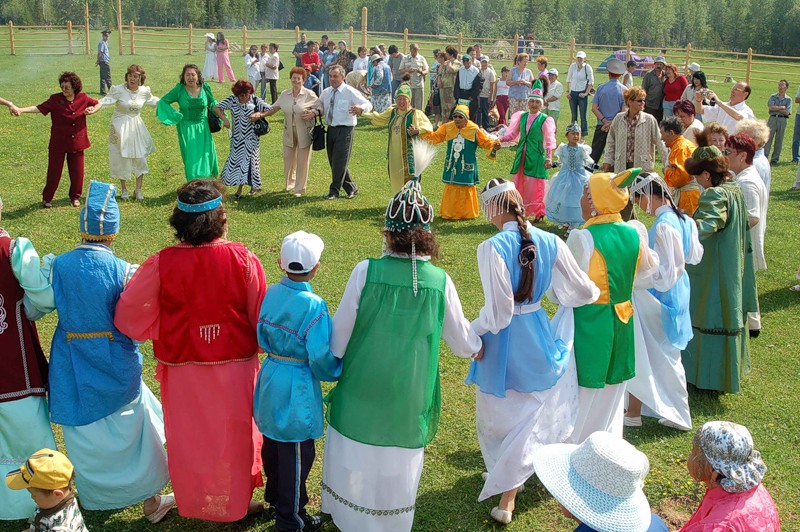 🇷🇺 RussiaYhyakhЫһыах
A summer solstice festival of the Sakha people marking the new year and nature's returnTradition · Luck and prosperity · Speaking with spirits and the dead Living
🇮🇳 IndiaTribal religions in India
Indigenous spiritual practices of India's Scheduled Tribes, often grouped under Hinduism in official records.Tradition · Speaking with spirits and the dead · Protection Living
🇩🇿 AlgeriaWezeeaوَزِيعَة
A Kabyle custom of communal slaughter and meat sharing for social solidarityRite · Speaking with spirits and the dead · Luck and prosperity Living
🇷🇺 RussiaYhyakhЫһыах
A summer solstice festival of the Sakha people marking the new year and nature's returnTradition · Luck and prosperity · Speaking with spirits and the dead Living
🇮🇳 IndiaTribal religions in India
Indigenous spiritual practices of India's Scheduled Tribes, often grouped under Hinduism in official records.Tradition · Speaking with spirits and the dead · Protection Living
🇩🇿 AlgeriaWezeeaوَزِيعَة
A Kabyle custom of communal slaughter and meat sharing for social solidarityRite · Speaking with spirits and the dead · Luck and prosperity Living
 🇮🇳 India and 1 moreRoshni Mela
A three-day fair of earthen lamps and prayers held at a Sufi shrine in Punjab.Tradition · Protection · Luck and prosperity Living
🇿🇼 ZimbabweMhande
A Shona song and dance performance tied to rain rituals and ancestral communicationIllusion · Speaking with spirits and the dead · Luck and prosperity Living
🇮🇳 India and 1 moreRoshni Mela
A three-day fair of earthen lamps and prayers held at a Sufi shrine in Punjab.Tradition · Protection · Luck and prosperity Living
🇿🇼 ZimbabweMhande
A Shona song and dance performance tied to rain rituals and ancestral communicationIllusion · Speaking with spirits and the dead · Luck and prosperity Living
 🇻🇳 VietnamBà Chúa Xứ婆主處
A Mekong Delta goddess of prosperity, asked for trade, health and fertilityBeing · Protection · Luck and prosperity Living
🇻🇳 VietnamBà Chúa Xứ婆主處
A Mekong Delta goddess of prosperity, asked for trade, health and fertilityBeing · Protection · Luck and prosperity Living
 🇭🇹 HaitiChristian-Vodou
The blending of Haitian Vodou and Roman Catholicism into a single spiritual practiceTradition · Speaking with spirits and the dead · Protection Living
🇭🇹 HaitiChristian-Vodou
The blending of Haitian Vodou and Roman Catholicism into a single spiritual practiceTradition · Speaking with spirits and the dead · Protection Living
 🇭🇹 HaitiHaitian CarnivalKanaval
A major Caribbean festival of music, dance, and satire leading to Mardi Gras in HaitiTradition · Wonder and entertainment · Luck and prosperity Living
🇭🇹 HaitiHaitian CarnivalKanaval
A major Caribbean festival of music, dance, and satire leading to Mardi Gras in HaitiTradition · Wonder and entertainment · Luck and prosperity Living
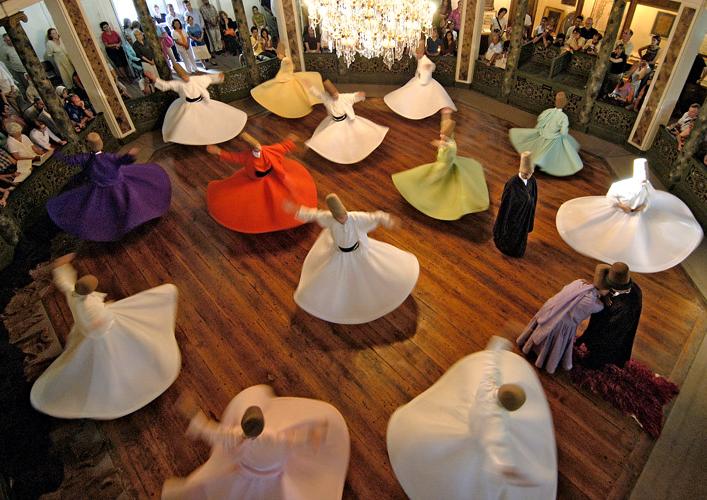 🇹🇷 Turkey and 4 moreSufi whirlingSemazen
A spinning meditation practiced by Sufi dervishes to reach spiritual connection through music and movement.Rite · Speaking with spirits and the dead · Change and initiation Living
🇹🇷 Turkey and 4 moreSufi whirlingSemazen
A spinning meditation practiced by Sufi dervishes to reach spiritual connection through music and movement.Rite · Speaking with spirits and the dead · Change and initiation Living
 🇮🇳 IndiaKadangot Makkam
A North Malabar goddess who became a deity after being killed by her brothers.Being · Protection · Love and attraction Living
🇮🇳 IndiaKadangot Makkam
A North Malabar goddess who became a deity after being killed by her brothers.Being · Protection · Love and attraction Living
 🇨🇳 ChinaSuperstition in China
A broad category for folk beliefs and rituals dismissed as backward by modern Chinese authoritiesBelief · Protection · Luck and prosperity Living
🇺🇦 Ukraine and 5 moreBullroarer
A wooden slat on a string that produces a roaring sound for ritual and communication.Tradition · Protection · Speaking with spirits and the dead Living
🇨🇳 ChinaSuperstition in China
A broad category for folk beliefs and rituals dismissed as backward by modern Chinese authoritiesBelief · Protection · Luck and prosperity Living
🇺🇦 Ukraine and 5 moreBullroarer
A wooden slat on a string that produces a roaring sound for ritual and communication.Tradition · Protection · Speaking with spirits and the dead Living
 🇮🇳 IndiaAshapura Mataआशापुरा माता
A Hindu goddess worshipped as the clan protector of Rajput and other communities in western India.Being · Protection · Luck and prosperity Living
🇮🇳 IndiaAshapura Mataआशापुरा माता
A Hindu goddess worshipped as the clan protector of Rajput and other communities in western India.Being · Protection · Luck and prosperity Living
 🇮🇳 IndiaPoomala Bhagavathy
A Hindu goddess of North Malabar, revered as the family deity of the Thiyya community.Being · Love and attraction · Luck and prosperity Living
🇮🇳 IndiaPoomala Bhagavathy
A Hindu goddess of North Malabar, revered as the family deity of the Thiyya community.Being · Love and attraction · Luck and prosperity Living
 🇮🇳 India and 1 moreFolk practices in Punjab
Indigenous beliefs and rituals of the Punjabi people across India and PakistanTradition · Protection · Healing Living
🇫🇮 Finland and 2 moreSaint Knut's Daytjugondag jul; nuutinpäivä
A January festival ending the Christmas season with tree removal and traditional visits.Rite · Cleansing and purification Living
🇮🇳 India and 1 moreFolk practices in Punjab
Indigenous beliefs and rituals of the Punjabi people across India and PakistanTradition · Protection · Healing Living
🇫🇮 Finland and 2 moreSaint Knut's Daytjugondag jul; nuutinpäivä
A January festival ending the Christmas season with tree removal and traditional visits.Rite · Cleansing and purification Living
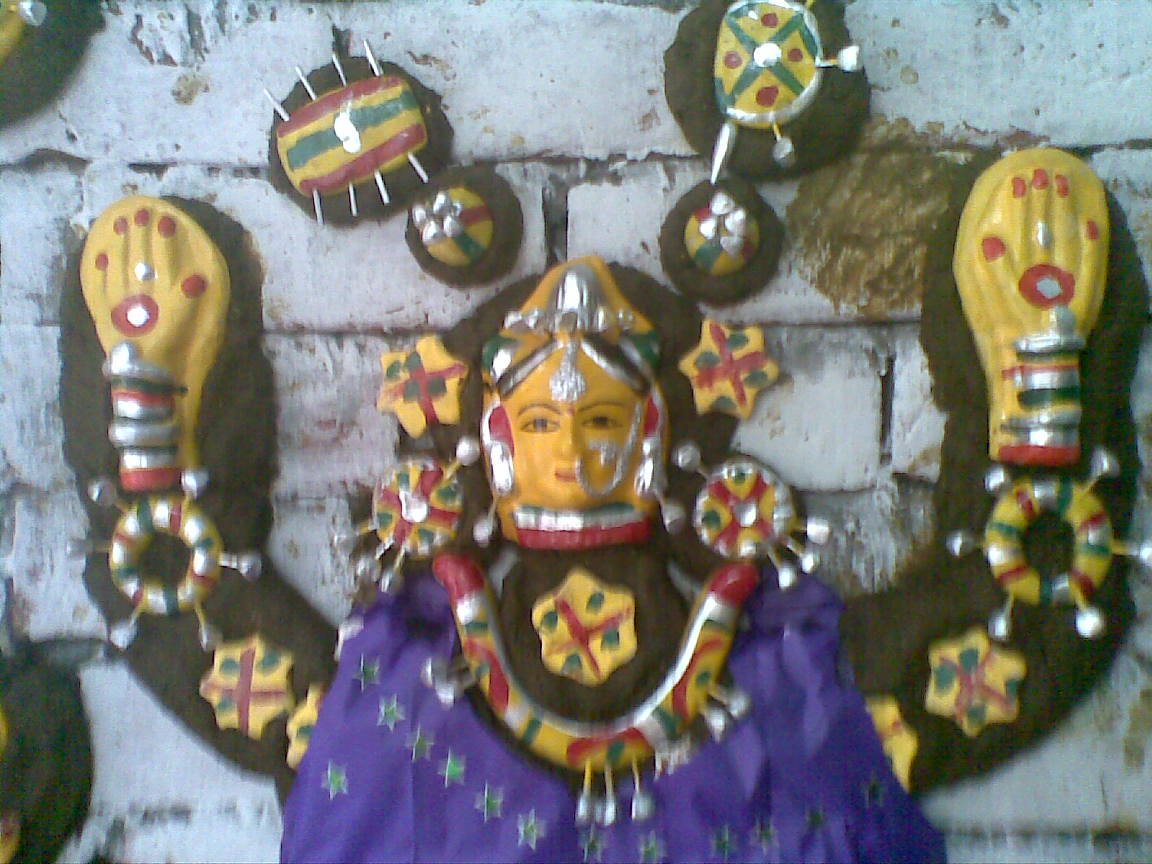 🇮🇳 IndiaSanjhi
A festival and art form honoring a mother goddess through clay images and colored designsTradition · Love and attraction · Luck and prosperity Living
🇮🇳 IndiaSanjhi
A festival and art form honoring a mother goddess through clay images and colored designsTradition · Love and attraction · Luck and prosperity Living
 🇵🇱 Poland and 4 moreMoranaМорена
A Slavic goddess of winter and death, whose effigy is drowned to welcome springFigure · Cursing and harm · Power and authority Living
🇵🇱 Poland and 4 moreMoranaМорена
A Slavic goddess of winter and death, whose effigy is drowned to welcome springFigure · Cursing and harm · Power and authority Living
 🇩🇿 AlgeriaMawsimموسم
Annual Maghrebi festival blending Sufi veneration with social and economic gatheringTradition · Speaking with spirits and the dead · Luck and prosperity Living
🇩🇿 AlgeriaMawsimموسم
Annual Maghrebi festival blending Sufi veneration with social and economic gatheringTradition · Speaking with spirits and the dead · Luck and prosperity Living
Photo credits on this page
The small pictures above come from Wikimedia Commons under free licences. Some are cropped to fit.
- Kadangot Makkam: Shagil Kannur, CC BY-SA 4.0, source
- Roshni Mela: FatherofGod, CC BY-SA 4.0, source
- Yhyakh: Humano92, Public domain, source
- Folk Catholicism: Calvin Hennick, for WBUR Boston, CC BY 3.0, source
- Haitian Carnival: User:Doron, CC BY-SA 3.0, source
- Morana: Marta Malina Moraczewska, CC BY-SA 4.0, source
- Mawsim: Beghdadi Walid, CC BY-SA 4.0, source
- Sama: myself, Public domain, source
- Superstition in China: Gary Todd, CC0, source
- Folk practices in Punjab: Veer jindal, CC BY-SA 3.0, source
- Sanjhi: Veer jindal, CC BY-SA 3.0, source
- Bà Chúa Xứ: Phương Huy, CC BY-SA 4.0, source
- Ashapura Mata: Rossifummi, CC BY-SA 4.0, source
- Poomala Bhagavathy: Ajeeshkumar4u, CC BY-SA 4.0, source